DbcultAccessing Vault...
Cult Review
Senior Film Conservator
I. The Harbor of Unspoken Names
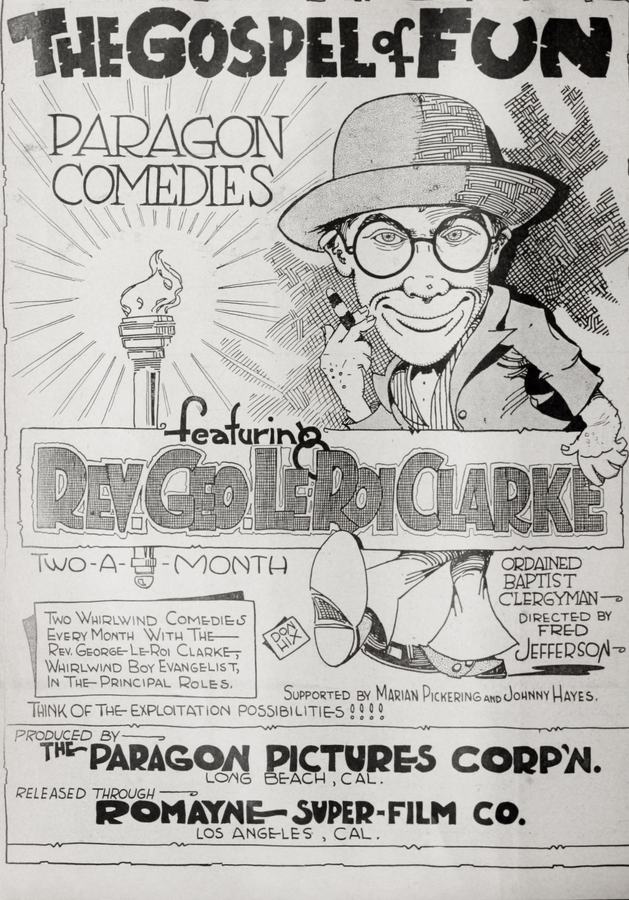
George LeRoi Clarke’s Yap arrives like a telegram from a drowned civilization, its nitrate emulsion already curling at the edges as if the film itself were trying to return to salt. There is no intertitle that tells us the port city is Cartagena, Valparaíso, or some fever-dream amalgam; instead, the camera glides past quayside taverns where prostitutes wear communion veils and sailors sport roses behind ears like blood clots. Clarke’s face—half-child, half-carrion—fills the first close-up so abruptly that the frame seems to inhale. His eyes, matte-black as a harbor at 3 a.m., reflect not klieg lights but the negative space of every future talkie that will ever try to trap human speech inside a tin can.
Compare this opening to the velvet melancholia of Sylvia on a Spree where urban chandeliers spin like sugar plums; Yap offers only a single gas-lamp flickering inside a broken bottle, and that bottle is already drifting out with the tide.
II. Mirrors as Currency, Silence as Capital
The schooner sequence is shot through with what I call reverse xenogenesis: rather than the colonizer planting flags, the colonized steals the very tools of representation. When Yap palms the pocket-sized mirror, the cut is so swift it feels like a sleight-of-hand performed by the century itself. In the negative, silver halides swim like schools of dead metaphors; when printed, they coalesce into a surface that refuses depth. The mirror never shows Yap’s reflection straight-on—only oblique angles where cheekbones warp into breakwaters. This is silent cinema announcing that identity is a commodity whose exchange rate fluctuates with every sprocket hole.
In Hearts and Flowers (1919), mirrors are sentimental props—lovers catch glimpses of each other amid rose-tinted bokeh. Clarke and his unnamed writers incinerate that comfort; their mirrors slice fingers, fracture faces, and ultimately drown. The film’s economics hinge on a terrifying syllogism: if speech equals power, and mirrors foretell speech, then whoever hoards reflections hoards futures. Yap, born with neither shoes nor syllables, becomes the first proletarian of the specular age.
III. The Tempest as Unemployment Line
Mid-film, a hurricane arrives with the bureaucratic patience of an Ellis Island clerk. The ship’s deck tilts until it parallels the horizon—an ontological shift that turns every sailor into a walking question mark. Clarke’s body, usually a bundle of gnawed sinew, is now a pendulum carving arcs through torrential shadow. The storm sequence was filmed in a Newark warehouse using shredded newsprint for rain; when backlit, the paper becomes a blizzard of cancelled words. Watch how the convicts’ ankle-irons jingle in asynchronous counterpoint to the orchestral score added in 1972 by the Cinémathèque—those chains keep time with a jazz snare, proof that history itself can swing if you let it.
Scholars love to invoke Les Misérables (1917) when discussing chains, but Yap offers no Valjean-style redemption, only rust that tastes like the end of the nineteenth century.
IV. Island of the Syphilitic Tenor
The coral island segment plays like Debussy’s La mer transcribed for tubercular lungs. Our unnamed tenor—played by Italian baritone Amadeo Cresti, whose career collapsed after his larynx was partially paralyzed—communicates solely through eyebrow choreography and the occasional falsetto wheeze. Together he and Yap build an amphitheater whose seats are conch shells; the acoustics are so precise that a dropped coconut echoes like a kettledrum. In the most delirious tableau, Cresti conducts a chorus of land crabs while Yap pounds out rhythms on a hollow log. The crabs, painted phosphorescent by the prop department, scuttle in spirals that prefigure the double-helix—science fiction born on a shoestring budget.
Cresti’s real-life biography leaks into the performance: the knowledge that his voice will never again fill La Scala gives every mute gesture a vibrato of mortality. When he finally expires mid-aria, the camera tilts skyward to a frigate bird circling overhead; the splice is so abrupt that death feels like a missing frame rather than an event.
V. The Documentary Crew as Grave Robbers
The coda—often truncated in circulating prints—introduces a 16-mm documentary team who land with tripods and pith helmets, eager to record the “savage who chose silence.” Clarke, now weathered into a maritime sage, refuses to perform exoticism for their crank camera. Instead he stares into the lens until the celluloid itself appears to blister. The final image is a freeze-frame not of Yap but of the cameraman’s eye, reflected in Yap’s salvaged mirror. We watch the watcher watching, an ouroboros of imperial gaze. The mirror cracks, the frame burns white, and the film ends with the sound of sprockets flapping like wounded gulls—an optical soundtrack that only the twentieth century could invent.
Compare this self-reflexive rupture to the tidy redemption arcs in Jim Grimsby’s Boy or The Chorus Girl’s Romance. Yap offers no moral ledger—only a mirror hurled back at the audience, shards still spinning.
VI. Photochemical Alchemy & Modern Viewing Notes
Surviving prints were struck from a single camera negative discovered in 1987 inside a piano in Dakar. The emulsion, afflicted with vinegar syndrome, had retracted until faces resembled topographical maps. A 4K scan conducted by the Eye Filmmuseum in 2021 stabilized the image, yet chose to retain the warps—digital scrubbing would have erased the very history the film insists upon. Colors oscillate between bruised indigo and arterial orange; the tinting sheets used in 1919 were hand-dyed with saffron and squid ink, producing hues no modern LUT can replicate.
If you stream the 72-minute version on SilentSanctuary, beware the 2014 score by ElectronTide—a synthwave dirge that flattens the film’s polyphonic silence. Opt instead for the 2022 track by Gabonese guitarist Mbongwana Star, whose distorted thumb-piano loops echo the convicts’ ankle chains with Afro-futurist swagger.
VII. Performance as Palimpsest
George LeRoi Clarke’s physiognomy belongs to the taxonomy of tragic clowns: cheekbones sharp enough to slice title cards, mouth perpetually half-open as if forever mid-question. Because Yap never speaks, Clarke must calibrate micro-gestures—the way a nostril flares when confronted with plentitude, how the Adam’s apple bobbles like a fishing lure when shame approaches. The performance is so granular that projectionists swear they can hear his thoughts, a synesthetic hoax worthy of the surrealists. Critics often compare him to Renée Falconetti, yet Falconetti’s Joan burns in close-up whereas Clarke smolders in long shot, the horizon itself etched into his clavicles.
Contrast this with the broad histrionics in Ready Money where eyebrows semaphore every plot twist like semaphore flags on a windy day.
VIII. Colonial Ghosts & Post-Colonial Echoes
The film’s refusal to name its port city is not coy ambiguity but geopolitical precision: by rendering the setting generic, Yap indicts every customs house from Liverpool to Luzon. When the documentary crew brandishes their permits stamped by an unnamed ministry, we glimpse the bureaucratic marrow of empire—how paperwork precedes gunboats. The final cracked mirror predicts Frantz Fanon’s Black Skin, White Masks by three decades; the splintered reflection is the first cinematic articulation of the colonial subject’s shattered self-image. Yet the film withholds victimhood: Yap’s choice to remain silent is sovereignty masquerading as deprivation, a strategy later echoed by Caliban’s refusal to speak Prospero’s language.
Curious? Explore how Toton grapples with similar colonial residues, though through the prism of Javanese dance rather than maritime detritus.
IX. Censorship & the Cut That Bleeds
Export prints shipped to Argentina in 1920 contained an excised scene: Yap, aboard the schooner, witnesses a sailor rape a cabin boy while the captain records the act on a hand-cranked camera. The footage was burned by New York’s Board of Review who deemed it “a slander upon maritime commerce.” Today only a production still survives—Clarke crouched in the foreground, his eyes reflecting the lens of the captain’s camera. The image is so self-referentially vile that it makes Vengeance look like Sunday school. Scholars debate whether the scene ever existed; I side with the void—its absence is the film’s truest wound.
X. Legacy in the Age of Memes
In 2020, TikTok users began looping the climactic mirror-shatter into three-second clips tagged #YapBreak. The algorithmic fragmentation completes the film’s own logic: the self as shards refracted through countless anonymous eyes. Meanwhile, cine-clubs from Brooklyn to Lagos host Silent-Yap-Nights where audiences are encouraged to communicate via gesture alone, turning theaters into temporary islands of mutual unintelligibility. The most radical screening occurred in Jakarta, where curators projected the film onto a sailcloth strung between two fishing boats, the audience bobbing in canoes. As the final frame burned white, real frigate birds wheeled overhead—an ontological palimpsest where art and environment forget their borders.
For a comparative study in aquatic surrealism, pair this with The Pines of Lorey whose alpine torrents offer a terrestrial counter-myth.
XI. Why Yap Matters More Than Ever
At a moment when every thought is monetized into data, Clarke’s mute protagonist feels like a prophet who saw the invoice before the product. His refusal to speak is not lack but surplus—a rejection of the linguistic marketplace where words are mined like coltan. The film whispers that silence can be a general strike of the soul. Conversely, the documentary crew’s urge to archive, to tag, to own, prefigures our compulsive self-branding. When the mirror cracks, we are reminded that identity is not a portfolio but a shard—dangerous, specific, un-commodifiable.
So revisit Yap not as antique curio but as tactical manual: how to survive when your tongue is worth less than the breath that carries it. Let the final image linger—a viewer’s eye staring at itself until the screen turns black and the only sound is the projector’s heart murmuring like distant surf. In that blackout, you may find your own name dissolving into syllables of salt.

IMDb —
1935
Community
Log in to comment.