DbcultAccessing Vault...
6.4/10
Senior Film Conservator
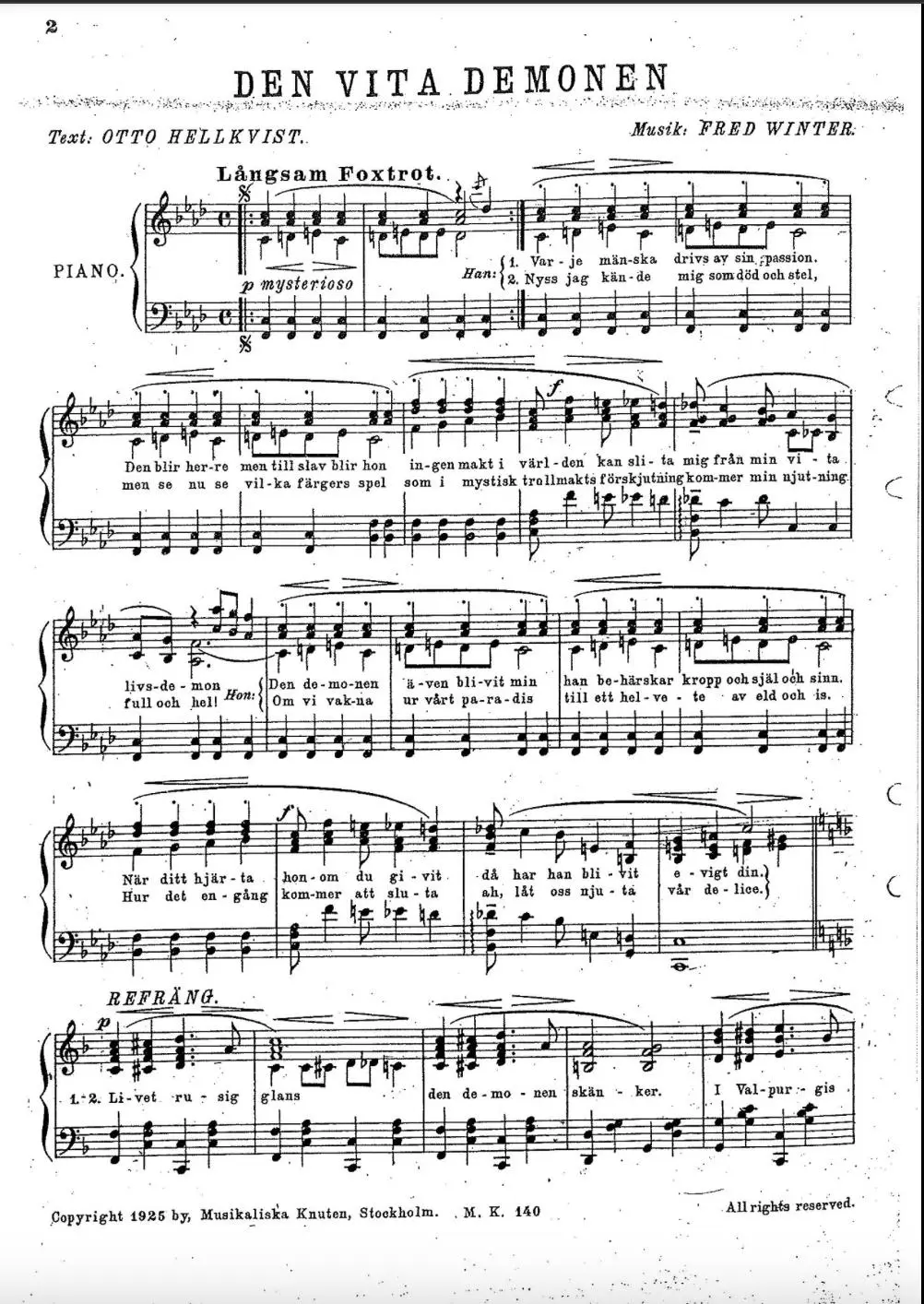
A definitive 6.4/10 rating for a film that redefined the boundaries of cult cinema. Den vita demonen remains a cornerstone of transgressive art.
Is "Den vita demonen" a film that demands your attention in the modern era? Short answer: yes, but with significant caveats. This early Swedish drama, rooted in a surprisingly potent tale of addiction and moral compromise, offers a fascinating, if sometimes rudimentary, glimpse into cinematic storytelling from a bygone era.
It is unequivocally for cinephiles, film historians, and anyone with a keen interest in the evolution of narrative cinema and early social commentary. However, those seeking polished modern production values, rapid-fire pacing, or unambiguous character arcs will find themselves largely disengaged. This is a film that requires patience and an appreciation for historical context.
Otto Hellkvist's "Den vita demonen" (The White Demon) emerges from the nascent years of Swedish cinema with a narrative that, on paper, feels remarkably contemporary. It’s a story steeped in personal failings, societal ills, and the desperate measures people take when pushed to their limits. While the specific cinematic language of the era might feel alien to modern eyes, the thematic undercurrents remain strikingly relevant.
The film introduces us to a world where the lines between respectable society and its underbelly are blurred, often within the same family unit. This isn't a simple morality play; it's a sketch of human frailty, addiction, and the surprising resilience—or perhaps, convenient intervention—that can alter one's fate.
This film works because... it bravely tackles the grim realities of drug addiction and moral decay, offering a surprisingly mature thematic core for its time, and features a compelling, if thinly sketched, female protagonist at its center.
This film fails because... its narrative resolution feels abrupt and somewhat unearned, undermining the dramatic tension built throughout the preceding acts, and its early cinematic language might alienate viewers accustomed to contemporary pacing and subtlety.
You should watch it if... you are a student of film history, an enthusiast of early European cinema, or someone interested in how social issues were depicted on screen before the advent of sound and sophisticated editing techniques.
The story of "Den vita demonen" unfolds across three distinct acts, each building on the escalating crisis faced by its central character, the unnamed pawnbroker. We begin in the intimate, somewhat transactional space of her pawnshop, a place symbolic of exchanged values and hidden secrets. Her personal life is a tangle of vulnerabilities: a recent divorce, an affair with her significantly younger sales assistant, and the crushing burden of a daughter consumed by cocaine addiction. This setup immediately establishes a character operating on the fringes of conventional morality, driven by both necessity and perhaps a yearning for connection.
The transition to the Eldorado dance hall marks a dramatic shift in scale and tone. This isn't just a social gathering; it’s a public crucible where the pawnbroker's disparate worlds collide. Her estranged husband, her addicted daughter, and her young lover are all present, forming a volatile tableau. The subsequent police raid is the film's undeniable dramatic peak, a moment of sudden, brutal reality interrupting the illusory escape of the dance hall. The desperate act of an addict shooting himself, rather than facing capture, is a stark, almost shocking, depiction of the depths of despair associated with drug use, even in an era of nascent cinema.
The final act, set in the cold, impersonal confines of police custody, promises a reckoning. Yet, the resolution arrives with a peculiar neatness: a 'decent' police officer, recognizing the pawnbroker from a previous encounter, orchestrates their release. This conclusion, while providing a 'happy ending' in the classical sense, simultaneously feels like a narrative shortcut, sidestepping the full consequences that the preceding events so vividly established. It’s a moment that, depending on your perspective, either offers a comforting closure or a frustrating evasion of deeper dramatic exploration.
Otto Hellkvist, as both writer and director, crafts a narrative that, despite its brevity, attempts to weave together multiple complex threads. His decision to center the story around a middle-aged female protagonist dealing with such weighty issues—addiction, illicit romance, social stigma—is notable for the period. Early cinema often leaned into more overt melodrama or adventure, making Hellkvist's more grounded, albeit sensationalized, approach to social realism a point of interest.
One can infer Hellkvist's directorial choices from the plot's structure. The distinct shift from the intimate pawnshop to the bustling dance hall, and then to the stark police station, suggests a deliberate attempt to vary settings and build narrative momentum. The police raid at the Eldorado, for instance, would have demanded careful staging, likely relying on crowd control and rapid cuts (for the era) to convey chaos and urgency. This sequence would have been the film's primary action set-piece, designed to shock and engage the audience.
However, the abrupt resolution, where a convenient police connection dissolves the entire conflict, raises questions about Hellkvist's ultimate thematic intent. Was it a concession to audience expectations for a less grim outcome, or a reflection of a belief in inherent goodness and social connections as a means of redemption? It feels, frankly, like a missed opportunity to truly explore the ramifications of the characters' actions, opting instead for a swift, almost perfunctory, release. This choice, while understandable in the context of early cinema's evolving narrative conventions, undeniably weakens the film's overall impact.
Given the limited surviving information about "Den vita demonen," evaluating the performances of Gustaf Lövås, Stina Berg, and Lili Ziedner requires a degree of speculative interpretation. However, the plot provides fertile ground for imagining their contributions. Stina Berg, likely playing the pawnbroker, would have been tasked with portraying a woman burdened by life's harsh realities. Her character's journey—from the quiet desperation of her shop to the public humiliation of the raid and custody—demands a range of emotion, from world-weariness to fear and eventual relief.
One can envision Berg relying on established silent film acting techniques: exaggerated facial expressions, deliberate body language, and perhaps a subtle portrayal of inner conflict through her gaze. The weight of her daughter's addiction alone would have provided ample opportunity for poignant, non-verbal communication. Her affair with the younger sales assistant, likely played by Gustaf Lövås, would have called for a delicate balance between tenderness and the underlying desperation of a woman seeking solace or escape. Lövås, as the 'extravagant' sales assistant, would have needed to convey youthful recklessness and perhaps a superficial charm that masked deeper vulnerabilities.
Lili Ziedner's role, presumably the addicted daughter, would have been the most challenging and potentially the most impactful. Depicting cocaine addiction in early cinema would have required a bold, perhaps even shocking, physicality. The moment an addict shoots himself during the raid suggests a raw, unfiltered depiction of drug-induced terror and despair. Ziedner's performance, if it leaned into these darker aspects, could have been a truly arresting element of the film, providing a visceral focal point for the 'white demon' of the title. It's a role with immense dramatic potential, capable of elevating the film's social commentary beyond mere plot points.
While specific details on cinematography are scarce, one can infer certain stylistic choices common to the era and dictated by the narrative. The pawnshop scenes would likely have utilized a more intimate, perhaps slightly darker, lighting scheme to emphasize the clandestine nature of the business and the pawnbroker's personal struggles. The clutter of the shop itself could have been used to create a sense of claustrophobia or the weight of accumulated pasts.
The Eldorado dance hall, in contrast, would have presented an opportunity for more expansive shots, capturing the energy and potential decadence of a public space. The police raid, in particular, would have benefited from dynamic camera work (for the time), perhaps employing rapid pans or quick cuts to enhance the sense of sudden chaos. The use of shadow and light would have been crucial, especially in portraying the desperation of the addicts and the authority of the police. Imagine the stark contrast between the bright, fleeting moments of pleasure at the dance hall and the harsh, unforgiving light of the police station.
The film's title, "Den vita demonen," evokes a sense of menace and insidious influence, suggesting a visual style that might have subtly underscored the destructive power of addiction. This could have been achieved through recurring motifs, perhaps even symbolic imagery, though such sophistication was still developing in silent cinema. The overall atmosphere would have been one of encroaching gloom, punctuated by moments of fleeting joy and sudden terror, characteristic of a film attempting to ground its drama in a gritty social reality.
The pacing of "Den vita demonen" would likely have been dictated by its three-act structure. The opening act, establishing the pawnbroker's life, would have been slower, allowing for character introduction and the gradual unfolding of her complicated circumstances. This deliberate pace would set the stage for the dramatic acceleration to follow.
The second act, centered on the Eldorado raid, would have represented a significant shift in tempo. The build-up to the raid, the sudden incursion of the police, and the shocking suicide would demand a much faster, more urgent pace. This section would be designed to be thrilling and emotionally impactful, a stark contrast to the earlier scenes. The final act, in custody, would likely revert to a more contemplative pace, focusing on the characters' predicament, before the quick resolution brings a sense of release.
The tone of the film appears to oscillate between social commentary and melodrama. While it grapples with serious issues like addiction, the sudden, almost convenient, resolution leans into a more traditional, less realistic narrative sensibility. This tonal inconsistency is one of the film's more challenging aspects. It works. But it’s flawed. The film attempts to be gritty but ultimately shies away from truly punishing its characters, which can feel like a compromise.
At its heart, "Den vita demonen" is a film about the destructive power of addiction and its ripple effects on families and relationships. The 'white demon' of the title clearly refers to cocaine, positioning the film as an early, albeit perhaps sensationalized, piece of anti-drug propaganda or social warning. The daughter's addiction is not just a plot device; it's a central force driving the pawnbroker's actions and anxieties.
Beyond addiction, the film touches on themes of moral ambiguity and the grey areas of human behavior. The pawnbroker herself is not a pristine figure; her affair and her profession place her outside strict societal norms. The police raid highlights the societal efforts to control vice, yet the final resolution suggests that personal connections and favors can circumvent the impersonal machinery of justice. This offers a cynical, yet perhaps realistic, commentary on social structures.
The film also subtly explores gender roles. A female protagonist at the center of such a morally fraught narrative, juggling family drama and illicit romance, was a progressive choice for the era. It suggests a nascent interest in exploring the complexities of women's lives beyond traditional domestic roles, even if the ultimate resolution undermines some of that initial grit.
Yes, "Den vita demonen" is worth watching for specific audiences. It holds significant value as a historical document of early Swedish cinema. It showcases how filmmakers tackled challenging social themes like drug addiction and moral compromise in an era when cinematic language was still in its infancy. For those interested in the evolution of film narrative and social realism, it provides valuable insights. However, its rudimentary production quality and a somewhat unsatisfying ending may test the patience of casual viewers. Approach it as an archaeological find, not a polished modern entertainment.
"Den vita demonen" is a fascinating artifact from the formative years of cinema, a film that dares to confront societal demons—both literal and metaphorical—with a surprising degree of frankness for its era. Otto Hellkvist’s vision, while constrained by the nascent cinematic language of the time, crafted a narrative with a compelling, if ultimately compromised, dramatic arc. The film’s strength lies in its willingness to delve into the gritty realities of addiction and moral ambiguity, offering a potent, albeit raw, form of social commentary.
However, its greatest failing is its narrative cowardice in the final act. The sudden, convenient resolution, engineered by a benevolent police officer, feels like a narrative sidestep, robbing the preceding drama of its full weight. It leaves the viewer with a sense of an opportunity missed, a powerful story that flinched at its own potential for a truly dark or complex conclusion. Despite this, for those willing to engage with its historical context and appreciate its early boldness, "Den vita demonen" remains a valuable, if imperfect, piece of cinematic history. It's not a forgotten masterpiece, but it's certainly a film worth unearthing for its intriguing premise and its brief, shining moments of raw social observation.

IMDb —
1922
Community
Log in to comment.