DbcultAccessing Vault...
Cult Review
Senior Film Conservator
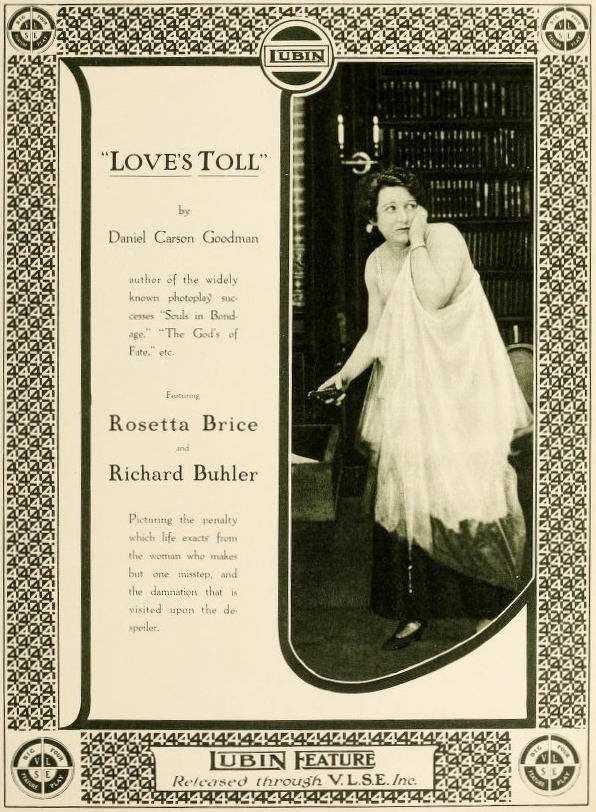
The cinematic tapestry of 'Love's Toll,' an evocative silent drama penned by the masterful Daniel Carson Goodman, unfurls a narrative as intricate as it is emotionally resonant, plunging viewers into a maelstrom of societal constraints, personal sacrifice, and the enduring, often agonizing, power of love. Released in an era when film was still discovering the boundless expanse of its expressive capabilities, this picture stands as a testament to the profound impact that a well-crafted story, coupled with compelling performances, can wield even without the aid of spoken dialogue. It's a film that doesn't merely tell a story; it feels it, breathes it, and invites its audience to do the same, drawing them into a world where every gesture, every flicker of an eye, carries the weight of unspoken emotion.
At its heart, 'Love's Toll' is a searing indictment of the rigid class structures and unforgiving social expectations that often dictated the course of individual lives in a bygone era. We are introduced to Elara Vance, brought to vivid, aching life by Inez Buck, a performance that transcends the limitations of the silent medium. Elara is a woman of spirit and genuine affection, whose heart has been irrevocably captured by Julian Thorne, portrayed with a brooding intensity by Richard Buhler. Julian, a talented artist, finds himself perpetually at odds with a world that values lineage and wealth above talent and true feeling. Their romance, blossoming in the shadows, is a fragile thing, constantly threatened by the looming specter of societal disapproval. This illicit passion is meticulously policed by Elara's aunt, Lady Beatrice, a character rendered with formidable, almost icy, precision by Garda Polotskova. Lady Beatrice is not merely an antagonist; she is a product of her time, a woman burdened by the weight of a dwindling family reputation, for whom social standing is paramount, a goal to be achieved at any cost, even the happiness of her niece.
The narrative's central conflict ignites when Lady Beatrice, with a calculated ruthlessness that chills the blood, orchestrates Elara's engagement to Lord Ashworth, a man of considerable means but little warmth, embodied by Crauford Kent. This forced betrothal serves as the catalyst for Julian's desperate, ill-fated gamble to secure his fortune. His venture, however, becomes the perfect trap for the film's true villain, Mr. Silas Croft, a master of duplicity brought to life by William H. Turner. Croft's machinations frame Julian for embezzlement, throwing him into the cold embrace of the law and, more painfully, into a prison of despair. The subsequent public repudiation by Elara – a devastating act of perceived betrayal – is the film's emotional crescendo, a moment of profound heartbreak that reverberates through every frame. Yet, this apparent abandonment is a ruse, a desperate, heart-wrenching sacrifice. Elara, with the quiet courage that defines her character, embarks on a clandestine mission to clear Julian's name, aided by her loyal maid, Martha, whose eccentricities, skillfully portrayed by Mary Carr, provide moments of much-needed levity amidst the pervasive gloom.
The genius of Daniel Carson Goodman's screenplay lies in its nuanced exploration of sacrifice. Elara's decision to publicly denounce Julian is not born of malice but of a profound, almost tragic, love. It is a calculated risk, a desperate measure to gain the proximity and leverage needed to dismantle Croft's web of deceit. This theme of self-immolation for a greater good finds echoes in films like The Passing of the Third Floor Back, where characters grapple with moral choices that demand a profound personal cost. As Elara navigates the treacherous currents of high society, collecting fragments of truth, she faces the suspicious gazes of Lady Beatrice and the subtle, yet potent, rivalry of Miss Evelyn Reed, played by Clara Lambert, a socialite with her own designs on Lord Ashworth. These interactions are expertly crafted, building tension through subtle glances, whispered asides, and the palpable weight of unspoken accusations.
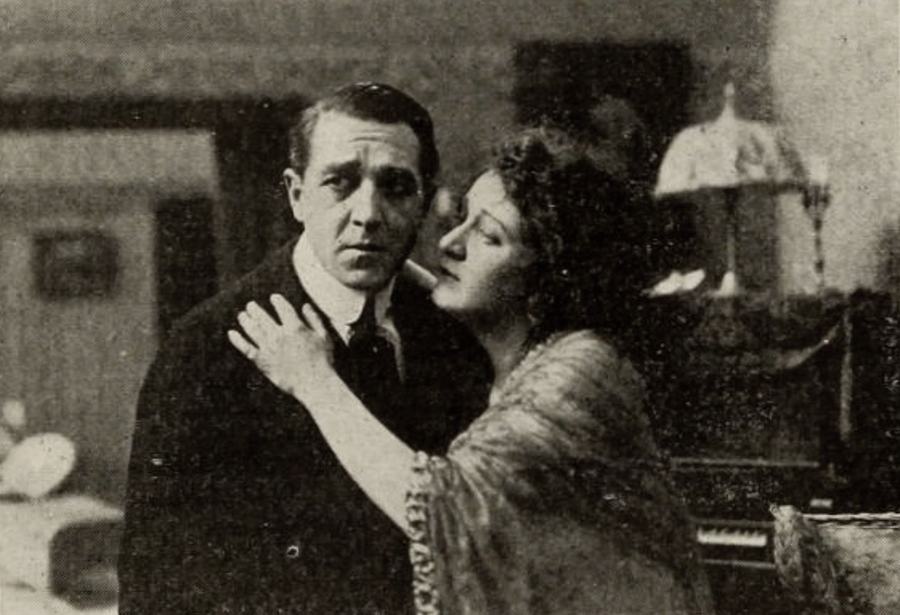
The film's climax is a masterclass in tension and resolution. Elara's meticulous unveiling of Croft's perfidy is a triumph of intellect and resilience, culminating in Julian's exoneration. However, 'Love's Toll' wisely refrains from offering a saccharine, unearned happy ending. The emotional and social 'toll' has been exacted, leaving indelible scars. Julian, though free, remains embittered by Elara's perceived abandonment, a testament to the profound psychological impact of betrayal, even when it is a necessary act of love. Their reunion is not one of immediate, joyous reconciliation but a fraught, tentative encounter, steeped in the bitter residue of their sacrifices. The ambiguous future of their love serves as a powerful, lingering question mark, leaving the audience to ponder the true cost of devotion and the enduring scars it can leave. This nuanced ending elevates 'Love's Toll' beyond mere melodrama, imbuing it with a depth that resonates long after the final frame.
The ensemble cast of 'Love's Toll' delivers a masterclass in silent film acting, each performer contributing to the rich emotional tapestry of the narrative. Inez Buck, as Elara Vance, is simply captivating. Her portrayal is a delicate balance of fragility and fierce determination. Every tilt of her head, every wide-eyed glance, every subtle tremor of her hand communicates volumes of inner turmoil and unwavering resolve. She embodies the quiet strength of a woman navigating an impossible situation, her performance a beacon of stoicism and grace. It's a testament to her skill that even without dialogue, her character's journey from hopeful lover to sacrificing heroine feels utterly authentic and deeply moving.
Richard Buhler, as Julian Thorne, complements Buck's performance with a powerful portrayal of a man unjustly wronged. His early scenes with Elara sparkle with genuine affection, making his later descent into despair all the more tragic. Buhler masterfully conveys Julian's artistic sensitivity, his burgeoning ambition, and the crushing weight of false accusation and perceived betrayal. His expressions of anger, sorrow, and eventual embitterment are raw and visceral, drawing the audience into his plight. The chemistry between Buck and Buhler, though often strained by the narrative's demands, is palpable, making their separation and fraught reunion all the more impactful.
Garda Polotskova's Lady Beatrice is a formidable presence, a perfectly sculpted embodiment of aristocratic rigidity and desperation. Polotskova eschews caricature, instead imbuing Beatrice with a cold, calculating intelligence driven by a deep-seated fear of social decline. Her performance provides a vital counterpoint to the youthful passion of Elara and Julian, representing the unyielding forces of tradition and expectation. Similarly, Crauford Kent's Lord Ashworth is not merely a villain but a figure of tragic consequence, a man who, despite his wealth, is emotionally impoverished, a pawn in Lady Beatrice's grand scheme. His quiet, almost melancholic demeanor adds a layer of complexity to a character who could easily have been one-dimensional.
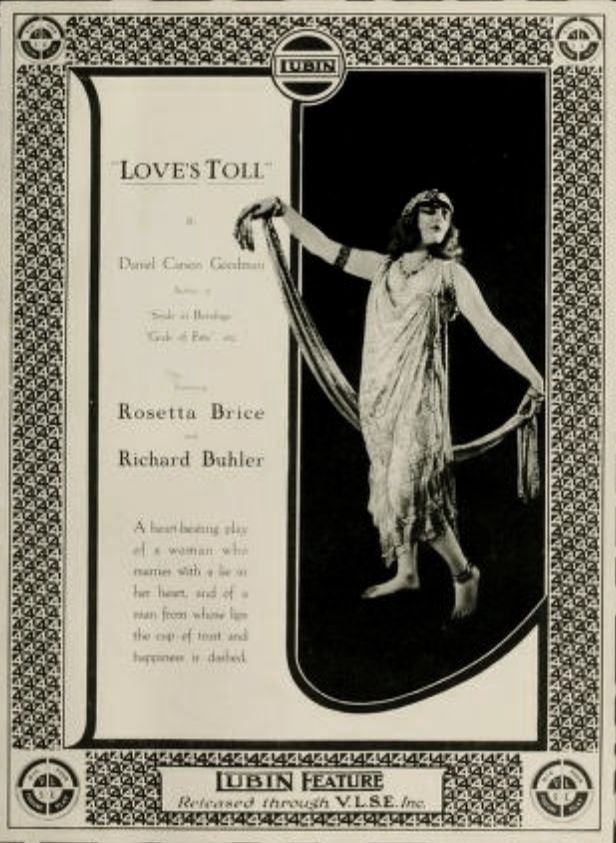
The supporting cast also deserves commendation. William H. Turner's Mr. Silas Croft is a wonderfully slimy antagonist, his every smirk and furtive glance oozing with deceit. Mary Carr's Martha provides much-needed comic relief, her loyalty and quirky charm a bright spot in the darker moments of the film. Clara Lambert as Miss Evelyn Reed skillfully portrays a subtle rival, her ambition masked by a veneer of social propriety. Even the brief appearances of Karva Poloskova and Betty Brice contribute to the richly textured social milieu, painting a vivid picture of the world Elara inhabits.
Daniel Carson Goodman's screenplay for 'Love's Toll' is a masterclass in narrative construction for the silent era. Goodman, known for his ability to weave intricate plots with deep emotional undercurrents, crafts a story that is both dramatically compelling and psychologically rich. The pacing is deliberate, allowing moments of quiet contemplation to breathe before accelerating into bursts of intense drama. The intertitles, so crucial in silent cinema, are used judiciously, providing necessary exposition without interrupting the flow of the visual storytelling. Goodman understands that in silent film, the camera is a character, and the visual language must convey as much, if not more, than any written word.
While the director's name isn't provided, their vision clearly aligns with Goodman's intricate script. The direction is assured, demonstrating a keen understanding of how to utilize mise-en-scène, lighting, and performance to maximum effect. The use of close-ups to capture the nuances of emotion, particularly in Inez Buck's expressive face, is particularly effective. The framing often emphasizes the isolation of characters, or the societal pressures bearing down upon them, using architecture and crowded rooms to visually communicate emotional states. For instance, the grand, imposing sets of Lady Beatrice's mansion, perhaps reminiscent of the stately, yet confining, environments seen in The Vicar of Wakefield, serve as a constant visual reminder of the societal cage Elara finds herself in.
The cinematography, though perhaps constrained by the technological limitations of the era, is remarkably effective. The play of light and shadow is utilized to great dramatic effect, particularly in scenes depicting Julian's despair or Elara's clandestine investigations. The costumes are period-appropriate and meticulously designed, reflecting the characters' social standing and inner lives. Elara's attire, for example, subtly shifts from the softer, more romantic gowns of her early romance to the more rigid, formal dresses she wears as Lord Ashworth's fiancée, mirroring her emotional journey and the sacrifices she makes. This attention to visual detail enhances the immersive quality of the film, making the world of 'Love's Toll' feel tangible and lived-in.
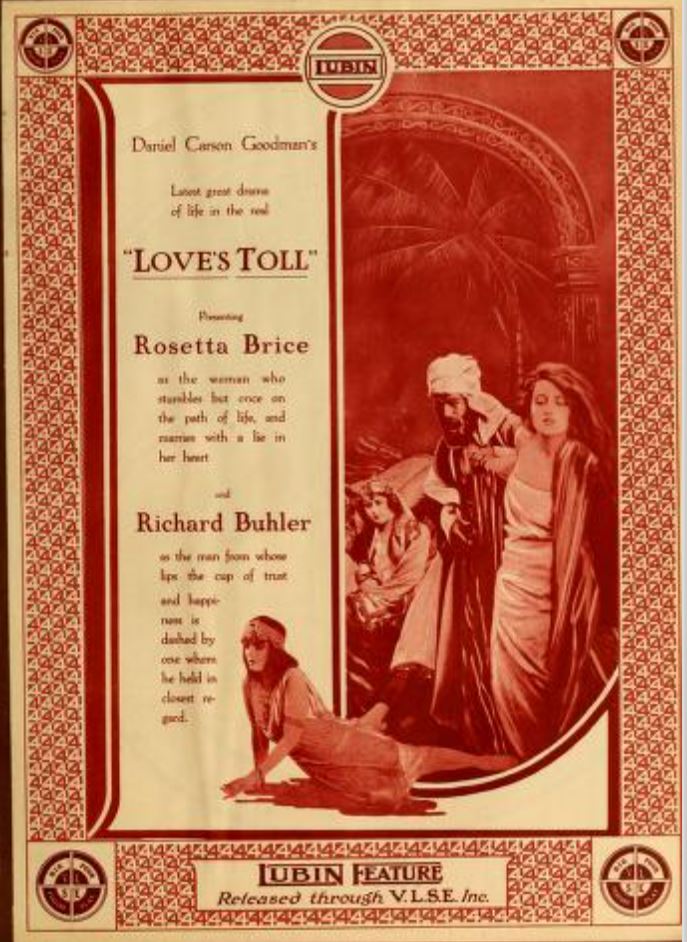
'Love's Toll' is a film that resonates with many of the thematic concerns prevalent in silent cinema, particularly those exploring social injustice and the plight of individuals against overwhelming societal forces. Its focus on a woman's sacrifice for the man she loves, and her cunning efforts to navigate a corrupt system, draws parallels to the strong female protagonists often found in dramas like Within the Law, where heroines fight for justice against formidable odds. The film's exploration of class divides and the consequences of ambition gone awry also aligns with the social realism found in works such as The Barricade, which often depicted the struggles of the working class or those caught in the machinations of the wealthy elite.
The pervasive sense of melodrama, while characteristic of the era, is handled with a restraint that prevents it from descending into caricature. The emotional stakes are always high, but the performances ground the drama in a believable reality. The film's ability to evoke profound sorrow and fleeting hope without a single spoken word is a testament to the power of pure visual storytelling. It reminds us of an era when narrative clarity and emotional depth were paramount, achieved through expressive acting, well-designed sets, and thoughtful direction. The silent era, often unfairly dismissed by modern audiences, produced works of immense artistry, and 'Love's Toll' stands as a proud example of this legacy.
Comparing it to another film dealing with the harsh realities of unrequited or thwarted love, such as Far from the Madding Crowd, we see a shared commitment to portraying the complexities of human relationships against a backdrop of unforgiving circumstances. While one is pastoral and the other urban, both films delve into the profound impact of choice and consequence on the human heart. The emotional intensity, the dramatic sacrifices, and the lingering sense of bittersweet resolution in 'Love's Toll' connect it directly to the emotional resonance found in such literary adaptations.
Furthermore, the subtle political undertones regarding the corruption within the legal or business systems, as embodied by Croft's character, tie 'Love's Toll' to other contemporary dramas exploring moral quandaries and the pursuit of justice. Films like Fear Not or even the more overtly action-oriented The Target, though different in genre, share a common thread of heroes or heroines battling against powerful, corrupt forces. This thematic consistency across various films of the period underscores a societal concern with justice and integrity, a universal struggle that 'Love's Toll' addresses with particular grace and emotional depth.
In summation, 'Love's Toll' is far more than a mere historical curiosity; it is a powerful, emotionally charged drama that speaks to universal themes of love, sacrifice, duty, and the often-crushing weight of societal expectations. Daniel Carson Goodman's screenplay is a meticulously constructed narrative, brought to vibrant life by a cast whose performances transcend the limitations of the silent medium. Inez Buck's Elara Vance is an unforgettable heroine, her quiet strength and profound sacrifice leaving an indelible mark. Richard Buhler's Julian Thorne is equally compelling, his journey from hopeful artist to embittered survivor forming the film's tragic counterpoint.
The film's enduring power lies in its refusal to offer easy answers or simplistic resolutions. The 'toll' exacted by love is not merely financial or social; it is deeply emotional, leaving scars that even time may struggle to heal. The ambiguous ending, where reconciliation is hinted at but not fully realized, lends the film a profound sense of realism and melancholy that elevates it above many of its contemporaries. It forces the audience to confront the harsh truth that even the noblest sacrifices can come with a lasting price, and that love, while powerful, cannot always erase the pain of the past.
For those who appreciate the artistry and emotional depth of silent cinema, 'Love's Toll' is an essential viewing experience. It is a film that reminds us of the profound capabilities of visual storytelling, demonstrating how a compelling narrative, supported by stellar performances and thoughtful direction, can resonate across generations, its silent voices speaking volumes about the human condition. It stands as a poignant reminder that the greatest stories often revolve around the most profound sacrifices, and that the echoes of love's toll can reverberate long after the final credits roll, prompting reflection on the enduring costs and rewards of the human heart.
IMDb 6.3
1922
Community
Log in to comment.