DbcultAccessing Vault...
Cult Review
Senior Film Conservator
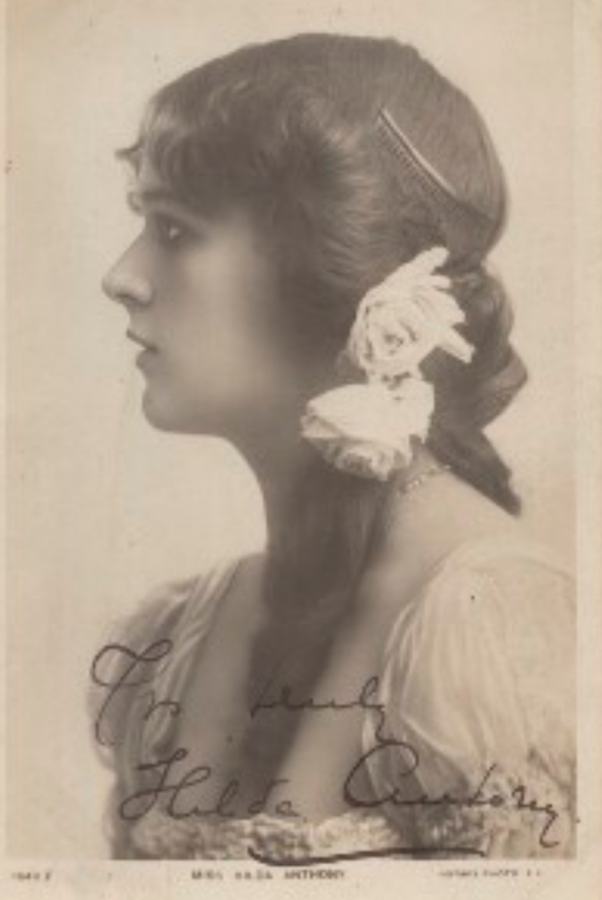
Married Life (1921) arrives as a haunting relic of pre-talkie cinema, its silent language speaking volumes about the human condition. Directed with a deft hand by J.B. Buckstone and Adrian Johnstone, the film transcends its era with a script that crackles with moral ambiguity. At its center is the MP’s adopted daughter, portrayed with raw vulnerability by Peggy Hathaway, whose emotional arc is a masterclass in physical acting. Her love affair with the financier’s son—Gordon Begg’s character—unfolds like a slow-motion train wreck, their chemistry charged with both tenderness and foreboding.
The financier himself, a figure of calculated menace played by Roger Tréville, embodies the film’s central paradox: a man whose public persona as a pillar of industry masks a private life built on exploitation. His blackmail of the MP—a subplot steeped in class tension—serves as the catalyst for the narrative’s unraveling. What begins as a tale of forbidden love quickly spirals into a meditation on the fluidity of identity. When the daughter’s biological paternity is revealed, the screenwriters J.B. Buckstone and Adrian Johnstone refuse to offer easy resolutions, instead letting the characters grapple with the dissonance between societal expectations and biological truths.
Visually, Married Life is a study in contrasts. The use of chiaroscuro in scenes depicting the financier’s shadowy dealings creates an atmosphere of claustrophobic tension, while the opulent but sterile interiors of the MP’s estate symbolize the fragility of respectability. The camera work, though rudimentary by modern standards, is purposeful—tight close-ups capture the micro-expressions of guilt, desire, and defiance that words cannot convey. Notably, the film’s pacing is deliberate, allowing the audience to savor the psychological weight of each revelation. A standout sequence involves a tense exchange between the daughter and financier in a dimly lit study; the interplay of candlelight and darkness mirrors the characters’ moral uncertainty.
Comparisons to Her Father's Son (slug: her-fathers-son) are inevitable, given both films’ exploration of paternity and societal hypocrisy. However, Married Life distinguishes itself through its unflinching examination of how secrets corrode not just individuals but entire families. The daughter’s journey—from innocent affection to disillusioned recognition of her birth father’s duplicity—parallels the broader theme of performative identity, a motif also present in On Trial (slug: on-trial), though here it is rendered with greater emotional nuance.
What elevates Married Life beyond its peers is its willingness to leave questions unanswered. The finale, devoid of romantic closure or moral triumph, leaves the audience in a state of uneasy reflection. The daughter’s final gaze at the financier—equal parts sorrow and resignation—serves as a poignant coda, a visual ellipsis that lingers long after the credits. This ambiguity, rather than a narrative flaw, is the film’s greatest strength, inviting viewers to interrogate their own complicity in the systems of power and deceit it lays bare.
The supporting cast, including Dorothy Fane as the MP’s wife and Hugh Higson as her conflicted husband, adds layers of complexity to the central drama. The MP’s internal struggle—torn between protecting his family’s reputation and confronting the financier’s threats—is rendered with understated dignity, a testament to Higson’s subtle expressiveness. Meanwhile, the financier’s son, caught in the crossfire of his father’s machinations and his lover’s turmoil, is a study in moral ambiguity, his performance by Begg oscillating between charm and self-destruction.
Technically, the film’s score—a sparse, string-heavy accompaniment—amplifies the tension without overpowering the visual storytelling. The intertitles, though sparse, are meticulously crafted, their poetic phrasing (“The truth is a blade that cuts both ways”) underscoring the film’s literary sensibilities. In an era when dialogue was absent, Married Life demonstrates the power of suggestion, using visual metaphor and expressive acting to convey a depth of meaning that transcends its medium.
For modern audiences, the film’s most striking element is its prescient handling of identity politics. The daughter’s dual heritage—adopted yet biologically bound to the financier—prefigures contemporary debates about nature versus nurture and the construction of self. This theme is echoed, though with a darker twist, in Die Bestie im Menschen (slug: die-bestie-im-menschen), where familial ties are similarly weaponized. Yet Married Life avoids the overt symbolism of its German counterpart, opting instead for a more restrained, almost naturalistic approach.
The film’s historical context—shot during a period of rapid social change in Britain—adds another layer of resonance. The MP’s adherence to traditional values and the financier’s capitalist machinations can be read as a microcosm of the era’s shifting power dynamics. This socio-political subtext is further enriched by the casting of Beatrix Templeton in a brief but memorable role as a suffragette pamphleteer, her presence a subtle nod to the era’s feminist undercurrents.
Despite its age, Married Life remains a compelling watch for cinephiles and newcomers alike. Its exploration of love as both a redemptive and destructive force feels startlingly modern, a testament to the timelessness of its emotional core. For those seeking a bridge between the silent era’s theatrical traditions and the more introspective narratives of later decades, this film is an essential viewing. It is a work that challenges the notion that older films are relics, instead proving that the questions it raises—about identity, morality, and the price of truth—are as urgent today as they were a century ago.
IMDb —
1934
Community
Log in to comment.