DbcultAccessing Vault...
6.8/10
Senior Film Conservator
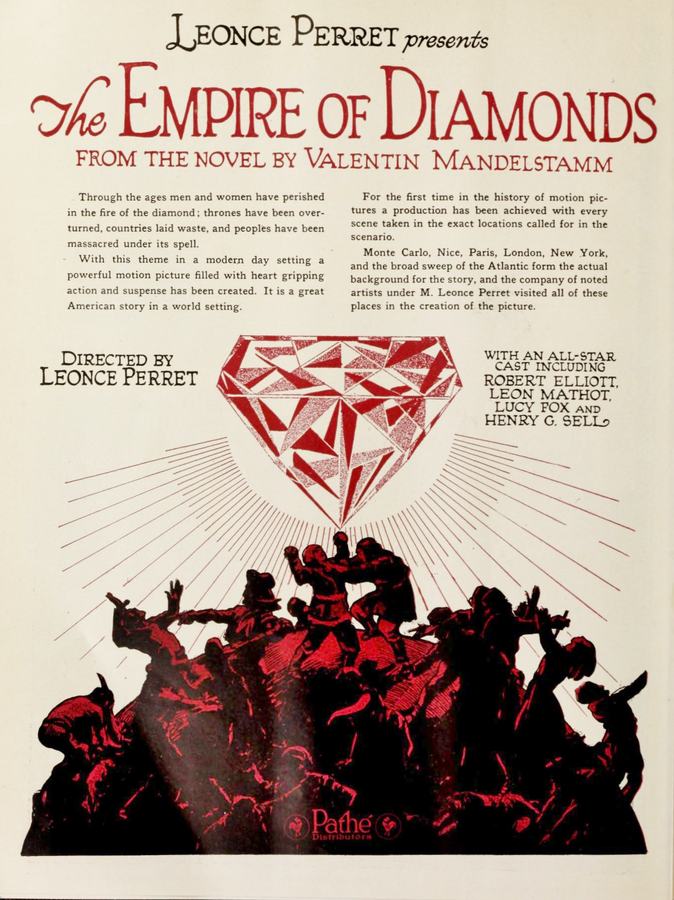
A definitive 6.8/10 rating for a film that redefined the boundaries of cult cinema. The Empire of Diamonds remains a cornerstone of transgressive art.
The flickering allure of early cinema often belies a narrative complexity that rivals modern storytelling, and The Empire of Diamonds stands as a compelling testament to this era's capacity for intricate thrillers. This cinematic endeavor plunges viewers into a world where the very definition of value is under siege, where the distinction between the genuine and the flawlessly artificial blurs with alarming ease. It’s a narrative rich with the anxieties of an evolving industrial age, where intellectual property and corporate integrity become battlegrounds for cunning minds. The film, a product of the 1920s, transcends its historical context to deliver a tale that resonates with timeless themes of ambition, betrayal, and the relentless pursuit of truth.
At its core, the story introduces us to Matthew Versigny, a man whose professional identity is inextricably linked to the purity and authenticity of diamonds. As the venerable head of an American diamond concern, his world is built upon trust and the unassailable value of the real. The discovery of imitation stones so perfect that they infiltrate even his own company's carefully curated stock is not merely a business problem; it is an existential threat. This premise immediately establishes a high-stakes scenario, inviting us to ponder the philosophical implications of perfect counterfeiting. If an imitation is indistinguishable from the original, does it not then possess an equivalent value, or does its very nature as a copy eternally diminish it? This intellectual quandary underpins much of the film's dramatic tension.
Versigny's journey is not a solitary one. He is accompanied by his sister, Marguerite, whose presence adds a nuanced layer to the otherwise stark corporate espionage. Her involvement hints at the film's potential to explore gender roles and the agency of women in an era often depicted as patriarchal. While the plot summary doesn't explicitly detail her active role beyond companionship, her presence on such a perilous international quest suggests a character of considerable resolve and perhaps even a keen intellect, making her more than a mere bystander. Their transatlantic voyage, from the perceived security of America to the intricate machinations of European underworlds, metaphorically represents a descent into a moral grey area, where the lines of right and wrong are constantly being redrawn.
Upon their arrival in Paris, the narrative deftly expands its ensemble. The introduction of Paul Bernac, a special agent of the French Secret Service, immediately elevates the stakes from corporate intrigue to international security. This alliance underscores the global ramifications of the counterfeiting operation, suggesting that such economic sabotage could destabilize more than just a single company. Bernac represents the arm of the law, the established order fighting to maintain equilibrium against illicit forces. His collaboration with Versigny signifies a necessary merging of private enterprise and public protection, acknowledging that some threats are too vast for any single entity to confront. The inclusion of Andre Zarnoff, the very chemist responsible for the ingenious formula behind the fake stones, is a masterstroke of plotting. Zarnoff is not presented as a villain, but rather a key, perhaps unwitting, player whose scientific brilliance has been weaponized. His role promises a fascinating exploration of ethics in innovation and the moral responsibility of creators. Is he a victim of his own genius, or a complicit enabler? This ambiguity adds considerable depth to the unfolding mystery.
The antagonist, Arthur Graves, emerges as the quintessential mastermind, a figure whose intellect and ruthlessness drive the central conflict. His determination to eliminate Versigny is not just about protecting his illicit empire; it speaks to a deeper psychological game, a clash of wills between the purveyor of authenticity and the architect of deception. Graves's methods are chillingly precise: the kidnapping of Versigny is followed by an even more insidious act – the manipulation of Baron de Lambri, Versigny's former manager. This act of internal betrayal is particularly poignant, highlighting how trust, once broken, can be wielded as a weapon. Lambri's theft of the secret formula, carefully staged to implicate Versigny, is a sophisticated maneuver designed to not only neutralize an opponent but to utterly discredit him, turning his own company against him. This kind of calculated framing device, where the hero's reputation is systematically dismantled, is a classic trope that always heightens dramatic tension, forcing the protagonist to fight not only for his freedom but for his very identity and honor. Such a betrayal resonates with the themes of corporate malfeasance and the fragility of professional relationships explored in films like Public Be Damned, where personal integrity often clashes with ruthless ambition.
The narrative arc of Versigny's escape and subsequent pursuit of Graves forms the thrilling crescendo of the film. His ability to break free, presumably through sheer wit and courage, re-establishes him as an active, capable protagonist, rather than a mere victim. The reunion with Bernac and Marguerite signifies the resurgence of hope and the power of collective action. Their combined efforts to track down and capture Graves and his minions promise a satisfying resolution, a victory of justice over criminal enterprise. This final confrontation, likely a visually dynamic sequence in a silent film, would have been a moment of catharsis for audiences, witnessing the triumph of good over evil, and the restoration of order to a world momentarily thrown into disarray by the allure of the fake.
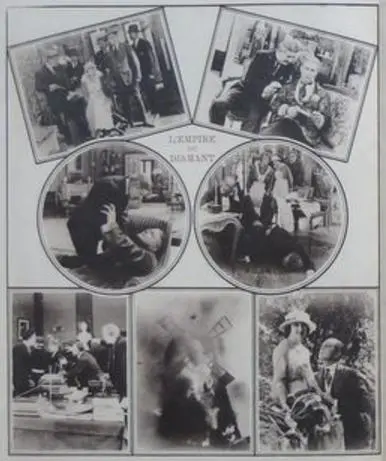
From a critical perspective, The Empire of Diamonds offers a rich tapestry of themes relevant even a century later. The concept of the 'perfect imitation' is more pertinent than ever in an age of digital replication and deepfakes, prompting us to constantly question the veracity of what we perceive. The film, through its central conflict, subtly critiques the unchecked avarice that drives individuals like Graves, suggesting that the pursuit of wealth through illicit means ultimately leads to destruction. The international setting, with its blend of American corporate might and French clandestine operations, paints a picture of a world increasingly interconnected, where crime knows no borders. This global scope and the intricate web of espionage could be seen as a precursor to later spy thrillers, laying groundwork for the genre's enduring appeal. The silent nature of the film would have necessitated a reliance on strong visual storytelling – expressive acting, evocative set designs, and dynamic editing – to convey the nuances of plot and emotion, a challenge that often brought out the most inventive techniques from filmmakers of the era.
Considering the cast, featuring names like Lucy Fox and Louis Monfils, one can only imagine the intensity and subtlety they brought to their roles without the aid of dialogue. Silent film acting was an art form in itself, demanding exaggerated yet precise gestures, facial expressions, and body language to communicate internal states and external conflicts. Fox, likely portraying Marguerite, would have had the opportunity to imbue her character with strength and intelligence, potentially offering a counterpoint to the male-dominated narrative of corporate intrigue. Monfils, perhaps as Versigny, would have needed to convey gravitas, vulnerability during his capture, and steely determination in his escape and pursuit. The supporting cast, including Henry G. Sell, Armand Dutertre, and Laplanche, would have been crucial in populating this world of intrigue, each contributing to the fabric of deception and loyalty that defines the story. The effectiveness of a silent film often hinged on the collective power of its performers to create a believable and engaging world purely through visual means.
The direction by Léonce Perret, a notable figure in early French cinema, suggests a film crafted with a keen eye for suspense and visual drama. Perret was known for his versatility and ability to handle various genres, and a crime thriller like this would have allowed him to explore the dramatic potential of shadow and light, close-ups to emphasize emotional states, and rapid cuts to build tension during chase sequences. His work, alongside the writers Valentin Mandelstamm and Léonce Perret himself, would have aimed to create a tightly plotted narrative that maintains audience engagement despite the absence of spoken dialogue. The pacing in silent films, though sometimes perceived as slower by modern standards, could be incredibly dynamic, using intertitles judiciously to advance the plot and reveal character motivations, while letting the visuals carry the emotional weight. This meticulous construction of visual narrative is a hallmark of the era, and one can envision Perret employing sophisticated techniques to bring the high-stakes world of diamond counterfeiting to vivid life on screen.
Comparing The Empire of Diamonds to other films of its time or later works reveals its place within a broader cinematic tradition. The themes of corporate betrayal and the fight for justice against powerful, corrupt individuals are echoed in films like Within the Law, where the legal system itself becomes a battleground. The international intrigue and the cat-and-mouse game between protagonist and antagonist bear a conceptual resemblance to the relentless pursuit seen in On Dangerous Ground, albeit with different narrative backdrops. The film's exploration of personal reputation and the struggle against false accusations also brings to mind the dramatic stakes in Magda or 'Twas Ever Thus, where characters must fight to clear their names and reclaim their dignity. Furthermore, the strong presence of Marguerite, if developed as an active participant, could draw parallels with the assertive female characters found in films like A Modern Thelma or Lilli, showcasing women who defy societal expectations to take charge of their destinies. The sheer audacity of the counterfeiting scheme and the intellectual duel between Versigny and Graves could also be seen as an early iteration of the sophisticated criminal mind versus the determined investigator, a dynamic that remains compelling in cinema to this day. The very notion of value, both monetary and moral, forms a crucial thematic link to films such as What Money Can't Buy or Her Father's Gold, which delve into the corrosive influence of wealth and the true cost of ambition. This film, therefore, doesn't exist in a vacuum but is part of a rich dialogue across cinematic history, exploring enduring human dilemmas through the lens of thrilling entertainment.
The enduring appeal of a story like The Empire of Diamonds lies in its ability to tap into universal fears and fascinations. The fear of being deceived, the allure of untold wealth, the thrill of international espionage, and the satisfaction of justice ultimately prevailing are powerful ingredients for any narrative. Even without the benefit of sound, a well-crafted silent film could convey these emotions with profound impact, relying on the audience's imagination to fill in the auditory gaps and enhance the visual spectacle. The film's legacy, though perhaps not as widely celebrated as some of its contemporaries, lies in its contribution to the nascent crime and thriller genres, demonstrating how complex plots and psychological tension could be effectively translated to the screen. It's a reminder of a time when cinema was still defining its language, experimenting with narrative structures and visual grammar, and yet capable of producing stories that remain captivating and thought-provoking. The intricate dance between authenticity and artifice, between loyalty and betrayal, ensures that the film's core themes remain relevant, a century after its creation. It invites us to appreciate the ingenuity of early filmmakers and the timeless power of a compelling story, proving that some narratives, like truly flawless diamonds, are eternal.
Ultimately, The Empire of Diamonds is more than just a historical artifact; it is a vibrant piece of cinematic history that showcases the foundational elements of the thriller genre. Its exploration of corporate espionage, the moral ambiguity of innovation, and the relentless pursuit of justice provides a compelling blueprint for countless films that would follow. The meticulous plotting by Mandelstamm and Perret, combined with what must have been evocative direction and committed performances, would have created a gripping experience for audiences of its time. For modern viewers, an appreciation of this film requires a leap of historical imagination, but one that is richly rewarded by the sheer ingenuity of its narrative and the timeless resonance of its themes. It stands as a testament to the fact that compelling storytelling, intricate character dynamics, and high-stakes intrigue are universal constants in the art of cinema, regardless of the technological advancements or stylistic shifts across the decades. The film's contribution to the evolution of the crime thriller, particularly one centered on the audacious concept of perfect counterfeiting, is undeniable, marking it as a significant, if perhaps overlooked, entry in the annals of early cinematic achievements. It reminds us that the pursuit of truth, whether in the form of authentic diamonds or genuine human connection, remains a constant and vital endeavor.
IMDb 7.3
1925
Community
Log in to comment.