DbcultAccessing Vault...
Cult Review
Senior Film Conservator
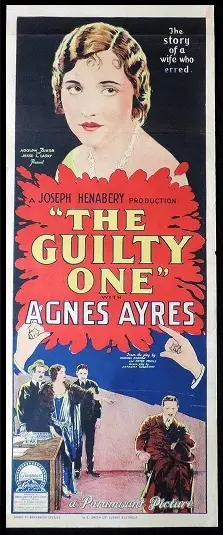
The silent era often grappled with the ephemeral nature of reputation, yet few films from the mid-twenties articulate the fragility of social standing with the surgical precision of The Guilty One. This 1924 drama, directed with a keen eye for domestic claustrophobia, serves as a poignant reminder that the 'Jazz Age' was not merely about flappers and gin; it was a period where the newly minted tabloid press could dismantle a life with a single headline. Starring the luminous Agnes Ayres, the film navigates the treacherous waters of marital loyalty and the unintended consequences of feminine ambition in a patriarchal framework.
At the heart of the narrative is Irene, portrayed by Ayres with a nuanced blend of vulnerability and steel. Unlike the more passive heroines found in contemporary works like The Door Between, Irene is a woman of action. Her fatal flaw is her belief that she can navigate the corrupt corridors of power—represented by the 'man-about-town' Davies—without becoming tainted by the association. The plot hinges on a classic irony: her efforts to secure an architectural contract for her husband, Donald (Cyril Ring), are the very things that threaten to destroy the home he wishes to build.
The screenplay, a collaborative effort by Michael Morton, Anthony Coldeway, and Peter Traill, expertly ratchets up the tension. When Graves, the blackmailing publisher, enters the fray, the film shifts from a domestic drama into a proto-noir mystery. Graves is the personification of the era's anxieties regarding the 'yellow press.' His character represents a predatory gaze that turns private interactions into public spectacles, a theme that resonates even more strongly today in our age of digital surveillance. Comparing this to the social hierarchies in His House in Order, one sees a more aggressive critique of how the media facilitates social ruin.
Visually, The Guilty One utilizes the high-contrast lighting typical of the Paramount prestige productions of the time. The shadows in Davies' apartment are long and ominous, foreshadowing the violence to come. When Davies is murdered, the film avoids the grandiosity of a theatrical stage play, opting instead for a gritty, grounded realism that was beginning to take root in American cinema. The suspicion cast upon Donald and Irene’s brother, Philip (Stanley Taylor), creates a double-bind of familial loyalty that tests the audience's sympathies.
Agnes Ayres delivers a performance that stands in stark contrast to her earlier, perhaps more sentimental roles. Here, she is required to play a woman under siege, not just from the law, but from the judgmental eyes of her own social circle. Her transition from the supportive wife to the amateur detective in the film’s final act is handled with remarkable fluidity. It is a far cry from the more whimsical nature of films like Playmates; instead, it occupies a psychological space closer to the moral complexities of Youthful Cheaters, where the consequences of one's associations are permanent and devastating.
George Siegmann, as Graves, provides a chilling antagonist. His performance is devoid of the mustache-twirling histrionics often associated with silent villains. Instead, he plays Graves as a businessman of misery, a man who views human lives as mere ink on a page. The scene where Irene extracts the confession from him is the film's piece de resistance. It is a battle of wits that replaces physical violence with psychological leverage. This climax underscores a rare moment in 1920s cinema where a female lead is the primary engine of justice, rather than a prize to be won or a victim to be saved.
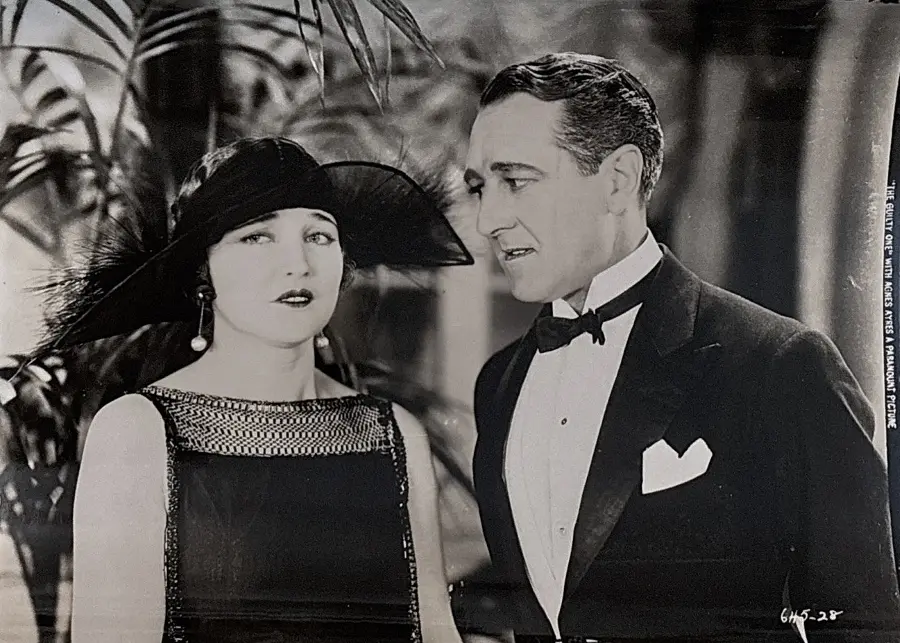
In the broader landscape of 1924, The Guilty One occupies a unique niche. While A Prisoner in the Harem dealt with exoticized melodrama, and The Little Church Around the Corner leaned into moralistic sentimentality, this film remains remarkably cynical about the institutions of law and media. It shares a certain DNA with the French psychological realism found in Le nabab, particularly in its depiction of the 'nouveau riche' and the precariousness of their ascent.
The film also touches upon the theme of the 'wrongly accused,' a staple of the era that would later be perfected by Hitchcock. However, by focusing on the wife's perspective rather than the accused husband's, the writers offer a more complex exploration of guilt. Irene feels 'guilty' not of the murder, but of the social transgression that allowed the murder to be pinned on her loved ones. This internal conflict is what elevates the film above a standard 'whodunit.' It is an exploration of the 'guilty' conscience of a woman who tried to play a man's game by her own rules and nearly lost everything in the process.
The pacing of the film, edited with a rhythmic understanding of suspense, ensures that the 1500-foot reels move with an urgency that belies their age. The use of intertitles is sparse but effective, allowing the actors' facial expressions to carry the emotional weight. This is particularly evident in the scenes involving the 'man-about-town' Davies, played by Crauford Kent. Kent imbues the character with a superficial charm that masks a hollow interior, making his eventual demise feel like the inevitable conclusion of a life built on sand.
Furthermore, the film's production design reflects the burgeoning Art Deco movement, providing a sharp, geometric backdrop to the chaotic human emotions on screen. The architectural motifs—Donald’s blueprints, the rigid lines of the courtroom, the cluttered, claustrophobic office of Graves—serve as visual metaphors for the structures that both support and imprison the characters. This attention to detail is something often missed in lower-budget contemporaries like Taxi Please or Wanted: A Baby.
Ultimately, The Guilty One is a sophisticated entry in the silent film canon that deserves a modern reappraisal. It tackles themes of media manipulation, gendered agency, and the corruption of the American Dream with a maturity that was ahead of its time. While some of the plot contrivances may seem dated to the modern eye, the core emotional truth of the film—the lengths to which one will go to protect a loved one—remains universal. It stands as a testament to Agnes Ayres' range as an actress and the collaborative brilliance of its writing team.
As we look back at the cinematic output of the early twenties, it is easy to get lost in the spectacle of epics like the National Red Cross Pageant. Yet, it is in these tightly wound domestic thrillers that we find the most honest reflections of the era's soul. The Guilty One is not just a story of a murder; it is a story of the death of innocence in the face of a burgeoning, interconnected, and often cruel modern world. It is a film that reminds us that while the 'guilty' may eventually be caught, the scars left by the accusation are rarely fully healed.
Critic's Note: For those interested in the evolution of the 'fallen woman' trope in silent cinema, compare Irene's journey here with the protagonist in Miyama no otome or the social struggles in The Princess of Patches. The Guilty One offers a significantly more empowered resolution than its peers.
IMDb —
1927
Community
Log in to comment.