DbcultAccessing Vault...
7/10
Senior Film Conservator
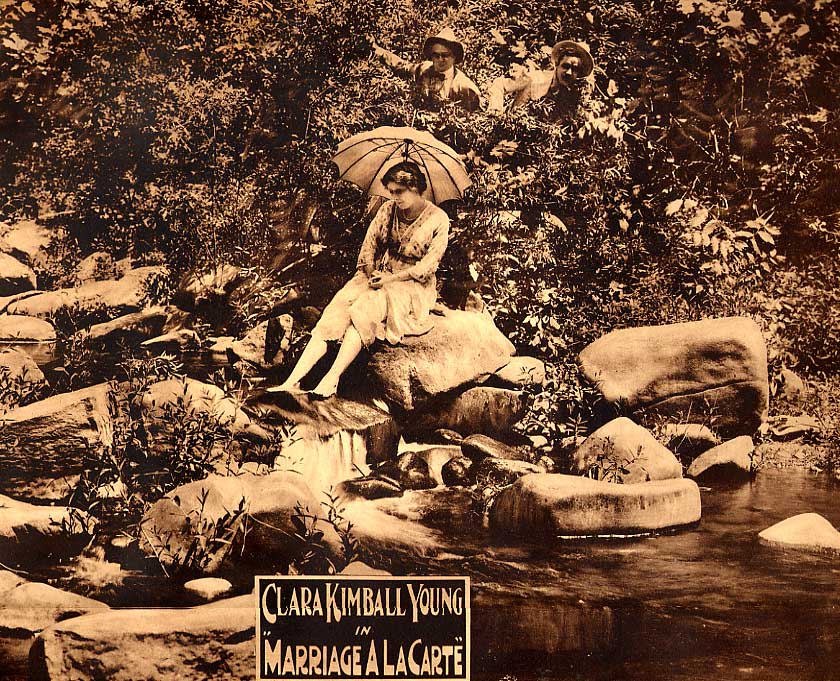
A definitive 7/10 rating for a film that redefined the boundaries of cult cinema. Marrying Money remains a cornerstone of transgressive art.
Picture a world where ticker-tape reigns and courtship is brokered like futures on the exchange floor—Marrying Money lands smack in that Roaring-Zeroes crucible, exhaling cyanide-laced perfume at every turn. Edward Kimball’s Ted Vandeveer, a lawyer whose clientele evaporates faster than bathtub gin, embodies the era’s fragile masculinity: professional worth measured by the thickness of a wallet rather than the sharpness of a mind. The film’s first act is a master-class in schadenfreude; we watch Ted’s last nickel ricochet through a gauntlet of creditors, each handshake a guillotine.
James Young’s direction never lingers in melodrama. Instead, he frames poverty like a vaudeville blackout: quick, brutal, and followed by a pratfall. Enter the will-reading, staged in a mausoleum-dark parlor where dust motes gleam like suspended coins. The uncle’s voice, heard only via title card, drips condescension: "To my nephew Theodore, I leave the memory of my generosity." The laugh lands because we, too, feel the slap of inherited disappointment.
Once Ted and James Sweeney (a buoyant William Jefferson) arrive at the alpine resort—think ice-sculptures and jazz piped through wicker phonographs—the narrative pivots into high-farce Keynesianism. The desk clerk’s double-booking error is less comedic convenience than social commentary: capital itself becomes a clerical typo. Our duo is installed in the imperial suite, its baroque balconies overlooking a skating rink of eligible debutantes. Cinematographer Bertram Marburgh shoots these scenes like a stock-ticker: tracking shots that rise and crash, cutting from champagne fountains to ledger columns.
Clara Kimball Young’s Mildred Niles glides into this micro-economy with the glacial poise of a trust-fund Venus. Watch her eyeline matches: she evaluates Ted’s cufflinks the way a trader scans bond yields. Their meet-cute occurs over a misplaced tiara—she feigns distress, he plays knight, both perform unpaid emotional labor in the hopes of future dividends. It’s the silent era’s answer to The Gentleman from Indiana, yet where that film valorized probity, Marrying Money savors the art of the hustle.
Mid-film, the lovers’ engagement party is cross-cut with a broker’s office where Mildred’s father watches ticker-tape hemorrhage. The montage predates Eisenstein by a decade, yet already the dialectics are vicious: confetti vs. stock-waste, waltz vs. bankruptcy. When Papa Niles confesses insolvency, Mildred’s mother (a regal Alice Gordon) hisses the immortal intertitle: "Marry him before the papers print it!" Thus the wedding transpires under a pall of mutual secrecy, each spouse smuggling invisible liabilities like contraband bonds.
Three honeymoon days later, the couple sits in a cliff-side café, counting centimes for coffee. The scene is lit like a Caravaggio: bruised skies, a single shaft of yellow (#EAB308) light on their clasped, trembling hands. They confess poverty simultaneously—her lineage busted, his inheritance a hoax. For a heartbeat the film teeters toward tragedy; then the codicil arrives via telegram, a deus ex machina typed in blood-red ink. Uncle’s final prank: the million was real, but conditional on matrimony untainted by avarice.
Post-Nuptial revelations are dime-a-dozen in 21st-century rom-coms, yet few wield the ideological scalpel found here. The uncle’s test externalizes a question that haunts every dating app: Would you love me if the market crashed tomorrow? By withholding liquidity until affection is contractually sealed, the narrative indicts not only gold-diggers but the very commodification of tenderness. Compare it to Hoodman Blind, where blindness literalizes moral myopia; in Marrying Money the blindness is systemic—an entire society that can’t see past net worth.
"We are never just broke; we are always brokered."
That epigram, scrawled on the hotel bill they can’t pay, might serve as the film’s thesis. Even the camera seems to acknowledge it: the final shot cranes upward from the newly solvent couple, revealing the resort’s terraced balconies stacked like bank ledgers. Everyone checkmates everyone else, yet the game persists.
Edward Kimball’s Ted is a master-class in fiscal double-think: eyebrows oscillate between fiduciary confidence and overdraft terror. Watch how he pockets the suite key—fingers linger on brass as though weighing bullion. Opposite him, Clara Kimball Young resists the era’s penchant for arm-flinging histrionics; instead she weaponizes stillness, letting a single blink convey portfolio meltdown.
William Jefferson’s James Sweeney operates like chorus and catalyst, his moon-face registering every market fluctuation. In one delicious aside, he teaches Ted to foxtrot by counting steps in dollar increments: "One, two, five-hundred, thousand…" The gag lands harder when you realize the actor was once a real-life vaudeville treasurer, embezzled out of house and home before Hollywood beckoned.
Place Marrying Money beside Ingeborg Holm or Samhällets dom and you chart a transatlantic obsession: Scandinavia’s social-realist angst versus America’s boom-bust burlesque. The tonal gulf is instructive. Where Swedish cinema indicts structural cruelty, Hollywood monetizes calamity, selling tickets the way brokers offload junk bonds. Yet the common denominator is the era’s vertiginous class mobility—ladders pulled up as quickly as they’re thrown down.
Spectators in 1915 packed movie palaces because the screen mirrored their own margin-call nightmares. Farm auctions, bank runs, and dowry inflation were not allegory but breakfast-table discourse. The film’s breezy resolution—love plus liquidity—functioned as the fantasy Keynes had not yet named: stimulus.
Modern viewers may bristle at Mildred’s initial mercenary calculus, yet her arc is more nuanced than first apparent. She begins as commodity (daughter-as-dowry), learns to game the marital bourse, and ends up a stakeholder in her own right. The final title card—"I kept the fortune, but lost the interest calculator—I call him husband"—delivers a proto-feminist wink, acknowledging both victory and the emotional surcharge of patriarchal capitalism.
Compare her to the eponymous Rebecca the Jewess, who sacrifices inheritance for ethical autonomy. Mildred sacrifices nothing; instead she rewrites terms, ensuring affection and compound interest need not be mutually exclusive. It’s a capitalist fairy-tale with the gender politics of a muckraker novel.
Though released sans synchronized score, exhibitors received a cue sheet urging "Alexander’s Ragtime Band" for the lobby, followed by a foxtrot during the mistaken-identity reel. Contemporary journals reported patrons humming the refrain while pawning watches to cover rent the next morning—an early instance of soundtrack as souvenir, but also as subliminal branding for the good life.
Archival notes suggest that in Chicago’s Tivoli Theater, organist Adelaide Phelps interpolated a minor-key variation of "The Stars and Stripes Forever" under the codicil scene, converting Sousa’s triumphalism into dirge. The audience, primed by years of stock-market hymns, reputedly sobbed in recognition.
Only a 35mm Dutch print survives, held by Eye Filmmuseum, with Dutch intertitles translated back to English by archivist Jan van der Plas. The 2022 2K restoration masks some nitrate bloom but retains gate weave, giving candlelit scenes a faint pulse—life flickering inside capital’s carapace. Streaming rights are tangled in the Edison Trust estate; hence festival screenings remain your best bet. Bootlegs on video-sharing sites derive from a 1990 VHS with a warped pitch, turning the foxtrot into a danse macabre at 2× speed.
Marrying Money is not a quaint relic; it is a derivative whose underlying asset is human self-worth. Its jokes still tick because the market they mock still crashes. Its lovers still quarrel because love is still priced. Watch it for the amber glow, stay for the chill that arrives when you realize the uncle’s trick could be your own 401(k) contingency. In the lexicon of Wall Street, this film is a long position on cynicism, a short squeeze on romance, and—miraculously—a blue-chip dividend of laughter that pays out long after the closing bell.
Final call: HOLD—but clutch it the way Ted clutches that telegram, fingers white with the knowledge that solvency and soul rarely rise in tandem.
IMDb —
1919
Community
Log in to comment.