DbcultAccessing Vault...
6.8/10
Senior Film Conservator
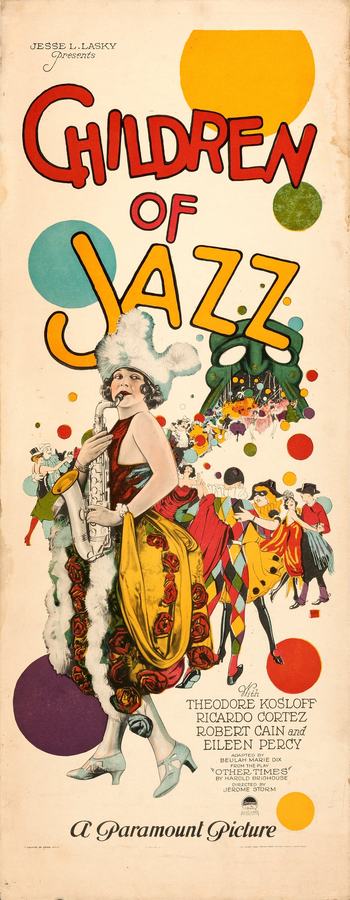
A definitive 6.8/10 rating for a film that redefined the boundaries of cult cinema. Children of Jazz remains a cornerstone of transgressive art.
In the cinematic landscape of 1923, Children of Jazz emerges not merely as a narrative feature but as a cultural barometer for a society teetering between Victorian restraint and the unbridled velocity of the Jazz Age. Directed with a keen eye for the burgeoning 'flapper' archetype, the film serves as a cautionary tale that utilizes the aesthetic of decadence to preach a gospel of sobriety. The screenplay, penned by the formidable duo of Beulah Marie Dix and Harold Brighouse, dissects the fragility of post-war commitments in the face of urban stimulation.
The film opens with a scene of poignant intimacy that stands in stark contrast to the subsequent chaos. Richard Forestall, played with a rugged stoicism by Ricardo Cortez, represents the old-world adventurer—a man defined by action and geographical exploration rather than the superficial conquests of the ballroom. His departure creates a vacuum in the life of Babs Weston (Olive Borden), a space that is rapidly filled by the intoxicating, jagged energy of the 'jazz' lifestyle. In this era, 'jazz' was more than a musical genre; it was a shorthand for moral elasticity, a rhythmic disruption of the traditional social order.
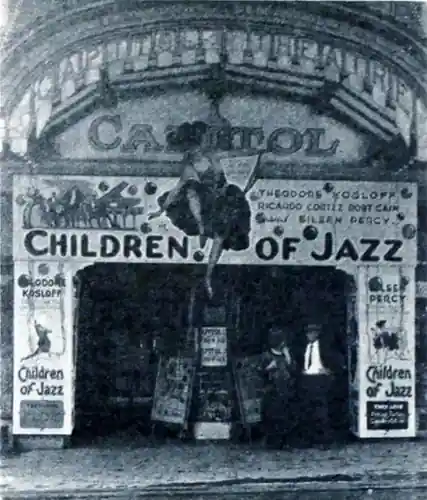
Olive Borden’s portrayal of Babs is a masterclass in silent-era transformation. When we first encounter her, she is a vessel of sincerity, accepting Richard’s ring as a sacred talisman. Yet, as the narrative progresses, her physical and emotional vocabulary shifts. She adopts the restless, bird-like movements associated with the flapper—a performance of constant motion that masks a profound internal stasis. This transformation into a 'victim of jazz' is handled with a nuance that avoids caricature, making her fall from grace feel like a systemic failure of her social circle rather than a singular character flaw.
The film’s critique of the urban socialite is particularly biting. Babs’ engagement to two other men—one of whom is embroiled in the legal limbo of an unfinished divorce—serves as a searing indictment of the era's perceived lack of consequence. This narrative choice echoes themes found in other contemporary works like Nice People, where the youth are depicted as hollow vessels of pleasure-seeking. However, where other films might remain in the drawing-room environment, Children of Jazz chooses a more radical path for its second act.
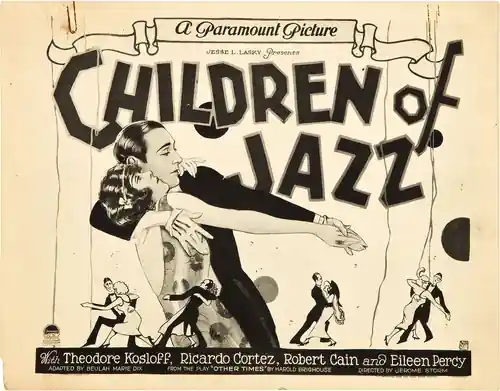
The transition to the Caribbean island marks a significant tonal shift. The cinematography, which previously utilized the claustrophobic, high-contrast lighting of nightclubs, opens up into expansive, sun-drenched vistas. This visual liberation mirrors Richard’s intent. By a twist of fate that borders on the providential—a common trope in silent melodramas like The Stronger Love—Babs and her 'wastrel' friends find themselves at the mercy of the man they once mocked for his earnestness.
Richard’s decision to reform these characters through 'useful occupations' is an intriguing intersection of early 20th-century social engineering and cinematic fantasy. The film meticulously documents the physical toll of labor; we see the manicured hands of the debutantes calloused by agriculture, and the soft, tuxedo-clad men forced to engage with the raw elements of nature. This 'back-to-the-land' philosophy was a prevalent counter-reaction to the industrialization of the 1920s, suggesting that true character is forged in the struggle against the environment, not in the avoidance of it.
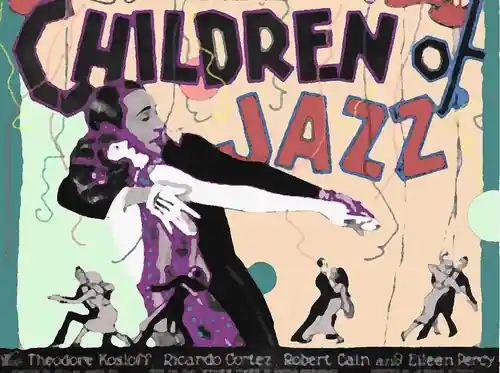
When comparing Children of Jazz to other films of the period, such as the more somber Jomfru Trofast or the gothic-tinged The Monster of Frankenstein, one notices a unique vibrancy. Despite its moralistic underpinnings, the film does not shy away from the allure of the lifestyle it ostensibly condemns. The party scenes are filmed with a kinetic energy that rivals the later work of the German Expressionists, yet the grounding presence of actors like Alec B. Francis and Frank Currier keeps the film anchored in a traditionalist reality.
The inclusion of Theodore Kosloff, a dancer and choreographer of significant renown, adds a layer of physical artistry to the 'thrill-seekers.' His presence highlights the film’s obsession with the body—how it is used for frivolous dance versus how it is used for productive work. This dichotomy is further explored in Sham, but Children of Jazz provides a more visceral resolution through its island setting.
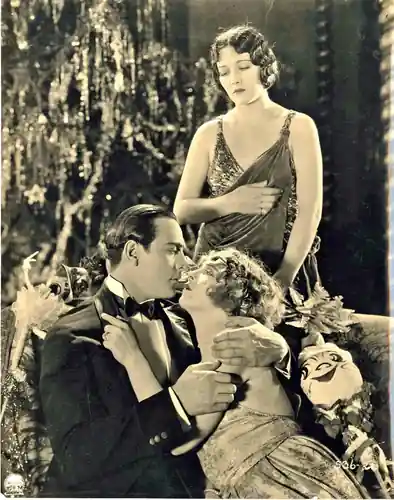
The script by Beulah Marie Dix and Harold Brighouse is surprisingly modern in its dialogue (via intertitles) and character arcs. They manage to imbue Babs with a sense of agency, even when she is being 'reformed.' She is not merely a passive participant in her own salvation; she eventually recognizes the vacuity of her previous existence. This is a far more sophisticated approach than the simplistic moral binary found in Naked Hearts.
The writers also skillfully handle the 'not yet divorced' subplot, which in 1923 would have carried significant scandalous weight. By introducing this element, the film highlights the legal and social chaos that 'jazz' culture allegedly fostered. It positions Richard’s island not just as a place of work, but as a sanctuary of clarity where the messy entanglements of the city can be untied. The island represents a 'clean slate,' a concept explored with varying degrees of success in films like Retten sejrer.
Visually, the film is a feast. The contrast between the 'jazz' environments—shadowy, smoke-filled, and chaotic—and the island—bright, structured, and serene—is a testament to the cinematography of the era. The use of the sea as both a barrier and a bridge is particularly effective. It serves as the physical manifestation of the distance Babs has traveled from her true self. The scenes of the shipwreck and the subsequent survival are handled with a realism that predates the high-octane spectacles like Tell It to the Marines, focusing more on the psychological impact of the disaster than the mechanics of it.
The supporting cast, including Snitz Edwards and Julie Bishop, provide the necessary texture to the group of 'wastrels.' Their individual journeys from resistance to acceptance mirror Babs’, but on a less romantic scale. They represent the broader societal implications of the film's message—that the entire generation, not just the heroine, is in need of a recalibration. This ensemble approach is reminiscent of the historical epics like Attila, the Scourge of God, where the collective fate of a group is as important as the individual protagonist.
Ultimately, Children of Jazz is a fascinating artifact of its time. It captures a moment when cinema was grappling with its role as a moral guide in a rapidly changing world. While its conclusion—that hard work and island isolation can cure the 'jazz' out of someone—might seem quaint by modern standards, the film’s execution is anything but. It is a vibrant, technically accomplished, and deeply felt exploration of the human capacity for change. It stands alongside other transformative narratives like The Student of Prague in its interest in the duality of man, though it trades the supernatural for the sociological.
For the modern viewer, the film offers a window into the anxieties of the 1920s, presented through a lens of high drama and island adventure. It reminds us that the struggle to find meaning in a world of distractions is not a new phenomenon. Whether through the lens of a Western like Keith of the Border or the domestic drama of The Law of Men, silent cinema was always concerned with the preservation of the soul. Children of Jazz remains one of the most stylish and compelling entries in this grand tradition, a syncopated symphony that eventually finds its way back to a harmonious, if arduous, truth.
IMDb —
1921
Community
Log in to comment.