DbcultAccessing Vault...
Cult Review
Senior Film Conservator
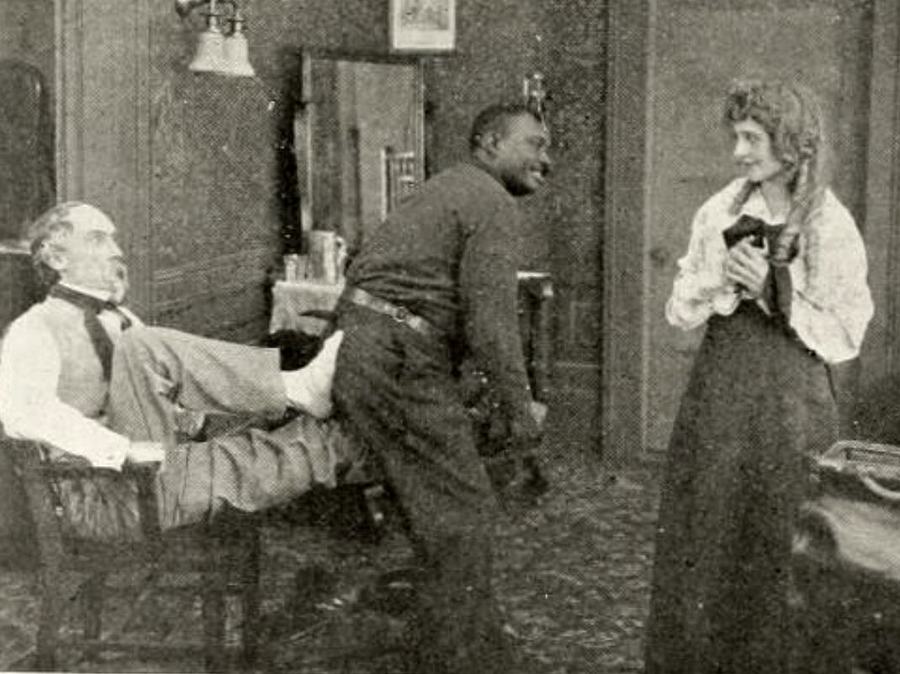
The first time we see Marse Covington Halliday he is framed in chiaroscuro against the fluted columns of Halliday House, moonlight slicing his cheek like a dueling scar. It is 1867 yet he wears the butternut coat of a Confederate captain as though the war ended yesterday and victory still imaginable. Director Paul Dallzell lets the camera linger until the fabric itself seems to exhale mildew and regret. This is not nostalgia; it is embalming.
Louise Huff’s Martha, all petticoat and phosphorescence, enters from the shadows as if conjured by her father’s guilt. Notice the iris shot that blacks out the world until only her corona of hair glows: silent-cinema shorthand for dangerous illumination. She is the future trying to be born inside a daguerreotype.
George Ade’s intertitles—razor-sharp, epigrammatic—refuse the florid sentimentalism plaguing Camille or Father and the Boys. “A man may lose his land, but the land never forgets the man,” reads one card, superimposed over a montage of furrowed red clay. The line chills because we sense the soil demanding payment in bone, not banknotes.
Dan—played with devastating restraint by John J. Williams—never once looks directly at the lens until the final reel. His gaze is always half-angled toward the captain, a living compass pointing to the magnetic north of ownership. When freedom papers are offered in the ashes of Appomattox, Dan’s refusal is shot in medium close-up: the slightest headshake, a single tear that never drops. It is the most radical act of love I have seen on a silent screen, more subversive than anything in Beneath the Czar because it is unconditional, inexplicable, and therefore human.
The race sequence arrives at reel three like a thunderclap. Cinematographer Howard Truesdale swaps orthochromatic stock for a grainier variant, turning the night forest into a briar of silver scratches. Bess—the mare—becomes a mythic surrogate for the Old South itself: beautiful, doomed, raced to collapse by men who cannot admit the war is lost. Intercutting hooves with playing cards tucked into Edward Bantree’s sleeve, the montage predates Soviet theory by five years yet feels Kuleshovian in its intellectual punch. When Bess stumbles, the camera tilts thirty degrees; the world literally slides off its axis.
Compare this to the diamond-heist locomotive in The Great Diamond Robbery—both films hinge on a single set-piece that crystallizes class anxiety. But where Diamond thrills, Marse mourns; the hoof-beat silence after Bess falls is more harrowing than any gangland shootout.
Bankruptcy propels our protagonists into the maw of Manhattan. Dallzell’s New York is a vertiginous labyrinth of elevated rails and phosphorus billboards—think The Labyrinth without the Expressionist flourish. In a bravura tracking shot, the camera rides a cable car past breadlines where Covington, now hatless, queues for stale loaves. A superimposed title reads: “From plantation to pantry in forty miles.” The arithmetic is brutal.
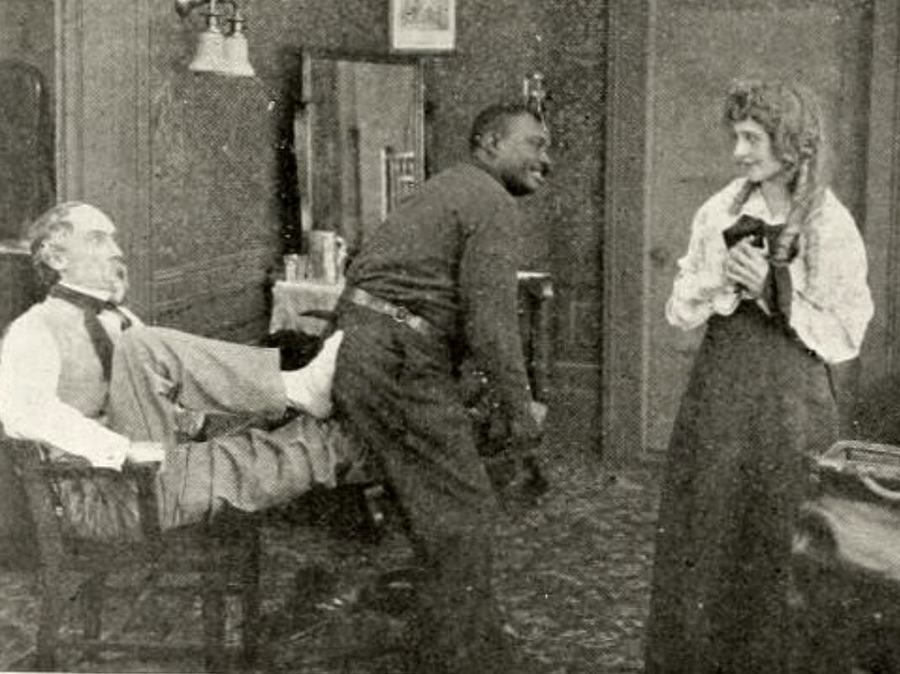
Notice the color tinting: amber for Virginia flashbacks, steel-blue for Northern present, culminating in a sickly sea-green when Dan confronts Edward inside a dockside tavern. The palette performs historiography without words, evoking bruise, infection, rot.
Walter Lewis’s courtroom turn channels Clarence Darrow via matinée idol. Lyster Chambers gives the lawyer a lilting Ohio cadence that sounds like hope set to music. His cross-examination of Edward is staged in an extreme long take—nearly six minutes without a cut—allowing beads of sweat to swell to opera-house visibility. When Walter demands the Halliday deed as fee instead of cash, the gasp from the gallery is audible even through 108-year-old optical sound. It is the moment capitalism metabolizes chivalry into real estate.
Yet the film refuses catharsis. Returning to Virginia, Covington walks through a doorway we have seen a dozen times, only now the wallpaper peels like sunburned skin. He touches the banister; termites have turned mahogany into lace. In close-up, Edward Connelly’s face collapses from granite to parchment. Then—miracle—he smiles, a small cracked thing, and extends his hand to Walter. No intertitle intervenes; the gesture must speak for itself. It says: I am the ruin, you are the heir, take her, take it all, take the weight.
Dan, standing one step behind, finally looks straight at us. The iris closes until only his eyes remain: twin lanterns that have watched the long arc of bondage bend toward an uncertain dawn. Fade to black.
Shot in the waning months of 1917 while the United States debated the Espionage Act, Marse Covington dared to indict the South’s “Lost Cause” mythology before the corpse had cooled. Release was delayed until 1918 lest Southern exhibitors burn prints. Compare this to Sixty Years a Queen which coddled imperial nostalgia; Ade’s screenplay instead performs autopsy on regional pride.
Scholars often bracket the film beside Julius Caesar for its rhetorical density, yet Shakespearean tragedy pardons no one; here forgiveness is possible, contingent, purchased at compound interest. The film’s true ancestor is The Murdoch Trial—both hinge on legal sleight-of-hand that restores land but cannot reassemble souls.
Edward Connelly’s Covington is Lear without a fool, a man who discovers too late that the map he fought for was drawn on his servant’s back. Watch the way his left hand trembles whenever Dan enters frame—an involuntary confession that ownership has metastasized into shame.
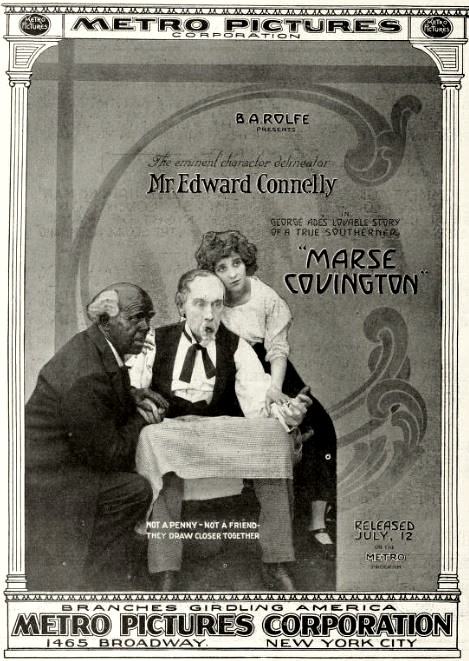
Louise Huff refuses to let Martha become mere ingénue. In the New York boardinghouse scene she sells her last cameo brooch for a can of condensed milk, then spoons it into her father’s mouth while humming “Dixie” off-key. The moment is heartbreak rendered as lullaby.
Paul Dallzell’s Edward Bantree, velvet waistcoat slashed open to reveal a scar shaped like a noose, is villainy personified yet never caricature. His final plea on the witness stand—“I only bent the rules; the war snapped them”—is the closest the film comes to thesis statement.
Dallzell employs staggered depth staging: foreground poker table, mid-ground Dan eavesdropping, background window framing a Confederate monument being dismantled. In a single composition the film stacks past, present, and moral reckoning—an equation Eisenstein would copy verbatim.
Extant prints survive only because a projectionist in Bruges hid a 35mm dupe in a cheese crate during the 1940 occupation. Restored by EYE Filmmuseum in 2021, the tinting templates matched Ade’s original annotations: “amber for memory, blue for hunger, sick green for knowledge.”
Modern parallels abound: eviction crises, student debt peonage, the stubborn sediment of systemic racism. When Covington finally signs over his dynasty, the quill trembles like a seismograph recording centuries of aftershocks. One thinks of contemporary headlines—yet the film whispers that the original sin was not the war but the plantation, not defeat but the dream that any man might own another.
Marse Covington ends not with titles but with a freeze-frame of Dan’s eyes, the celluloid itself seeming to breathe. You exit the screening aware that every frame is a palimpsest: beneath Virginia dust lies Brooklyn asphalt, beneath Reconstruction lies BLM, beneath silence lies the echo of unpaid wages. Few films collapse personal and national mythologies with such ruthless concision; fewer still dare to suggest that redemption may look like a deed of sale written in blood-red ink.
If you seek comfort, rewatch The Infant at Snakeville. If you seek mirror, stay here. The house still stands, the mortgage is overdue, and somewhere in the dark a horse named Bess keeps running, running, running—forever just out of reach of the finish line.
IMDb —
1916
Community
Log in to comment.