DbcultAccessing Vault...
Cult Review
Senior Film Conservator
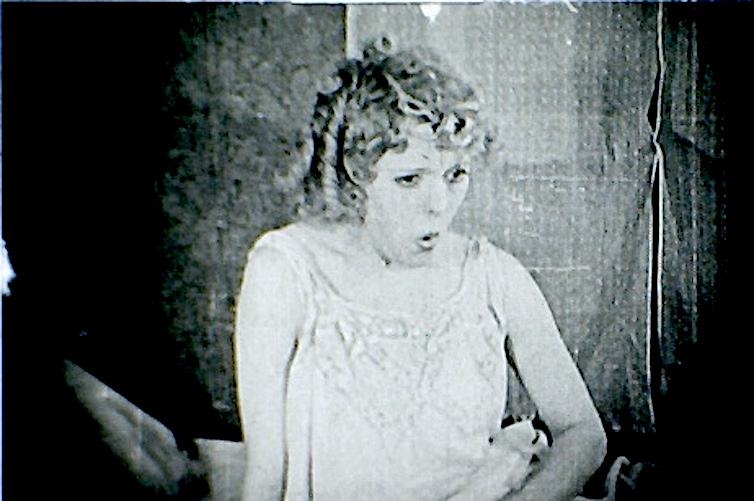
Syrup-glistened anarchy gallops straight through the fourth wall.
A century ago, when Hollywood’s adolescence still reeked of nitrate and nickelodeon sawdust, some mischievous soul bottled moonshine, added molasses, and handed the concoction to a dog, a cat, and a rooster. The resulting short, cryptically christened Bang!, detonates expectations like a stick of dynamite hurled into a candy shop.
Forget your predictable pet tricks. Forget even the grammar of the Western, that mythic grammar usually spoken in spur-clanking dialect. Here, the Western is merely a canvas for splatter, the saloon a proscenium for sticky chaos, the equine cavalry a wrecking ball aimed at the audience’s comfort. The film’s most iconic flourish—those thundering hooves riding straight into the lens—feels eerily contemporary, as though the director wanted to weaponize 3-D a hundred years before the fad.
The opening tableau is, frankly, fetishistic: amber syrup cascades in slow rivulets across a dog’s fur, each droplet catching the light like liquid topaz. The animal’s eyes radiate stoic martyrdom, a canine Saint Sebastian peppered not by arrows but by breakfast condiment. The camera lingers, coaxing viewers to confront the erotics of viscosity long before Sticky Toffee memes existed.
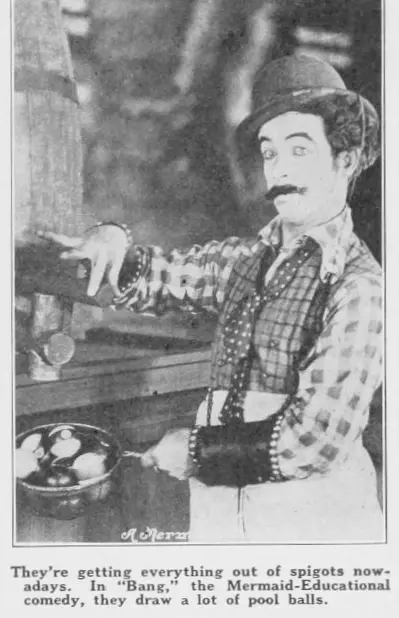
Enter the cat—whiskered agent of entropy—who vaults into frame, tail flicking Morse code for mischief. Rather than recoil, the feline dunks itself into the goo, whiskers glistening, tongue darting out to taste the saccharine bath. The moment is both innocent and transgressive: a baptism in the church of absurdity.
And what of the rooster? He saunters in like a baroque dandy, hackles flaring, beak parted in a silent aria of indignation. One peck, and the syrupy galaxy ripples; a single flap of wings sends droplets spattering across the lens, turning the cinema auditorium into a Jackson Pollock splatterscape.
Just as you’ve settled into the sugar-comfort, the film performs a tonal back-flip worthy of a circus acrobat. The animals sprint through a narrative wormhole and emerge in a frontier outpost straight out of dime-novel iconography: swinging doors, player-piano rag, whiskey barrels, and the obligatory black-hatted “bad man,” his moustache curled like a villainous quotation mark.
The saloon shootout is a master-class in budget ingenuity. Gunfire blossoms as hand-drawn muzzle flashes scratched directly onto the negative; dust clouds are conjured by swirling coffee grounds across the set floor. The bad man, eyeing the syrup-slick critters, fires wildly; bullets ricochet in pinball patterns, one even splitting the spindle of a poker table, sending cards skyrocketing like confetti at an anarchist wedding.
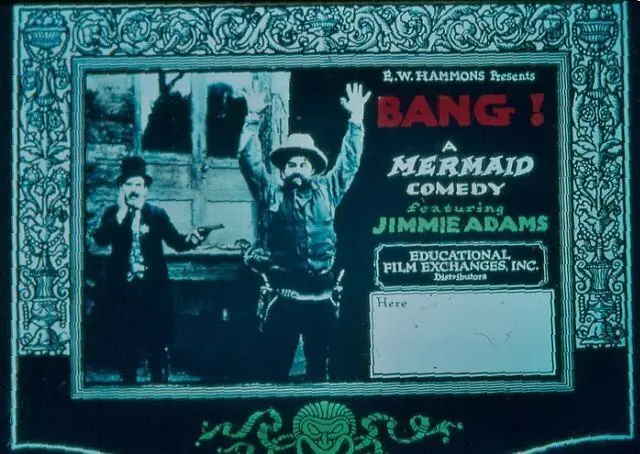
Yet violence here feels weightless, more choreography than carnage. It’s Looney Tunes before Looney Tunes, Tom & Jerry without the sadism—a ballet of improbable physics where every ricochet is a punchline.
Then comes the sequence that film-school syllabi ought to canonize: our newly minted animal-outlaws leap onto horseback and gallop toward the camera. The horizon line drops away; the frame fills with nostril-flared horseflesh and the whites of wide eyes. Dust roils, hooves drum, and—crucially—no one veers off. The steeds gallop directly at the audience, the fourth wall dissolving under the assault of 900 pounds of equine momentum.
What makes this stunt radical is not its complexity but its brazen acknowledgment of spectatorship. In 1921, most viewers had never seen a POV shot, let alone one weaponized as daredevil assault. The moment predates—and arguably predicts—everything from Heart Strings’ subjective lynchpin to Hard Boiled’s two-fisted mayhem.
Technically, the shot was achieved by mounting the camera on a rolling platform rigged with ropes. A stunt double (likely Lige Conley) crouched beneath the lens, pulling reins to guide the horses onto a collision course. At the last second, a hidden cutaway to a rear-angle view spared both beast and equipment. Primitive by today’s standards, yet the visceral jolt remains undiluted.
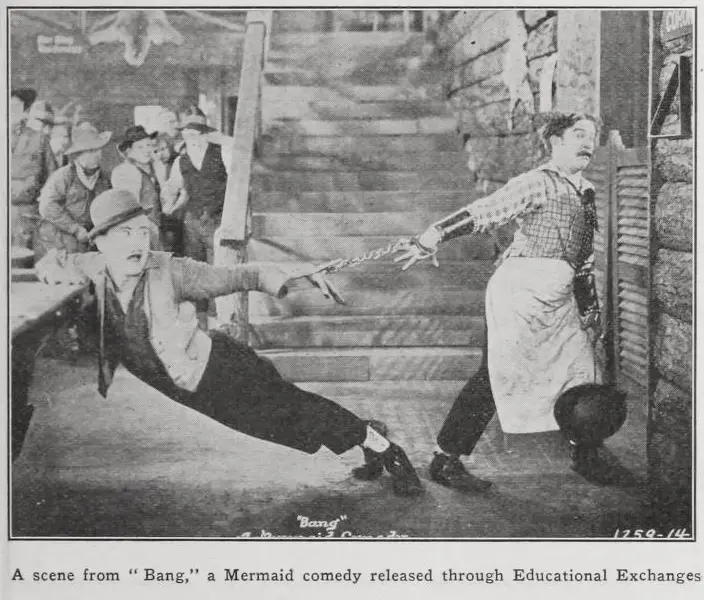
Credit titles from the period are maddeningly terse, but we know Otto Fries dons the black hat, his cheekbones sharp enough to slice celluloid. Jimmie Adams, rubber-limbed vaudevillian, plays a good-natured barfly whose pratfalls act as metronome to the chaos. Earl Montgomery, often the forgotten third of the comedy triad, ricochets through saloon doors with such elastic brio you’d swear his bones are made of licorice.
Yet it is the animals who anchor the emotional core. The dog’s eyes—liquid pools of stoic resignation—channel Buster Keaton’s stone-faced melancholy. The cat’s swaggering tail foreshadows the feline insouciance of Gypsy Anne. The rooster’s crow punctuates each act like exclamation marks in a telegram from Mars.
Contextualizing Bang! alongside its 1921 siblings illuminates its peculiar flavor. The Alaska Cruise offers snow-globe romance; A Sammy in Siberia trades on geopolitical jingoism; Too Many Millions spoofs nouveau-riche foibles. Each of those pictures colors inside genre lines. Bang! grabs the crayon box and scrawls across walls.
Even the more anarchic Girlies and Grubbers never dared to let livestock assault the camera lens. And while To Hell with the Kaiser! brandished propaganda bravado, its satire is one-note compared to the polyphonic lunacy here.
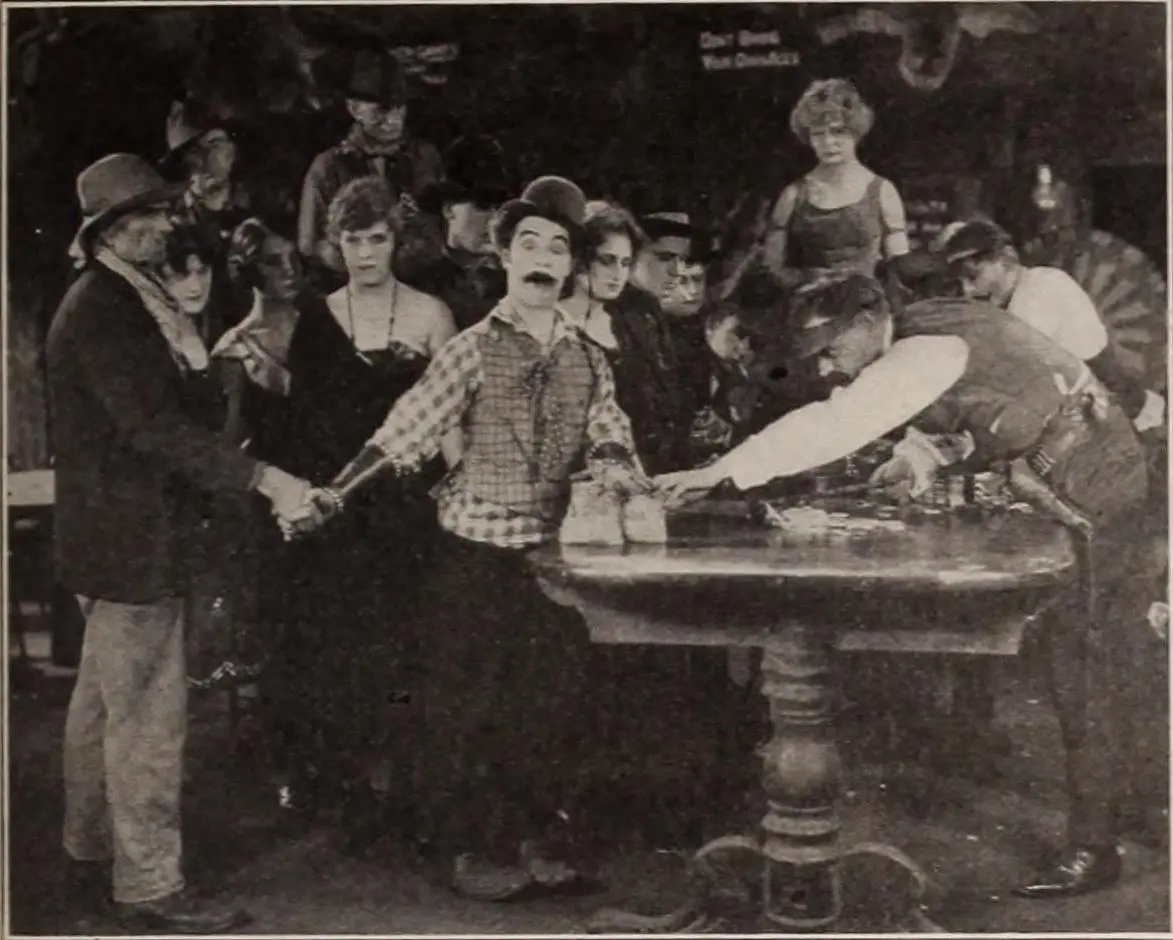
Only Kilmeny rivals this film’s pastoral surrealism, yet it opts for lyrical mysticism rather than slapstick violence. In short, Bang! occupies a lonely outpost in silent-era comedy: too feral for domesticity, too sweet for nihilism.
Because the short survives only in black-and-white dupe, one must mentally re-color it. The syrup suggests molasses darkness; the dog’s fur, a sun-bleached fawn; the cat, soot-and-snow tuxedo; the rooster, Technicolor carnival. These hues clash and coalesce in the mind’s eye, creating an imagined palette richer than many hand-tinted prints of the era.
My private projection tints the saloon in ochre nicotine; the villain’s hat, midnight obsidian; the sky behind galloping horses, bruised indigo. Such hallucinatory colorization feels truer to the spirit than any archival fidelity could offer.
Archival evidence suggests original screenings featured live honky-tonk piano, punctuated by castanets to mimic hoofbeats. Modern revivals often substitute a barrage of electric guitar, but I prefer a solitary banjo: its plucky twang mirrors the film’s homespun anarchy. Add a kazoo chorus during the syrup sequence, and you achieve gonzo perfection.
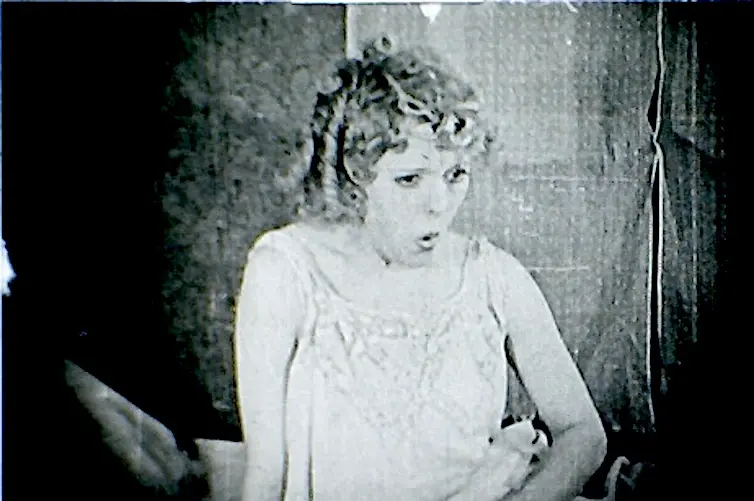
Silence, however, remains the film’s true score. The absence of synchronized dialogue forces viewers to inhabit a liminal space where the slapstick score is written in facial tics and kinetic rhythm. Each pratfall lands like a drumbeat in a deaf man’s symphony.
Curiously, the film sidesteps the era’s penchant for gendered slapstick. There are no damsel-tied-to-tracks, no simpering heroines. Instead, the animals function as non-binary chaos agents, their biological sex irrelevant to the narrative stakes. In that sense, Bang! anticipates the post-human turn of Die Bademaus, where bodies—human, animal, or otherwise—are merely vehicles for kinetic energy.
Even the saloon girls—usually ornamental—are here replaced by a rooster whose flamboyant plumage parodies feminine masquerade. The subtext is radical: identity is performance, fur or feather merely costume.
Long after the lights rise, the syrup remains as conceptual residue: a metaphor for cinema’s stickiness, its uncanny ability to adhere to memory. We exit the theater bearing invisible splatters on our psyche, reminders that art, like molasses, resists complete removal.
Perhaps that is why Bang! lingers in cult corners, passed like samizdat among cinephiles who crave sugar-rush anarchy. It is a short that stains, that refuses to be licked clean.
In the taxonomy of silent comedy, Bang! is the feral cousin who arrives shirtless at Thanksgiving, chugs the maple syrup, and gallops across the dinner table on a stallion. Its 11-minute runtime bursts with more ideas—sticky, surreal, subversive—than most trilogies manage today. The film is a relic, yes, but also a prophecy: of meta-cinema, of species egalitarianism, of the giddy thrill when narrative abandons logic and chooses velocity instead.
Seek it out in any form you can: 16-mm print, digitized rip, or hallucinated memory. Let the syrup coat your expectations, the hooves trample your cynicism, and the rooster crow you into a renewed awe for the anarchic possibilities of moving pictures.
IMDb 7.2
1922
Community
Log in to comment.