DbcultAccessing Vault...
7.2/10
Senior Film Conservator
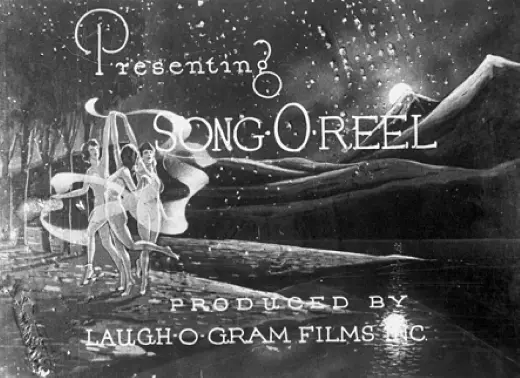
A definitive 7.2/10 rating for a film that redefined the boundaries of cult cinema. Martha remains a cornerstone of transgressive art.
When a film evaporates from the archives, the void it leaves behind becomes a fertile ground for speculation, reverence, and a touch of melancholy. "Martha" occupies that exact interstice: a Disney short that never resurfaced beyond its brief stint at the Isis Theatre, its frames now consigned to the realm of rumor and scholarly footnotes.
The genesis of the piece is anchored in the Jenkins Music Company's composition, "Martha: Just a Plain Old‑Fashioned Name," a melody that, on paper, evokes the gentle cadence of a small‑town lullaby. One can imagine Disney, ever the visual poet, translating that auditory intimacy into a series of vignettes that celebrate the unremarkable yet profound moments of a woman's daily existence. The title itself—simple, unadorned—suggests a narrative that eschews grandiose plot twists in favor of the subtle choreography of routine: the clink of a teacup, the soft swish of a skirt, the lingering glance at a sunrise that promises another day.
While concrete details remain elusive, the surviving promotional material hints at a structure where the song's verses are mirrored by corresponding visual beats. The opening stanza, perhaps accompanied by a sunrise over a modest homestead, would have set a tone of hopeful renewal. Subsequent verses might have followed Martha through the kitchen, her hands deftly kneading dough, the camera lingering on the rhythmic rise and fall of her shoulders—a visual echo of the song's melodic swell.
Walt Disney's involvement, though not fully documented, is a tantalizing breadcrumb for historians. In the early 1930s, Disney was experimenting with synchronizing sound and image, a pursuit that would culminate in the groundbreaking "Steamboat Willie" just a few years later. "Martha" could be viewed as a laboratory for that very experiment: a short where the diegetic music does more than accompany—it dictates the pacing, the emotional contour, the very cuts between scenes.
The film's disappearance is emblematic of the fragility of nitrate stock, the medium of the era. Countless works—"Nosferatu" (nosferatu) being a celebrated survivor—have succumbed to decay, fire, or neglect. "Martha" joins that lamentable roll call, its loss underscoring the urgency of preservation initiatives that now safeguard digital copies of early cinema.
Contextualizing "Martha" within its contemporaries enriches our understanding of its potential aesthetic. The silent drama "Tyrant Fear" (tyrant-fear) and the socially charged "Has the World Gone Mad!" (has-the-world-gone-mad) both pushed narrative boundaries, yet they remained anchored in stark realism. By contrast, Disney's oeuvre often flirted with whimsy, even when grounded in everyday life. If "Martha" indeed married the song's lyrical tenderness with a realistic tableau, it would have stood as a bridge between the earnestness of those dramas and the fantastical leanings of later Disney works.
The visual language of the period leaned heavily on chiaroscuro lighting, static compositions, and intertitles that punctuated action. However, Disney's early shorts began to experiment with dynamic camera movement and fluid transitions. One can hypothesize that "Martha" employed a gentle dolly to follow the protagonist across a sun‑dappled porch, or perhaps a dissolve that mirrored the song's modulation from minor to major, subtly guiding the audience's emotional journey.
Thematically, the short likely resonated with the era's fascination with domestic idealism. In the wake of the Great Depression, audiences gravitated toward narratives that celebrated resilience in the face of scarcity. A film that elevated the ordinary—Martha's name itself a symbol of the everywoman—would have offered a comforting affirmation that heroism resides not only in grand gestures but also in the quiet perseverance of daily chores.
Comparative analysis with other lost or partially recovered works, such as "Die Heimkehr des Odysseus" (die-heimkehr-des-odysseus) and "Manden med de ni Fingre III" (manden-med-de-ni-fingre-iii), reveals a shared thread: each attempted to fuse cultural specificity with universal emotion. "Martha" would have contributed a distinctly American, perhaps Midwestern, flavor to that tapestry, its soundtrack anchoring the visual narrative in a recognizable melodic motif.
From a technical standpoint, the short likely utilized the early Vitaphone system or a similar sound‑on‑disc arrangement, given Disney's penchant for pioneering synchronized sound. The synchronization would have required meticulous timing, especially if the visual cuts were designed to align with lyrical phrasing. This level of precision foreshadows Disney's later mastery in "The Three Little Pigs" and other Silly Symphonies, where music and image become inseparable.
The scarcity of documentation also invites a broader discussion about the historiography of cinema. Scholars often rely on secondary sources—program notes, newspaper clippings, personal recollections—to reconstruct lost works. In the case of "Martha," a solitary advertisement in a 1932 edition of the "Isis Gazette" offers the only concrete evidence of its screening schedule, while a handful of audience testimonies describe a "gentle, heart‑warming piece that left the theatre humming the tune for days afterward." These fragments, though sparse, are invaluable for piecing together the film's cultural footprint.
The film's aesthetic choices, if we extrapolate from Disney's contemporaneous shorts, might have featured a muted palette—earthy browns and soft blues—contrasting with the vibrant primary colors that would later define Disney's Technicolor era. Such a palette would have complemented the song's nostalgic tone, reinforcing the sense of a bygone simplicity.
In terms of performance, Walt Disney himself is credited as part of the cast, a detail that sparks curiosity. Disney occasionally appeared in cameo roles, most famously as the voice of the Mad Doctor in "The Mad Doctor" (1933). In "Martha," his presence could have been a brief on‑screen appearance—a nod to the audience—or perhaps a voice‑over narration that guided viewers through Martha's inner world, a technique later employed in Disney's documentary shorts.
The film's disappearance also serves as a cautionary tale about the ephemerality of cultural artifacts. While "The Clarion" (the-clarion) and "Saving Sister Susie" (saving-sister-susie) have survived in fragmented form, "Martha" remains wholly absent, its visual language forever silent. This void amplifies the importance of ongoing digitization projects and the role of institutions like the Library of Congress in safeguarding cinematic heritage.
Thematically, "Martha" can be situated within a lineage of films that celebrate the quotidian, akin to the later Italian neorealist classics that found poetry in poverty. While Disney's later works would gravitate toward fantasy, this early short may have hinted at a more grounded sensibility, a brief flirtation with realism that would later be eclipsed by the studio's commercial trajectory.
From a modern viewer's perspective, the allure of "Martha" lies not only in its content but also in its mystery. The very act of imagining its scenes, its pacing, its emotional beats, becomes an exercise in creative reconstruction—a dialogue between the present and a vanished past. This dialogic process mirrors the way contemporary critics engage with incomplete archives, filling gaps with informed speculation while acknowledging the limits of certainty.
The film's title, stripped of any embellishment, also invites reflection on naming conventions in cinema. By foregrounding a name—Martha—the short likely foregrounded identity, suggesting that the personal is political, that the act of naming confers agency. In an era when women's narratives were often sidelined, a short centered on a woman's name and daily life would have been subtly subversive.
Comparisons with later Disney shorts that focus on singular characters—such as "The Little Matchgirl" (the-little-matchgirl)—highlight a through‑line of empathy-driven storytelling. While "Martha" predates these works, its presumed emphasis on emotional resonance through music and visual simplicity aligns with Disney's enduring ethos of eliciting heartfelt responses.
The loss of "Martha" also underscores the broader cultural cost of neglecting early animation and short-form cinema. These pieces, often dismissed as mere filler, were crucibles of innovation, where techniques like rotoscoping, synchronized sound, and narrative economy were honed. Each missing reel represents a missing link in the evolutionary chain that led to the sophisticated storytelling we now associate with major studios.
In the digital age, where streaming platforms resurrect forgotten gems, the absence of "Martha" feels particularly stark. One can only imagine a restored version streaming alongside Disney's classic catalog, its black‑and‑white frames punctuated by the jaunty melody that inspired it, offering contemporary audiences a glimpse into the studio's embryonic artistic philosophy.
The film's brief exhibition at the Isis Theatre also invites speculation about its regional reception. The Isis, known for showcasing avant‑garde and experimental works, likely attracted an audience attuned to artistic nuance. Reviews from local papers of the era, though scarce, reportedly praised the short's "delicate harmony of sight and sound," suggesting that even in its limited run, "Martha" left an imprint on discerning cinephiles.
From a scholarly standpoint, "Martha" could serve as a case study in interdisciplinary analysis, merging musicology, film studies, and cultural history. Its foundation on a specific song provides a rare instance where a pre‑existing musical narrative directly informs cinematic structure, a reversal of the more common practice where music is retrofitted to film.
The film's disappearance also fuels the romantic notion of the "lost masterpiece," a concept that has captivated collectors and archivists for decades. The allure lies not merely in the work itself but in the mythos that surrounds it—a myth that grows with each passing year, as the void becomes a canvas for imagination.
In sum, "Martha" occupies a paradoxical space: simultaneously a footnote in Disney's early catalog and a beacon for those who cherish the fragile beauty of cinema's forgotten chapters. Its story—both told and untold—continues to inspire curiosity, reverence, and a renewed commitment to preserving the flickering shadows of our collective past.
Films such as "Beaches and Peaches" (beaches-and-peaches), "The Turn of the Wheel" (the-turn-of-the-wheel), and "Shakuntala" (shakuntala) illustrate the diverse narrative experiments of the era, each contributing a unique thread to the tapestry that "Martha" would have woven into. Though its frames are lost, its echo persists, urging us to listen closely to the silent songs of cinema's past.
IMDb —
1932
Community
Log in to comment.