DbcultAccessing Vault...
6.6/10
Senior Film Conservator
A definitive 6.6/10 rating for a film that redefined the boundaries of cult cinema. The Ships That Meet remains a cornerstone of transgressive art.
Kai Holberg’s 1916 curio The Ships That Meet is less a narrative than a restless tide that drags the viewer from foaming deck to garret studio, then hurls him onto the jagged cliffs of creative obsession. Shot through with the sulphurous yellow of gaslight and the bruised indigo of Nordic dusk, the film announces itself as an elegy for every wanderer who mistakes marriage for a safe harbor.
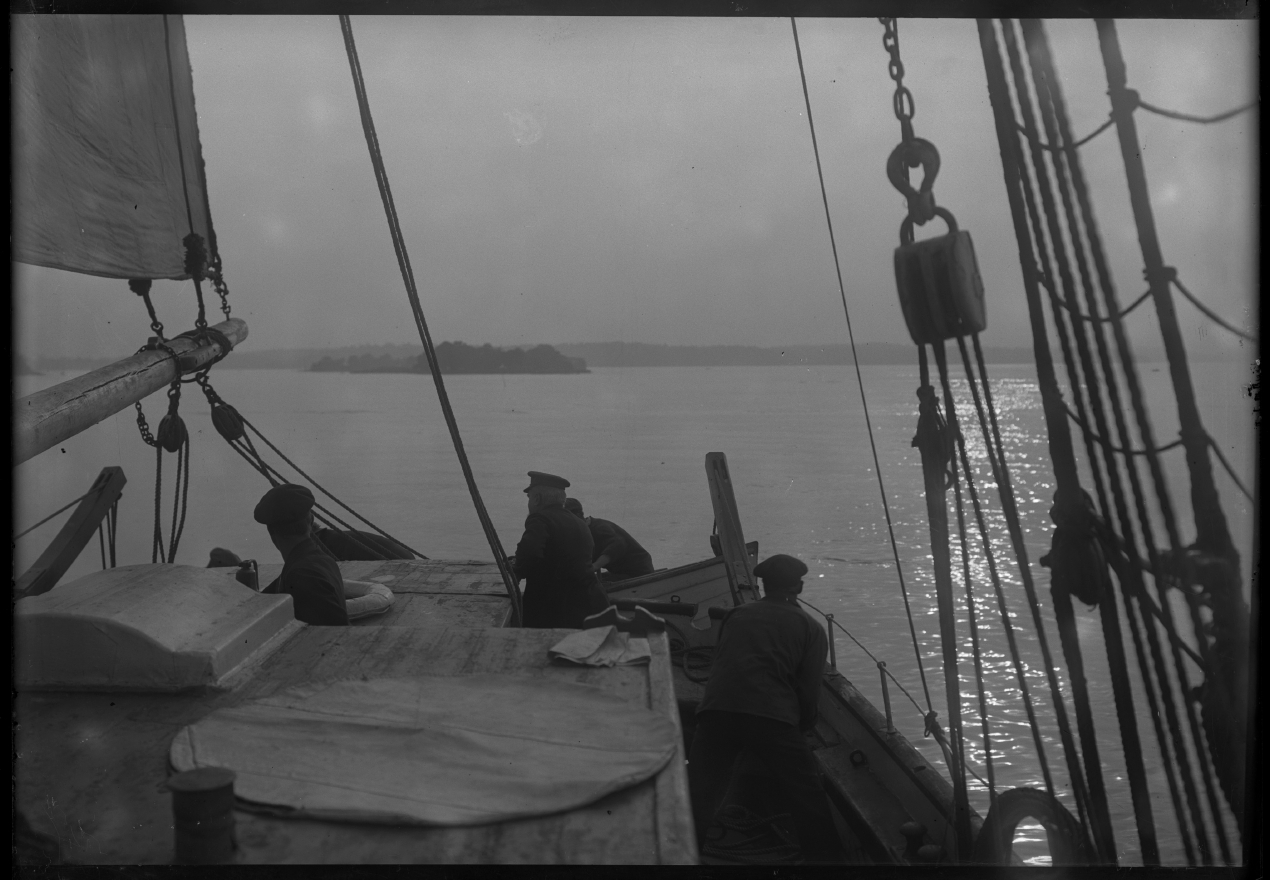
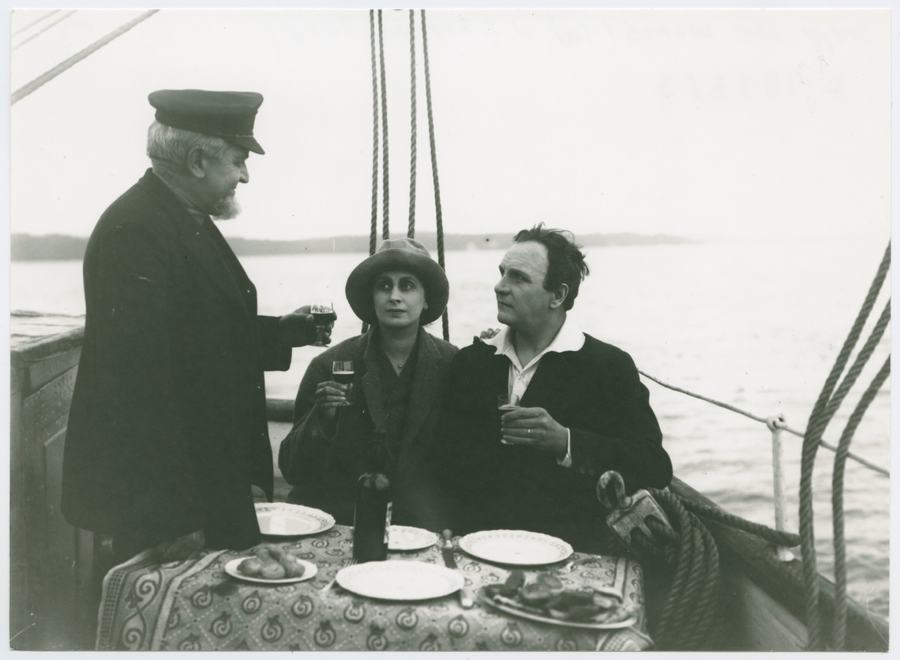
John—played with barnacle-rough stoicism by Egil Eide—first appears as a silhouette against a copper sunset, the outline of his oilskin slicker merging with the ship’s mast so completely that he seems an extension of the vessel itself. The camera lingers, as if afraid to blink and lose him to the horizon. Holberg’s script strips maritime adventure of its swagger: no howling storms, no mutinous crescendos—only the quiet resignation of a man who realizes that every nautical chart has now been replaced by the immutable grid of his cottage window.
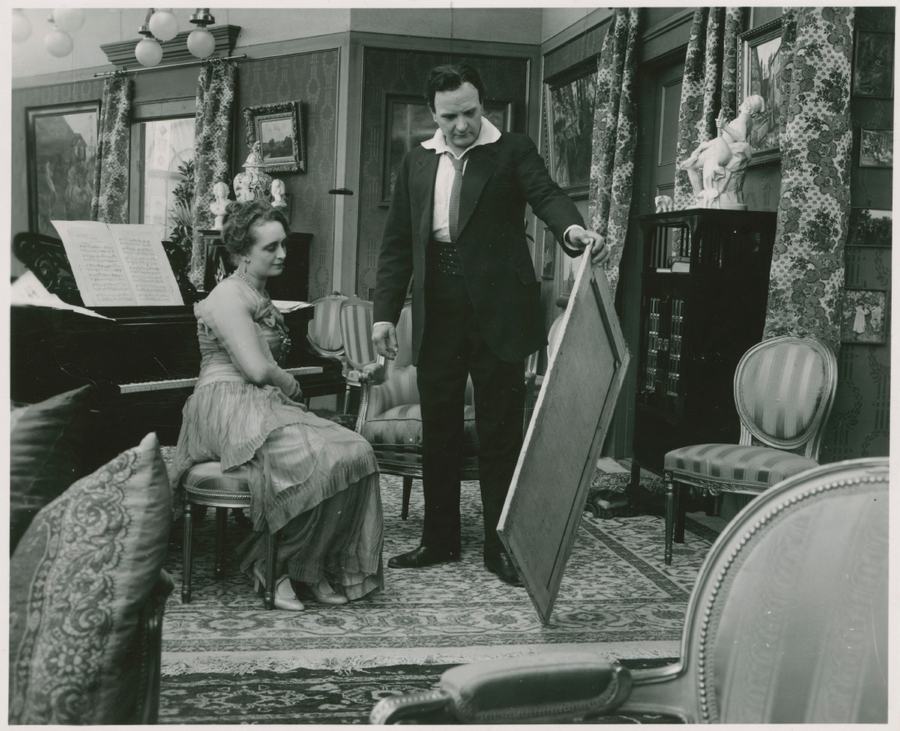
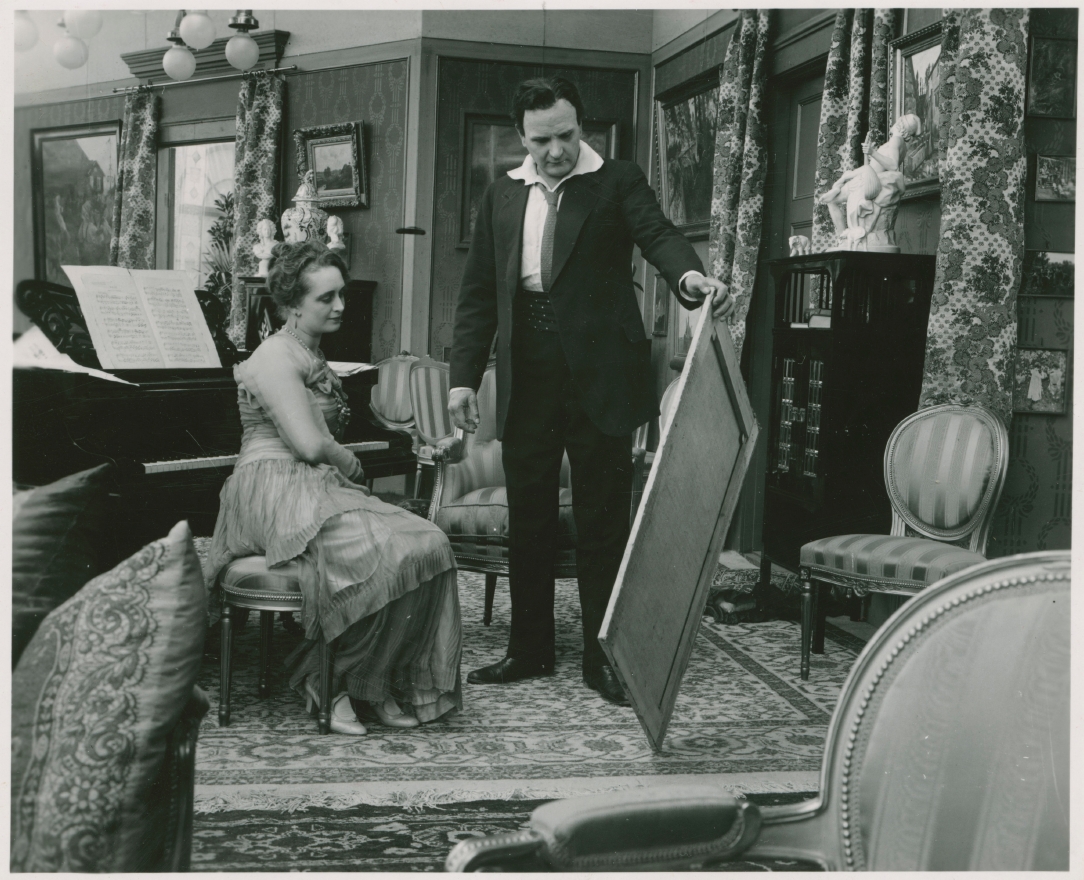
The tonal pivot arrives with the abruptness of a snapped spar. One intertitle—"The tide withdrew, leaving him on the shoals of stillness"—and we are ushered into a parlour fragrant with camphor and beeswax. Here John’s bride, portrayed by Lili Beck with the porcelain composure of a Gallen-Kallela muse, pours tea with the mechanical grace of one who has already intuited the gulf yawning between them. The marriage is consummated off-screen, a narrative elision that feels almost indecent: Holberg denies us even a chaste kiss, as though physical union would dispel the existential fog he so carefully distills.
Cinematographer August Warberg—whose subsequent fame would crest with The Family Cupboard—relies on tenebrism more than tinting. Interiors are candle-pooled pockets of umber; exteriors flare with the sodium glare of lighthouses. In one breathtaking insert, John’s palette knife scrapes against canvas while, behind him, the hearth spits sparks that hover like displaced constellations. The double exposure is so subtle you almost doubt it: a phantom galleon drifts across the bedroom wall, its sails billowing into the folds of the marital bedsheet. The effect anticipates by several years the maritime phantasmagoria of Stingaree, yet achieves its poetry without studio trickery, relying purely on mirrored reflections and scrim.
Eide moves like a man perpetually bracing for squalls that never come; every gesture carries the residual torque of rope-hauling. Watch him squeeze a tube of cerulean: the same tendon that once gripped a mainsheet now trembles, and the unconscious symmetry is heartbreaking. Opposite him, Lili Beck modulates between docility and incandescent hurt without the histrionic semaphore common to 1910s Nordic melodrama. When she finally confronts John—"You have painted me into a prison of pigments"—her whispered Norwegian cuts deeper than any intertitle.
Sideline characters flicker briefly: Mathias Taube’s gout-ridden art dealer, a sybarite who compares brushstrokes to "the thighs of Aphrodite emerging from foam," and August Warberg’s own cameo as a circus strongman whose biceps mock John’s newfound frailty. These figures operate like Brechtian placards, reminding us that art and commerce, like tide and moon, are locked in a dance of mutual parasitism.
Mid-film, Holberg stages a daring set-piece: a traveling carnival erects its striped pavilions on the outskirts of town. John, lured by calliope music that bleeds into the soundtrack via a hand-cranked organ, sketches feverishly. The ensuing montage—cross-cuts between fire-eaters, bearded ladies, and the artist’s charcoal smears—culminates in the unveiling of a triptych. Holberg photographs the canvases head-on, turning cinema screen into gallery wall. The left panel shows a yellow-eyed sailor lashed to a mast of swirling orange flames; the central panel depicts his wife as an iconic Madonna, haloed by a gold-leafed aura; the right panel dissolves into cerulean chaos, a tempest where human forms melt into breakers. This sequence, indebted both to Royal Slave’s tableau vivant and to Munch’s The Scream, positions the film within the gesamtkunstwerk tradition—art about art about life, ad infinitum.
Though silent, the film is sonically suggestive. Intertitles arrive irregularly, like flotsam: terse, poetic, occasionally fractured. One card reads only: "—and the gull laughed—", the em-dash implying a backstory we will never access. The sparse Norwegian text is supplemented by handwritten English translations that jitter across the screen, mimicking the scrawl of John’s sketchbook. The effect is uncanny: we read not dialogue but the residue of voices swallowed by sea-spray.
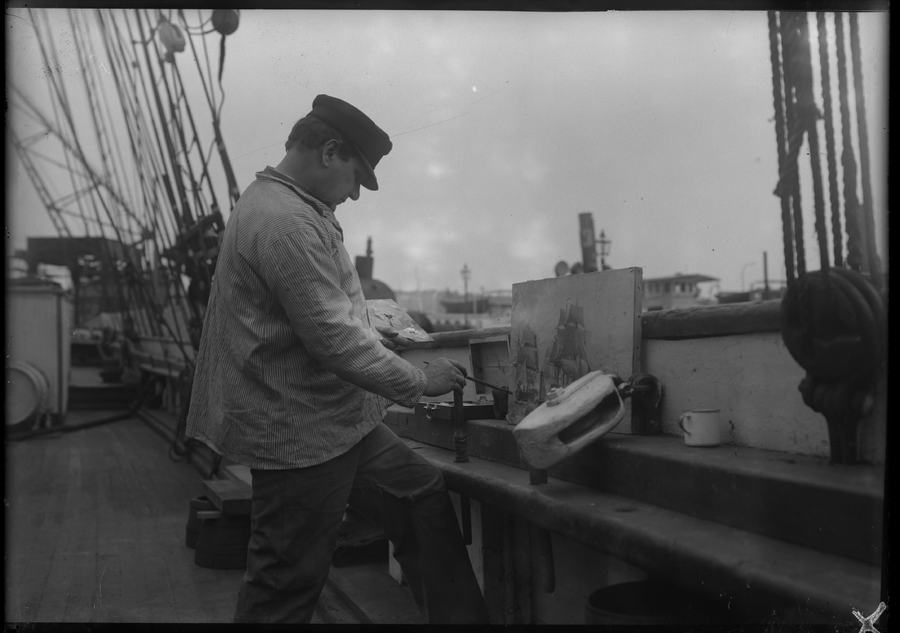
Early scenes privilege John’s point-of-view: the camera tilts up at his wife as though she were a figurehead. Yet Holberg quietly subverts this gaze. During the carnival episode, a reverse shot places Beck in the foreground, her eyes tracking John with predatory calm. The editing rhythm stutters; suddenly it is she who appears to storyboard his descent. Scholars have likened this inversion to Saint, Devil and Woman, though Holberg’s sexual politics feel more fluid, less moralistic. The wife’s final act—slashing the seascape miniature from its frame—reads simultaneously as castration and liberation, a gesture that anticipates the feminist iconoclasm of later Scandi cinema.
Produced during Norway’s tentative neutrality in WWI, The Ships That Meet channels national anxiety via metaphor: a sailor adrift in peacetime, a country unsure whether to cast its lot with maritime commerce or continental militarism. The film’s refusal to stage naval combat feels deliberate; the only war here is domestic, aesthetic, existential. Distribution was limited to Nordic territories, yet prints circulated among Danish intellectuals who compared its visual lexicon to Uden Fædreland, another parable of displacement. Alas, nitrate decomposition claimed nearly a third of the original negative; the surviving restoration (2018, National Library of Norway) interpolates stills where footage was irrevocably lost. These frozen tableaux, rather than disrupting flow, accentuate the film’s meditation on incompleteness.
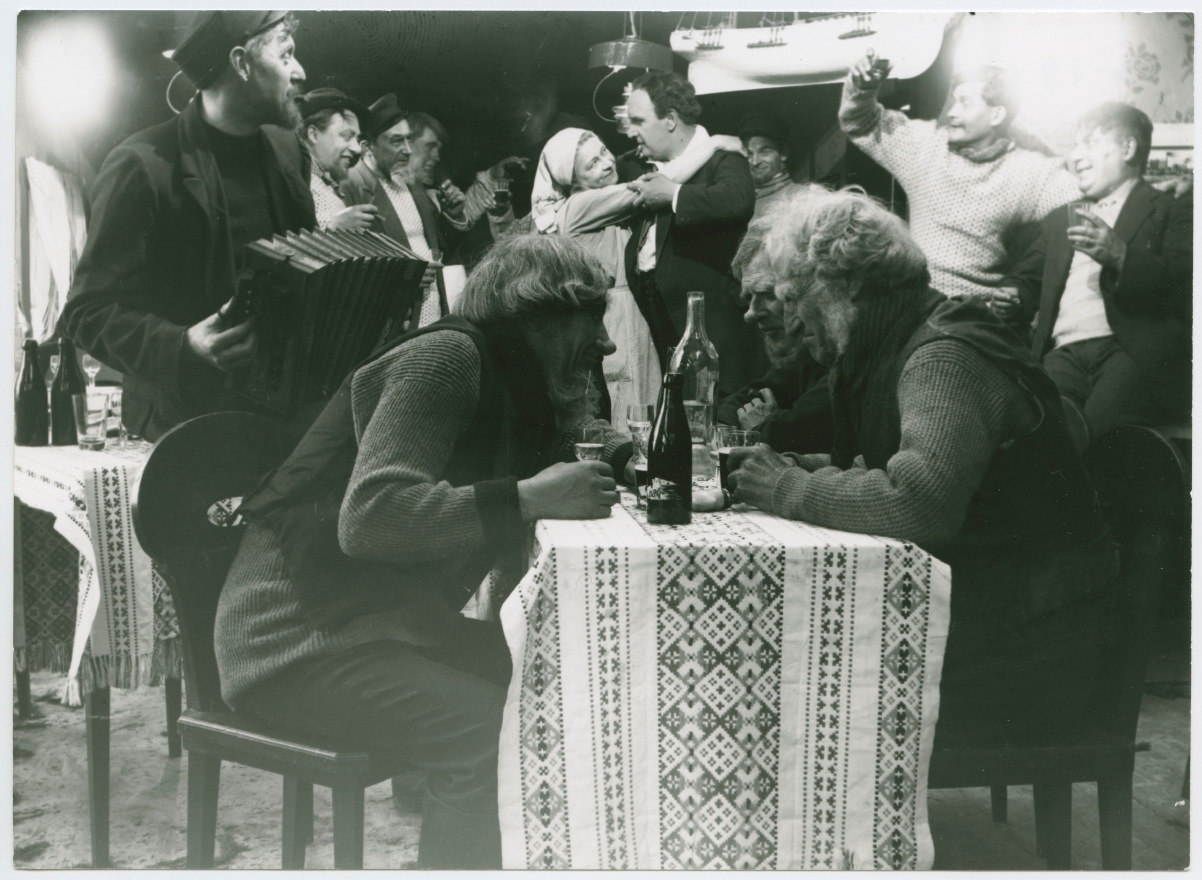
Unlike Griffith’s epoch-shaking Birth of a Nation, Holberg’s epic is microcosmic, intimate. Where When Rome Ruled fetishizes imperial sweep, Ships hones in on a single cracked psyche. Its closest kin may be A Dream or Two Ago, yet whereas that film treats art as redemptive, Holberg withholds such comfort. John’s canvases do not save him; they merely refract his corrosion into pigments that will outlast bone.
Contemporary Oslo newspapers praised the film’s "Nordic melancholy thicker than lutefisk," while Stockholm critics dismissed it as "Kammerspiel on a sinking skiff." In the decades since, reclamation efforts have elevated its status. The 1972 Venice retrospective placed it alongside Three Black Trumps in a sidebar on "narrative opacity," and 2019’s Bologna Il Cinema Ritrovato awarded it the Bronze Barberousse for historical significance. Modern bloggers laud its forward-leaning psychology, though some chide its gender politics as "proto-incel." Such readings, while reductive, testify to the film’s uncanny capacity to refract each era’s neuroses.
Holberg ends on a shot that refuses catharsis. The camera retreats from the cottage interior out through a window, snow beginning to veil the lens. The miniature seascape, now slashed, flaps like a torn sail. Fade to black. No end card, no moral. You exit the screening room tasting brine, convinced the seat beside you is damp with spray. Days later, while buttering toast or queuing for metro tokens, you recall the sailor’s trembling hand and realize the film has not finished; it has merely transferred its subject—you are now the vessel, forever tacking between the certitude of land and the siren call of the uncharted.
"Art does not rescue the sailor from the sea; it merely salts the wound of his exile."
— Ingrid Saetre, Nordic Celluloid Dreams, Universitetsforlaget, 2004
If you hunger for silent-era experiences that vibrate at the frequency of modern anxiety, stream The Ships That Meet on any platform hosting the 2018 2K restoration. Just keep a sweater nearby—its chill lingers long after the screen goes dark.

IMDb 7.2
1933
Community
Log in to comment.