DbcultAccessing Vault...
Cult Review
Senior Film Conservator
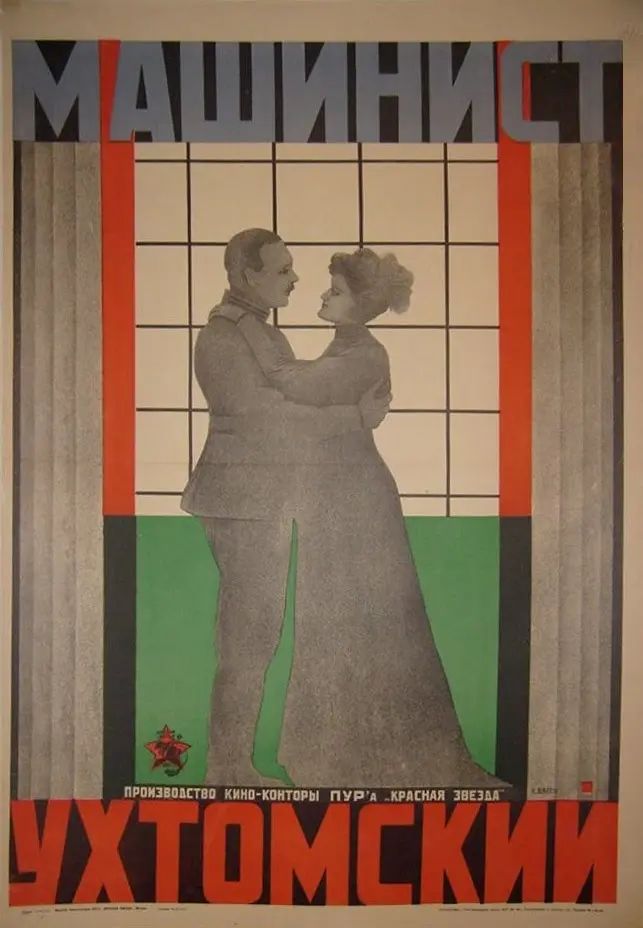
Is Mashinist Ukhtomskiy a film that merits your attention in the current cinematic landscape? Short answer: yes, but with significant caveats. This early Soviet drama is undeniably worth watching today for serious cinephiles, historians, and anyone interested in the foundational narratives of revolutionary cinema, yet it is decidedly not for those seeking modern pacing, nuanced character development, or apolitical entertainment.
Mashinist Ukhtomskiy stands as a fascinating artifact, a cinematic testament to a pivotal moment in Russian history and the nascent power of Soviet filmmaking. Released in an era when cinema was rapidly evolving into a potent tool for mass communication and ideological dissemination, this film captures the raw energy and fervent belief of a nation on the cusp of radical change. It is less a conventional narrative and more a historical tableau, painted with broad, bold strokes designed to inspire and educate.
Let’s get straight to the core of it.
The Revolution of 1905 in Russia was a dress rehearsal for the seismic events of 1917, a period of widespread social unrest, strikes, and political upheaval that shook the foundations of the Tsarist autocracy. Mashinist Ukhtomskiy plunges the viewer directly into this volatile atmosphere, focusing its lens on the Moscow-Kazan railroad workers. This setting is not arbitrary; railroads were the arteries of the empire, and control over them was paramount for both state and revolutionaries.
The film leverages this historical backdrop to craft a narrative steeped in the struggle of the common man. It's a clear illustration of how early Soviet cinema sought to canonize its heroes, transforming real-life figures or composite characters into symbols of proletarian strength and unity. The events depicted, while dramatized, aim to capture the spirit of collective action that defined the era, showcasing the power of organized labor against an oppressive regime.
One might argue that its primary value today lies not just in its narrative, but in its function as a historical document of propaganda itself. It demonstrates how a nascent political system used the new medium of cinema to forge a national identity and a pantheon of revolutionary heroes. The film doesn't just tell a story; it actively participates in the construction of a national mythos, a concept that remains fascinating for any student of political science or media studies.
At the heart of this historical drama is Aleksandr Kramov’s portrayal of Ukhtomsky. Kramov embodies the ideal revolutionary leader: stoic, determined, and utterly committed to the cause of the workers. His performance is less about internal struggle and more about outward manifestation of resolve. We witness his transformation not through subtle emotional shifts, but through his actions and his growing influence over his comrades.
For instance, the moments where Ukhtomsky addresses the gathered railroad workers are pivotal. Kramov imbues these scenes with a quiet authority that gradually builds into fervent oratorical power. There’s a palpable sense of conviction in his gaze, a steadfastness that inspires trust and galvanizes the men around him. He isn't just speaking; he's articulating the unspoken grievances and aspirations of an entire class.
However, this archetypal portrayal comes at a cost. The film prioritizes the collective over the individual, meaning Ukhtomsky, while charismatic, remains largely a symbol rather than a fully fleshed-out human being. His personal life, his doubts, his fears – these are largely absent, sacrificed at the altar of revolutionary purity. This is a deliberate choice, certainly, reflecting the ideological imperatives of the time, but it limits the film's capacity for universal emotional resonance. Other cast members like Antonin Pankryshev and Vladimir Vladislavskiy provide solid, if similarly two-dimensional, support, serving more as representations of the working class than distinct personalities.
The direction, while perhaps not as innovative as some of the montage masters who would follow, effectively conveys the scale and urgency of the workers' movement. The filmmakers understand the power of visual rhetoric. They frequently employ wide shots to emphasize the sheer number of striking workers, creating an impressive sense of collective strength and solidarity. The camera often lingers on the faces of the laborers, capturing their grime, their weariness, but also their nascent hope.
Pacing is deliberate, building slowly from the everyday grind of the railroad to the escalating tension of the strike. There are no sudden bursts of action in the modern sense; instead, the drama unfolds through the gradual accumulation of grievances and the methodical organization of resistance. The tone is consistently serious, almost reverent, befitting a narrative that positions its characters as heroes of a grand historical struggle. The film's rhythm mirrors the slow, inexorable build-up of revolutionary sentiment.
A particularly effective sequence involves the preparations for the strike: the clandestine meetings, the hushed conversations, the subtle nods of agreement among the men. These moments, devoid of overt melodrama, convey the quiet courage required to defy authority. The director uses these scenes to highlight the meticulous planning and the shared risk that underpinned the revolutionary movement, making the eventual strike feel earned and inevitable.
The cinematography of Mashinist Ukhtomskiy, while limited by the technology of its era, serves its purpose with clarity and purpose. The black and white palette is utilized to create a stark, almost documentary-like feel. The industrial setting of the Moscow-Kazan railroad is not merely a backdrop; it is a character in itself. The massive locomotives, the steam, the tracks stretching into the distance — all contribute to an atmosphere of relentless labor and the potential for immense power.
There are moments where the camera captures the sheer scale of the railroad machinery, contrasting the individual worker against the formidable industrial landscape. This visual choice reinforces the idea that the workers are part of a larger, powerful system, and their collective action represents a force capable of redirecting that power. The framing often emphasizes solidarity, with groups of workers depicted in tight clusters, their faces united in common purpose.
The film's visual style is functional, prioritizing narrative clarity and thematic reinforcement over aesthetic flourishes. It’s gritty, unpolished, and feels authentic to the period it depicts. While it might lack the dynamic montages of an Eisenstein or the experimental spirit of a Vertov, its straightforward approach allows the revolutionary message to cut through directly, without distraction. It's a
IMDb —
1927
Community
Log in to comment.