DbcultAccessing Vault...
Cult Review
Senior Film Conservator
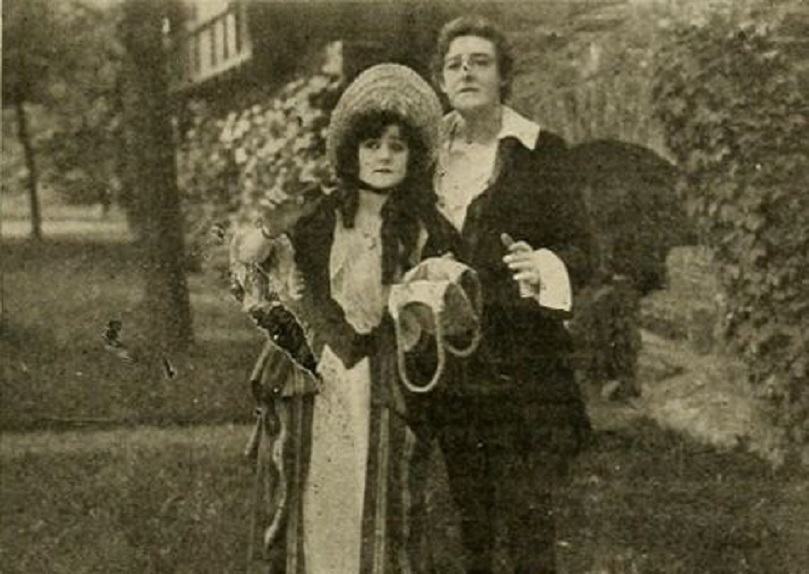
Moon-drenched rubies, a scholar’s cracked fingernails, and the creak of rope at dawn—Eugene Aram arrives like a half-remembered nightmare stitched from celluloid and gaslight. Directed by Richard Ridgely and adapted from Bulwer-Lytton’s feverish 1832 novel, this 1915 silent survives only in fragmented prints, yet what remains is potent enough to stain your week with soot.
The film’s prologue is a master-class in chiaroscuro: torches gutter, rain slashes, and Herbert Prior’s Housman—greasepaint eyebrows arched like cathedral vaults—waves a parchment promising “jewels enough to ransom a prince.” Enter Bigelow Cooper’s Eugene: coat skimming ankles, eyes carrying the stunned brightness of a man who has read too much and eaten too little. The robbery choreography is brutal yet balletic; when Clark’s hand latches onto Eugene’s wrist, the gesture feels less like assault than betrothal—an unholy marriage sealed in blood.
Cut to Grassdale, five years hence, and cinematographer Alfred Gosden swaps thunderclouds for sun-dappled hedgerows. The tonal whiplash is intentional: guilt, after all, does not advertise itself with gargoyles; it whispers through a child’s botched recitation of Nunc est bibendum or the rustle of a girl’s skirt as she passes a fresh-dug grave.
Mabel Trunnelle’s Madeline is no swooning Victorian prop; her gaze carries the flinty appraisal of someone who has already catalogued the world’s disappointments. The courtship scenes between her and Eugene unfold in a hay-scented classroom where Latin verbs become courtship code. Meanwhile George A. Wright’s Walter—equal parts wounded colt and entitled heir—hovers like a bad omen, his jealousy shot in lingering close-ups that prefigure Trilby’s hypnotic envy by several months.
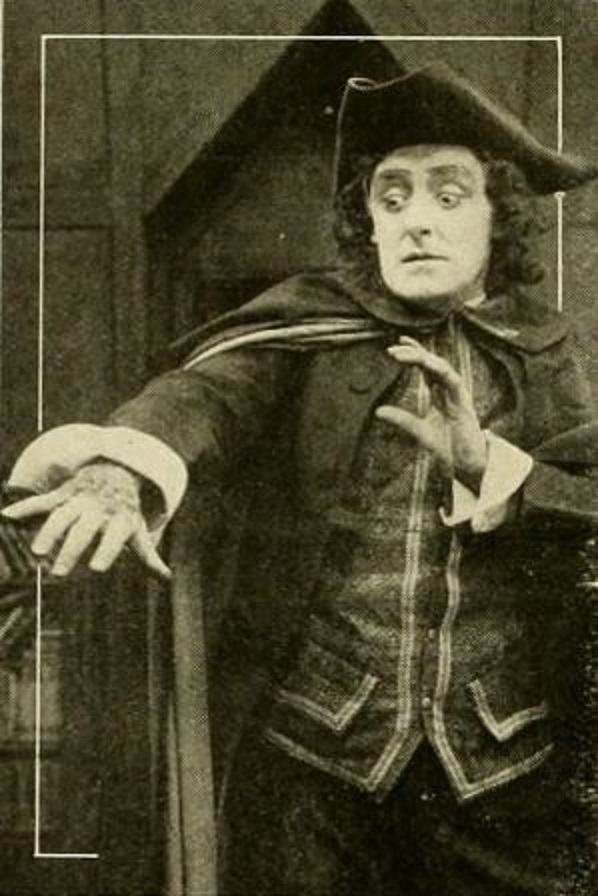
The narrative piston that keeps everything thudding forward is Housman’s resurrection—first as limping extortionist, then as drunken Cassandra in a torch-lit tavern. Watch how Ridgely frames the cave exhumation: the camera dollies back until the torch flames resemble a miniature Passion Play, Housman’s shadow cruciform against the rock. It’s pure Grand-Guignol poetry, served without intertitles because the image alone is scripture enough.
Cooper’s Eugene is a revelation in minimalist torment; he ages the character not with bewhiskered greasepaint but by gradually draining the calcium from his own posture—by the final reel he seems to walk on stilts made of sighs. Prior’s Housman, by contrast, inflates like a bullfrog, each demand for hush-money accompanied by a grin that could pickle herring. Their confrontation in the London hovel—shot in a single take—plays like a moral seesaw: every coin Eugene pushes across the table tilts the frame ever so slightly, as though gravity itself were on the take.
Art director Frank A. Moore drapes St Robert’s cave in kelp and bat guano, turning a Yorkshire limestone hole into something reminiscent of Bruegel’s drunkards by way of Doré. The tinting strategy—amber for interiors, viridian for nocturnal exteriors, rose for Madeline’s death scene—adds emotional subtitles without a single card. Contemporary exhibitors often accompanied the picture with a chopped-up arrangement of “The Last Rose of Summer,” whose syrulean cadences make Eugene’s final walk to the gallows feel like a wedding march played in reverse.
Bulwer-Lytton’s novel is a harangue against social immobility; Ridgely’s film condenses that into glances. Notice how Madeline’s silk sleeve brushes Eugene’s ink-stained cuff—an illicit semaphore across class barricades. Or how Walter’s privilege manifests not in cruelty but in the assumption that forgiveness is his to bestow, as though absolution were another manor-born heirloom. The scaffold becomes the ultimate leveling ground: knowledge, jewels, even love evaporate when the drop-door greets the sole of a peasant’s shoe.
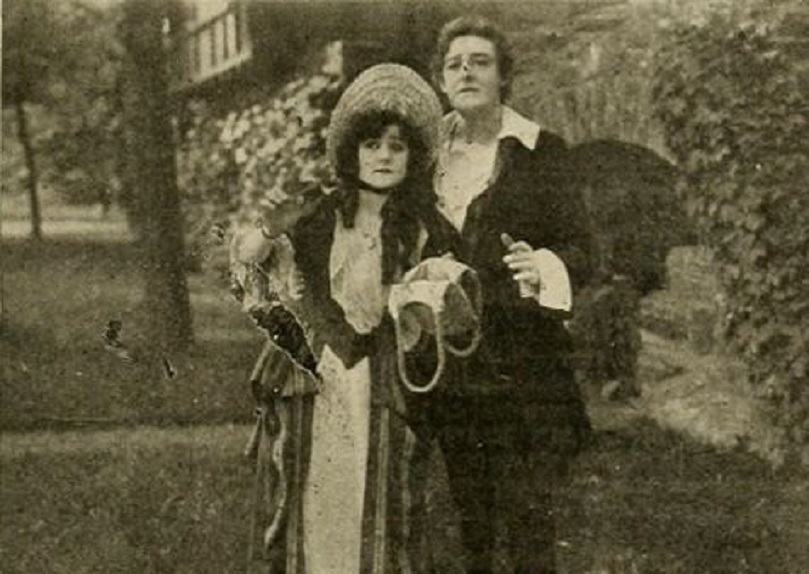
If you crave more tales where the past shows up with a shovel, queue The Black Envelope or The Gray Mask. For poisoned affection and sibling rivalry, Vanity Fair offers Becky Sharp’s sociopathic waltz through Regency drawing rooms. None, however, match the suffocating intimacy of Eugene’s self-laceration.
The surviving 35 mm at Library of Congress is incomplete—roughly 42 minutes from what was originally a five-reel feature. Digital scans circulated among cine-clubs carry a pulsing pipe-organ score by Dr. Philip Carli; the mono wav crackles like wet kindling, but it beats the eerie hush that once greeted urban nickelodeon crowds. A Blu-ray pairing with A Good Little Devil is rumored for late 2025, restored through a 4K photochemical process that should tease out the amber grain in Madeline’s death tableau.
Is Eugene Aram a tad melodramatic? Unapologetically. Yet within its hand-tinted frames lurks a surprisingly modern meditation on imposter syndrome, class panic, and the lethal cost of wanting more world than the world wants for you. It is a film that smells of lamp-oil and wet soil, and when the hangman tightens the knot you may, for a vertiginous instant, feel the rough hemp on your own carotid. Seek it out—preferably after midnight, when the house is quiet enough to hear the past rifling through your drawers.
Runtime (extant): ≈42 min. | Country: USA | Language: Silent with English intertitles | Director: Richard Ridgely | Screenplay: Richard Ridgely, from Edward Bulwer-Lytton’s novel | Cinematography: Alfred Gosden | Cast: Bigelow Cooper, Herbert Prior, George A. Wright, Mabel Trunnelle, Marc McDermott, Gladys Hulette, Edward Earle
IMDb —
1917
Community
Log in to comment.