DbcultAccessing Vault...
6.7/10
Senior Film Conservator

A definitive 6.7/10 rating for a film that redefined the boundaries of cult cinema. A Daughter of the Gods remains a cornerstone of transgressive art.
Stepping back into the nascent years of feature filmmaking, one encounters productions that, even today, inspire a sense of awe not just for their technical ambition but for their sheer audacity. Herbert Brenon’s 1916 epic, A Daughter of the Gods, stands as a monumental testament to this era, a grand cinematic endeavor that pushed the boundaries of what was thought possible on screen. More than just a film, it was an event, a declaration of intent from an industry rapidly discovering its own colossal power. At its heart lies a narrative steeped in myth and melodrama, a tale spun around a grieving Sultan, a malevolent witch, and a mysterious, ethereal young woman whose very existence becomes a bargaining chip in a desperate quest for resurrection. The plot, while seemingly straightforward, unravels a complex interplay of power, sacrifice, and the eternal struggle between good and evil, all set against a backdrop of fantastical landscapes and ancient, resonant themes.

The film’s historical significance cannot be overstated, particularly as it provided a colossal platform for its star, Annette Kellerman. A celebrated Australian swimmer, diver, and vaudeville performer, Kellerman was a pioneer in aquatic athleticism and a trailblazer for women in sport. Her casting was a stroke of genius, leveraging her unparalleled physical prowess and striking beauty to embody the titular 'daughter.' This was a silent film era where physical expression and visual storytelling reigned supreme, and Kellerman, with her graceful movements and powerful screen presence, was perfectly suited to the medium. Her performance transcended mere acting; it was an embodiment of strength, vulnerability, and an almost otherworldly purity. The film’s narrative, which often required her to perform daring feats, including extensive underwater sequences, was tailor-made to showcase her unique talents, setting a precedent for action heroines long before the term was even coined. This was a spectacle built around a star, much like later epics would be, but with an emphasis on authentic physical performance rather than special effects, a refreshing distinction even today.
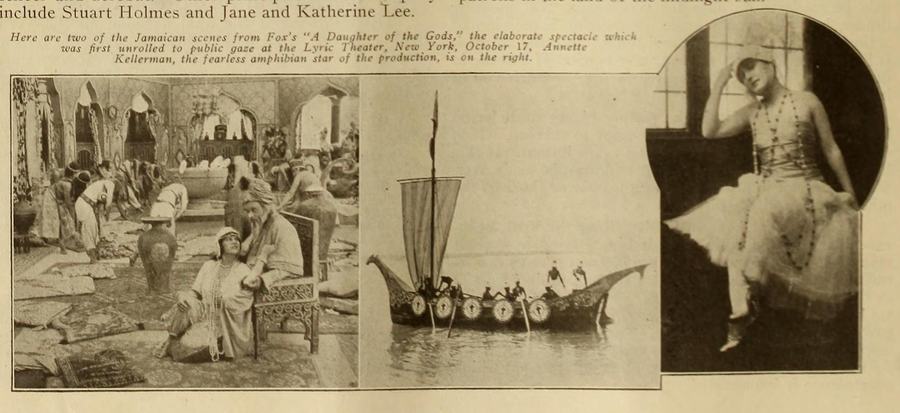
The core conflict of A Daughter of the Gods is a primordial one: a Sultan, consumed by the unbearable loss of his son, seeks to defy death itself. His desperation leads him into a Faustian bargain with a wicked witch, who promises to restore his child’s life in exchange for the destruction of a mysterious young woman. This premise, simple yet profound, allows for a rich exploration of morality, grief, and the corrupting influence of power. Herbert Brenon, credited alongside Hetty Gray Baker for the screenplay, orchestrates this drama on an epic scale, transforming a personal tragedy into a cosmic confrontation. The exotic, fantastical setting, with its sultans, sorceresses, and mythical creatures, transports the audience to a realm beyond the mundane, a common trope in early cinema designed to offer pure escapism and wonder. While films like The Temptations of Satan might explore moral dilemmas through a more allegorical lens, A Daughter of the Gods grounds its fantastical elements in a human emotional core, making its stakes feel genuinely monumental.

The character of the mysterious young lady, portrayed by Kellerman, is a figure of almost divine purity, her very existence a challenge to the witch's malevolent order. She represents innocence, nature, and perhaps a forgotten connection to a more benevolent, ancient power. Her struggle against the forces arrayed against her is not just a fight for survival, but a battle for the soul of the fantastical world she inhabits. The film delves into the idea of predestined conflict, where certain individuals are chosen, or perhaps cursed, to play pivotal roles in larger cosmic dramas. This narrative ambition, to tell a story of such grand scope and mythological resonance, was groundbreaking. It aimed to create a world, not just tell a story, inviting audiences to immerse themselves in its intricate lore and visual splendor. This commitment to world-building foreshadowed later fantasy epics, demonstrating that even in its infancy, cinema had the capacity to construct elaborate, believable alternate realities.
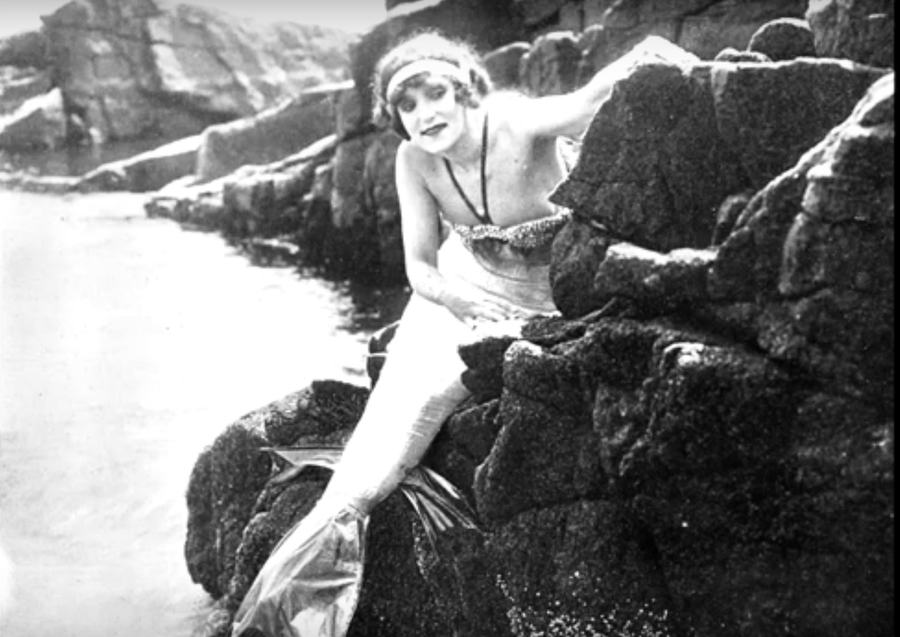
Herbert Brenon’s directorial vision for A Daughter of the Gods was nothing short of audacious. Shot on location in Jamaica, the film boasted unprecedented scale, employing thousands of extras and constructing elaborate sets that brought its mythical world to vivid life. The decision to film in such a remote and picturesque location was a logistical nightmare for the time, but it paid off handsomely in the breathtaking visuals that graced the screen. Brenon understood the power of the landscape as a character in itself, allowing the natural beauty of Jamaica to imbue the film with an exotic authenticity that studio-bound productions simply couldn't replicate. The underwater sequences, a hallmark of Kellerman’s unique abilities, were particularly revolutionary, offering audiences a glimpse into a world rarely seen on film. These scenes, filmed with groundbreaking techniques, were not mere stunts but integral parts of the narrative, highlighting the protagonist's connection to the aquatic realm and her ethereal nature. This commitment to realism within a fantastical framework was a testament to Brenon's innovative spirit.
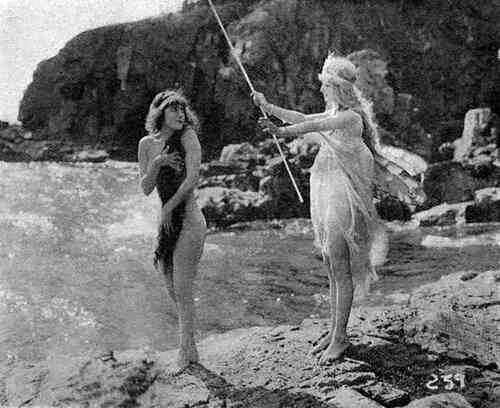
Beyond Kellerman’s magnetic presence, the supporting cast, including Walter McCollough, Edward Boring, William E. Shay, and Marcelle Hontabat, contributed to the film’s rich tapestry. While silent film acting often leaned towards exaggerated gestures and expressions, the ensemble here worked to convey the emotional weight of the story, from the Sultan's profound grief to the witch's sinister machinations. Violet Horner, Stuart Holmes, and Katherine Lee further fleshed out the dramatic landscape, each contributing to the epic feel of the production. The sheer number of performers, including Barbara Castleton, Ricca Allen, Millie Liston, Hal De Forest, Mark Price, Henrietta Gilbert, Jane Lee, Walter James, and Louise Rial, speaks to the immense scale of the undertaking. This was a production that required a small army of actors and crew, a logistical feat that rivaled military operations. In an era where films like The Vicar of Wakefield might focus on intimate character studies, A Daughter of the Gods opted for panoramic sweep, demanding a different kind of performance that could fill the vastness of the frame and convey emotion without dialogue. The performances, while broad by today's standards, were perfectly calibrated for the grandiosity of the silent epic, allowing the audience to project their own understanding onto the characters' silent struggles and triumphs.
Sadly, like many films of the silent era, A Daughter of the Gods is largely considered a lost film, with only fragments and promotional materials surviving. This unfortunate reality casts a poignant shadow over its legacy, making it a masterpiece known more through reputation and historical accounts than through direct viewing. The loss of such a significant work underscores the fragility of early cinema and the immense challenge of preserving its cultural heritage. Imagine the spectacle, the groundbreaking underwater photography, and Kellerman's athletic grace, all now relegated to the annals of history. The surviving stills and contemporary reviews paint a picture of a film that was truly ahead of its time, a visual feast that captivated audiences and critics alike. Its ambition for spectacle can be compared to other grand productions of the era, such as The Life and Death of King Richard III, which also sought to bring historical or mythical narratives to life with unprecedented scope. The sheer scale and investment in A Daughter of the Gods signaled a shift in Hollywood, indicating that cinema was ready to compete with, and perhaps even surpass, the grandeur of live theater.
The film’s influence, despite its physical absence, is undeniable. It cemented Annette Kellerman’s status as a bona fide star, demonstrating that a woman could lead a major cinematic production with her physical prowess and unique appeal. It pushed the boundaries of location shooting and special effects (for its time), setting a precedent for future epic productions. The film's exoticism, much like 'Neath Austral Skies showcased a distant land, offered audiences a window into a fantastical, alluring world. Moreover, it highlighted the burgeoning power of the studio system to mount colossal projects, signaling the industry's rapid growth and its aspiration for global dominance. The challenges faced by the production team, from managing thousands of extras to filming complex underwater sequences, were immense, yet they were overcome through sheer will and ingenuity, defining the spirit of early Hollywood. The commitment to such grand storytelling, even in an era of nascent technology, is a powerful reminder of the enduring human desire for myth and spectacle.
Beyond its cinematic achievements, A Daughter of the Gods resonated culturally. Annette Kellerman, already a figure of controversy and admiration for her pioneering swimwear and athletic feats, became an even larger icon. Her portrayal of a powerful, yet vulnerable, woman challenged conventional female roles in society and on screen. The film, in its own way, contributed to the evolving discourse around female empowerment and bodily autonomy, themes that were subtly woven into its fantastical narrative. While not overtly political, the very sight of Kellerman, unencumbered and physically dominant, projected an image of female strength that was revolutionary for its time. This was a narrative that, despite its mythological trappings, spoke to contemporary ideas about self-determination and resistance against oppression.
The enduring themes of sacrifice, redemption, and the battle between light and shadow ensure that even in its fragmented state, the film’s core message remains powerful. The Sultan’s tragic bargain, the witch’s malevolence, and the heroine’s unwavering purity are archetypal elements that transcend time and medium. This universality is what gives films like A Daughter of the Gods their lasting power, even when they are largely inaccessible. The ambition to tell such a sweeping story, to create a world where magic and mortals intertwine, speaks to a fundamental human yearning for narrative that elevates the everyday into the extraordinary. In an era where audiences were hungry for new forms of entertainment, this film delivered a feast for the senses, captivating with its visual grandeur and emotional depth. Its place in film history is secure, not just as a lost artifact, but as a beacon of early cinematic innovation and a testament to the power of a singular vision.
To speak of A Daughter of the Gods is to speak of a dream, a whispered legend from the dawn of cinema. It is a reminder of the ephemeral nature of art, particularly in its nascent forms, and the critical importance of preservation efforts. While we can no longer fully experience the grand vision that Herbert Brenon and Annette Kellerman brought to life, the film's reputation and fragmented remnants serve as a powerful testament to its original impact. It stands as a pivotal moment in the evolution of the epic film, a courageous leap into the realm of large-scale storytelling that defined much of what was to follow in Hollywood. Its ambition, its star, and its mythological scope combine to create a compelling narrative even in its absence. For those who seek to understand the origins of cinematic spectacle and the pioneering spirit of early filmmakers, A Daughter of the Gods remains an indispensable, if largely unseen, chapter. It represents a period where every film was an experiment, every story a potential revelation, and every frame a brushstroke in the emerging art form of motion pictures. The stories of these lost films, like L'hallali or The Spy, are crucial to understanding the full tapestry of early cinema, and A Daughter of the Gods shines brightly among them, a spectral masterpiece whose grandeur continues to inspire awe from afar.

IMDb —
1922
Community
Log in to comment.