DbcultAccessing Vault...
7.3/10
Senior Film Conservator
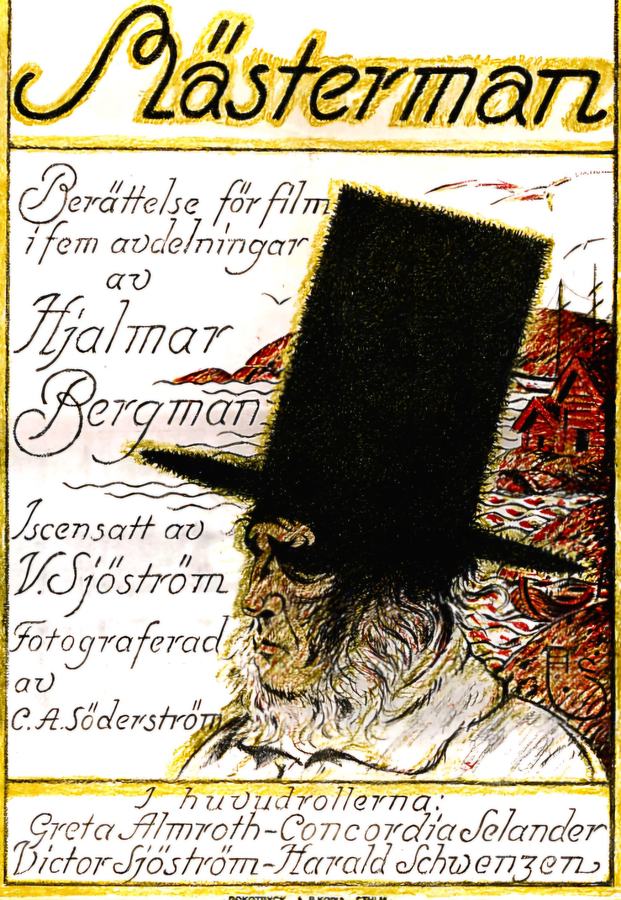
A definitive 7.3/10 rating for a film that redefined the boundaries of cult cinema. Mästerman remains a cornerstone of transgressive art.
Stepping into the world of Hjalmar Bergman's Mästerman (1920) is akin to entering a dimly lit, smoke-filled room where the air itself crackles with an unspoken tension. This isn't merely a film; it's a visceral experience, a stark psychological portrait etched onto the silver screen that, even a century later, retains its chilling grip. At its core lies the titular character, a pawnbroker whose very existence is a testament to the darker recesses of human nature, a man so thoroughly steeped in avarice and cruelty that he becomes less a person and more a force of nature, an embodiment of societal dread.
Hjalmar Bergman, the brilliant literary mind behind the screenplay, was a master of weaving intricate narratives that delved into the moral complexities and often bleak realities of human existence. His influence on Mästerman is undeniable, shaping a story that transcends a simple plot outline to become a profound exploration of character and consequence. Bergman's work often featured morally ambiguous figures and explored themes of social isolation, the corruption of power, and the desperate struggle for dignity in an unforgiving world. Here, he crafts a narrative that feels less like a conventional story and more like an unfolding tragedy, observed with an almost clinical detachment. The film, a product of the burgeoning Swedish cinema of the early 20th century, stands as a testament to Bergman's unique ability to infuse narrative with a palpable sense of psychological realism, even within the constraints of the silent era.

The narrative’s strength lies in its relentless focus on the central antagonist. Mästerman is not just a bad man; he is a symbol, a societal mirror reflecting the anxieties of a world grappling with economic disparity and moral decay. Bergman’s writing ensures that Mästerman’s actions are not random acts of villainy but rather logical extensions of his deeply ingrained character, making his cruelty all the more unsettling. One might find parallels in the stark realism and character-driven despair of Peterburgskiye trushchobi, which similarly plunges into the underbelly of urban life and the moral compromises made by its inhabitants. Both films, despite their geographical and cultural differences, share a commitment to portraying the harsh realities faced by those on the fringes of society, often at the mercy of more powerful, less scrupulous individuals.
The success of Mästerman hinges almost entirely on the performance of Hjalmar Selander in the titular role. Selander, with his imposing presence and masterful use of silent film acting techniques, embodies the pawnbroker with an unsettling conviction. His Mästerman is a figure of stark, unyielding malevolence, his every gesture, every flicker of his eyes, conveying a deep-seated contempt for humanity and an insatiable hunger for control. There's a particular scene, early in the film, where he haggles over a meager possession, his face a mask of stone, that perfectly encapsulates his merciless nature. It’s not just the words unsaid, but the way his body language exudes a chilling indifference to the plight of others that makes his portrayal so profoundly disturbing.
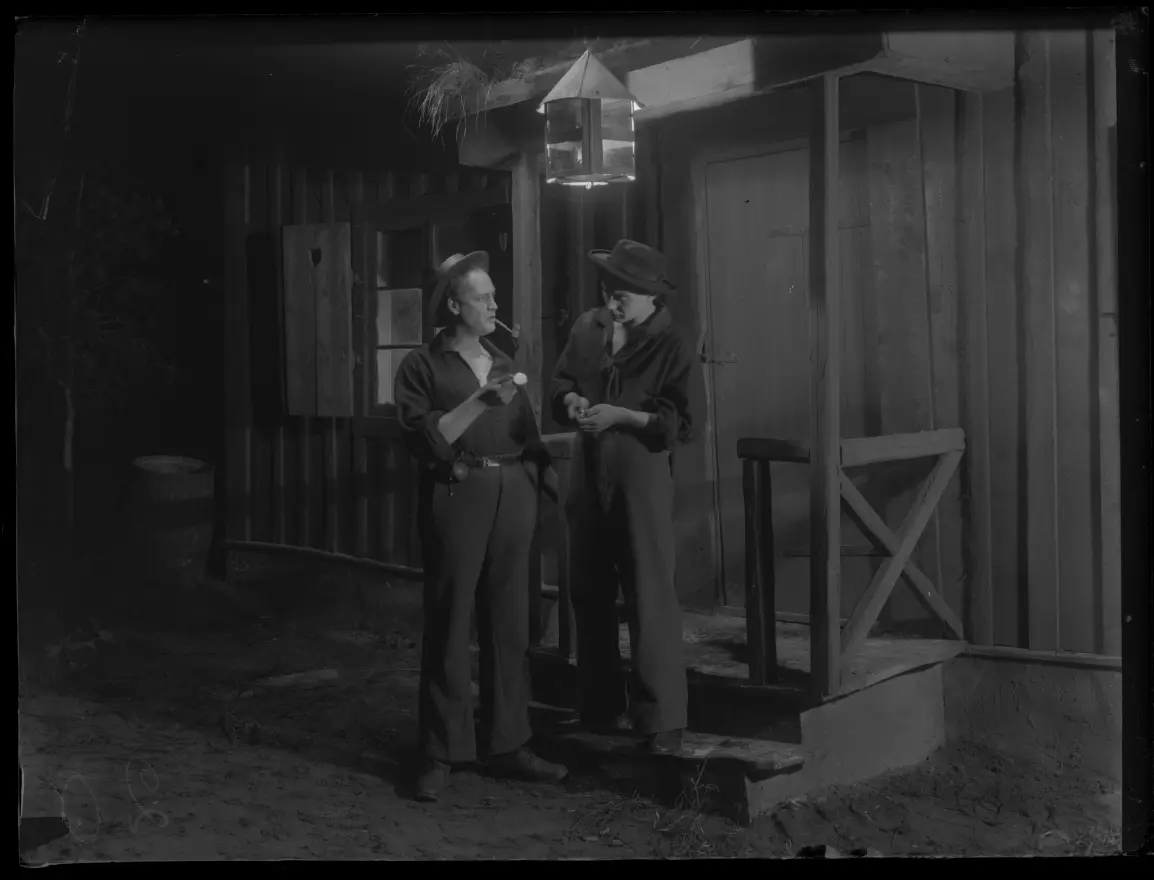
Selander’s performance is a masterclass in subtlety and intensity. He doesn't resort to overt theatrics; instead, he builds the character through nuanced expressions and controlled movements, allowing the audience to project their fears onto his inscrutable visage. This approach ensures that Mästerman remains a figure of constant dread, his cruelty simmering beneath the surface rather than boiling over in a histrionic display. This kind of nuanced villainy, where the true horror lies in the character’s cold calculation rather than their overt actions, echoes the psychological tension found in films like The Moral Code, where characters grapple with their own internal demons and the insidious nature of moral corruption. Selander makes Mästerman an unforgettable antagonist, a personification of the societal ills that Bergman so keenly observed.
While Selander dominates the screen, the film's impact is significantly amplified by a robust supporting cast who collectively paint a vivid picture of a community living under the shadow of Mästerman's tyranny. Each character, though perhaps given less screen time, contributes to the overall tapestry of suffering and desperation. Axel Lagerberg, Edvin Adolphson, and Harald Schwenzen, among others, portray individuals caught in the pawnbroker's web, their faces often etched with a silent anguish that speaks volumes. Jullan Jonsson, for instance, might play a character whose brief appearance nevertheless conveys a lifetime of hardship, her expressions a poignant counterpoint to Mästerman's stony indifference.
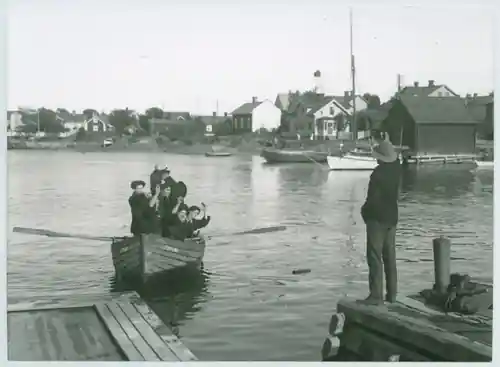
The collective performances of the ensemble cast — including Gustaf Salzenstein, Ollars-Erik Landberg, Tor Weijden, John Ekman, Lars Egge, Victor Sjöström, Gösta Gustafson, Linnéa Hillberg, Fridolf Rhudin, Greta Almroth, Emmy Albiin, Märta Scherberg, Torsten Hillberg, Georg Blomstedt, Bror Berger, Olof Ås, Concordia Selander, William Larsson, Richard Lundin, Helge Kihlberg, and Simon Lindstrand — are crucial in establishing the film's oppressive atmosphere. They are the victims, the witnesses, and the reluctant participants in Mästerman's reign, their individual stories, however brief, serving to highlight the pervasive nature of his cruelty. Their reactions, ranging from fear to quiet defiance, provide the emotional resonance that prevents the film from becoming a mere character study of a villain. Instead, it becomes a broader commentary on the human spirit's resilience, or lack thereof, when faced with overwhelming oppression.
The nuanced portrayals by the supporting actors are particularly vital in a silent film, where emotions must be conveyed through gesture, posture, and facial expression alone. They succeed in creating a palpable sense of community, even one bound by shared misery. Their performances are not simply reactive; they often carry the weight of the film's moral questions, prompting the audience to consider the complicity of silence and the slow erosion of dignity. This communal suffering finds echoes in the social critique inherent in films like Den Vanærede, which explores the devastating impact of societal judgment and the isolation of those who fall from grace. The collective despair of the townspeople in Mästerman serves as a powerful testament to the destructive power of unchecked avarice.

As a silent film, Mästerman relies heavily on its visual storytelling, and here, it truly shines. The cinematography, though perhaps constrained by the technology of its era, is remarkably effective in building an atmosphere of gloom and foreboding. The use of shadow and light, particularly in Mästerman’s pawnbroker shop, creates a claustrophobic environment that mirrors the suffocating grip he holds over his clients. The stark, often expressionistic lighting emphasizes the moral chiaroscuro of the narrative, highlighting the stark contrast between good and evil, hope and despair. The production design, too, contributes significantly, depicting a world that feels worn and weary, reflecting the lives of those who frequent Mästerman’s establishment.
The pacing is deliberate, allowing the psychological tension to build gradually, much like a slow-burning fuse. This measured rhythm ensures that every significant event, every act of cruelty or glimmer of resistance, lands with maximum impact. The intertitles, rather than merely relaying dialogue, are often used sparingly and poetically, adding to the film's literary quality and reinforcing Bergman's narrative style. They serve as concise, impactful pronouncements, guiding the viewer through the moral landscape without over-explaining the deeply felt emotions conveyed by the actors. This disciplined approach to visual and narrative rhythm is a hallmark of early Swedish cinema, which often prioritized psychological depth and atmospheric realism over fast-paced action.

At its heart, Mästerman is a profound meditation on themes that remain evergreen: the abuse of power, the elusive nature of justice, and the possibility, or impossibility, of redemption. Mästerman himself is a figure whose moral compass is irrevocably broken, seemingly beyond the reach of any redemptive arc. His power stems not from physical might, but from his control over the economic lifelines of the desperate, a subtle yet devastating form of tyranny. The film explores the insidious ways in which such power can corrupt not only the wielder but also the entire community, fostering fear, resentment, and a creeping sense of complicity among those who silently endure.
The question of justice looms large throughout the narrative. Will Mästerman ever face consequences for his actions? Will the oppressed find a way to reclaim their dignity? These are the questions that drive the emotional core of the film. It's a challenging watch precisely because it doesn't offer easy answers. The world of Mästerman is often bleak, reflecting a period where social safety nets were thin and the individual was often at the mercy of more powerful forces. This unflinching look at moral quandaries and the struggle for ethical conduct resonates with the intensity seen in films like The Crucible of Life, which similarly grapples with profound ethical dilemmas and the trials that shape human character. Both films refuse to shy away from the darker aspects of human experience, offering a rigorous examination of the choices people make under duress.
The film's exploration of these themes is surprisingly nuanced for its time. It doesn't simply portray Mästerman as a flat villain; rather, it suggests the complex interplay of societal conditions and individual choices that create such a character. The film invites viewers to consider the systemic factors that allow a figure like Mästerman to thrive, prompting a deeper reflection on collective responsibility. This depth of thematic exploration elevates Mästerman beyond a simple morality play, cementing its status as a significant work of early cinema that continues to provoke thought and discussion.
Decades after its initial release, Mästerman remains a compelling and important work within the canon of Swedish cinema. Its influence, though perhaps subtle compared to some of its more internationally recognized contemporaries, is felt in its commitment to psychological realism and character-driven drama. It represents a crucial period in cinematic history when filmmakers were still defining the language of the medium, pushing boundaries in storytelling and visual expression. The film's unflinching portrayal of human cruelty and the bleakness of existence resonated with audiences then, and continues to do so today, serving as a powerful reminder of the cyclical nature of human failings.
For those interested in the evolution of cinema, particularly the silent era, Mästerman offers a rich viewing experience. It's a film that demands engagement, rewarding patient viewers with a deep dive into the human psyche and the societal forces that shape it. Its artistic merit lies not just in its historical significance but in its enduring power to unsettle and provoke. The performances, especially Selander's, are timeless, proving that true acting transcends technological limitations. The film stands as a testament to Hjalmar Bergman's literary genius and the collaborative artistry of early Swedish filmmakers. It’s a film that, much like the persistent shadow of Mästerman himself, lingers long after the credits roll, compelling us to reflect on the darkness that can reside within the human heart and the fragile nature of justice in an often-unjust world.
In a world increasingly consumed by fleeting entertainment, Mästerman serves as a stark, powerful counterpoint, a piece of art that insists on deeper contemplation. It reminds us that some stories, particularly those that explore the darker facets of humanity, are not meant to be easily digested but rather to be absorbed, pondered, and perhaps, learned from. Its legacy is one of unflinching honesty, a cinematic mirror held up to the less savory aspects of human society, ensuring that the tales of terror and cruelty, much like Mästerman himself, are not easily forgotten.
IMDb 6.2
1918
Community
Log in to comment.