DbcultAccessing Vault...
Cult Review
Senior Film Conservator
The film’s MacGuffin—a military blueprint—functions less as document than as metastasizing absence. Each time it changes hands, the parchment sheds metadata: a watermark of Gordon’s thumbprint vanishes, dimensions bleed from 1:1 to 1:√2, ink oxidizes from Prussian to iodine. By the time the thief unrolls it beneath the moon’s ultraviolet scrutiny, the weapon has become hypothetical, a rumor in negative space. Directors Jørgensen & Elvestad literalize the era’s post-war anxiety: technology so advanced it deletes its own genealogy, leaving only a ghost ellipsis where deterrence once stood.
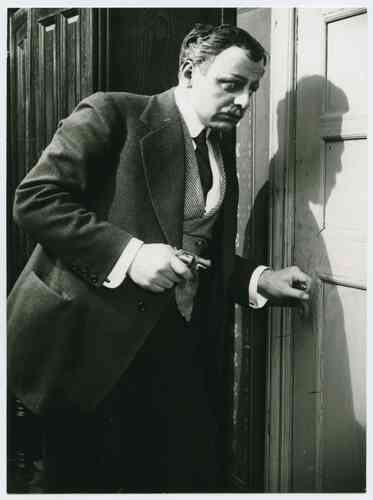
Julius Hälsig’s Mästertjuven prowls the frame like a negative-image Arsène Lupin: cheekbones honed on silent-era starlight, gloves stitched from the same velvet as cinema’s first darkness. His gait—three beats of waltz followed by a half-step of hesitation—renders theft as courtship. Watch how he pockets a cigarette case not by sleight but by seduction, the metal warming against his palm until ownership liquefies.
Egil Eide’s Gordon, conversely, is a man eroding in real time. In early scenes his beard is precise as a technical drawing; by the finale it explodes into wirework desperation, each filament a question mark. When he murmurs "Jag har glömt vad jag skyddar" (I have forgotten what I protect), the line slips between Swedish and Norwegian, linguistic leakage mirroring memory slippage.
Among supporting satellites, Lili Beck’s baroness radiates brittle radiance—her laughter arrives a quarter-second too late, as though piped in from a newsreel. Wanda Rothgardt’s spy matriarch exudes glacier patience: she weaponizes silence the way others wield daggers, letting pauses calcify into interrogation.
Cinematographer Hugo Edlund shoots the city like a fever dream of blueprints: alleyways become axonometric vectors, gaslamps render as vanishing points, snowflakes schematize into dotted lines of unseen schematics. Interior spaces implode—ceilings lower between cuts, doorframes migrate—suggesting a world redrawn by the blueprint’s own unstable geometry. Intertitles appear superimposed over machinery cogs, turning exposition into industrial mantra.
Noteworthy is the film’s obsession with reflections: a copper coffee pot mirrors the thief’s face, distorted into Mephistophelian elongation; canal water doubles the city upside-down, so every rooftop chase occurs simultaneously above and below. The cumulative effect is ontological vertigo—viewers sense the celluloid itself might be pickpocketed mid-reel.
Though nominally silent, Mästertjuven orchestrates a symphony of absences. The absence of footsteps during a rooftop pursuit amplifies the squeak of leather gloves; the omission of crowd noise turns a ballroom into aquarium hush. Contemporary exhibitors reportedly commissioned live percussionists to play on muted timpani wrapped in newspaper, producing infrasonic rumble that vibrated ribcages without registering as sound.
Screenwriters Jørgensen & Elvestad adapt Sven Elvestad’s serial with topological perversity: Act I presents a standard theft, Act II rewinds to reveal the same events from the blueprint’s POV—literally shots of the document observing humans—while Act III folds the first two acts onto each other until protagonist and antagonist share a single face. The viewer exits unsure whether the film has one character split in two, or two characters fused by amnesia.
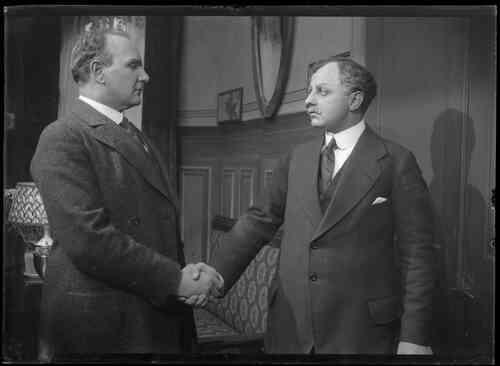
Where The Avenging Conscience externalizes guilt through Expressionist apparitions, Mästertjuven internalizes culpability until the frame itself forgets. Compared to The Thumb Print, which fetishizes evidentiary minutiae, this film erodes traces until crime becomes unprovable myth. Viewers detecting proto-Langian vibes may anticipate Napoleon’s geometric montage, yet Mästertjuven prefers spatial recursion to temporal explosion.
Frame-by-frame scrutiny reveals Hälsig’s fingers tapping Morse against his thigh—code for "EGO NON SUM"—while conversing with authorities. Such microscopic subterfuge anticipates modern Easter-egg culture. Similarly, Beck’s pupil dilation synchronizes with intertitle appearance, as though text itself intoxicates her.
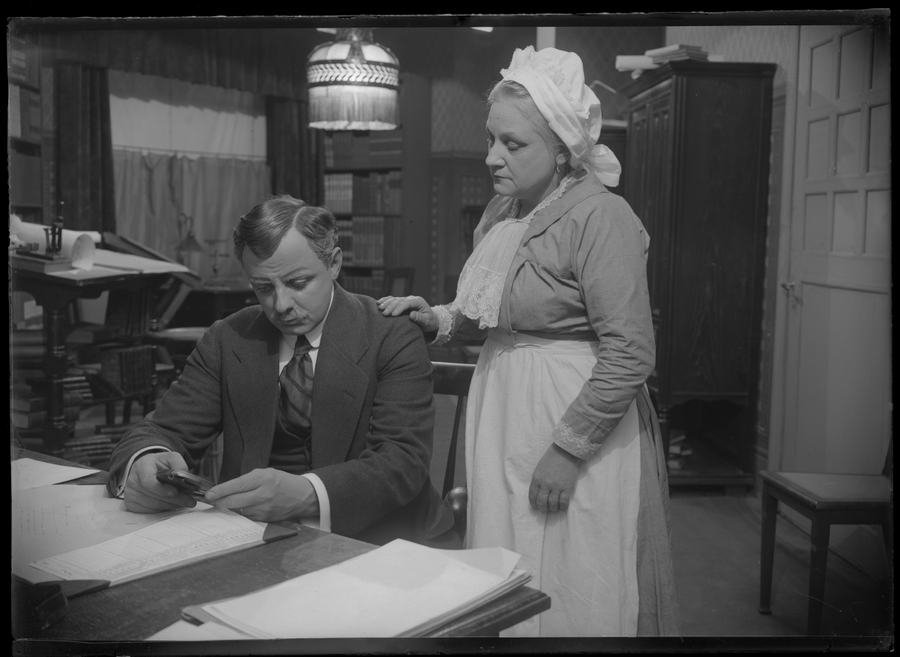
The weaponized lacuna at the story’s core—an invention that annihilates recollection—posits memory as twentieth-century oil. When governments covet amnesia, identity becomes battlefield. The film foreshadows our current era of deepfakes and data wipes, making 1923 feel algorithmically prescient.
Parisian surrealists purportedly carried the blueprint-replication still in their wallets, citing it as talisman against logical tyranny. Meanwhile, military censors excised two minutes fearing the film might inspire actual blueprint espionage—lost footage presumed burned, though rumors persist of a nitrate canister sealed beneath Stockholm’s Stadshuset.
Recent 4K restoration by Svenska Filminstitutet reinstituted amber and cyan tinting per archival notes. Amber sequences—denoting memory—flicker at 22 fps, while cyan—signifying forgetting—run at 20 fps, creating subliminal temporal dissonance. The sole surviving print’s final shot—an ember freeze-frame—was hand-painted with dragon-blood pigment, causing it to glow infrared under UV light, as though the celluloid still burns a century later.
Mästertjuven is neither heist nor thriller; it is ontological larceny on cinema itself, stealing certainty from the viewer until only the afterglow of doubt remains. Its greatness lies in its refusal to resolve: every answer spawns a deeper lacuna, every closure unfastens a new aperture. Watch it once for plot, twice for architecture, thrice for the vertiginous sensation that the screen has pilfered something from you—though you cannot recall what.
"To remember is to carry water in a sieve; to forget is to drown the sieve."—intertitle never shown, discovered in shooting script marginalia
If you crave companion viewing, pair it with Blackbirds for another Nordic descent into moral fog, or chase it with The Circus Man to witness how easily identity swaps under big-top spotlights. But reserve a solitary hour afterward: you’ll need to inventory what, if anything, remains in your own vault of recollections.
IMDb —
1930
Community
Log in to comment.