DbcultAccessing Vault...
6.9/10
Senior Film Conservator
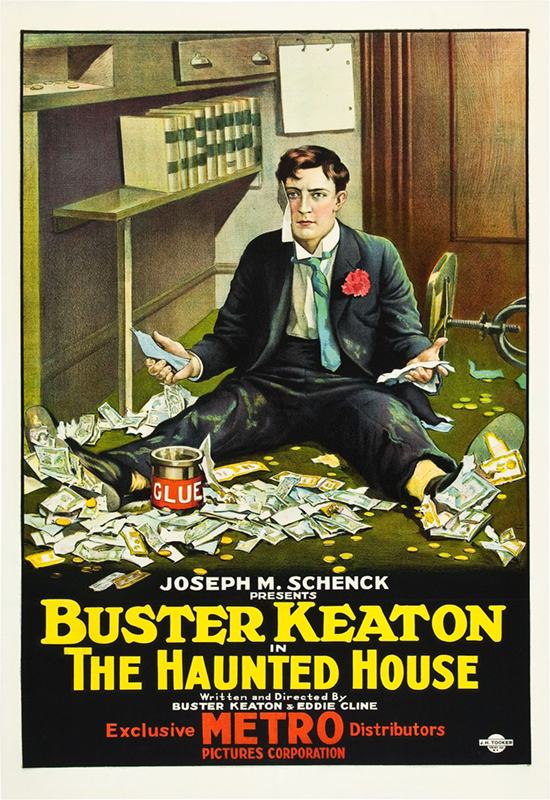
A definitive 6.9/10 rating for a film that redefined the boundaries of cult cinema. The Haunted House remains a cornerstone of transgressive art.
To witness Buster Keaton in his prime is to observe a physicist disguised as a clown. In 1921's The Haunted House, co-directed with Edward F. Cline, we are treated to a quintessential distillation of Keaton’s obsession with the intersection of human frailty and mechanical indifference. Unlike the heavy-handed melodrama found in contemporary works like The Mark of Cain, Keaton’s approach to the uncanny is rooted firmly in the tangible. The 'haunting' is not a spiritual visitation but a triumph of engineering—a series of levers, pulleys, and false floors designed to exploit the gullibility of the uninitiated. This film represents a pivotal moment in the silent era where the comedy of errors evolved into a comedy of geometry.
The opening sequence within the bank is a tour de force of prop-based comedy. The simple catalyst of spilled glue transforms the mundane act of counting currency into a nightmarish struggle against the physical world. Keaton’s movements here are staccato and deliberate; he treats the sticky notes of money not as mere props, but as malevolent entities. While the era saw many instructional or utilitarian films like Dr. Wise on Influenza, which focused on the literal and the didactic, Keaton pushes the boundaries of the literal into the realm of the absurd. The visual of the bank teller unable to detach himself from the very capital he is meant to manage serves as a biting, if unintentional, metaphor for the socioeconomic traps of the early 20th century.
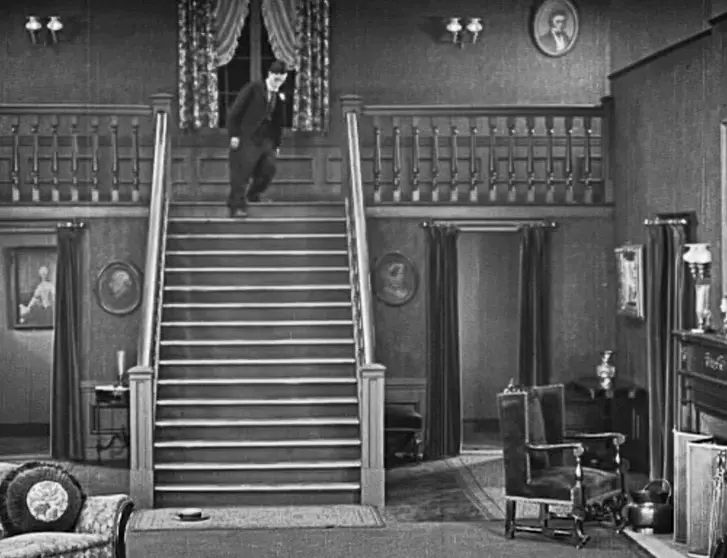
Once the action migrates to the titular house, the film sheds its terrestrial skin and becomes something far more experimental. The house is a character in its own right—a malevolent machine that responds to Keaton’s presence with mechanical hostility. The most famous set piece, the staircase that flattens into a slide, is a marvel of early cinema production. It challenges the viewer’s perception of domestic safety. In contrast to the static, stagey presentations often seen in European imports like L'orgoglio, Keaton utilizes the entire frame, moving vertically and horizontally with a fluidity that feels modern even a century later.
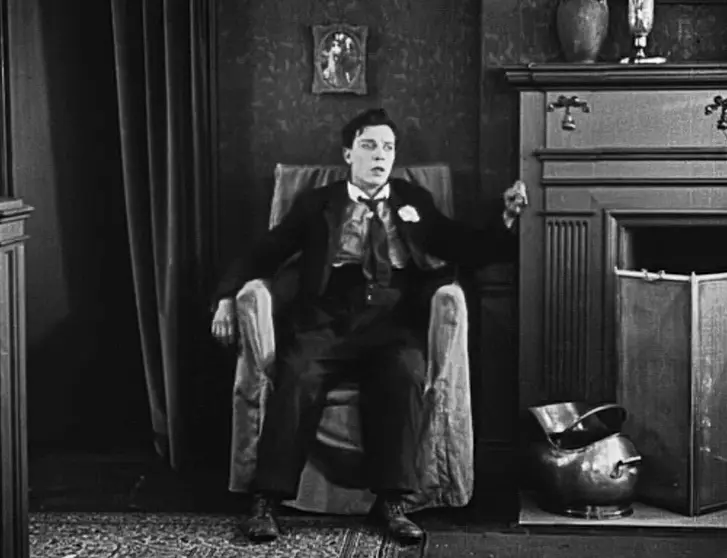
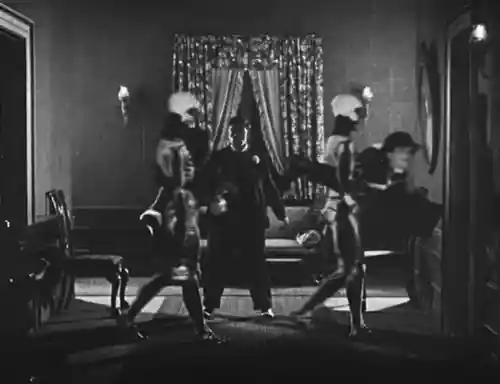
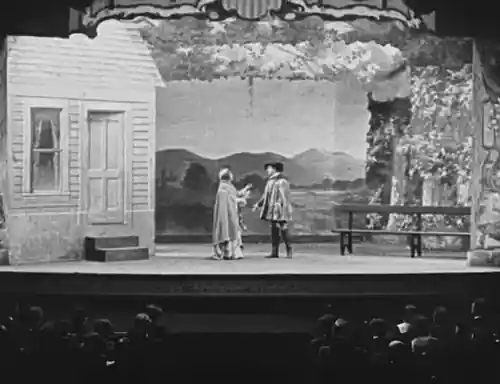
The counterfeiters, dressed as ghosts and devils, represent a fascinating meta-commentary on the theatricality of fear. They are 'staging' a haunting, much like a film crew stages a scene. This layers the narrative with a sense of artifice that mirrors the filmmaking process itself. When Keaton encounters these 'phantoms,' his reactions are not those of a terrified victim but of a man deeply inconvenienced by the supernatural. This stoicism is what elevates the film above standard slapstick. He is the calm eye in a hurricane of choreographed chaos, a trait that distinguishes his work from the more emotive performances in The Mother Instinct or the atmospheric dread of The Red Lantern.
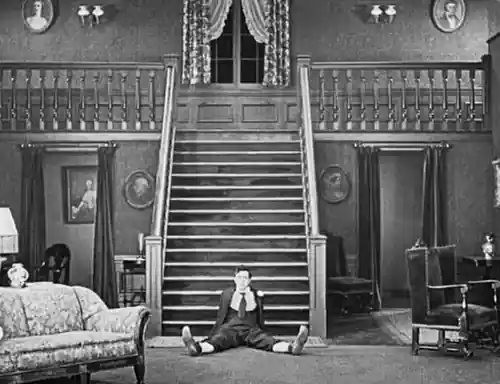
Technically, The Haunted House is a masterclass in timing. The editing must be precise for the mechanical gags to land, and Cline and Keaton demonstrate an intuitive grasp of rhythmic cutting. The lighting, particularly in the shadowy corners of the hideout, hints at the burgeoning German Expressionist influence that would soon permeate global cinema, yet it remains distinctly American in its brightness and clarity. While films like The Lotus Woman relied on exoticism and visual texture to captivate, Keaton relies on the purity of the stunt. There is no trick photography here—only the physical bravery of a performer willing to hurl himself down a wooden slide for the sake of a frame.
It is also worth noting the cast's synergy. Virginia Fox provides a grounded presence amidst the madness, while Joe Roberts, Keaton’s frequent foil, brings a looming physicality that heightens the stakes. The ensemble moves like a well-oiled machine, essential for a film where the environment is constantly shifting. This level of coordination was rare; many films of the period, such as Kapten Grogg och fru, focused on simpler, more isolated character interactions rather than the complex, multi-layered choreography found here.
Why does The Haunted House endure while other 1921 releases like The Discarded Woman or A Wife's Sacrifice have faded into the annals of niche historical interest? The answer lies in Keaton’s universal language. Tragedy and melodrama often date themselves through shifting social mores, but the struggle against a collapsing staircase is eternal. Keaton taps into a primal human anxiety: the fear that the world we have built—our banks, our homes, our technology—is secretly conspiring against us.
In the film’s final act, the dream-like sequence involving a climb to heaven (and a swift descent back to earth) adds a layer of existential whimsy. It suggests that even the afterlife is subject to the same mechanical failures and bureaucratic glitches as the bank. This cynical yet playful worldview is what makes Keaton a true auteur. He doesn't just make us laugh; he makes us acknowledge the absurdity of our own resilience. Whether he is dealing with the domestic upheaval of Maman poupée or the high-stakes tension of Burning Daylight, the underlying theme in Keaton's world is always the same: the individual versus the incomprehensible machinery of existence.
Ultimately, The Haunted House is more than just a twenty-minute short; it is a blueprint for the action-comedy genre. It eschews the sentimentality of its peers for a rigorous, almost mathematical exploration of physical space. While other films like It Pays to Advertise or San-Zurka-San might have captured the zeitgeist of the early twenties, Keaton captured something far more elusive: the kinetic soul of cinema.
As we look back through the lens of modern digital effects, the practical ingenuity of the 1921 production remains staggering. There are no pixels to hide behind, only the raw talent of a man who understood that a well-timed fall is the most honest form of art. From the sticky fingers in the bank to the demonic dancers in the hallway, every frame is saturated with a creative energy that refuses to be ignored. It is a haunting that we should all welcome with open arms.
An essential pillar of silent comedy that transcends its era through brilliant set design and Buster Keaton's unparalleled physical intelligence. A must-watch for anyone interested in the foundations of visual storytelling.
IMDb —
1918
Community
Log in to comment.