DbcultAccessing Vault...
Cult Review
Senior Film Conservator
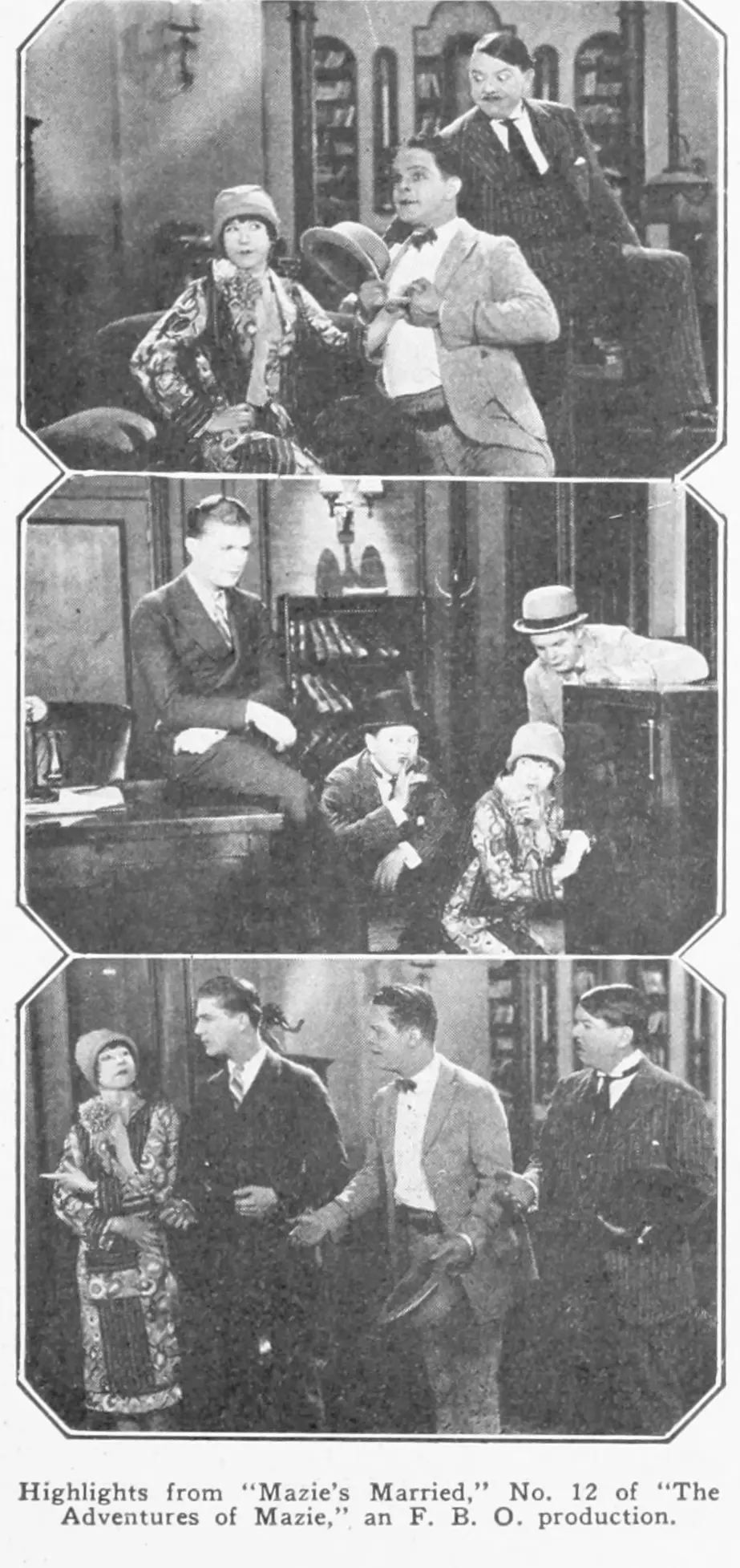
Is 'Mazie's Married' worth watching today? Short answer: yes, but with significant caveats that demand a specific kind of viewer. This rarely-seen silent film offers charming performances and a fascinating glimpse into early comedic stylings, yet it undeniably struggles with pacing and narrative depth by contemporary standards.
This film is unequivocally for silent film enthusiasts, cinephiles tracing the roots of comedic timing, and those with a high tolerance for early cinema's structural quirks. It is decidedly not for anyone seeking a fast-paced, narrative-driven experience, a polished modern comedic sensibility, or those unaccustomed to the unique language of silent storytelling.
'Mazie's Married' presents a deceptively simple premise that, on paper, holds the promise of lighthearted romantic comedy. We are introduced to Dorsey, a character defined less by his actions and more by his profound inaction. He harbors romantic feelings for Mazie but is utterly paralyzed by shyness, unable to articulate his desire to propose. This central conflict is the engine of the film, intended to generate humor through Dorsey's repeated, and increasingly desperate, failures.
The plot, penned by Nell Martin and Doris Anderson, leans heavily on the comedic trope of the bumbling suitor. Dorsey's attempts are not just ineffectual; they are a masterclass in comedic self-sabotage, often exacerbated by the well-meaning but clumsy interventions of Tripp and Fall. These secondary characters act as a Greek chorus of incompetence, their efforts to assist Dorsey only serving to highlight his own pathetic indecision. Their presence, while adding to the ensemble, often feels less like genuine aid and more like narrative padding, stretching out a joke that might have landed more effectively with tighter execution.
What truly sets 'Mazie's Married' apart, however, is the resolution to this prolonged comedic agony. It is Mazie herself who, with a refreshing display of agency, takes matters into her own hands. Confronted with Dorsey's inability to even present a simple card, she seizes the initiative, writing 'yes' herself. This pivotal moment, while undeniably a comedic punchline, also carries a subtle undercurrent of female empowerment, a surprising twist in an era often characterized by more passive female roles. It’s a moment that elevates the film beyond mere slapstick, hinting at a character with a decisive spirit far removed from the dithering men around her.
The narrative, while slender, provides a window into the comedic sensibilities of the 1920s, valuing character archetypes and physical gags over intricate plot developments. It's a foundational piece, showing the building blocks of what would evolve into more complex romantic comedies.
The success of any silent film hinges almost entirely on the expressiveness and physicality of its cast, and 'Mazie's Married' is no exception. Al Cooke, in the role of Dorsey, embodies the quintessential silent film everyman paralyzed by social anxiety. His performance is a masterclass in non-verbal communication, relying heavily on exaggerated facial contortions and a repertoire of nervous tics. We see him repeatedly adjust his tie, fidget with the brim of his hat, or nervously clear his throat, all while his eyes dart around the room, betraying an internal panic that no intertitle could fully capture. His attempts to present the proposal card are particularly telling; a sequence might show him approaching Mazie, only for his hand to tremble violently, causing the card to slip from his grasp or for him to retreat entirely, feigning an interest in a distant object. This physical comedy, though simple, effectively communicates his character's profound ineptitude and makes his plight both frustrating and oddly endearing. It's a performance that leans into the theatricality inherent in early cinema, prioritizing broad strokes over subtle realism, yet it remains effective within its chosen medium.
However, it is Alberta Vaughn as Mazie who truly anchors the film and provides its most memorable performance. Vaughn brings a vibrant energy and a surprising depth of character to a role that could have easily been one-dimensional. Her Mazie is not merely the passive object of affection but a woman of intelligence and agency. Her expressions range from amused exasperation at Dorsey's antics to a quiet determination that culminates in her taking control of her own destiny. The moment she snatches the card and writes 'yes' is not just funny; it’s a powerful declaration, delivered with a smirk that speaks volumes without a single word. Vaughn's ability to convey both comedic timing and a distinct personality makes her the standout element of the entire production. She elevates the material, injecting it with a spark that prevents it from becoming entirely forgettable.
The supporting cast, including Kit Guard and Larry Kent as Tripp and Fall, primarily serves as comedic foils to Dorsey. Their performances are, by design, more broadly drawn, often resorting to exaggerated gestures and slapstick reactions. While effective in short bursts, their consistent over-the-top antics can become repetitive, underscoring the film's reliance on a limited comedic palette. Their characters are functional rather than nuanced, existing solely to push Dorsey further into his comedic despair. This style of acting, while common for the era, highlights a contrast with Vaughn's more grounded (for silent film) portrayal, making her performance shine even brighter.
The direction of 'Mazie's Married', while uncredited, reflects the nascent stage of cinematic storytelling in the 1920s. The film largely employs static shots, a common technique for the era, which allows the audience to fully absorb the physical comedy unfolding within the frame. Camera movement is minimal, if present at all, placing the emphasis squarely on the actors' performances and the staging of gags. This approach, while lacking the dynamic flair of later silent film pioneers like F.W. Murnau or Sergei Eisenstein, serves the simple comedic narrative adequately. Gags are often set up in wide shots, allowing the full scope of Dorsey's clumsiness or Tripp and Fall's misguided efforts to be appreciated.
Intertitles are used sparingly but effectively, primarily to advance the plot or deliver punchlines that cannot be conveyed through action alone. They are integrated smoothly, ensuring that the audience can follow the narrative thread without feeling overwhelmed by text. The lack of sophisticated editing or innovative camera angles means the film relies on the inherent humor of its situations and characters. This is both a limitation and a charming characteristic, offering a raw, unfiltered look at early filmmaking techniques. Compared to more ambitious contemporary films like The Foolish Virgin, which explored dramatic depth, 'Mazie's Married' is content with its comedic simplicity, focusing its technical efforts on clarity and visibility.
Cinematography for 'Mazie's Married' is functional and straightforward. Shot in black and white, the lighting appears to be naturalistic for the most part, designed to illuminate the actors clearly and ensure visibility of their movements and expressions. There's no grand artistic statement being made through shadows or elaborate compositions; the goal is simply to capture the action. The sets are modest, likely studio-bound, but serve as believable backdrops for the domestic and office settings. This pragmatic approach to visual storytelling is typical of short comedies from this period, prioritizing efficiency and immediate comedic impact over aesthetic grandeur. It’s a stark contrast to the more experimental visual styles that would emerge in the later years of the silent era.
The pacing of 'Mazie's Married' is, perhaps, its most divisive attribute. The film's central conceit—Dorsey's ineffectual attempts to propose—is stretched across its runtime, leading to a repetitive structure. Each failed attempt, while offering a new variation on the theme of comedic ineptitude, contributes to a sense of narrative languor. Modern audiences, accustomed to rapid-fire editing and constantly evolving plotlines, may find the deliberate, almost episodic, rhythm challenging. The humor often builds slowly, allowing each physical gag to play out fully, a style that reflects the era's audience expectations for silent comedy where gags were savored rather than rushed.
This measured pace, however, can also be seen as a strength, particularly for those interested in the historical evolution of comedic timing. It allows for a deeper appreciation of the subtle nuances in Al Cooke's performance and the visual storytelling. Unlike the frenetic, often chaotic energy of pure slapstick, the humor here is more observational, drawing laughs from the escalating absurdity of Dorsey's plight. It's a film that demands patience, rewarding those who settle into its rhythm rather than expecting a relentless barrage of jokes. This is a significant distinction from films like Love's Sweet Piffle, which might have relied on a quicker succession of gags.
The tone throughout is consistently lighthearted and farcical. There are no genuine stakes, no looming tragedies, only the gentle humor derived from human foibles. This unwavering cheerfulness is part of the film's charm. It never delves into cynicism or dark comedy, maintaining an innocent, almost childlike wonder at the absurdity of its characters' predicaments. The absence of high drama allows the audience to simply enjoy the comedic performances without emotional entanglement. It's a testament to the writers, Nell Martin and Doris Anderson, who crafted a scenario that, despite its simplicity, sustains a consistently amiable mood. This unwavering joviality makes it a pleasant, if not particularly profound, viewing experience.
'Mazie's Married', beneath its unassuming comedic surface, offers intriguing glimpses into societal norms and gender dynamics of the 1920s. Dorsey's inability to propose is not just a character flaw; it can be interpreted as a commentary on male timidity and the societal pressures placed upon men to initiate romantic proceedings. His reliance on Tripp and Fall further underscores a perceived male helplessness, a reliance on 'the boys' to navigate even the simplest emotional challenges. This portrayal, while played for laughs, presents a fascinating, albeit perhaps unintentional, critique of certain masculine archetypes prevalent at the time.
The true thematic power, however, lies in Mazie's decisive action. Her taking the card and writing 'yes' is a powerful subversion of expectations. In an era where women were often depicted as passive recipients of male attention, Mazie asserts her agency, not just accepting a proposal but actively orchestrating it. This moment, I'd argue, is the film's most enduring and surprisingly modern element. It speaks to a nascent feminism, a quiet declaration that women are capable of seizing their own happiness, even when the men around them falter. It's a bold move, played for laughs, but with a resonant undercurrent of empowerment that few short comedies of the era dared to touch upon. It is a surprisingly sharp observation about communication – or the lack thereof – in relationships.
This film, despite its simple plot, inadvertently highlights the evolving roles of women in society and the often-comical inadequacies of traditional male courtship rituals. Mazie's 'yes' isn't just an answer; it's a statement.
The unconventional charm of 'Mazie's Married' lies in its unpretentious nature. It doesn't strive for grand statements or revolutionary filmmaking. Instead, it offers a slice of life, albeit a highly comedic one, from a bygone era. Its flaws in pacing and narrative depth are almost part of its identity, a reminder of the foundational stage of cinema. It works. But it’s flawed. This isn't a film designed to be a timeless classic in the vein of a Chaplin feature, but rather a delightful, if somewhat elongated, comedic sketch that captures the spirit of its time. It’s charming. But it’s also a product of its time. For those with an appreciation for silent film history, these quirks become part of its appeal, offering a more authentic experience of early cinematic humor.
'Mazie's Married' is more than just a historical curiosity; it's a charming, if somewhat flawed, relic of early American comedy. While its simplistic plot and deliberate pacing may test the patience of modern viewers, it offers invaluable insights into the performance styles and comedic sensibilities of the 1920s. Alberta Vaughn's spirited portrayal of Mazie stands out as a beacon of agency and wit, elevating the material beyond its humble origins. It's a film that asks for a specific kind of engagement – one rooted in appreciation for cinematic history and the foundational elements of visual storytelling. For those willing to meet it on its own terms, 'Mazie's Married' provides a delightful, if not entirely gripping, journey back to the dawn of romantic comedy. It is a testament to the enduring power of a simple idea, executed with the earnest charm of its era. Seek it out if you have a genuine interest in the roots of cinema; otherwise, you might find its pace a challenge.
IMDb —
1914
Community
Log in to comment.