DbcultAccessing Vault...
5.1/10
Senior Film Conservator
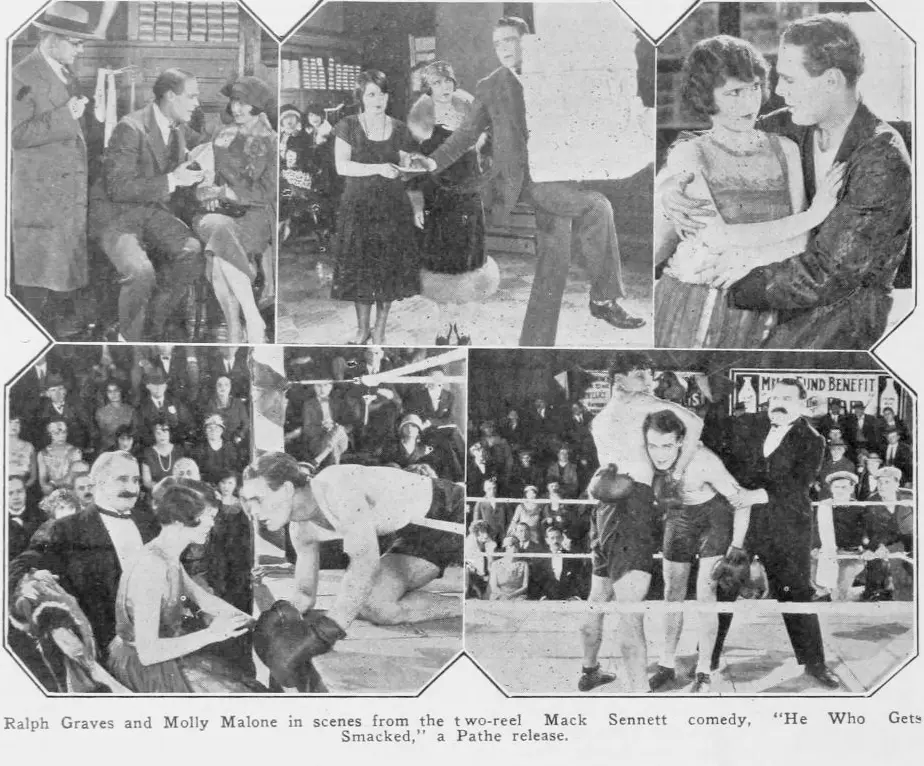
A definitive 5.1/10 rating for a film that redefined the boundaries of cult cinema. He Who Gets Smacked remains a cornerstone of transgressive art.
The year 1925 was a watershed moment for American cinema, particularly within the realm of the silent comedy. While the industry was beginning to eye the horizon for the advent of sound, the masters of the silent frame were reaching the peak of their visual storytelling capabilities. In this fertile landscape, He Who Gets Smacked emerged not merely as another slapstick short, but as a sharp, satirical jab at the social structures of the Roaring Twenties. Directed with a frantic yet controlled energy, the film serves as a vehicle for Ralph Graves, an actor whose physicality and expressive face provided a necessary bridge between the broad clowning of the early nickelodeon era and the more sophisticated character-driven comedies of the late twenties.
The film’s narrative engine is fueled by the classic trope of the 'little man' attempting to navigate a world that demands more than he can provide. Jimmie, played with a delightful mixture of nervous energy and unearned confidence by Graves, is an employee at a department store—a setting that filmmakers of the era frequently used to represent the burgeoning consumerist culture. The department store is a microcosm of society: hierarchical, rigid, and obsessed with appearances. When Jimmie is mistaken for a professional fighter, he doesn't just fail to correct the error; he inhabits the role with a fervor that is both admirable and deeply pathetic. This is where the film finds its heart. It isn't just about the physical comedy of a man who can’t fight; it’s about the psychological comedy of a man who desperately wants to be seen as someone powerful.
In the world of Mack Sennett-style comedy, the truth is always the first casualty of social climbing. He Who Gets Smacked takes this premise and turns it into a high-stakes game of survival within the boxing ring.
The writing team, including the legendary Felix Adler, constructs a screenplay that meticulously escalates the stakes. Adler, who would later go on to write for the likes of Laurel & Hardy and Harold Lloyd, demonstrates an early mastery of the 'snowball effect' in comedy. Every small lie Jimmie tells necessitates a larger one, until he is physically trapped in the ropes of a boxing ring. The inclusion of the 'charity carnival' as the setting for the climax is a stroke of satirical genius. It highlights the absurdity of the upper class using the physical suffering of the lower class (in the form of a boxing match) to fund their philanthropic endeavors. It’s a theme that resonates even today, making the film feel surprisingly contemporary.
While many silent comedians relied on a single 'type'—the tramp, the stone-face, the boy next door—Ralph Graves in He Who Gets Smacked offers something more mercurial. He possesses a unique ability to transition from smug arrogance to sheer terror in the blink of an eye. His performance in the department store sequences is a masterclass in 'underplaying' the comedy, allowing the absurdity of the situation to speak for itself. However, once the film moves toward the boxing carnival, Graves leans into the full-bodied slapstick that the era demanded. His movements in the ring are a chaotic dance of avoidance. He doesn't just get hit; he reacts to the *idea* of getting hit, often falling before a punch even connects. This 'anticipatory comedy' is a difficult skill to master, and Graves executes it with the precision of a clockmaker.
The supporting cast provides a sturdy foundation for Graves’ antics. Louise Carver, often cast as the formidable, no-nonsense woman, brings a necessary groundedness to the film. Her presence acts as a foil to Jimmie’s flightiness. Marvin Loback and Eli Stanton round out the cast with performances that, while traditional for the era, are executed with a level of professionalism that elevates the film above the standard 'two-reeler' fare. The chemistry between the performers suggests a well-oiled machine, likely the result of the rigorous production schedules of the time, where actors worked together across dozens of projects like Their Baby or Help Wanted - Male.
Technically, the film is a fascinating artifact. The cinematography, though restricted by the heavy equipment of 1925, manages to capture the kinetic energy of the boxing match with surprising fluidity. The use of medium shots to capture the full range of Graves’ physical comedy, interspersed with tight close-ups of his panicked expressions, creates a rhythmic pacing that keeps the audience engaged. Unlike the somber, atmospheric lighting found in contemporary dramas like The Phantom Carriage, the lighting here is bright and flat, designed to ensure that every gag is visible. However, within that brightness, there is a clear intentionality to the framing. The way the department store aisles are used to create a sense of entrapment, and the way the boxing ring is framed as a literal cage, shows a sophisticated understanding of visual metaphor.
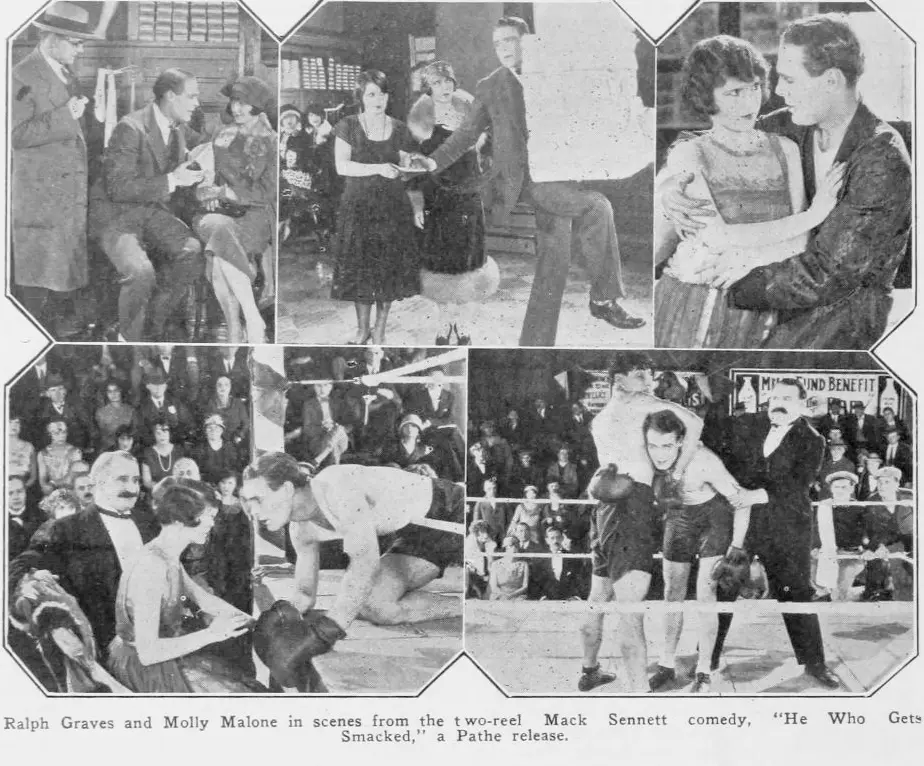
It is easy to dismiss films like He Who Gets Smacked as mere relics of a simpler time, but that would be a mistake. In my professional opinion, this film is a superior example of the 'social pretender' subgenre, outclassing many of its more famous contemporaries through its sheer economy of storytelling. Where other films might spend thirty minutes establishing a character’s motivation, Adler and Heath give us Jimmie’s entire world in the first five minutes. We know who he is, what he wants, and exactly why he is doomed to fail. This efficiency is a hallmark of the best silent comedies and is something modern screenwriters could learn from.
Furthermore, the film’s title is a clever nod to (and perhaps a parody of) the 1924 Lon Chaney prestige drama *He Who Gets Slapped*. By subverting the tragic 'clown' archetype and replacing it with a 'smacked' boxer, the filmmakers are engaging in a meta-commentary on the film industry itself. They are suggesting that while drama might earn accolades, there is a profound, honest truth in the physical comedy of a man taking a punch to the gut. I contend that the film’s ending is one of the most satisfying punchlines of the mid-20s, refusing to give Jimmie a traditional 'hero's exit' and instead leaning into the reality of his situation.
To truly appreciate He Who Gets Smacked, one must look at it alongside the other releases of the period. While films like The Adventures of Robinson Crusoe were exploring the limits of adventure and The Slave Auction was tackling heavy social themes, the boxing comedy was a staple that allowed audiences to laugh at the very real violence of the world. The boxing ring in 1925 was a place of immense cultural significance, a site where masculinity was tested and proven. By turning the ring into a site of farce, the film subtly critiques the cult of toughness that dominated the era. Jimmie isn't a hero because he wins; he’s a hero because he survives the embarrassment of losing.
The film also stands in stark contrast to the more experimental European cinema of the time. While Victor Sjöström was pushing the boundaries of narrative time in The Phantom Carriage, American shorts were perfecting the art of the 'gag.' This isn't to say one is better than the other, but rather to highlight the diversity of the medium. He Who Gets Smacked represents the peak of the 'gag' as a structural unit. Every fall, every misplaced punch, and every double-take is a building block in a larger architectural achievement of humor.
Ralph Graves is often overshadowed by the 'Big Three' (Chaplin, Keaton, Lloyd), but his work in this film proves he was a formidable talent in his own right. His Jimmie is a character defined by his eyes—wide, searching, and perpetually terrified. There is a sequence halfway through the film where Jimmie is first shown the boxing gloves he is expected to wear. The way Graves handles the gloves, as if they were alien artifacts or live explosives, is a masterclass in object work. He manages to convey a dozen different emotions without a single intertitle. It is this level of nuance that keeps the film from feeling dated. The technology of cinema has changed, but the humor of a man out of his depth is eternal.
In conclusion, He Who Gets Smacked is a knockout. It is a film that understands the fundamental truth of the human condition: we are all, at some point, Jimmie. We are all pretending to be more capable than we are, hoping that the world doesn't book us for a 'Star Bout' before we’re ready. Whether you are a scholar of silent cinema or a casual viewer looking for a laugh, this film offers a wealth of entertainment and insight. It is a testament to the power of visual storytelling and a reminder that sometimes, the best way to deal with life’s blows is to lean into the smack.
While it may not have the haunting imagery of Whitechapel or the epic scope of The Broken Coin, its focus is its strength. By narrowing its gaze to the department store and the boxing ring, it creates a concentrated burst of comedic energy that is impossible to resist. It is a film that reminds us why we fell in love with the movies in the first place: the simple, profound joy of watching a man try, fail, and get back up again—only to be smacked once more for our amusement.
IMDb 6.7
1935
Community
Log in to comment.