DbcultAccessing Vault...
Cult Review
Senior Film Conservator
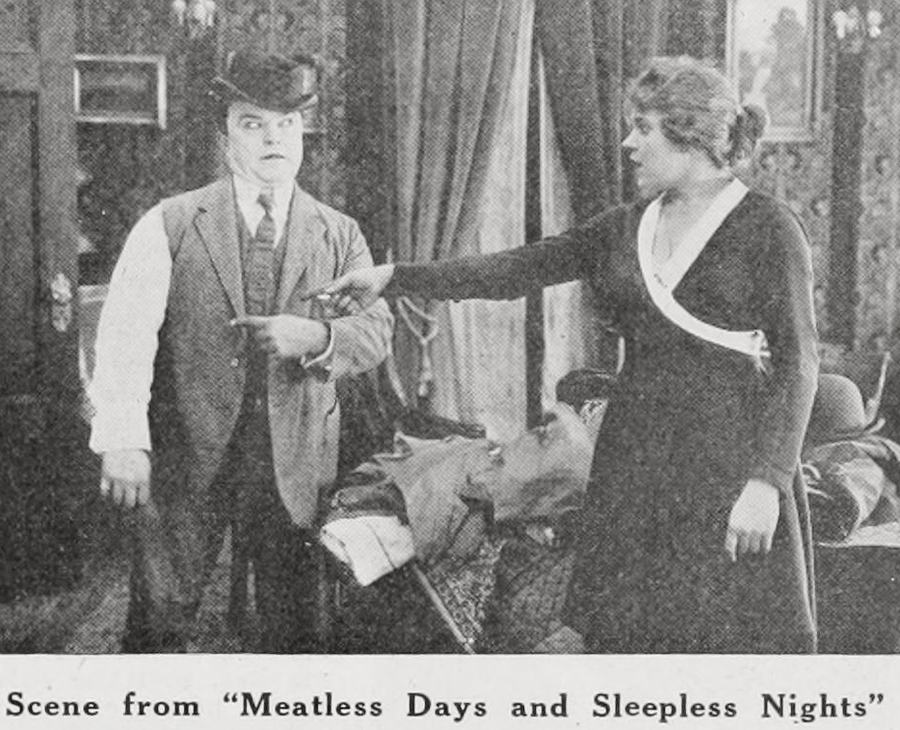
In the annals of early cinema, few films capture the absurdities of wartime rationing with such boisterous comedic energy as Thomas J. Gray's "Meatless Days and Sleepless Nights." This seemingly simple narrative, a relic from an era grappling with unprecedented global conflict, transcends its humble origins to deliver a surprisingly potent, albeit farcical, commentary on bureaucratic overreach, individual desire, and the chaotic friction between them. Released during a period when the United States Food Administration actively promoted conservation efforts, the film serves as both a reflection of its time and a timeless exploration of human nature under duress. It’s a riotous romp that, beneath its slapstick veneer, offers a nuanced, if exaggerated, look at the common man's struggle against an impersonal system. The experience of watching it today is akin to unearthing a forgotten time capsule, revealing not just cinematic techniques of yesteryear, but also the societal anxieties and coping mechanisms of a nation at war.
At the heart of this gastronomic pandemonium is Vic, portrayed with a delightful blend of earnestness and exasperation by the inimitable Victor Moore. Vic operates a "lunch-urant," a culinary establishment proudly, perhaps even fanatically, adhering to the Food Administration's directives. Tuesdays are declared "meatless," Wednesdays, "wheatless." This isn't merely compliance; it's a zealous embrace of austerity, turning Vic into a frontline enforcer of national policy, much to the chagrin of his patrons. Moore's performance anchors the film, embodying the well-meaning but ultimately rigid figure who believes firmly in the letter of the law, even when it drives his customers—and himself—to the brink of madness. His restaurant, rather than a haven of sustenance, becomes a battleground where the ideals of national sacrifice collide head-on with the very real, very primal needs of the populace. This dynamic is a masterstroke of comedic setup, laying the groundwork for the escalating chaos that defines the film. It's a testament to the film's clever writing that it manages to lampoon such a serious national effort without entirely undermining its necessity, focusing instead on the human element of its implementation.
The stage is perfectly set for the arrival of our protagonist-antagonist, a janitor played by Davy Don, whose desires are as uncomplicated as Vic's rules are convoluted. The janitor, dreaming of a hearty, carnivorous repast on his payday, makes a bee-line for Vic's establishment. His yearning for a substantial meal, after presumably enduring his own meatless and wheatless existence, is palpable. He invests a hefty five dollars in a meal ticket, anticipating a future filled with succulent meats. This initial transaction, seemingly innocuous, is the spark that ignites the powder keg of the film's central conflict. Don portrays the janitor with a compelling blend of weary resignation and simmering frustration, making his eventual outbursts entirely understandable, if comically exaggerated. The audience feels his pain, his deep-seated desire for something tangible and satisfying in a world increasingly defined by scarcity and self-denial. It is a powerful, if unspoken, commentary on the class disparities inherent in such rationing policies; for the poor, every meal is a victory, every restriction a profound burden. This film, like The Business of Life, touches upon the often unseen struggles of the working class, albeit through a much lighter lens.
The janitor's hopes are immediately dashed when Vic, with an almost gleeful adherence to protocol, informs him that it is, indeed, Tuesday—a meatless day for all restaurants. The exasperation on Don's face is priceless, a silent scream against the arbitrary cruelty of the calendar. This moment of bureaucratic inflexibility sets the tone for the ensuing chaos. The janitor, feeling swindled, departs with a vow of revenge, a promise that hangs heavy in the air, a comedic Sword of Damocles awaiting its opportune descent. This initial encounter establishes the film's core dynamic: the individual's desperate pursuit of gratification against the unyielding wall of institutional decree. It's a classic comedic setup, but executed with a particular bite given the historical context.
The domestic front provides a parallel, equally absurd subplot. Vic's wife, embodying a different facet of wartime thrift, embarks on her own "saving idea." She delves into the dusty confines of the attic, unearthing a trove of antiquated family garments, determined that these must be worn out before any new clothing purchases are even contemplated. This seemingly innocuous domestic detail further highlights the pervasive culture of rationing and reuse, extending the film's commentary beyond the dinner plate to the very fabric of daily life. It’s a subtle nod to the broader societal pressures, where every resource, no matter how trivial, was subject to scrutiny and conservation. Elizabeth Woodhill, though perhaps given less screen time than her male counterparts, delivers a memorable performance, portraying the wife as a formidable, if misguided, force of domestic economy, her actions inadvertently fueling her husband's later predicaments.
True to his word, the janitor returns the following day, Wednesday, his desire for sustenance undimmed, though redirected. He confidently orders a "herd" of wheat cakes, a seemingly safe bet. However, the universe, or rather Vic's lunch-urant, conspires against him once more. It is, of course, a wheatless day. This second denial, delivered with Vic's characteristic bureaucratic flourish, shatters the janitor's already frayed patience. The ensuing "free for all" is a masterclass in early slapstick comedy. Vic is "badly handled," a euphemism for a thorough thrashing, and the janitor, having exacted a measure of physical revenge, retreats, threatening to unleash all manner of havoc. His threats, delivered with a manic intensity, hint at a mind pushed to its limits, bordering on the kind of desperate, almost delusional state one might find in a darker narrative like Alone with the Devil, though here, it's played purely for laughs. This scene effectively escalates the conflict, demonstrating that the janitor's grievances are not merely about food, but about a deeper sense of injustice and powerlessness.
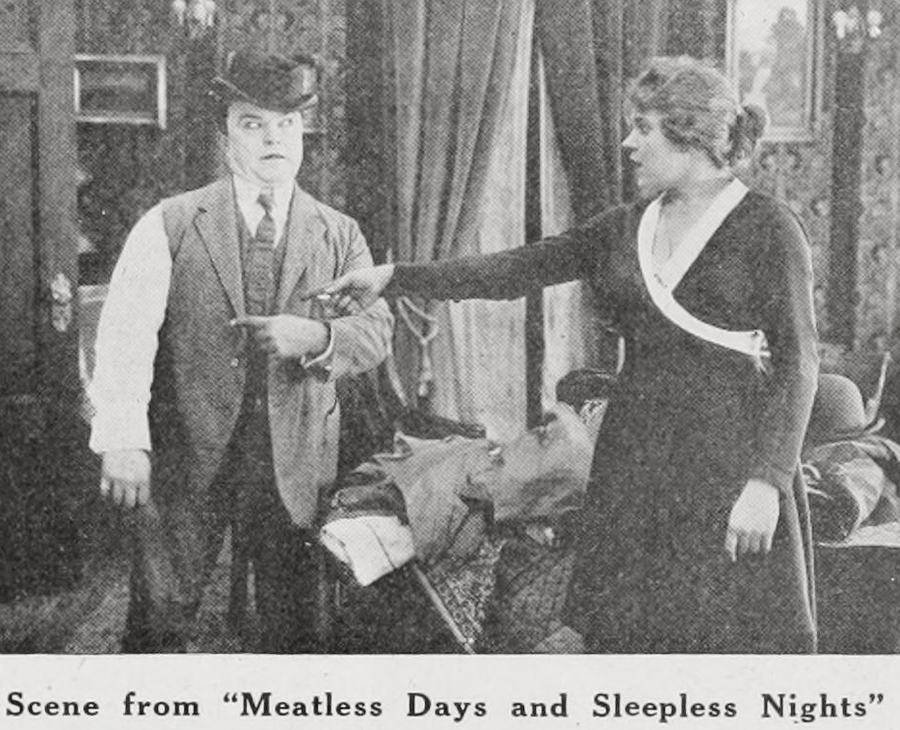
Disheveled and defeated, Vic rushes home, seeking not only solace but also a change of clothes. His wife, ever the pragmatist with an eye for thrift, insists he dons one of her attic finds. This moment of domestic intervention transforms Vic. Clad in an ill-fitting, anachronistic suit, he returns to the restaurant in what appears to be a deliberate disguise. The irony is twofold: he looks ridiculous, and his attempt to blend in only makes him stand out more. This comedic device, where a character's attempt to evade recognition only draws more attention, is a timeless trope, utilized in countless comedies from Shakespeare to contemporary cinema. Here, it adds another layer of absurdity to Vic's already precarious situation, setting him up for the final, inevitable confrontation.
The janitor, not one to suffer alone, has returned, this time with an entourage: the "Weed-etarians." This collective, presumably fellow sufferers of Vic's strict dietary regimen, represents a burgeoning consumer revolt. Their demand is simple: the janitor's money back. This shift from individual grievance to collective action elevates the stakes, transforming the personal feud into a miniature class struggle, a battle between the rigid enforcer and the frustrated masses. Vic, cornered and clearly outmatched, attempts a compromise, offering to host a banquet for the disgruntled group. His hope is to appease them, to restore order through a grand gesture of hospitality. This moment, however, is where Vic's judgment utterly fails him, leading to the film's most deliciously ironic and chaotic climax.
Everything appears to be salvaged, a fragile peace negotiated. But then, in a stroke of narrative brilliance that is either a testament to Vic's supreme idiocy or a darkly comedic twist of fate, he serves meat to the "Weed-etarians." The sheer audacity, the profound misjudgment of this act, is breathtaking. Was it an oversight? A deliberate act of provocation? Or simply a complete misunderstanding of his clientele's core philosophy? Whatever the intention, the result is instantaneous and explosive. The fragile truce shatters, giving way to an even more tremendous "free for all" than before. The film culminates in a spectacular display of physical comedy, with Vic receiving a "tremendous wallop" at the finish. The enduring image is of a man utterly overwhelmed by the very rules he sought to enforce, a victim of his own zealous adherence and, ultimately, his spectacularly poor judgment. This final melee provides a satisfyingly chaotic resolution, emphasizing the futility of trying to control human desire through arbitrary rules.
"Meatless Days and Sleepless Nights" functions as a sharp, though humorous, social commentary on the impact of World War I rationing. It deftly satirizes the tension between national duty and personal deprivation. The film highlights the absurdity of bureaucratic mandates when they clash with fundamental human needs. The janitor's relentless pursuit of a proper meal, whether meat or wheat, symbolizes the common person's struggle for dignity and basic satisfaction in a time of widespread scarcity. Vic, on the other hand, represents the often-hapless enforcer of these rules, caught between his duty and the increasingly violent reactions of his patrons. This dynamic is not unlike the societal friction explored in more serious dramas of the era, such as Within Our Gates, which also delves into the challenges faced by ordinary people in extraordinary times, albeit with a vastly different tone.
The performances are central to the film's success. Victor Moore, with his expressive face and physical comedy prowess, perfectly embodies Vic's escalating despair and bewilderment. Davy Don's janitor is a sympathetic figure whose frustration is so universally relatable that his violent outbursts feel earned, if exaggerated for comedic effect. Elizabeth Woodhill, as Vic's wife, provides a grounded, if comically oblivious, counterpoint to the male-dominated chaos, her domestic thriftiness inadvertently complicating her husband's life. The direction, characteristic of early silent comedies, relies heavily on physical gags, exaggerated expressions, and rapid-fire pacing to convey its narrative. The chaotic brawls are choreographed with a delightful abandon, showcasing the nascent art of cinematic slapstick.
While ostensibly a lighthearted comedy, the film touches upon deeper themes. It subtly critiques the potential for well-intentioned policies to become oppressive, demonstrating how abstract rules can lead to very real, very physical conflicts when applied without empathy or flexibility. The janitor's primal hunger, a 'fruit of desire' in its most basic form, echoes the struggles against societal constraints found in other films like Fruits of Desire, albeit with a much more comedic, less melodramatic outcome. The film also playfully comments on the power of collective action, however misguided, in challenging authority. The "Weed-etarians," though comically depicted, represent the collective voice of the disenfranchised, demanding their due.
In conclusion, "Meatless Days and Sleepless Nights" is more than just a historical curiosity; it’s a vibrant, laugh-out-loud comedy that still resonates. Its exploration of rationing, individual freedom, and the comedic potential of bureaucratic absurdity remains remarkably fresh. It reminds us that even in times of national crisis, the human spirit, driven by fundamental desires, will find ways to express its discontent, often with riotous and unexpected consequences. The film stands as a testament to the power of satire to illuminate profound truths about society, even when delivered through the most chaotic and slapstick of means. It’s a delightful journey into a bygone era, offering both historical insight and timeless entertainment, proving that a good laugh can be just as nourishing as a hearty, meat-filled meal, even on a Tuesday.

IMDb 7
1932
Community
Log in to comment.