DbcultAccessing Vault...
Cult Review
Senior Film Conservator
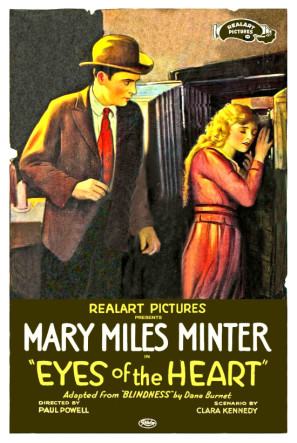
Streetlamps bleed sodium across rain-slick asphalt; a nickelodeon piano hammers out a waltz that sounds like a lullaby choking on its own tongue. In this gutter-born prologue, Eyes of the Heart announces itself not as comfort food for the sentimental but as a surgeon’s ledger of every incision made when kindness and criminality share the same cracked teacup.
Mary Miles Minter’s Laura arrives like a Pre-Raphaelite manuscript illumination that has been soaked in gutter water. Her blindness is no saintly trope; it is a velvet sack cinched over the head by three men who need her ignorance the way a magician needs misdirection. Cook’s Mike, Littlefield’s Whitey, and Midgley’s Sal orbit her with the anxious tenderness of stray dogs guarding a porcelain doll. Their affection is real, but it is also a shackle: every whispered fairy tale about “the world outside” is another iron rivet in the blindfold.
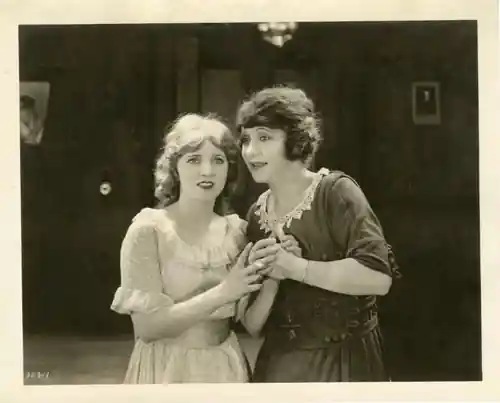
Then comes the operation sequence—an Eisensteinian montage before Eisenstein had coined the word. Microscopic sutures, ether masks blooming like white poppies, a surgeon’s blade catching the flare of a klieg light. The bandages unravel in a spiral, and the first thing Laura sees is not God’s glory but a ceiling blistered with mildew. The camera, cruelly lucid, records her pupils dilating from wonder to revulsion in the span of a heartbeat. Vision, the film insists, is not revelation; it is eviction from Eden.
Enter Edmund Burns as Dennis Sullivan, slithering through the celluloid in impeccably tailored dusk. He is the urban devil as boutique aesthete: pocket squares folded into paper cranes, voice like velvet soaked in absinthe. Sullivan does not seduce with promises of diamonds; he seduces with blueprints, each line of ink a stanza of erotic poetry. Under his tutelage Laura learns that every safe contains a heartbeat—five tumblers aligning is the metallic equivalent of a lover’s sigh. Their rehearsal scenes play like inverted Sunday-school lessons: instead of scripture, lock-pick diagrams glow on the wall by candlelight; instead of hymns, the click-click-click of practice tumblers becomes a diabolic rosary.
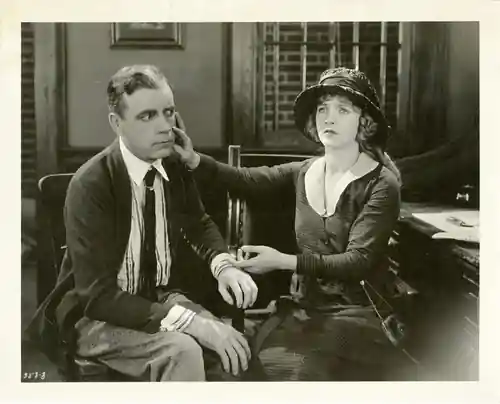
The film’s moral fulcrum tilts the night Laura stands before her first target: a jewelry emporium whose proprietor keeps his receipts inside a polished steel womb. She wears a cloche hat pulled low, eyes glittering with both terror and the first blush of power. Just as she inserts the tension wrench, three familiar silhouettes lurch out of the fog—Mike, Whitey, Sal—freshly acquitted, sporting prison-issued shoes still scuffed with the dust of the yard. Their frantic intervention is staged like a slapstick miracle: Sal’s coat catches on a fire escape, Whitey drops his revolver which skitters across cobblestones like a startled rat, Mike yells “Kid, don’t!” with the cracked urgency of a father recognizing his daughter on a brothel stair.
What follows is one of silent cinema’s most surreal restitution scenes. The store owner, rather than press charges, is so moved by the thwarted robbery that he deeds them a ranch in the Sacramento delta—an act of generosity so unhinged it feels like the film itself has leapt the tracks into fable. But director William Parsons is sly: the telegram handing over the deed is shot in extreme close-up, the ink still wet, glistening like fresh blood. We are reminded that miracles in this universe arrive tarred with the same brush as crimes.
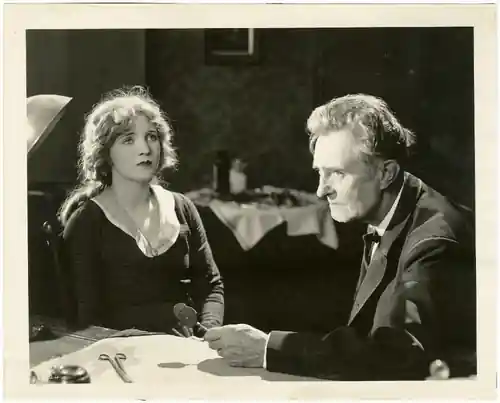
Visually, the picture is a study in oxidative color temperature. Interiors stew in umber gloom, cigarette haze curling around chandeliers like sepia octopi. Exterior night scenes are drenched in cyanotype blues, suggesting the city has been submerged under a sea polluted by moonlight. The westbound train that ferries the quartet toward redemption is painted butter-yellow inside, a chromatic promise that somewhere beyond the frame the world might yet be kind.
Minter, only seventeen during shooting, performs Laura’s arc with a kinetic face that seems to vibrate between opposing weather systems. Watch the micro-tremor in her lower lip when she first spies Sullivan sliding a diamond ring onto her finger—pleasure and self-loathing braided into a single spasm. Or the way her gait recalibrates after weeks of criminal apprenticeship: shoulders thrown back, hips swinging like a metronome set to arrogance. By the final reel, when she stands in prairie grass up to her shins, the hardness has melted yet the fear has not; she squints against the sun the way she once squinted against darkness, suggesting that sight and insight remain two distinct countries separated by an ocean of regret.
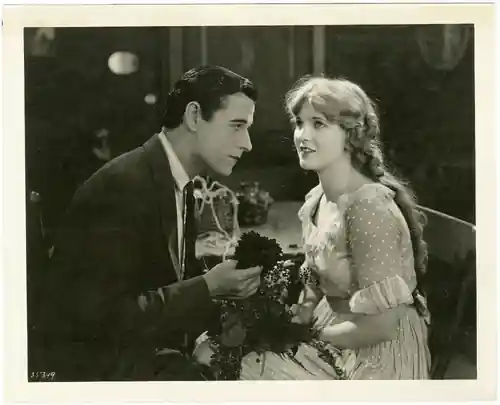
Burns’s Sullivan, by contrast, is a portrait of charisma as metastasis. His villainy is never mustache-twirling; it is seductive logic. In one chilling intertitle he tells Laura, “A lock is just a door that hasn’t learned to trust you yet.” The line arrives with a smile so warm you almost miss the shiver. When his influence finally evaporates—rendered impotent by geography rather than justice—the film refuses to punish him in conventional fashion. Instead he recedes into the city’s arterial flow, a virus awaiting another host, and the moral ambiguity scalds like hot coffee on bare skin.
Comparative cinephiles will detect spectral echoes of The Master Passion’s obsession with mentor-protégé corruption, though Eyes of the Heart predates it by a year and reverses the gender polarity. Others may trace thematic cousinship to Le coupable, where guilt is a contagion passed by touch. Yet Parsons’s film is leaner, meaner, more American: it believes neither in the cleansing power of suffering nor the inevitability of divine grace, only in the brittle negotiation between appetite and the odd, accidental mercy.
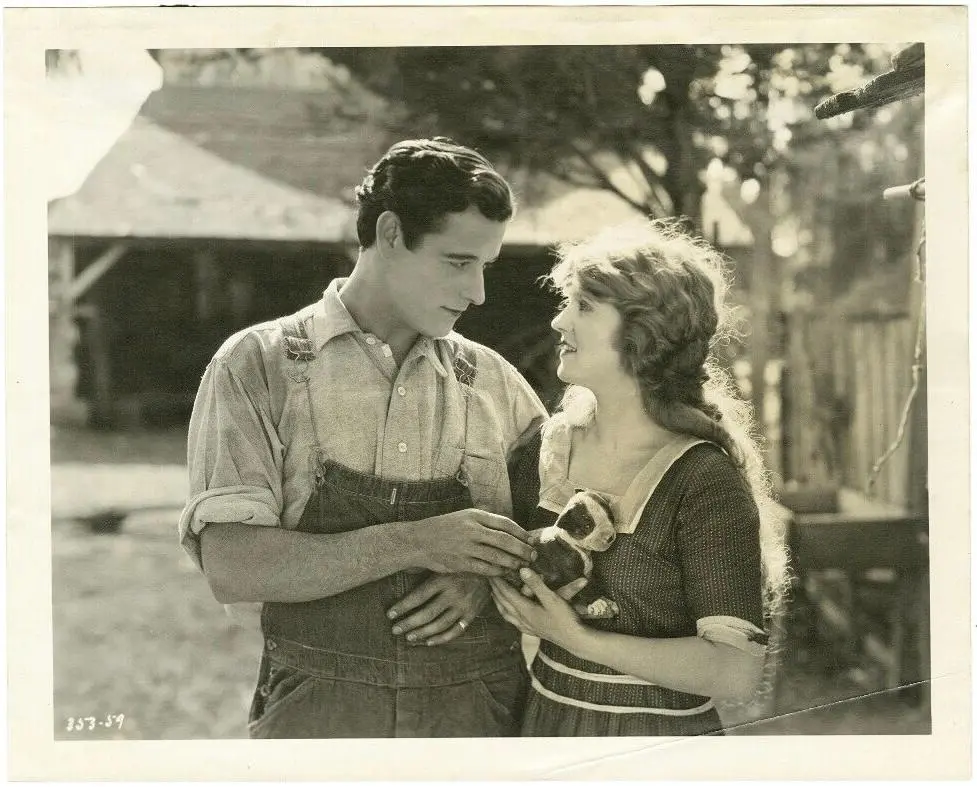
The screenplay—penned by poet Dana Burnet and Clara Genevieve Kennedy—reads today like a flamingo perched on a junkyard: florid yet unafraid of squalor. Intertitles bristle with imagistic daring: “The city’s heart beats under manhole lids, pumping coal-colored blood.” Or, “Her retinas held the sunrise like two guilty secrets.” Such linguistic bravura risks purple bruises, yet in the silent context—where language must compensate for absent voices—it feels earned, even necessary.
Musically, the surviving restoration (commissioned by Eye Filmmuseum and premiered at Pordenone 2019) commissioned composer Maud Nelissen to score the picture for a seven-piece ensemble. Her leitmotif for Laura is built around a slightly detuned music-box celesta, its lullaby warped by a tritone, so each recurrence feels like a memory trying to crawl back into a womb already occupied by thorns. Sullivan’s theme, conversely, is a tango played on viola and muted trumpet, the tempo dragged through treacle, turning seduction into a predatory slow dance.
If the film has a flaw, it is the eleventh-hour ranch gift, a deus-ex-machina so bald it could moon the audience. Yet Parsons almost acknowledges the artifice: he frames the deed-signing inside the jewelry store’s walk-in safe, doors yawned open like a steel cathedral. The symbolism is delicious—we exit the very womb of avarice into open farmland—yet the moment remains brazenly unearned by narrative logic. Still, in a cultural moment when audiences craved deliverance more than verisimilitude, the contrivance played like honey on torn bread.
Contemporary reviewers missed the nuance. Variety’s 1919 notice dismissed it as “a cautionary tale for wayward girls,” while Photoplay lamented the “unpleasant moral odor” of showing crime without scourging. Only in the reevaluation catalyzed by second-wave feminism and trauma-studies did critics notice how the film weaponizes the male gaze only to fracture it: Laura’s first panoramic look at the world is a full thirty-second POV sequence—windows steaming with laundry, children chasing a rat with a stick, a woman slapping a drunk soldier—cutting together like a malicious travelogue. Sight itself is indicted as complicit voyeurism.
Restoration-wise, the 4K transfer sourced two incomplete 35mm nitrate prints—one from EYE, one from Gosfilmofond—yielding a 78-minute reconstruction. Missing sequences, including Laura’s initial ophthalmological exam, were bridged with production stills and textual synopses over granular footage of light flickering across water, a visual metaphor for the act of seeing reclaimed. The tinting scheme follows 1919 conventions: amber for interiors, blue-green for night exteriors, rose for close-ups of Laura, suggesting her skin retains the memory of darkness even under klieg lights.
Availability remains scattershot. While Hearts and Flowers enjoys mainstream Blu-ray distribution, Eyes of the Heart languishes on DCP only, screening at repertory houses or via Kino’s Pioneers: Women of Early Cinema streaming bundle. Bootlegs circulate on grayscale torrents, but the tango-infused score is often replaced with generic piano, eviscerating the film’s rhythmic spine. Seek the legitimate restoration; your retinas will thank you, even if your comfort leaves the room.
In the final measure, the picture survives as both artifact and wound. It reminds us that guardianship without truth is merely another brand of captivity, that the gift of perception can arrive wrapped in razor wire. And yet—like the improbable ranch shimmering on the horizon—it dares to imagine a geography where yesterday’s predators might hoe tomatoes under the same sun that once glinted off a safecracker’s drill. Such optimism is either idiotic or saintly; the film declines to choose, preferring instead the fragile equipoise of a lock whose tumblers have not yet decided whether to open or to snap shut.
IMDb —
1930
Community
Log in to comment.