DbcultAccessing Vault...
Cult Review
Senior Film Conservator
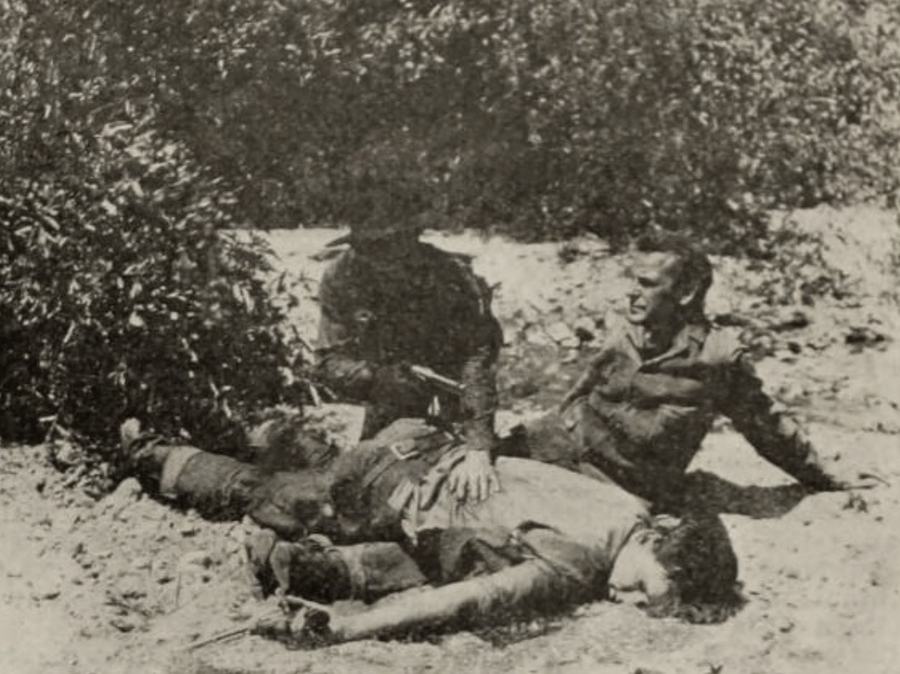
Step back into the nascent days of cinematic storytelling, to an era when the flickering images on a silver screen transported audiences to worlds both fantastical and grounded in the rugged realities of American myth. Medicine Bend, a 1916 silent Western, emerges from this period not merely as a historical artifact but as a vibrant, albeit often overlooked, chapter in the genre's formative years. It’s a narrative steeped in the classic tropes of the Wild West: lawlessness, the tenacious pursuit of justice, and the inescapable complications of human desire. Yet, it manages to infuse these familiar elements with a dramatic intensity and a personal stakes that elevate it beyond a mere action spectacle. The film unfurls a tapestry of betrayal, loyalty, and a love rekindled under the most perilous circumstances, all set against the unforgiving backdrop of the burgeoning railroad frontier.
At its core, Medicine Bend is a testament to the enduring appeal of the lone hero battling overwhelming odds. Our protagonist, Whispering Smith, portrayed with a stoic intensity by Paul Hurst, is no ordinary lawman. He is a railroad detective, a symbol of industrial progress and order, dispatched to a town that seems to exist solely to challenge both. Medicine Bend itself is almost a character, a crucible where morality is fluid and opportunity often wears the guise of illicit gain. Smith’s arrival immediately sets the narrative’s gears in motion, establishing him as a force of calm determination amidst the swirling chaos of train robberies. His mission: to quell the rampant looting of railcars, a task that quickly becomes intertwined with the intricate skein of his personal history.
The film deftly introduces a pivotal emotional anchor through the re-acquaintance of Smith with Marion, played by the expressive Belle Hutchinson. Marion is not just a damsel in distress; she is a woman caught in a maelstrom of conflicting loyalties and rekindled affections. Her connection to Smith, a spark from childhood, immediately adds a layer of poignant vulnerability to the otherwise rugged narrative. This emotional undercurrent is skillfully contrasted with the burgeoning villainy of her husband, Murray Sinclair, brought to life with palpable menace by J.P. McGowan. Sinclair, initially presented as a childhood friend of Smith's, quickly devolves into a desperate antagonist, his descent into criminality triggered by his discharge from the railroad for his involvement in the very acts of plunder Smith is there to stop. This personal entanglement—friendship turned rivalry, love rekindled amidst betrayal—elevates the stakes considerably, transforming a simple tale of law versus outlaw into a profound exploration of human nature under duress.
Sinclair’s spiral into villainy is depicted with a chilling credibility. His initial indignation at being fired quickly morphs into a destructive rage, culminating in threats against the very railroad that once employed him. Marion, witnessing this alarming transformation, makes the difficult choice to leave him, a decision that further fuels Sinclair’s resentment, particularly towards Smith, whom he rightly perceives as a rival for Marion's affections and a direct impediment to his criminal ambitions. The confrontation with Bucks, the general manager, is a masterclass in silent film tension. The dramatic refusal to reinstate Sinclair, followed by his attempted assault on McCloud—the official responsible for his dismissal—is a pivotal moment. It’s here that the cunning Du Sang (F.M. Van Norman) seizes an opportunity, snatching a crucial telegram detailing a substantial cattle shipment. This act of espionage sets in motion the film’s central conflict: a high-stakes train robbery designed to fund the gang’s escape and, more sinisterly, a plot to eliminate McCloud.
The film’s pacing is relentless, a hallmark of many early Westerns that prioritized action and narrative momentum. The introduction of Tony Wickwire (Nick Woods), a Mexican whose life McCloud previously saved, adds another layer of moral complexity and heroic intervention. Wickwire’s overheard conversation in the Three Horses saloon, revealing Sinclair’s plot to murder McCloud, is a classic dramatic device, perfectly executed. His subsequent warning to Smith and McCloud, preventing Du Sang’s ambush, is a pulse-pounding sequence that underscores the film’s commitment to thrilling suspense. It’s a moment that highlights the interconnectedness of characters and the ripple effect of past kindnesses. Smith’s subsequent confrontation with Du Sang, delivering a terse ultimatum to leave town, encapsulates the quiet authority of the railroad detective, a man who lets his actions speak louder than words.
The train robbery itself is portrayed with a stark, uncompromising realism. The murder of the messenger, who tragically identifies Sinclair in his dying breath, adds a layer of visceral brutality, reminding the audience that this is not a sanitized version of the West. The consequences are dire, and the stakes are life and death. This scene serves as a powerful catalyst, propelling McCloud, the sheriff (Thomas G. Lingham), and a posse into a furious pursuit. Simultaneously, Smith, ever the strategist, takes Wickwire, Lloyd (William Brunton), and other men to intercept the bandits at Williams Cache, demonstrating a tactical acumen that sets him apart from a mere reactive lawman.
The gang’s decision to split, with Sinclair and two followers attempting to flee the country and Du Sang, Karg, and Sam heading to Williams Cache, introduces a dual narrative chase that amplifies the tension. Sinclair’s desperate act of sabotaging the switch, derailing the relief train, is a testament to his escalating depravity. It's a moment that underscores the destructive power of unchecked vengeance and greed. The posse's subsequent pursuit on horseback, a classic Western image, culminates in a violent confrontation where Sinclair’s faction is ultimately brought down, albeit at the tragic cost of Sheriff Banks’s life. This loss injects a somber note into the narrative, reminding viewers of the high price of justice in the untamed territories.
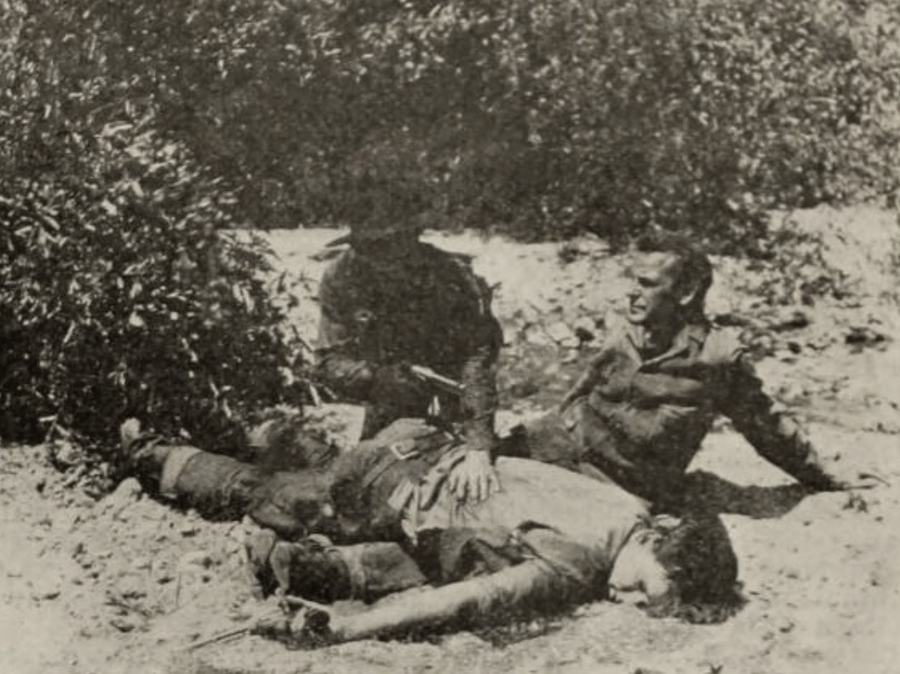
Meanwhile, the parallel chase involving Smith and Du Sang’s faction at Williams Cache is equally compelling. The refusal of Rebstock, the cache's controller, to assist Smith, highlights the prevalence of self-interest and lawlessness in remote outposts. Smith’s pragmatic response—rounding up and clearing out the stolen cattle—demonstrates his unwavering commitment to his mission, even in the face of local resistance. The climactic showdown between Smith’s men and Du Sang’s remaining gang is a furious, no-holds-barred fight, resulting in the deaths of Du Sang and Karg and the capture of Sam. It’s a brutal, decisive victory, yet it’s immediately complicated by Lloyd’s mistaken belief that Smith has fallen, leading to Marion’s debilitating illness upon hearing the false news. This emotional beat adds a profound personal dimension to the relentless action, underscoring the human toll of the conflict.
Sinclair’s audacious return to Medicine Bend, demanding Marion accompany him, serves as the final, desperate act of a man consumed by his own downfall. Marion’s steadfast refusal, and Sinclair’s chilling readiness to kill her rather than relinquish her to Smith, brings the love triangle to its tragic apex. It is only the timely intervention of a doctor, warning Sinclair of the town’s imminent discovery of his presence, that prevents a final, horrific act. This dramatic tension, expertly built without dialogue, relies entirely on the actors’ expressions and gestures, a testament to the power of silent film performance. Sinclair’s subsequent flight, coinciding with Smith’s triumphant return with his captives, sets the stage for the ultimate confrontation.
The deathbed warrant from Sheriff Banks is a poignant passing of the torch, solidifying Smith’s role as the sole agent of justice against Sinclair. The final pursuit, spanning several days, culminates in a desolate arroyo, a classic Western setting for a final, deadly reckoning. The strategic dismounting of Smith and Wickwire, with Wickwire attempting to flank the remaining bandits, showcases Smith’s tactical prowess. The ensuing gunfight is swift and brutal: Smith eliminates two of Sinclair’s men, but not without sustaining a wound himself. The moment Sinclair stands over a fallen Smith, reloading his revolver with murderous intent, is pure cinematic suspense. It is here that Wickwire, positioned on higher ground, delivers the ultimate act of loyalty and heroism, firing the fatal shot that ends Sinclair’s reign of terror and saves Smith’s life. This climax is both satisfying and cathartic, delivering a definitive resolution to the pervasive conflict.
Medicine Bend, like many films of its era, relies heavily on visual storytelling, exaggerated gestures, and intertitles to convey dialogue and internal thoughts. The performances, particularly by Hurst, Hutchinson, and McGowan, are remarkably effective in communicating complex emotions without spoken words. Hurst’s Whispering Smith embodies the quiet strength and moral fortitude expected of a Western hero, while Hutchinson's Marion navigates a difficult emotional landscape with grace and conviction. McGowan's Sinclair is a compelling villain, his descent into desperation and malice clearly etched on his face and in his actions. The film’s direction, though uncredited in the provided details, efficiently orchestrates a sprawling narrative, moving from intimate emotional moments to wide-open action sequences with commendable fluidity.
The themes explored in Medicine Bend are timeless. The clash between law and lawlessness, the corrupting influence of greed, and the enduring power of love and loyalty resonate even today. The railroad itself serves as a powerful symbol: a harbinger of progress and civilization, yet also a magnet for those who seek to exploit its bounty. The film’s portrayal of justice, often brutal and earned through direct confrontation, reflects the ethos of the frontier. While perhaps not as widely known as some of its contemporaries, Medicine Bend stands as a robust example of early Western cinema, demonstrating a sophisticated understanding of dramatic structure and character development.
Comparing Medicine Bend to other films of its period, one might find thematic echoes in works like Red Powder, which often explored similar narratives of railroad detectives confronting frontier banditry. The focus on the railroad as a central element of conflict and progress was a common motif in early 20th-century Westerns, reflecting America's ongoing expansion and industrialization. Moreover, the dramatic love triangle, while perhaps more overtly melodramatic in films like Sapho, is expertly woven into the fabric of this Western, providing a compelling personal stakes that elevates the genre's typical action beats. The silent era’s reliance on strong visual narratives and clear moral lines made such stories particularly impactful, allowing audiences to project their own understanding onto the characters’ unspoken struggles.
In its conclusion, Medicine Bend delivers a satisfying resolution. Smith, recovered from his wounds, seeks out Marion. Their eventual marriage signifies not just a personal triumph but the restoration of order and the promise of a future built on integrity and affection, rather than greed and violence. The film, in its entirety, offers a compelling glimpse into the silent Western genre, showcasing its capacity for intricate plotting, dynamic action, and profound emotional depth. It's a reminder that even without the benefit of spoken dialogue, the human story, in all its complexity, can be told with enduring power and captivating artistry.
IMDb —
1931
Community
Log in to comment.