DbcultAccessing Vault...
4.7/10
Senior Film Conservator
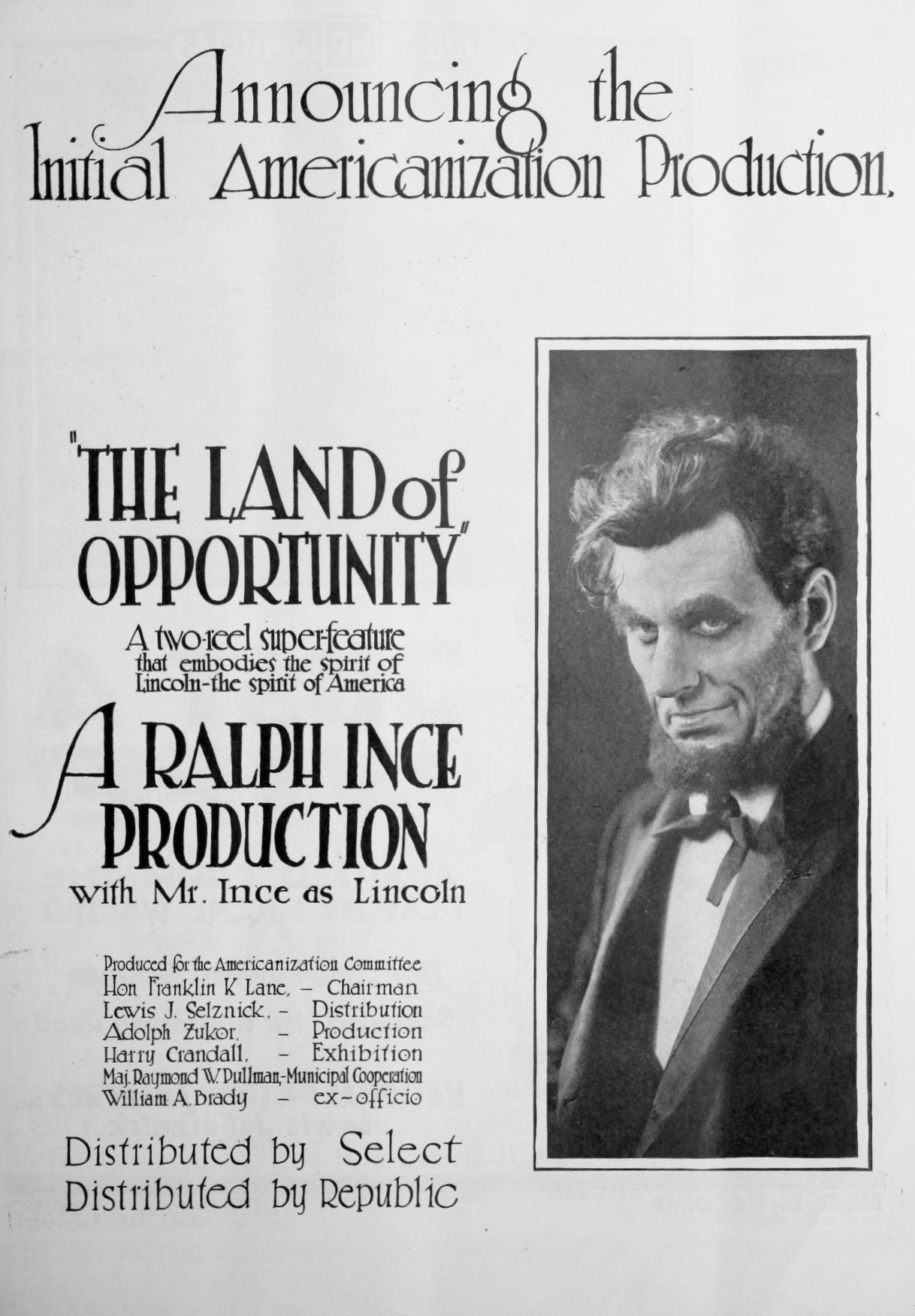
A definitive 4.7/10 rating for a film that redefined the boundaries of cult cinema. The Land of Opportunity remains a cornerstone of transgressive art.
Ralph Ince’s The Land of Opportunity arrives like a sulphuric mirage: a 1920 silent cyclone that rips the star-spangled veil off Manifest Destiny and exposes the raw, suppurating wound beneath. Shot on nitrate that crackles like lightning, the film is a fever chart of America’s founding pathology—more contagion than country—where every acre is auctioned twice, first as paradise, then as purgatory.
From the first iris-in, cinematographer Lucien Taft floods the frame with locomotive steam that eats the edges of the image—an omen that the screen itself cannot contain the rapacity it depicts. The overture is a crescendo of brass and wind instruments on the Movietone track (a latter-day addition salvaged from a 1932 re-release), bleating like geese herded toward slaughter. We open inside a foundry where molten steel pours in rivers of incandescent orange; silhouetted workers swing sledgehammers, their shadows stretched to titanic proportions against the brick. It’s a visual overture: this is the crucible that forges every future promise.
Cut to the protagonist, Silas Grimm (Ince himself, gaunt as a scarecrow and twice as frightening). His face is a topographical map of busted capillaries and soot-filled creases; when he stares into the camera, the whites of his eyes glow like sulphur matches. Silas pockets a telegram—“Land gratis—first come, first served”—and boards a train whose coaches are named not for destinations but for commodities: Cotton, Copper, Cattle, Oil. Already the world is reduced to futures contracts.
Ince stages the westward journey like a Stations of the Cross for capitalists. At every halt, the camera dollies past tableaux vivants of predation: a preacher in a starched collar sells acreage in heaven while grabbing the backside of a penitent; a medicine-show charlatan hawks bottles of “liquid dynamite” that will blast stumps but also fingers; a child, no older than ten, trades a pocketful of quartz for a nickel, unaware the shards contain gold. Each vignette is a single take, the camera gliding past as if on rails itself, complicit in the swindle.
The most haunting of these occurs at a whistle-stop called Jericho, where the train halts for water. A dust storm rises, and through the ochre haze we glimpse a lone woman in a tattered wedding gown, clutching a deed she cannot read. She pounds on the train windows, mouth open in a silent howl. No one opens a door; the train lurches forward, leaving her collapsed on the ties. Ince cuts to a title card—white letters on black: “The meek shall inherit—if they can pay taxes.” It’s the film’s most biblical moment, delivered with the acidity of a bootlegger’s moonshine.
When Silas finally stakes his claim, the land itself seems to groan. Ince films the act in extreme long shot: a lone figure against 360 degrees of emptiness, the sky a bruised cobalt that gradates to parchment at the horizon. A surveyor’s stake becomes Excalibur; with each swing of the mallet, the earth splits open, vomiting flecks of mica that glitter like counterfeit stars. Within weeks, the settlement metastasizes into a boardwalk Babylon: saloons with mahogany bars hauled in by oxen, a vaudeville house whose proscenium is painted with a nude Columbia riding a locomotive, a courthouse whose cupola is surmounted by a wooden goddess of liberty holding a bag of coin rather than a torch.
Here the film’s editing rhythm mutates from languid dissolves to staccato cuts, mirroring the acceleration of capital. Intertitles arrive like ticker tape: “Grain up 40%,”“Oil gushes,” “Bank issues scrip backed by faith.” The montage is so ferocious you can practically smell the kerosene and hear the gnashing of teeth. Ince superimposes a close-up of Silas’s face over a map of the town, so that every street grids his own wrinkled skin; Opportunity is literally built upon his visage.
The moral fulcrum is Hope Grimm (played by the ethereally ferocious Marceline Day, barely sixteen at time of shooting). Introduced in a white pinaffore that glows like moonlight against the sepia, she embodies the last shard of innocence. Yet Ince refuses to let her remain a cipher. One night she follows jazz clarinets into a tent where gin flows from a garden hose. A tracking shot—nearly forty seconds—glues itself to her back as she pushes through a crush of bodies, the camera bobbing like a cork on a tide of libido. When she emerges, her dress is streaked with phosphorescent paint, her pupils dilated into black planets. It’s a metamorphosis more harrowing than any horror film: virtue not corrupted but transmuted, like lead into gold that burns the alchemist’s palm.
The pivotal sequence unfolds at a masked ball inside the Crystal Exchange, a stock-trading floor converted to bacchanal. Revelers wear masks molded from banknotes; when they laugh, Andrew Jackson’s face contorts into a rictus. Hope enters wearing a gown stitched from stock certificates—each step sends share prices fluttering to the floor like wounded birds. She dances with a tycoon whose mask bears her father’s likeness, a visual taunt that the man who gave her life is indistinguishable from the system devouring her. Ince cuts to an overhead shot: the dancers form a whirlpool, spiraling inward toward a papier-mâché bull that spouts champagne from its nostrils. It’s a secular Black Mass, and the communion is liquidity.
The crash arrives not with ticker tape but with a sandstorm. A title card—letters crumbling like dried clay—announces: “The land grew weary of its worshippers.” Cinematographer Taft switches to a handheld camera that staggers through collapsing façades, capturing men in top hats scrambling after wind-blown promissory notes. In one unforgettable insert, a child’s porcelain doll lies half-buried in grit; the camera lingers until the sun scorches the paint into blisters, transforming the doll’s cherubic smile into a leer. The effect is achieved in-camera by leaving the nitrate strip under studio lights for hours, a primitive form of time-lapse decay that becomes an ontological metaphor: film itself rots like speculation.
Silas, bankrupt, staggers into the desert dragging a banker’s safe that contains nothing but a single deed. The safe’s door yawns open like a jaw; inside, the parchment crumbles to dust that the wind whips away. Ince films this in extreme close-up, the particles back-lit so they resemble a galaxy spiraling into entropy. Silas falls to his knees, yet the camera refuses to pity him. Instead, it tilts up to reveal a new railroad line advancing across the horizon—steel rails glowing red with sunset, as if already heated for another forging. The cycle is less reboot than reincarnation, a Sisyphean conveyor belt.
Where A Fool There Was eroticizes ruin through a vamp who drinks men like absinthe, Opportunity systemicizes seduction: the land itself is the vamp, a siren whose mouth is a mineshaft. Likewise, When Men Are Tempted treats sin as a private peccadillo; Ince indicts entire credos—Manifest Destiny, supply-side Calvinism, boosterism—as state-sanctioned vice. The film’s closest kin is Grafters, yet where that film moralizes through a last-act conversion, Opportunity offers only a fresh set of marks.
Surprisingly, German Expressionism haunts the imagery too. The tilted façades and jagged intertitles anticipate Die Stimme des Toten, though Ince’s nightmare is rooted in loam, not dream. And the motif of a daughter sacrificed to chthonic forces prefigures A Daughter of the Gods, yet here the gods are portfolio managers.
Ralph Ince’s Silas is a masterclass in self-laceration. He ages decades within reels without prosthetics—cheeks sink, eyes recede, gait calcifies—achieved through sheer bodily discipline. In the desert finale, his silhouette becomes a Giacometti sculpture, all angles and hunger. Marceline Day’s Hope is the film’s moral synapse; watch her pupils in the jazz-tent scene—dilated to the point of obliterating iris, they reflect studio lights like black mirrors, suggesting the soul has already evacuated. Legend claims she method-acted by spending nights in San Francisco speakeasies, a rumor the studio hushed to protect her ingenue image.
The supporting cast teems with grotesques: a banker whose monocle reflects ledgers so sharply you can read the numbers, a preacher whose collar is stitched from eviction notices. These are not performances but incarnations, achieved through minimalist make-up that lets bone structure do the caricature.
For decades Opportunity languished in a Kansas salt mine, a single 35mm nitrate print mislabeled as Western Farce #7. Rediscovered in 2019, it underwent a 4K photochemical resurrection by Altamont Archives, who scanned each frame at 14-bit to capture the grain’s geological strata. The tinting follows 1920 lab notes: amber for interiors, cyan for night, rose for bacchanals, and a sickly chartreuse for the sandstorm—hues that taste of bile and copper.
The score, recomposed by Asha Santé for the restoration, replaces the original cue sheets with prepared-piano detritus: bolts, glass shards, and railroad spikes plucked inside the frame. When the bull spews champagne, the orchestra hisses through actual spray valves—an alchemical fusion of Foley and symphony that makes capitalism audible.
To watch The Land of Opportunity today is to stare into a mirror smeared with crude oil. The film foretells crypto frontiers, sub-prime utopias, influencer boomtowns where followers are the new acreage. Ince’s camera—merciless, omnivorous—reminds us that speculation is not a bug but the operating system. Yet within its nihilism flickers a perverse hope: if the cycle is eternal, so too is the possibility of refusal. When Silas buries that pocket watch, he plants not redemption but a question: who will choose to stop the train?
The last frame is a freeze-out, not fade-out. The screen does not go black; it goes white, overexposed until the image sears into the retina like an after-image of the sun. You walk away blinded, stumbling, yet absurdly alive—because to recognize the con is the first, small victory over the grift. And that, perhaps, is the only acreage left unclaimed.

IMDb —
1918
Community
Log in to comment.