DbcultAccessing Vault...
Cult Review
Senior Film Conservator
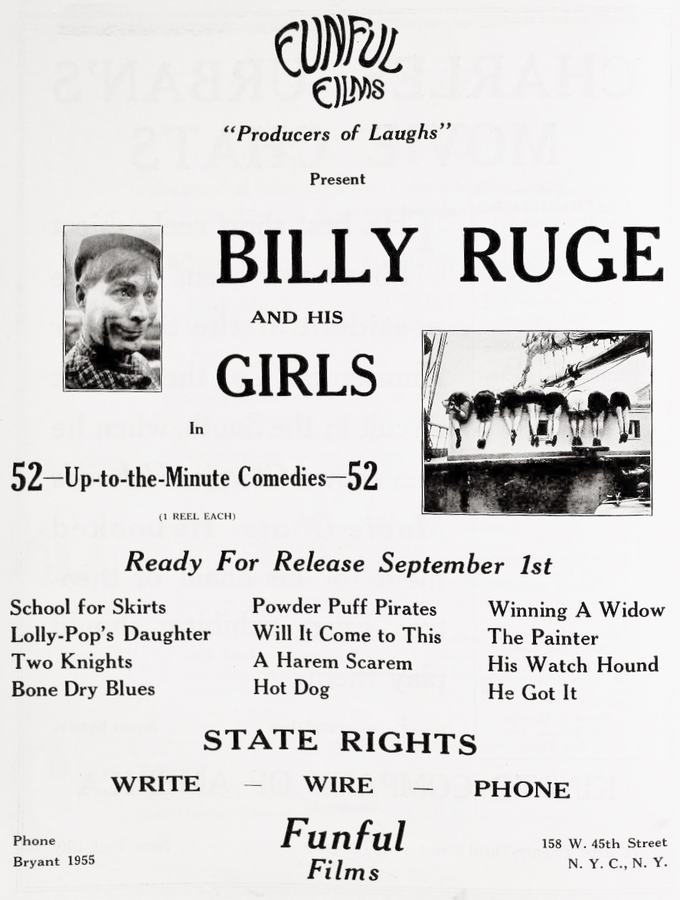
A nitrate fever dream resurrected from a Berlin vault, Will It Come to This arrives like a ransom note from the past—its edges singed, its punchlines bleeding.
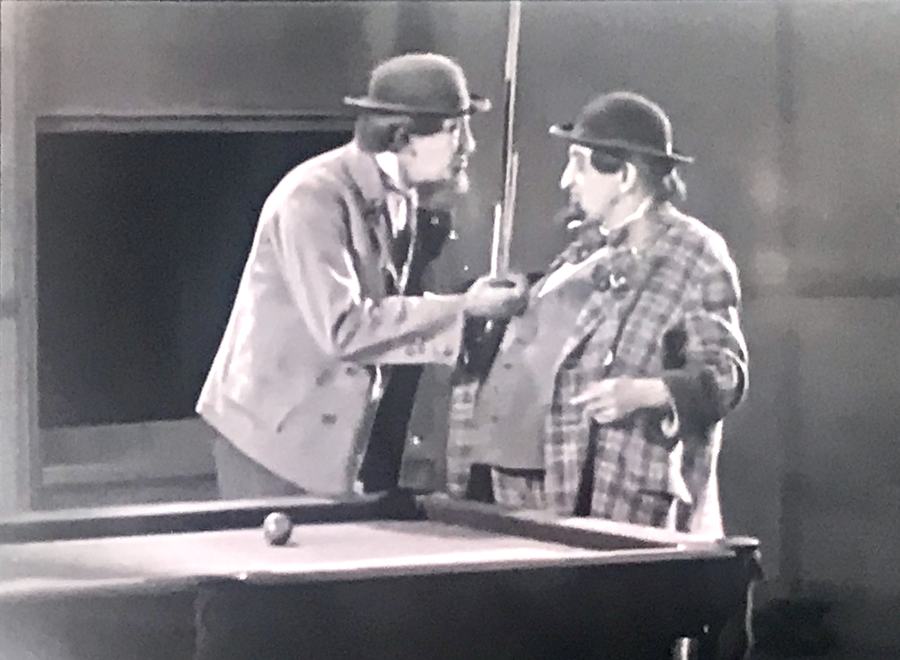
Tom Bret’s screenplay, once dismissed as too grotesque for peacetime, now feels like a wiretap on the 21st-century id. Scene after scene anticipates the meme-ification of governance, the lolcats who hold nuclear codes, the telethons where despair is auctioned for likes. Billy Ruge, a vaudeville escape artist who never quite broke the fourth wall on Broadway, here somersaults through it with sackcloth grace. His face—elastic, pallid, haunted by the knowledge that every grin is a skull’s rehearsal—carries the film the way a rusted shopping cart carries groceries: precariously, noisily, yet somehow all the way home.
Watch how he navigates the opening bazaar: a tracking shot pirouettes above horse manure and ticker tape, the camera mounted on a wheelchair commandeered from an amputee newsboy. Ruge snatches a hot dog, pays with a poem, then barters the sausage for a pocket Bible, which he immediately tears into paper planes he launches toward a blimp advertising Instant Happiness—Just Add Debt. The gag runs eleven seconds, yet it telescopes the entire moral arc of consumer capitalism.
Director Hans Freilicher—known in his day primarily for industrial lube commercials—relies on under-cranked chaos one moment, then switches to glacial longueurs where dust motes eclipse human heads. The strategy weaponizes boredom; you itch for speed, then recoil when the velocity returns with sabers drawn. It is the same rhythm the stock market will weaponize ninety years later, the same whiplash Twitter perfected while we weren’t looking.
Comparing this urban labyrinth to the tidy village of Loyalty or the drawing-room repartee of The Man and the Moment illuminates how rapidly silent cinema metabolized dread. Those earlier films still believe in the possibility of social glue; Will It Come to This dissolved the adhesive in sulfuric laughter.
Note the set design: skyscrapers lean inward like gossiping elders, their windows flicker with silhouettes of copulation and audit. The miniature work is blatant—corners don’t align, paint peels under hot lights—but the imperfection itself becomes existential graffiti. When the protagonist clambers onto a girder to address an indifferent moon, the corrugated backdrop ripples, betraying the studio floor. The artifice indicts us: if we can see the seams of the world, why do we still obey its edicts?
Though touted as a silent, the picture toured with a synchronized acetate of assorted noises: typewriter bells, crowd murmur, a single whispered “welcome” reversed to spell “moclew”. Most prints lost the disc; scholars assumed it myth until the 2018 restoration married the audio to a 4K scan. The whisper now arrives forty-three minutes in, just as Ruge’s mayor-elect rehearses his inauguration grin. The word lands like a dentist’s drill, reminding viewers that every political honeymoon is haunted by its palindrome twin.
Women circulate as both solvent and solvent-eroder. A stenographer sells her signature to competing lobbyists, pocketing the fees yet aware that each autograph erodes her legal existence. Elsewhere, society matrons host “Unemployment Soirées” where jobless artisans cater canapés in exchange for references that never materialize. The film refuses to sanctify victims; even the children who skip rope chant “I.O.U., I.O.U., your pa’s a IOU” with merciless glee.
Contrast this with the sacrificial maternal trope in A Wife’s Sacrifice or the pastoral innocence of Hulda from Holland; Bret’s urbanity offers no moral safe word. When the heroine—credited only as “the one who calculates”—empties her dowry into the stock exchange, the film cuts to a hand-cranked montage of blooming roses superimposed onto plunging graphs. The frisson between fecundity and insolvency is both erotic and nauseous.
Slapstick here is not relief but acceleration. Ruge trips on a banana peel, lands face-first in a campaign poster, stands up wearing the candidate’s lithographed grin. Laughter catches in your throat once you notice the poster’s promise: “A chicken in every pot, a pistol in every purse.” The physical gag mutates into political semaphore; the body becomes satire’s canvas, bruises its footnotes.
This differs sharply from the knockabout frivolity of Cinderella Cinders or the swashbuckling zip of The Spitfire of Seville. Physical trauma in those films resets the moral equilibrium; here it corrodes the very concept of balance.
Bret’s editing anticipates modern nonlinear ferocity. Months collapse into jump-cuts; a single sneeze spans two fiscal quarters. The only temporal anchor is a recurring shot of a wall calendar illustrated by a different animal each month. When December arrives, the pictured beast is man.
Released months before the 1920 landslide that put salesmen in cabinet seats, the film was quietly shelved after test audiences in Toledo rioted, hurling projectors into the river. Studios branded it “gutter prophecy” and funneled PR budgets toward sunnier fare like Pearls and Girls. Nitrate prints were recycled into combs and buttons. Censors objected not to sex or violence but to the absence of redemption; they wanted a final reel where the drifter awakens, learns it was all a dream, buys war bonds. Bret refused, claiming “nightmares also pay interest.”
Now, a century later, when demagogues crowd-fund their campaigns via punchlines, when markets yo-yo on emoji sentiment, when reality television scripts geopolitics, the question posed by that spinning recorder—Will it come to this?—no longer sounds hypothetical. It sounds like push-notification déjà vu.
So, is the film enjoyable? Only if you savor the coppery tang of premonition. Will it make you guffaw? Sporadically, then remorse arrives like sales tax. Should you watch it? Imperatively. Because the final freeze-frame of Ruge’s eyebrow isn’t an ending; it’s a mirror. And the dare is still live.
IMDb —
1916
Community
Log in to comment.