DbcultAccessing Vault...
5.9/10
Senior Film Conservator
A definitive 5.9/10 rating for a film that redefined the boundaries of cult cinema. Mellem muntre musikanter remains a cornerstone of transgressive art.
The opening tableau of Mellem Muntre Musikanter is deceptively simple: a modest seaside manor, the salty scent of the Baltic, and a family whose routine is as predictable as the tide. Director Jessen, a man of modest ambition, has cultivated a domestic sphere that mirrors the calm of the surrounding waters. Yet beneath that placid surface simmers a potent mixture of paternal expectation and cultural bias, a combination that propels the narrative into a whirlwind of farcical intrigue.
When Jessen announces the impending arrival of his Australian employer and the employer's daughter, Alice, the brothers' reactions are immediate and visceral. Fritz, the elder, clutches a newspaper clipping of an Australian outback scene, while Jørgen mutters about "down‑under" customs with a mixture of fear and disdain. Their decision to resolve the dilemma by drawing lots feels like a ritualistic casting of lots in an ancient drama, underscoring how deeply ingrained their xenophobia has become. This moment is not merely comic; it is a commentary on how prejudice can be institutionalized within family structures.
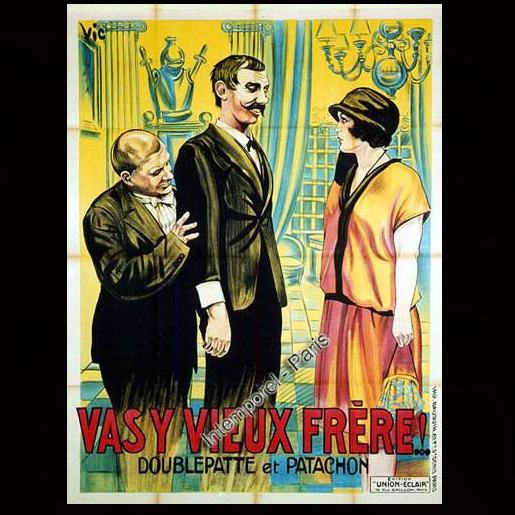
Alice's strategic choice to send Elsie ahead—an impostor masquerading as the very woman she wishes to evaluate—adds a layer of meta‑theatricality. Elsie, a bright‑eyed Australian with a mischievous grin, steps onto the Danish stage with a confidence that belies her role as a spy. Simultaneously, Fritz and Jørgen's recruitment of Pat and Patachon, two itinerant vagabonds with a penchant for slapstick, creates a parallel masquerade. The audience is invited to watch a dance of false identities, each step choreographed to heighten the tension between expectation and reality.
Lissen Bendix, portraying Elsie, delivers a performance that oscillates between coy innocence and razor‑sharp wit. Her eyes sparkle with the kind of mischief that makes the audience root for her subterfuge, even as the brothers' schemes grow increasingly convoluted. Harald Madsen and Oscar Stribolt, as Fritz and Jørgen, embody the archetypal brothers whose rivalry is both fraternal and competitive. Their chemistry is palpable; one can hear the subtle shift from contempt to admiration as Elsie's true nature unfolds before them.
Pat and Patachon, enacted by Carl Schenstrøm and Carl Petersen, provide the film's physical comedy backbone. Their exaggerated gestures and slap‑slap‑slap timing echo the traditions of early silent cinema, yet their presence feels fresh within the sound era context. The duo's antics—mistaking a teapot for a telephone, stumbling over a garden hose—serve as visual punctuation marks that break the narrative tension and remind viewers of the film's comedic lineage.
Beyond the surface humor, the film interrogates the fluidity of identity. The brothers' prejudice evaporates the moment they encounter Elsie's kindness, suggesting that personal interaction can dismantle entrenched stereotypes. This revelation is mirrored in the audience's own experience: we, too, are invited to question our assumptions about the 'other' and recognize the universality of human warmth.
The motif of deception operates on multiple levels. While the characters don literal masks, the narrative also exposes the metaphorical masks we wear in social negotiations—particularly in matters of marriage, where familial expectations often eclipse personal desire. The film's resolution, which sees the brothers vying for a woman who is not who they thought she was, underscores the absurdity of arranging unions based on superficial criteria.
Visually, the film employs a muted palette that accentuates the stark contrast between the dark interior of the manor and the bright, sun‑drenched exteriors. The cinematographer uses long, static shots to capture the languid rhythm of coastal life, punctuated by rapid cuts during the comedic set‑pieces involving Pat and Patachon. The sound design is equally deliberate; the creak of floorboards, the distant gulls, and the occasional clatter of a misplaced teacup all contribute to an immersive auditory landscape.
Lauritz Olsen's direction balances theatrical staging with naturalistic moments. He allows the actors to linger in their beats, granting the audience time to savor the subtext. This restraint is evident in the scene where Elsie, still posing as Alice, shares a quiet conversation with Fritz by the fireplace; the flickering flames illuminate both characters' faces, revealing vulnerability beneath the comedic veneer.
When placed alongside contemporaneous European comedies such as De kantwerkster van Brugge or the whimsical Pretty Smooth, Mellem Muntre Musikanter distinguishes itself through its layered exploration of cultural clash. While the former films rely heavily on situational humor, this Danish work intertwines satire with a subtle critique of colonial attitudes, making it a richer text for modern analysis.
Nearly a century after its release, the film's core concerns—prejudice, identity, and the performative nature of social roles—remain strikingly relevant. In an era where cross‑cultural marriages are commonplace, the absurdity of arranging unions based on nationality feels both nostalgic and cautionary. The film invites contemporary viewers to reflect on how far we have come and how much of the old anxieties persist beneath the surface of globalized societies.
Moreover, the film's structural ingenuity—two simultaneous deceptions that converge in a climactic revelation—has influenced later works that play with mistaken identity, such as the French farce Une brute and the German comedy Das Geheimnis von Bombay. Its legacy can be traced through the lineage of comedic cinema that values both slapstick and intellectual wit.
In sum, Mellem Muntre Musikanter is a masterclass in balancing levity with layered commentary. Its cast delivers performances that are simultaneously exaggerated and deeply human, its direction respects the rhythm of both dialogue and silence, and its thematic concerns echo across decades. For anyone interested in the evolution of comedy, the film offers a compelling case study in how humor can serve as a vehicle for social critique. The interplay of dark orange ambition, yellow optimism, and sea‑blue melancholy creates a visual and emotional palette that lingers long after the final frame fades.

IMDb 3.6
1913
Community
Log in to comment.