DbcultAccessing Vault...
6.9/10
Senior Film Conservator
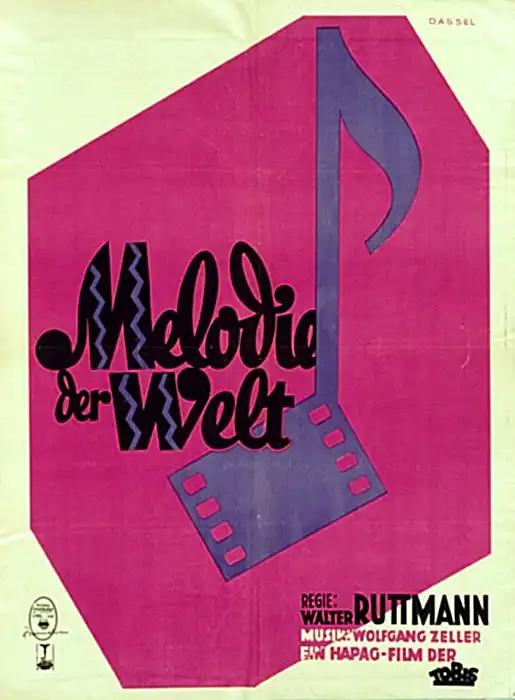
A definitive 6.9/10 rating for a film that redefined the boundaries of cult cinema. Melody of the World remains a cornerstone of transgressive art.
Alright, let’s talk about Melody of the World. This isn't your average movie night flick. If you’re into old films, history, or just genuinely curious about how people lived and what the world looked like back in 1929, then yeah, it's absolutely worth your time. But if you need a story, dialogue, or anything resembling a fast pace, you'll probably find yourself checking your watch quite a bit. It’s a very specific taste, a real time capsule.
Wolfgang Ruttmann tried to give us an impression of the whole world, or at least a big chunk of it, almost like a visual symphony. It jumps from bustling city streets to quiet villages, from grand ceremonies to simple daily chores. The idea is to show us similarities and differences across cultures. Sometimes it hits, sometimes it just... shows.
What really grabs you are the faces. So many different people, caught in candid moments. You see a woman in traditional Japanese dress, then a stern-looking man in a suit somewhere in Europe. Their expressions, their clothes, it’s all just there. It feels very unfiltered, like someone just pointed a camera.
The film plays a lot with contrasts. One moment, you’re watching people dancing gracefully in a ballroom. The next, it’s a more tribal, energetic dance in a different land. It’s trying to say something profound about human nature, but without words, it can feel a bit blunt, a little on the nose.
There are some truly fascinating glimpses of technology from that era. Early airplanes taking off, big old trains chugging along. You see a car drive down a dusty road and realize just how much of a novelty it still was for many. It's a world where the future was just beginning to peek through.
Some parts, though, feel like they go on a bit too long. There’s a sequence showing factory work, repetitive motions, machinery clanking away. You understand the point after a minute, but the camera just keeps rolling. It makes you feel the monotony right along with the workers. 😴
Ruttmann’s editing is quite clever for its time. He’ll cut from someone praying in one country to someone else in a completely different setting, doing something that echoes the same sentiment. It tries to draw connections across vast distances. A hand reaching for bread in one scene, then a hand reaching for a religious artifact in another. It’s trying to make you feel a universal human experience.
And the sheer variety! From busy markets in what looks like North Africa, full of people and animals, to quiet scenes of children playing. It’s a chaotic, beautiful mess. You can almost smell the spices and hear the chatter in those market shots. They’re really well observed.
The film doesn't really have a 'message' that it hammers home. It’s more of an invitation to observe, to reflect on a world that's almost a century gone. It’s a historical document as much as it is a piece of art.
It's not perfect. Some of the attempts at grand statements feel a bit clunky without narration. But for a film made in 1929, with no sound, it’s remarkably ambitious. It’s a genuine effort to capture the 'melody' of human life across continents. A really bold experiment.
IMDb 6.6
1926
Community
Log in to comment.