DbcultAccessing Vault...
Cult Review
Senior Film Conservator
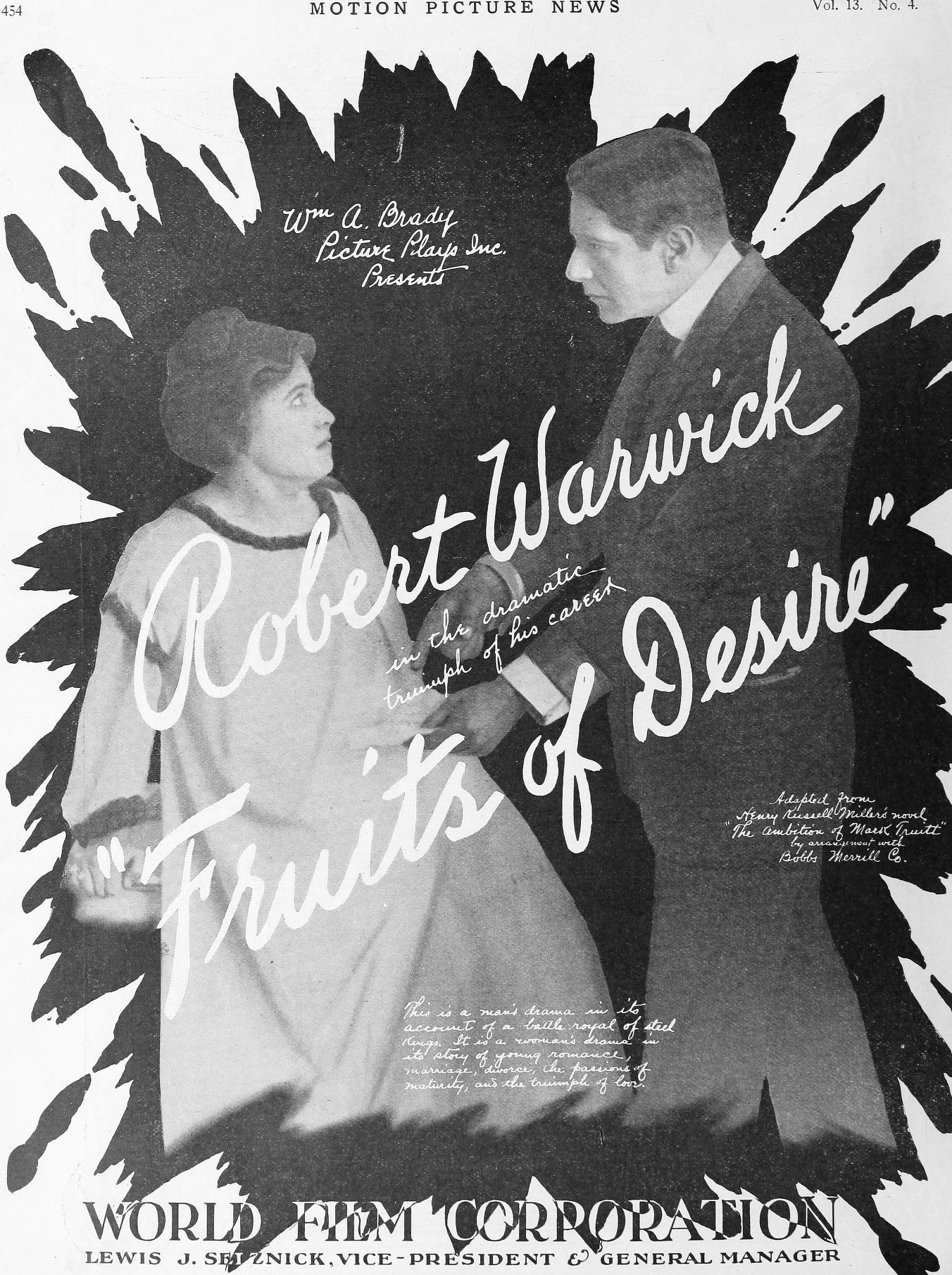
In the grand tapestry of early cinema, where narratives often served as moral parables or heroic sagas, a film like 'Fruits of Desire' emerges as a compelling exploration of the human spirit's relentless pursuit of success and its often unforeseen consequences. Directed with an eye for dramatic sweep and penned by Henry Russell Miller, this cinematic endeavor, even without the benefit of a modern soundtrack or crisp dialogue, manages to convey a profound message about the dichotomy between material wealth and genuine human connection. It's a journey into the heart of ambition, set against the backdrop of America's burgeoning industrial might, and it asks us to ponder what truly constitutes a life well-lived.
The narrative centers on Mark Truitt, portrayed with earnest intensity by Harry Weir. Truitt is a man consumed by a singular vision: to become a titan of the steel industry. His initial circumstances are humble, rooted in the tranquil countryside, far removed from the clang and roar of the mills. He leaves behind not only his pastoral home but also Unity, his sweetheart, played by Phyllis Hazeltine, a character whose arc will later serve as a poignant counterpoint to Mark's own transformation. This initial severance from his roots immediately establishes the film's central conflict: the allure of progress and prosperity versus the simpler virtues of home and hearth.
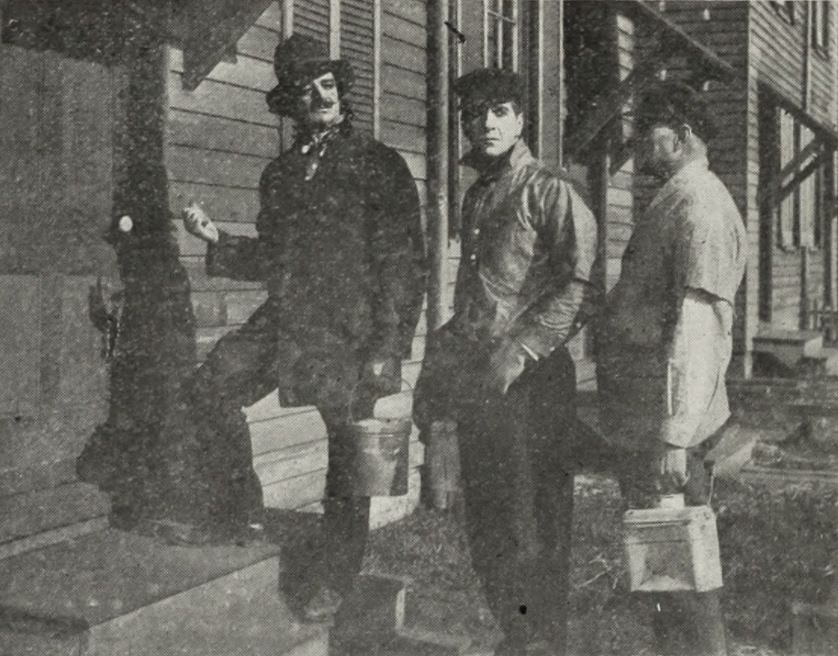
Mark's pilgrimage to Pittsburgh is more than a geographical shift; it's a symbolic descent into the very furnace of American capitalism. He begins, as many aspirational figures of the era did, at the bottom rung, a laborer amidst the inferno of the steel mill. The film, even through the lens of silent-era storytelling, vividly paints a picture of this environment – a place of intense physical labor, danger, and immense opportunity. His rapid ascent, first to foreman and then superintendent, is a testament to his intelligence, work ethic, and perhaps, a ruthless streak that one often finds in the truly ambitious. It’s a classic rags-to-riches trajectory, a narrative that resonated deeply with audiences then and continues to captivate today, speaking to the enduring mythos of the American Dream.
During this period of intense professional growth, Mark finds himself residing with the shop foreman, a detail that introduces another pivotal character: Kazia, the foreman's daughter, brought to life by Madlaine Traverse. Kazia represents a different kind of love, one that blossoms not from shared history or idyllic rural settings, but from proximity, shared daily life, and an admiration for Mark's drive. Her love for him is depicted as steadfast and unwavering, a stark contrast to the more volatile and conditional affections that will later define his relationship with Unity. This budding romance adds a layer of quiet emotional depth, serving as an anchor in Mark's otherwise tumultuous journey of self-actualization through industry. It subtly suggests that even in the pursuit of grand ambitions, the human heart seeks connection.
Having conquered the ranks of the Pittsburgh mills, Mark's ambition isn't sated by mere employment. He returns to his hometown, not as the poor country boy who left, but as a man of means, ready to establish his own industrial empire. The construction of his own mill is a powerful visual metaphor for his achieved status, a tangible manifestation of his 'fruits of desire.' With wealth now firmly in hand, he fulfills his earlier promise, marrying Unity. This moment should, by all narrative conventions, be the triumphant culmination of his efforts – the hero getting both the girl and the gold. However, 'Fruits of Desire' subverts this expectation, delving into the more complex, often tragic, reality of how wealth can warp relationships.
The film masterfully illustrates how money, rather than cementing their bond, acts as a corrosive agent. Unity, once the symbol of pastoral innocence and simple affection, is transformed by their newfound affluence. Her character arc suggests a susceptibility to the superficiality and demands of wealth, perhaps finding herself ill-equipped to navigate the complexities that come with it. This shift in her character leads to an inevitable divorce, a stark, sobering moment that underscores the film's central thesis: that the pursuit of material gain, while offering certain rewards, can often exact a heavy toll on personal happiness and genuine connection. It's a theme echoed in other cinematic explorations of materialism, reminding one of the cautionary tales found in films like The Toll of Mammon, where the siren call of riches proves ultimately destructive.
Disillusioned by the failure of his marriage and the hollowness of wealth without true companionship, Mark Truitt embarks on a journey of introspection and eventual redemption. He returns to Pittsburgh, the very place where his ambitious journey truly began, and more importantly, to Kazia. Her enduring love, untouched by the vicissitudes of his financial success or marital strife, stands as a beacon of unwavering affection. This final act of the film brings the narrative full circle, emphasizing that while ambition and wealth can be powerful motivators, they are ultimately secondary to the human need for authentic, unconditional love.
The marriage of Mark and Kazia at the film's conclusion isn't merely a happy ending; it's a profound statement about growth, maturity, and the reordering of priorities. Mark, having tasted the 'fruits' of both ambition and disillusionment, finally understands where true value lies. Kazia, for her part, represents the stability and genuine affection that was always present, waiting patiently. This arc is particularly resonant, providing a satisfying emotional resolution that elevates the film beyond a simple romantic drama or industrial epic. It reminds us of narratives like The Habit of Happiness, which similarly explores the pursuit of contentment beyond material possessions.
'Fruits of Desire' is a rich tapestry of themes that continue to resonate with modern audiences. At its heart, it's a commentary on the American Dream, questioning whether the relentless pursuit of material success truly leads to happiness. It explores the transformative power of ambition, both for good and for ill, and the subtle ways in which wealth can corrupt or reveal true character. The film also touches upon the changing face of America, moving from an agrarian society to an industrial powerhouse, and the personal sacrifices demanded by such progress. The character of Mark Truitt, as portrayed by Harry Weir, embodies this struggle with a conviction that transcends the limitations of silent cinema, relying on nuanced facial expressions and body language to convey his inner turmoil and triumphs. Similarly, Madlaine Traverse as Kazia offers a portrayal of quiet strength and steadfast devotion that is deeply affecting.
Henry Russell Miller's writing provides a robust framework for these complex themes. The narrative structure, moving from aspiration to achievement, disillusionment, and finally, redemption, is both classic and effective. The pacing, a crucial element in silent films, likely allowed for moments of grand spectacle (the steel mills) juxtaposed with intimate character beats, driving the emotional core of the story forward. While specific directorial choices are often lost to the mists of time for films of this era, the plot's clarity and emotional impact suggest a thoughtful hand at the helm, orchestrating the performances of Harry Weir, Harry De Vere, Phyllis Hazeltine, James Ewens, Julia Stuart, George Moss, Ralph Delmore, Philip Basi, D.J. Flanagan, James T. Mack, Adolph Lestina, Madlaine Traverse, Robert Warwick, Ezra Walck, Robert Cummings, Adolph Parina, Dorothy Fairchild, Alec B. Francis, and Mildred Havens with a keen understanding of human drama. The collective efforts of this ensemble cast, even in the absence of spoken dialogue, would have been vital in conveying the emotional weight of Miller's story.
'Fruits of Desire' stands as a compelling example of early 20th-century cinema's ability to tackle sophisticated themes. It shares thematic DNA with other films of its time that explored the complexities of societal change and personal struggle. One might draw parallels to The Squatter's Son, for instance, in its depiction of individuals carving out their own destiny against challenging backdrops, or even The Lone Star Rush if that film similarly delves into the ambition fueled by resource acquisition. The portrayal of love and its trials, particularly the love triangle element, brings to mind the emotional intricacies found in dramas like The Love Tyrant, where personal desires clash with societal expectations or competing affections.
The film's exploration of a woman's transformation through wealth, as seen in Unity's character, could be viewed alongside other portrayals of female roles in a rapidly changing world, perhaps touching on similar societal observations as The Little Dutch Girl or Lydia Gilmore if those narratives similarly delve into the pressures and influences shaping women's lives. The stark contrast between the industrial grit of Pittsburgh and the pastoral idealism of the countryside also echoes the broader societal shifts depicted in many films of the era, where the march of progress often came at the expense of traditional ways of life. Even the general sense of striving and overcoming obstacles, a common trope, connects it to a vast array of cinematic works, from the more overtly patriotic like Guarding Old Glory (albeit with different subject matter) to dramas about finding one's place in a complex world, such as Out of the Darkness.
In its essence, 'Fruits of Desire' remains a potent reminder that the deepest human desires are not always aligned with the accumulation of wealth or power. Mark Truitt's journey is a cautionary tale, yet also one of hope and eventual clarity. It speaks to the universal struggle of balancing ambition with personal happiness, and the often-painful lessons learned along the path to self-discovery. The film, through its compelling narrative and well-drawn characters, asks us to reflect on our own 'fruits of desire' and whether they truly nourish the soul or merely satiate a fleeting craving. Its enduring power lies in this timeless question, making it a valuable piece of cinematic history and a narrative that continues to provoke thought and introspection.
While we might not have the luxury of experiencing 'Fruits of Desire' with its original orchestral score or in the bustling picture palaces of its premiere, its core message transcends the technological limitations of its era. It's a testament to the power of storytelling that a narrative conceived over a century ago can still speak with such clarity and relevance to contemporary audiences grappling with similar questions of purpose, success, and the true meaning of a fulfilling life. The film serves as a poignant reminder that while the settings and specific industries may change, the fundamental human drama of ambition, love, and the search for contentment remains eternally fascinating.

IMDb 6.5
1931
Community
Log in to comment.