DbcultAccessing Vault...
Cult Review
Senior Film Conservator
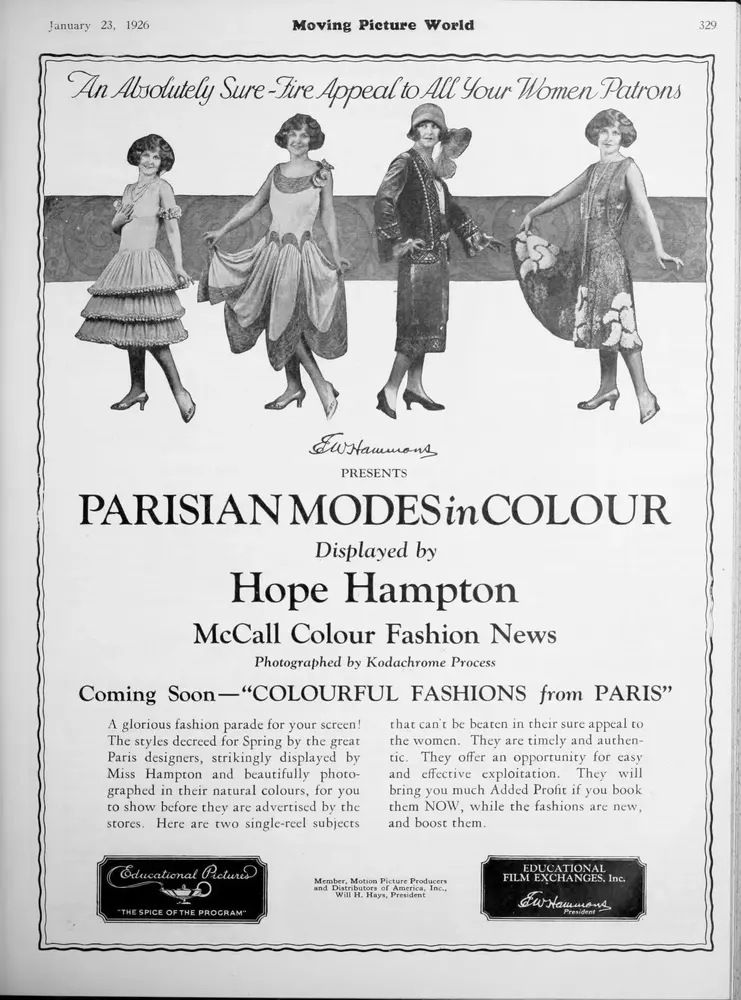
Is 'Parisian Modes in Colour' worth watching today? The short answer is: probably not for most, but unequivocally yes for a very niche audience. This archival piece serves as a fascinating, albeit often frustratingly brief, window into early 20th-century Parisian haute couture, making it essential viewing for fashion historians and enthusiasts of silent-era cinema or cultural anthropology. However, general audiences seeking narrative, character development, or even sustained visual spectacle will find little to latch onto.
It exists primarily as a historical document, a moving photographic record rather than a cinematic experience in the contemporary sense. It’s less a film and more a time capsule, offering a fleeting, vibrant look at a bygone era of fashion presentation. Its value is purely academic, yet undeniably rich for those with the right lens.
This film works because it provides an unparalleled, if brief, visual record of high fashion from a pivotal period in design history, showcasing the work of legendary couturiers through the lens of early cinema. It fails because its primary purpose was informational and promotional, not entertainment, leading to a viewing experience that can feel disjointed and lacking in narrative or dramatic depth for modern audiences. You should watch it if you possess a keen interest in historical fashion, silent film techniques, or the cultural artifacts of the early 20th century, and are prepared to engage with it as a primary source document rather than a conventional movie.
'Parisian Modes in Colour' is, at its heart, a promotional reel, a moving catalogue designed to disseminate the latest trends from the fashion capital of the world. In an era before glossy magazines and instantaneous digital media, film offered a revolutionary way to showcase garments. This particular reel brings to life the creations of titans like Poiret, Callot, and Jenny—names that defined the silhouette and spirit of their time. The very concept is intriguing: imagine a world where the only way to truly see the drape and movement of a gown from Paris was to watch it projected onto a screen.
The film’s structure is straightforward: Hope Hampton, serving as the central mannequin, presents a succession of garments. We see street dresses, each designed for practicality and understated elegance, followed by dinner gowns that speak of more formal, intimate gatherings. The true spectacle, however, lies in the evening gowns and wraps. These are the pieces where the designers truly unleashed their creativity, employing luxurious fabrics and intricate detailing. Observing these garments, one cannot help but appreciate the craftsmanship that predates mass production, each stitch and fold a testament to bespoke artistry.
What strikes a critic is the sheer audacity of presenting such a delicate art form through the rudimentary technology of silent cinema. The film acts as a bridge between the exclusive salons of Paris and a wider, curious public. It democratized, to a degree, access to high fashion, even if the actual garments remained unattainable for most. The implicit 'direction' here is less about storytelling and more about optimal display: how to best frame a dress, how to capture its flow as Hampton moves, how to highlight the 'colour' that the title so boldly promises.
Hope Hampton, a known figure of the silent screen, is tasked with a unique form of 'performance' here. She is not delivering lines or conveying complex emotions; her role is to be a canvas, a living sculpture on which the designs are presented. This requires a specific kind of grace and poise. Hampton moves with a deliberate, almost balletic precision, ensuring that each angle of the garment is visible. Her posture is impeccable, her turns measured, her gestures subtle yet effective in drawing attention to details like a cascading train or an embroidered bodice.
Her 'acting' is in her stillness, her ability to project the intended aura of each dress. For a street dress, she might exude a confident, purposeful stride. For an evening gown, her movements become more languid, more ethereal. It’s a fascinating study in non-verbal communication, a testament to the power of presence without dialogue. She is not a character; she is a representation, an ideal. This makes her contribution critical, elevating the film from a mere static catalogue to a dynamic, albeit brief, visual experience.
One could argue that Hampton’s performance here is more akin to modern runway modeling than traditional acting. She embodies the garment, allowing it to speak for itself. Her face, often serene or slightly enigmatic, does not distract from the primary focus. This disciplined approach is a strength, ensuring the viewer’s attention remains squarely on the sartorial artistry. It’s a nuanced, understated portrayal of elegance that defines the era.
The most intriguing aspect, hinted at in the title, is the 'colour.' In an age of predominantly black and white cinema, the inclusion of 'colour' implies a special process—likely hand-tinting or stencil-coloring. This laborious technique involved artists meticulously applying dyes to individual frames, creating a vibrant, if often impressionistic, palette. While the quality of preservation and digital restoration can vary, glimpses of this hand-applied colour are genuinely captivating.
Imagine the painstaking effort: each dress, each accessory, potentially tinted to reflect its true hue. This wasn't merely a technical flourish; it was essential for conveying the full impact of the designs. A red evening gown, a blue wrap—these details would be lost in monochrome. The colour adds another layer of authenticity and visual richness, making the garments truly pop on screen. It’s a powerful reminder of the ingenuity employed by early filmmakers to overcome technological limitations.
The cinematography itself, while not groundbreaking in its camera movements or shot composition (it mostly relies on static, medium shots to capture the full length of the garments), is effective for its purpose. The lighting, though simple, is sufficient to highlight textures and silhouettes. The film’s visual language is functional, prioritizing clarity and detail over artistic flourish, which is perfectly appropriate given its informational objective. It serves as a stark contrast to the more experimental visual narratives seen in films like The Libertine or even the dramatic compositions of Sången om den eldröda blomman, showcasing a different facet of early cinema's capabilities.
The pacing of 'Parisian Modes in Colour' is dictated by the presentation of each garment. There’s a measured rhythm, allowing sufficient time for viewers to observe each dress before Hampton gracefully transitions to the next. This isn't a film designed for rapid cuts or suspense; it's an observational piece. The tone is reverent and informative, treating the fashion as a serious artistic endeavor. There's no overt commentary, no dramatic score (as it's a silent film, any accompanying music would be live, adding another layer of historical performance), just the silent elegance of the designs.
Understanding the historical context is paramount to appreciating this film. It emerged at a time when Paris was the undisputed global epicenter of fashion. The designers featured were celebrities in their own right, their names synonymous with innovation and luxury. This film was a vital tool for disseminating their influence, not just to wealthy patrons but also to other designers, dressmakers, and department stores seeking inspiration. It’s a snapshot of an industry at its peak, navigating new media to broadcast its vision.
The film offers a valuable counterpoint to the more overtly narrative films of the era, such as The Frame-Up or We Can't Have Everything, demonstrating the diverse applications of nascent cinematic technology. It reveals that cinema wasn't solely about storytelling from its inception; it was also a powerful tool for documentation, education, and promotion. This unconventional purpose makes it a truly unique artifact.
For the casual viewer seeking entertainment, 'Parisian Modes in Colour' will likely fall flat. It lacks a conventional plot, dramatic tension, or character development. It is, by modern standards, slow and seemingly uneventful. However, its value lies elsewhere.
For those with a specific interest in early 20th-century fashion, costume design, or the history of silent film, it is an indispensable resource. It offers a rare, moving glimpse into the actual garments and their intended presentation. The hand-tinting, if visible, provides crucial insight into the original aesthetic. It’s a primary source that speaks volumes about the aesthetics and cultural priorities of the time.
It's a historical document, not a feature film. Its worth is measured in its ability to transport you to a specific moment in time and reveal the elegance of an era through its most visible art form: clothing. Approach it with an academic mindset, and you will be rewarded.
IMDb —
1918
Community
Log in to comment.