DbcultAccessing Vault...
Cult Review
Senior Film Conservator
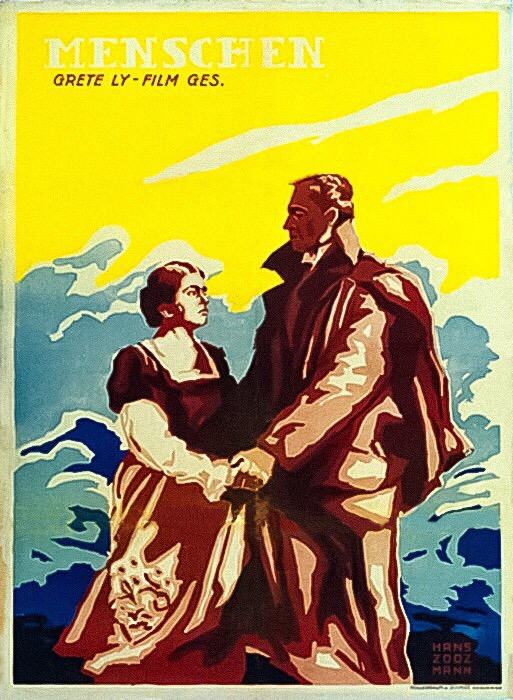
In the pantheon of Weimar-era cinema, certain titles loom with a gargantuan presence, often overshadowing the quieter, more subversive works that laid the groundwork for the movement's psychological depth. Menschen (1921), directed by the intellectually rigorous Martin Berger, is precisely such a film. It is a work that demands not merely a viewing, but a reckoning. Eschewing the jagged geometries of Expressionism for a more grounded, yet no less haunting, social realism, Berger crafts a tapestry of human suffering that feels uncomfortably modern. This is not the stylized nightmare of Dr. Caligari; it is the waking nightmare of the street, the tenement, and the factory floor.
The visual language of Menschen is one of suffocating proximity. While films like The White Circle utilized a more traditional mystery-thriller framework to engage their audience, Berger leans into the stillness of misery. The cinematography focuses on the topography of the human face—specifically the weary countenances of Bernhard Goetzke and Eugen Klöpfer. Goetzke, who would later become an icon of the era's fatalism, provides a performance that is almost ontological in its weight. His eyes do not just see the world; they absorb its injustices until they are heavy with the soot of the industrial age.
Unlike the sensationalist tone found in The Spider, Menschen avoids the trap of melodrama by grounding its stakes in the mundane. The tragedy here isn't a grand betrayal or a gothic secret, but the slow, attritional loss of dignity. The way Berger frames the urban environment—narrow alleyways that feel like arteries of a dying beast—suggests a world where the architecture itself is designed to trap the protagonist. It shares a certain spiritual kinship with the later thematic explorations in Mice and Men, particularly in its depiction of the crushing loneliness inherent in the working-class struggle.
The ensemble gathered for this production represents a veritable who's-who of the period's character actors. Ilka Grüning and Grete Ly bring a necessary, albeit tragic, feminine perspective to a narrative that could easily have become a monochromatic masculine dirge. Grüning, in particular, possesses an uncanny ability to convey an entire history of domestic hardship through the simple act of setting a table or adjusting a shawl. There is a tactile reality to her performance that cuts through the century of time between the film's creation and the modern viewer.
The presence of Alexander Ekert and Charles Willy Kayser adds layers of complexity to the social hierarchy depicted on screen. While Her Official Fathers might play with the tropes of lineage and societal standing for comedic or light dramatic effect, Menschen treats these class distinctions as life-or-death barriers. The interactions between the characters are fraught with the tension of survival; every conversation is a negotiation, every silence a prayer or a curse.
Martin Berger is a director whose name deserves more frequent invocation in discussions of early German cinema. His approach to Menschen is characterized by a refusal to blink. He captures the grime under the fingernails and the dampness of the walls with a precision that predates the New Objectivity (Neue Sachlichkeit) movement by several years. Where a film like The Mystery of Edwin Drood relies on the fog-drenched atmosphere of Victorian suspense, Berger relies on the cold, hard light of day to expose the failures of the social contract.
His pacing is deliberate, almost agonizingly so. He understands that for the audience to feel the weight of his characters' lives, they must experience time as the characters do: as a series of long, grueling intervals punctuated by moments of sharp, sudden pain. This rhythmic mastery is what elevates the film from a mere social tract to a piece of high art. It is a symphony of the downtrodden, composed in shades of grey and black.
When placing Menschen alongside its 1921 peers, its uniqueness becomes even more apparent. Consider Apartment 29, which utilizes the domestic space as a site of mystery. Berger, conversely, uses the domestic space as a site of claustrophobia and inevitable conflict. The home is not a refuge; it is a microcosm of the external world's pressures. Similarly, while Lady Audley's Secret deals with the moral failings of the aristocracy, Menschen is concerned with the moral endurance of the poor.
The film’s technical merits are equally impressive for the era. The use of natural light in several exterior sequences provides a jarring contrast to the heavily controlled environments of contemporary studio-bound epics. This choice reinforces the film's thematic commitment to truth. It lacks the explosive spectacle of The Explosion of Fort B 2, but its emotional detonations are far more devastating. It is a film that explodes from the inside out, fueled by the volatile mixture of poverty and repressed rage.
The importance of Menschen in the evolution of the 'Zille-film' or the 'street film' cannot be overstated. It serves as a bridge between the early moralistic dramas and the sophisticated social critiques of the late 1920s. By centering the narrative on the 'Menschen'—the humans—rather than the plot, Berger anticipated the shift toward psychological realism that would define the next decade of filmmaking. It possesses a raw power that is often missing from more polished productions like San-Zurka-San or the adventurous spirit of Taming the West.
In Menschen, the struggle is not against outlaws or foreign landscapes, but against the very fabric of modern existence. The film asks a question that remains uncomfortably relevant: what happens to the human spirit when it is treated as a mere cog in a machine? The answer Berger provides is not an easy one, nor is it particularly hopeful, but it is delivered with a sincerity and a formal brilliance that makes it essential viewing for any serious student of the medium.
The interplay of light and shadow in Menschen serves as a visual metaphor for the characters' fluctuating fortunes. There are moments of startling beauty—a sunbeam hitting a cracked window, a shared look of understanding between two strangers—that serve to highlight the surrounding darkness. This is not the flamboyant lighting of Die Fürstin von Beranien; it is a lighting scheme that feels organic to the environment, as if the shadows themselves were made of the same coal dust that covers the actors' faces.
Furthermore, the editing by Berger (who likely had a heavy hand in the assembly of the film) demonstrates a sophisticated understanding of Kuleshovian principles. He cuts between the opulence of the wealthy and the squalor of the poor not for cheap didacticism, but to create a rhythmic dissonance that mirrors the social unrest of the time. This is far more effective than the straightforward narrative progression found in films like Fireman, Save My Gal! or the whimsicality of The Guilty Egg.
Ultimately, Menschen is a testament to the power of silent cinema to communicate complex sociological ideas through the sheer force of imagery and performance. It doesn't need intertitles to explain the agony of a mother who cannot feed her child or the shame of a man who has lost his place in the world. These are universal experiences, rendered here with a specific, localized intensity that makes them feel both ancient and immediate. It is a film that lingers in the mind like a half-remembered dream—or perhaps more accurately, like a shadow that refuses to dissipate when the lights come up.
While it may lack the name recognition of 'Metropolis' or 'Nosferatu', 'Menschen' remains a cornerstone of German cinematic history. It is a reminder that the most profound stories are often the ones told in the quietest voices, amidst the loudest silences of history. For those willing to look past the surface of the silent era, Berger’s masterpiece offers a glimpse into the very soul of humanity, in all its fractured, beautiful, and terrible glory.

IMDb —
1927
Community
Log in to comment.