DbcultAccessing Vault...
5.4/10
Senior Film Conservator
A definitive 5.4/10 rating for a film that redefined the boundaries of cult cinema. Messalina remains a cornerstone of transgressive art.
The year 1923 marked a peculiar zenith for the Italian silent film industry, a period where the 'peplum' or sword-and-sandal epic had already established its grammar through works like Cabiria and Quo Vadis. Yet, Enrico Guazzoni’s Messalina stands as a defiant, late-era monumentalism that refuses to fade into the background of cinematic history. It is a work of staggering ambition, a film that breathes through its stones and marble as much as through its actors. In the landscape of early 20th-century cinema, while American directors were refining the intimacy of the close-up, Guazzoni was perfecting the choreography of the masses and the psychological resonance of the proscenium.
To understand Messalina, one must first acknowledge Enrico Guazzoni not merely as a director, but as a visual architect. His background in painting is evident in every frame; the composition of the Roman forum isn't just a backdrop—it's a character in itself. Unlike the somewhat claustrophobic domesticity seen in The Sin of Martha Queed, Guazzoni’s Rome is vast, terrifying, and indifferent to the human ants scurrying across its floor. The sets are not the flimsy plywood constructions of a low-budget serial like Lucille Love: The Girl of Mystery; they possess a weight that feels as though they might survive another two millennia.
The film’s visual language is one of chiaroscuro and depth. Guazzoni understands how to lead the eye through a crowd of three thousand people to find the subtle glint of a dagger or the suggestive curve of an empress’s smile. This mastery of scale sets it apart from the more grounded narratives of the time, such as Lena Rivers, which relied on emotional sentimentality rather than aesthetic awe. In Messalina, the awe is the primary emotion.
At the epicenter of this tectonic shift in filmmaking is Rina De Liguoro. Her portrayal of Messalina is a masterclass in silent-era histrionics tempered by a very modern sense of menace. While contemporary audiences might be used to the 'vamp' figure—the femme fatale who leads men to ruin—De Liguoro imbues the character with a regal entitlement that makes her actions feel less like villainy and more like a force of nature. She does not merely want the Persian slave, Ennio; she views his very existence as a commodity of her empire.
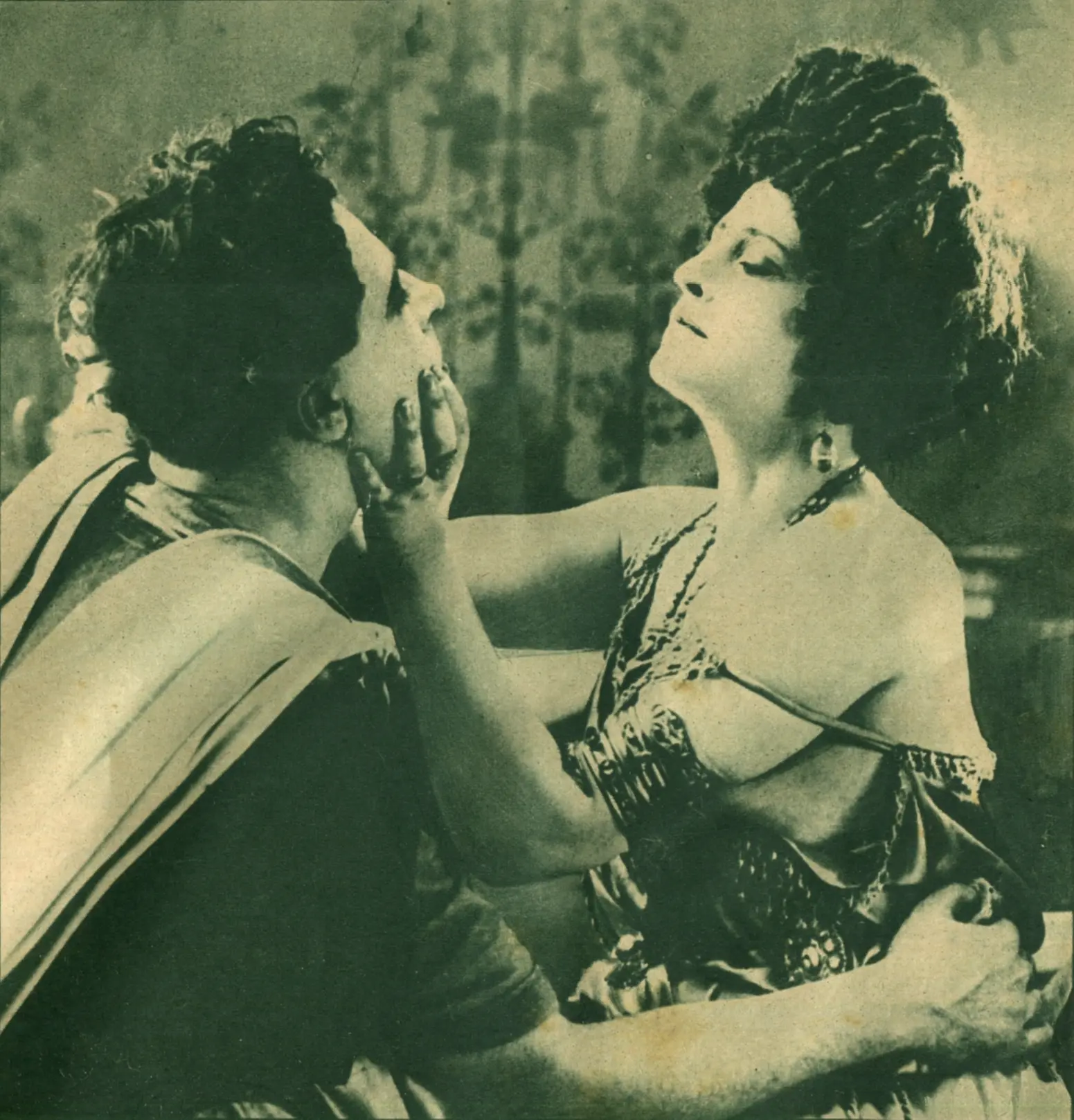
Her performance provides a fascinating contrast to the more ethereal or victimized female roles found in films like Lulù. Messalina is never a victim of her circumstances. Even in her most desperate moments of lust or political peril, she retains a terrifying agency. This is a woman who would look at the moral quandaries presented in The Devil's Garden and find them quaintly irrelevant. Her morality is dictated by the pulse of her own desires and the cold logic of the throne.
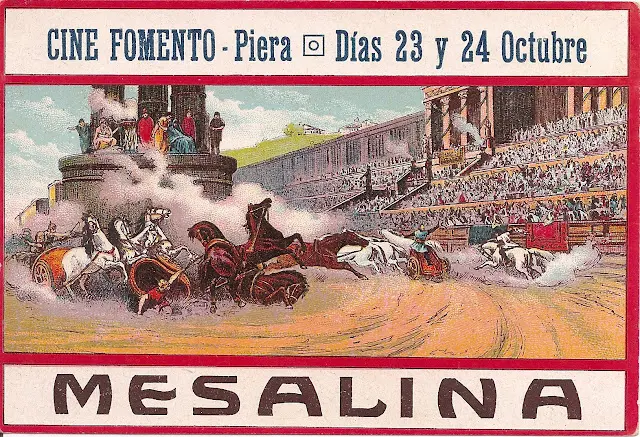
One cannot discuss Messalina without addressing the chariot race. Long before William Wyler’s 1959 Ben-Hur became the gold standard for the sequence, Guazzoni was pushing the limits of what a camera could capture in a high-speed chase. The editing here is remarkably sophisticated for 1923. There is a palpable sense of danger—the dust, the sweat, the splintering wood. It possesses a visceral energy that makes the more leisurely pacing of Sands of the Desert feel positively sedentary by comparison.
"The chariot race in Messalina is not just a display of athletic prowess; it is a metaphor for the empress’s own life—a high-speed, reckless dash toward an inevitable crash, fueled by the cheers of a bloodthirsty populace."
The technical execution of these scenes required a level of coordination that few directors of the era could manage. Guazzoni’s ability to maintain narrative clarity amidst the chaos of the circus maximus is a testament to his directorial discipline. It is a far cry from the slapstick mayhem of Toonerville's Fire Brigade; here, every tumble and every whip-crack is calculated for maximum dramatic impact.
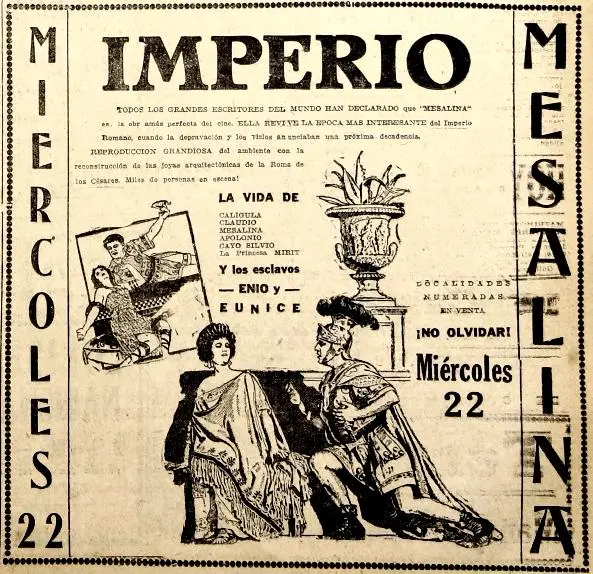
The plot, centered on Messalina’s obsession with the Persian slave Ennio (played with a rugged, silent intensity), serves as a vehicle to explore the intersection of class and carnality. Ennio is the 'other'—an exotic prize that represents a world beyond the rigid hierarchies of Rome. This dynamic of the powerful woman and the lower-class object of desire was a radical subversion of the tropes seen in films like The Bashful Lover, where courtship usually followed more traditional, patriarchal lines.
As Messalina maneuvers through the treacherous waters of the Roman court, we see the supporting cast shine. Augusto Mastripietri and Calisto Bertramo provide the necessary gravitas to the political subplots, ensuring the film doesn't devolve into a mere series of spectacles. The tension is consistently high, mirroring the existential dread found in Paradise Lost, though transposed from a theological stage to a historical one. The stakes are not merely the soul, but the state itself.
When placed alongside other works of the early 1920s, Messalina feels like a bridge between the past and the future. It lacks the experimental, almost surrealist qualities of La montagne infidèle, opting instead for a rigorous, classical realism. Yet, it shares a certain thematic darkness with The Man Who Played God, particularly in its exploration of how absolute power can distort the human psyche into something unrecognizable and monstrous.
While a film like Egyenlöség might focus on social equality and political reform, Messalina is fascinated by the inherent inequality of the ancient world. It revels in the distance between the empress and the slave, the citizen and the gladiator. Even the lighter moments, if they can be called that, lack the jaunty optimism of Back from the Front or the playful athleticism of Play Ball with Babe Ruth. This is a world where the sun always seems to be setting on a civilization that has forgotten how to be human.
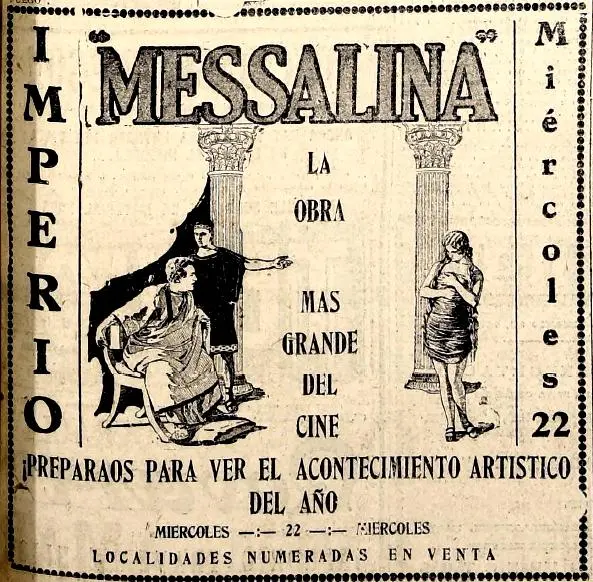
The cinematography in Messalina is exceptionally sophisticated. The use of natural light in the outdoor sequences creates a shimmering, sun-drenched Rome that feels lived-in. Conversely, the interior scenes in the palace are thick with shadows, suggesting the rot at the heart of the empire. This visual duality is something that many smaller films of the era, like The Twinkler, simply didn't have the budget or the artistic vision to execute.
The costumes, too, deserve a mention. They are not merely period-accurate; they are designed to highlight the physical presence of the actors. The heavy silks and intricate jewelry worn by De Liguoro emphasize her status and her burden, while the minimal attire of the athletes highlights the raw physicality of the Roman spectacle. It is a film that understands the erotic power of the gaze, both the camera's gaze and the characters' gazes upon one another.
Ultimately, Messalina is a testament to the power of the silent epic. It is a film that demands to be seen on the largest possible screen, accompanied by a booming orchestral score that can match its visual grandeur. It represents a moment in time when the Italian film industry was the undisputed king of the historical spectacle, a crown it would eventually pass to Hollywood.
For the modern viewer, Messalina offers more than just a historical curiosity. It is a visceral, often shocking exploration of human desire and the corrupting influence of power. It bypasses the brain and aims straight for the senses. While it may lack the narrative complexity of modern dramas, it possesses a purity of vision that is increasingly rare. Enrico Guazzoni didn't just tell a story; he built a world and invited us to watch it burn. In the pantheon of silent cinema, Rina De Liguoro’s Messalina remains one of the most haunting and magnetic figures to ever grace the silver screen, a reminder that even in the silence, a scream of passion can be heard across the decades.

IMDb 5.7
1932
Community
Log in to comment.