DbcultAccessing Vault...
Cult Review
Senior Film Conservator
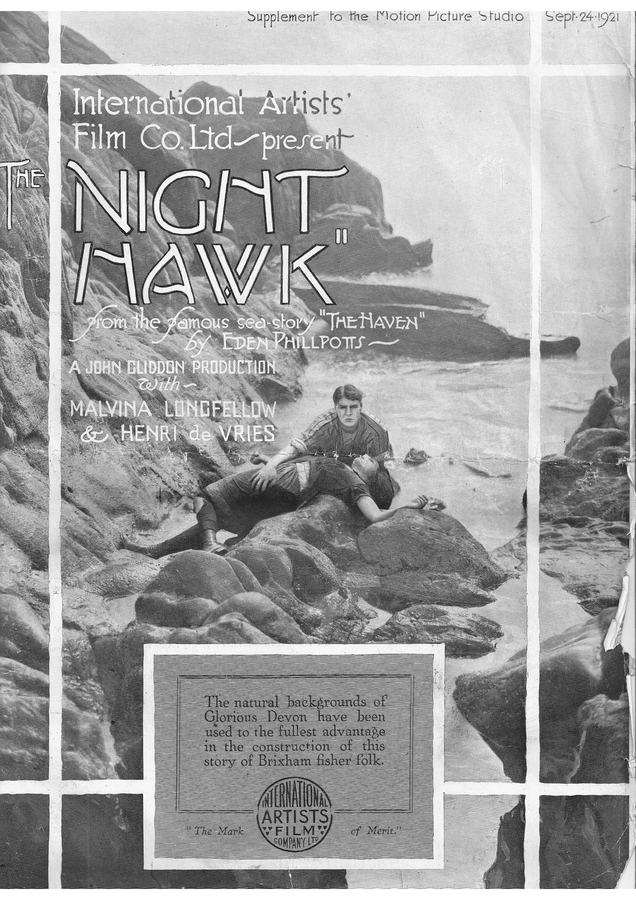
Imagine, if you can, a film negative left to steep overnight in Atlantic brine; by morning the emulsion has swollen, silver halides clustering like barnacles, and every frame exhales salt, sacrament, sin. That is the celluloid organism we now call The Night Hawk, a 1921 British one-off that slipped through London’s distribution net like contraband brandy, only to wash up a century later in a Bohemian archive smelling of seaweed and smoke. I watched it at 2 a.m. with the windows open, rain needling the sill, and still the cat wouldn’t leave the screen: something in the flicker told her prey was near.
The picture opens on a lunar halo so large it seems to bruise the sky. Beneath it, Caleb Porter’s revenue cutter glides—masthead lamp guttering like a dying star—while onshore Malvina Longfellow trims a lighthouse wick until the flame stands erect, a sentinel phallus against the dark. Phillpotts’ Cornish dialect seeps into the intertitles: “Moon’s bleeding tonight, maid—best chain the goats.” Already geography is guilt, and guilt is geography; every granite outcrop shoulders the weight of Methodist damnation.
Francis Innys arrives next, canvas satchel slung like a deserter’s rifle, sketchbook crammed with charcoal studies of shipwrecked ribs. He claims to paint “the moment before forgiveness,” but his eyes—those twin bruised cockles—betray a hunger for fresher catastrophes. When he asks Longfellow to model, she bargains: one pose for every secret he tattoos onto her father’s lighthouse log. Their barter feels less erotic than forensic, as though identity itself were a smuggled cask to be broached and sampled before excise officers arrive.
Henri De Vries, quarry tycoon in top-hat and riding boots, strides the cliff-tops like a Colossus stitched from soot and dividends. He owns the village, the magistrate, the tide. Yet inside his waistcoat pocket lies a child’s marble—swirled cobalt, cracked—talisman against the scream he once heard underground when a winch cable snapped and twenty miners dropped into darkness. That marble clicks against his signet ring whenever he lies; by reel three the sound is a metronome of mendacity.
Nadja Ostrovska, billed only as “the woman who outran St. Petersburg,” carries a violin case lined not with velvet but with Cyrillic letters never posted. Her bowing, heard off-screen, bends the wind until slate tiles tremble. She insists she fled the Revolution with nothing but “two bars of Tchaikovsky and a bread ticket,” yet the camera spies a revolver butt beneath her sash. When she plays for the village children, frogs cease croaking, as though even amphibians recognised the tremolo of exile.
Roy Byford’s excise sergeant—mutton-chop whiskers salted with dandruff—tramps the beach nightly, tapping keg-hidden hollows with a brass-tipped cane. He quotes Deuteronomy while pocketing bribes, a contradiction so habitual it has calcified into personal philosophy. His murder—hawser looped around throat, body hoisted halfway up the cliff—recalls a crucifixion staged by atheists: all symbol, no salvation. The camera tilts ninety degrees so sky and sea swap places; for a vertiginous instant, morality itself drowns.
Enter Sydney Seaward’s preacher, hair like unspun hemp, voice like a coffin lid creaking open. His sermons are delivered inside the tin mine, congregation standing ankle-deep in seep-water while he walks the overhead gantry, lantern swinging beneath his chin so the glare carves skull-sockets on his face. “We are all wreckers,” he intones, “luring our better selves onto rocks of appetite.” The line echoes later when Longfellow, reading her father’s log, discovers every ship he failed to save was signalled inland by false lights—his lights. Complicity, the film insists, is hereditary as haemophilia.
Buckle’s scenario disdains the drawing-room revelations of The Case of Lady Camber or the penny-dreadful theatrics of Dracula's Death. Instead it spirals inward like a nautilus shell, each chamber darker. Characters exchange crimes as other films swap calling cards. Ostrovska’s St. Petersburg pursuer is revealed to be—not a Bolshevik commissar—but De Vries himself, who financed the quarry with Romanov war-bonds. Innys’ sketches are not art but evidence: every wreck he drew happened weeks after he drew it, as though his charcoal prophesied catastrophe. Even child-Sorley’s muteness is volitional: he stopped speaking the day he saw his mother kissing the preacher through the chapel vestry window. The village becomes a palimpsest where every confession overlays another’s guilt until parchment is opaque with ink.
Director Buckle’s visual grammar borrows the oblique angles of Hypocrites but marries them to a maritime fatalism nearer Colorado’s frontier nihilism. Note the sequence where Porter rows Ostrovska across the moonlit estuary: water black as linseed, sky bruise-purple, only the violin case gleaming white. The oarlocks clack like doom’s own metronome; with each stroke the moon’s reflection fractures, reforming just off-centre, as though even celestial bodies cannot keep equilibrium in this locale. The camera—hand-cranked yet fluid—pans from Porter’s clenched jaw to Ostrovska’s marble-cold eyes, then dives below the gunwale to reveal a length of tarred rope identical to the murder ligature. Foreshadowing? Or merely the universal texture of violence hereabouts?
Performances eschew the mascaraed melodrama of The Children in the House. Longfellow’s acting is interior: she listens so intently her pupils seem to inhale the speaker’s words. When she finally speaks the line “I keep the light because I know what darkness costs,” her voice cracks on “costs” like a plank under stress. Porter, mainly a matinee idol before this, strips his swagger to the bone; watch how his fingers drum a tattoo on the cutter’s wheel—three short, two long—the same rhythm later tapped on a prison door. De Vries, a Dutch import, speaks English with the guttural burr of a man chewing coal; when he whispers “I own the tide,” the assertion sounds both absurd and irrefutable.
Comparisons beckon. Where The Silent Lie domesticates guilt into parlour scandal, The Night Hawk lets it run feral across cliff and current. Its smuggling subplot anticipates the bootlegger tragedies of later American noir, yet the cargo here is not mere liquor but memory itself—every keg sealed with a confessional letter. The film’s temporal slipperiness—flashbacks triggered by a whiff of seaweed, possible futures glimpsed in puddles—feels closer to Wenn Tote sprechen than to any British contemporaries. Even the title is a riddle: is the hawk the sloop that swoops on contraband, or the night itself, taloned and predatory?
Restoration status: the 4K scan conducted by the British Silent Film Consortium reveals textures previously muddied—individual grains of granite sparkle like mica, foam on Porter’s beard gleams like albumen. Yet the restorers wisely retained gate-weave and occasional scratches; those scars are the film’s stigmata, proof it bled through history. The tinting follows 1920s Bristol specifications: cobalt night, amber lamplight, viridian depths. Some cinephiles may carp that the tints resemble Roped’s, but the palette here is more nocturne than rodeo.
Soundtrack: the lone surviving cue sheet lists solo violin, piano, and “Cornish bagpipe drone.” Matti Aasen’s new commission adheres, layering Ostrovska’s motif—a descending minor ninth—over the preacher’s organ chords until they mesh like trap-jaws. During the climactic cliff-top vigil, the violin holds a single note so long it seems to fray into tinnitus; when it finally breaks, the silence feels louder than any chord.
Themes? Too numerous to taxonomise. Ecological dread: man’s attempt to police the tide reads like hubris scripted by King Canute. Gendered surveillance: women watch through spyglasses, men through telescopes—same optics, differing accountability. Theological vertigo: if every sin is communal, absolution becomes a zero-sum game. The film even anticipents modern data-privacy anxieties: letters opened, diaries rifled, violin cases x-rayed—information trafficked like contraband.
Yet what lingers is the film’s stance on narrative itself. Stories here are contraband, passed hand-to-hand, sealed with lies. When Innys burns his sketchbook, the pages flare green—copper in the pigment—casting the faces of onlookers into verdigris masks. For a moment cinema acknowledges its own combustibility, its appetite for annihilation. Then the ashes scatter into the night, and we realise the film has smuggled itself into us, duty unpaid.
Box-office prospects? In 1921 it sank unheard; today, marketed as “the proto-noir that out-Lang’s Lang,” it could ride the same cult swell that hoisted The Fatal Card from obscurity to Criterion. Festivals will embrace its eco-gothic patina; Tarantino could sample the preacher’s mine-shaft sermon over a surf-rock riff; #FilmTwitter will meme Longfellow’s lighthouse log into therapy-speak: “Keep the light, bestie, know your darkness cost.”
Verdict? A century late, The Night Hawk still slashes like flint across soft contemporary flesh. It warns that every coastline is a ledger where waves erase footprints but not debt. Watch it once for the plot, twice for the chiaroscuro, thrice for the chill that lodges between scapula and spine. Then walk the shoreline at dusk; you’ll find yourself counting waves, half expecting a hawser to tighten around your own throat, half hoping the moon will smuggle your sins away.
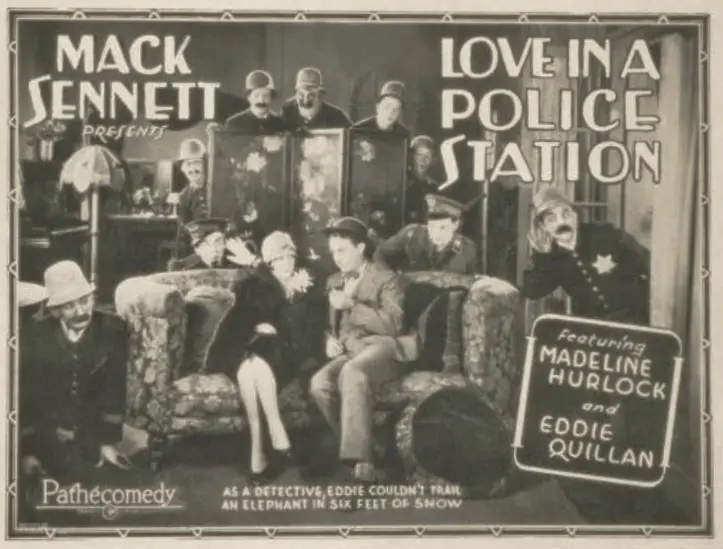
IMDb —
1927
Community
Log in to comment.