DbcultAccessing Vault...
6.7/10
Senior Film Conservator
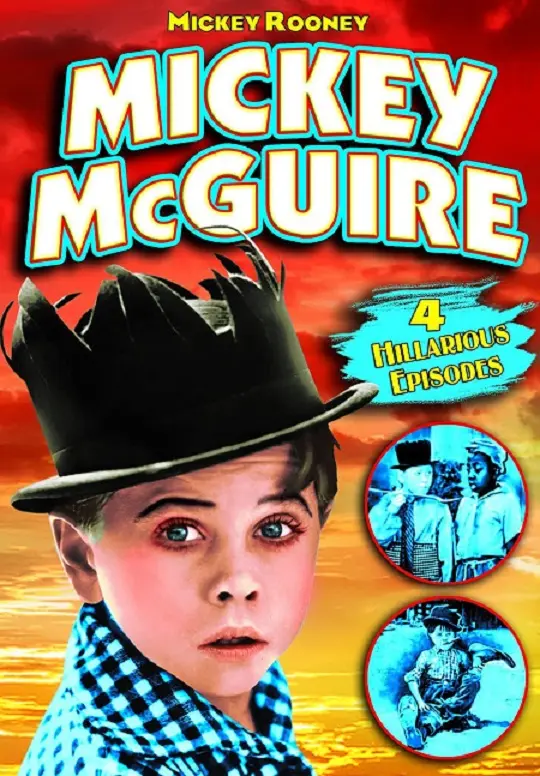
A definitive 6.7/10 rating for a film that redefined the boundaries of cult cinema. Mickey's Eleven remains a cornerstone of transgressive art.
Is 'Mickey's Eleven' worth watching today? Short answer: yes, but with significant caveats. This vintage football short offers a fascinating glimpse into early Hollywood's portrayal of youth sports and class conflict, making it a valuable watch for film historians and those nostalgic for a bygone era of simple storytelling.
However, it is decidedly not for viewers seeking modern production values, nuanced character development, or progressive themes. This is a film best appreciated through a specific lens, understanding its historical context rather than judging it by contemporary standards.
This film works because it captures a raw, almost documentary-like energy in its depiction of childhood rivalry and the simple stakes of a football game. Its unvarnished charm is surprisingly effective.
This film fails because its narrative is simplistic, its characterizations are broad, and its technical execution, while competent for its time, feels rudimentary by today’s standards.
You should watch it if you appreciate early cinema, enjoy discovering the roots of sports films, or are a fan of Mickey Rooney's early work and want to see him in a different light.
The premise of 'Mickey's Eleven' is deceptively simple, yet it taps into universal themes that resonate even decades later. We are introduced to Mickey and his ragtag football squad, a group of youngsters for whom the local field is more than just a patch of grass—it’s a sanctuary, a proving ground, and a canvas for their youthful ambitions.
Their practice, a scene brimming with boisterous energy and unrefined passion, is abruptly disrupted. The intruders are not malicious villains in the traditional sense, but rather a rival group: the 'rich kids' from the more affluent side of town. This immediate juxtaposition establishes a clear, if rudimentary, class divide that underpins the entire conflict.
What ensues is not merely a dispute over a football, but a collision of worlds. The rich kids, with their polished equipment and air of entitlement, embody a different ethos than Mickey’s scruffier, more resourceful team. The film cleverly frames this initial confrontation as a battle for territory, a primal struggle for dominance over a shared, yet contested, space.
The subsequent 'battle,' both on and off the field, is the narrative's engine. It’s a contest of wills, a test of ingenuity, and ultimately, a challenge to see which group possesses not just superior athletic skill, but also a stronger sense of unity and purpose. The stakes, while seemingly small from an adult perspective, are monumental for these children, representing their pride, their identity, and their right to play.
Mickey Rooney, even in his younger years, possesses an undeniable charisma that anchors 'Mickey's Eleven'. His portrayal of Mickey, the team leader, is less about a nuanced character study and more about embodying a particular type of spirited, determined American youth. He’s the plucky underdog, radiating an infectious energy that rallies both his on-screen teammates and, presumably, the original audience.
One particularly telling moment is during the initial confrontation. Rooney doesn't just react; he bristles with a defiant energy, his small stature amplified by a fiery gaze and quick retorts. It’s a performance that telegraphs leadership through sheer force of personality, a trait he would refine throughout his extensive career.
The supporting cast, including the inimitable Billy Barty, adds layers of personality to Mickey's team. Barty, despite limited screen time, brings a distinct physical comedy and an endearing resilience that makes his character memorable. His presence, often a source of lightheartedness, also underscores the diverse personalities that make up the underdog team.
Direction, credited to a team of writers including Fontaine Fox, E.V. Durling, Earl Montgomery, and Joseph Basil, likely implies a collaborative effort, typical of short films from this era. The filmmaking style is direct and functional, prioritizing clear storytelling over stylistic flourishes. There’s a utilitarian efficiency to the camera work, ensuring that the audience always understands the action and the emotional beats, however broad they may be.
For example, the camera often captures the wide shots of the football games, emphasizing the chaotic, unrefined nature of children's sports. There’s a particular sequence where the two teams scramble for a loose ball, and the camera, rather than cutting rapidly, holds a slightly elevated angle, allowing the viewer to absorb the full, frenetic energy of the moment. It’s simple, but effective in conveying the youthful exuberance.
Beyond the surface-level football rivalry, 'Mickey's Eleven' subtly, and perhaps unintentionally, explores themes of class disparity and the inherent unfairness that can arise from it. The 'rich kids' are not inherently evil; they simply possess resources and an attitude that stems from privilege. Their interruption of Mickey’s practice isn’t malice, but a casual disregard for others' space, a consequence of never having to negotiate for it.
This dynamic is a surprisingly potent undercurrent for a children's film. It suggests that success isn't just about talent, but also about access and opportunity. Mickey’s team, by contrast, relies on grit, teamwork, and a shared sense of injustice to fuel their efforts. This makes their eventual triumph, however it manifests, feel earned and deeply satisfying.
One could argue that the film, in its own quaint way, is a precursor to countless sports narratives that pit the underdog against the well-funded elite. Think of the thematic echoes in something like The Untamed, where characters also contend with societal structures, albeit in a much more dramatic context. The simplicity of 'Mickey's Eleven' makes these themes digestible even for young audiences, instilling a basic sense of fairness and the value of fighting for what's right.
However, it’s also important to acknowledge that the film’s handling of these themes is rudimentary. There’s no complex socio-economic commentary, nor should there be. It’s a children's short, and its messages are delivered with the directness of a playground scuffle. It works. But it’s flawed.
The pacing of 'Mickey's Eleven' is brisk, as one would expect from a short film. There’s little time for meandering subplots or extensive character development. The narrative moves with a propulsive energy, quickly setting up the conflict and driving towards its resolution. This efficiency is one of its strengths, preventing the film from overstaying its welcome.
The tone is overwhelmingly lighthearted and optimistic, even during moments of conflict. Despite the underlying class tensions, the film never veers into genuine bitterness or anger. It maintains a consistent, wholesome sensibility that reflects the era in which it was made. This makes it an easy, unchallenging watch, though perhaps lacking the emotional depth modern audiences might expect.
Its lasting impact is primarily as a historical artifact. It's a charming example of early youth cinema and a testament to Mickey Rooney's precocious talent. While it won't redefine your understanding of film, it serves as an interesting footnote in the evolution of sports movies and the careers of its young stars. It's a snapshot, pure and simple, of a certain time and place.
Absolutely, if you approach it with the right expectations. This isn't a film designed to compete with today's blockbusters or even classic feature-length films. It's a historical curiosity, a piece of cinematic archaeology that offers insights into early Hollywood's approach to children's entertainment.
For fans of Mickey Rooney, it's an essential watch to witness his raw, untamed talent before he became a household name. For film scholars, it provides context for the development of narrative shorts and the portrayal of social dynamics in early cinema.
However, if you're looking for a film with high production values, complex storytelling, or deep emotional resonance, you will likely be disappointed. Its charm lies in its simplicity and its historical value, not in its ability to captivate a modern, unschooled audience.
Every film, regardless of its era, has its strengths and weaknesses. 'Mickey's Eleven' is no exception, presenting a clear dichotomy between its charming attributes and its noticeable limitations.
IMDb —
1934
Community
Log in to comment.