DbcultAccessing Vault...
Cult Review
Senior Film Conservator
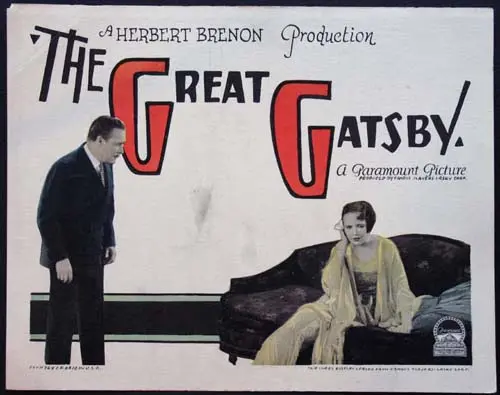
Is the 1926 silent version of The Great Gatsby worth tracking down in the annals of film history? Short answer: Yes, but primarily as a historical artifact of the era that birthed the novel rather than a definitive adaptation of the text.
This film is for the cinematic archaeologist and the Fitzgerald completist who wants to see how the Roaring Twenties viewed itself in real-time. It is decidedly not for those who require the polished, hyper-saturated aesthetics of modern Baz Luhrmann spectacles or the slow-burn prestige of 1970s dramas.
1) This film works because it captures the raw, unpolished energy of the Jazz Age using the very visual language of the people who lived it.
2) This film fails because it leans too heavily into the melodramatic tropes of silent-era stage plays, often losing the subtle social commentary of the prose.
3) You should watch it if you are fascinated by the evolution of the American Dream on screen or want to see a young William Powell before he became a household name.
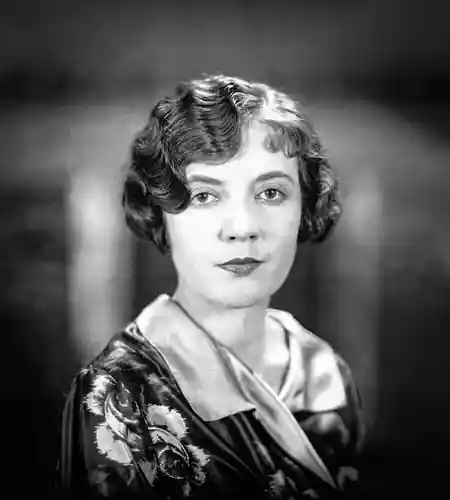
The 1926 adaptation of The Great Gatsby is a phantom. With only a trailer surviving in the public consciousness, reviewing it requires a reconstruction of the performances by Warner Baxter and Lois Wilson. It is a film that feels like a fever dream of the 1920s.
Unlike later versions that treat the material with a sort of holy reverence, the 1926 film, directed by Herbert Brenon, feels like a contemporary tabloid come to life. It’s punchy. It’s loud. It’s unashamedly commercial.
The film lacks the distance of history. When we watch it, we aren't looking back at the 20s through a nostalgic lens; we are seeing the 20s looking at itself in a mirror. That immediacy is something no modern remake can ever replicate.
Warner Baxter’s Jay Gatsby is not the polished, enigmatic figure played by Robert Redford or Leonardo DiCaprio. He is rougher around the edges. There is a palpable sense of the 'nouveau riche' desperation in his eyes.
Baxter plays Gatsby as a man who is constantly performing. In the party scenes, his smiles are a second too late, suggesting a man who has memorized the script of high society but hasn't quite mastered the accent. It works. But it’s flawed.
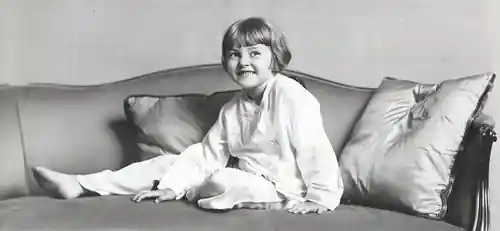
His chemistry with Lois Wilson’s Daisy is grounded in a silent-era physicality. Wilson plays Daisy with a flightiness that borders on the neurotic, making her feel less like a 'golden girl' and more like a trapped bird. It’s a brave choice that makes the tragedy feel more grounded.
One of the most striking elements of this production is the presence of William Powell as George Wilson. Long before he was the suave detective in The Waybacks or other sophisticated comedies, Powell was a master of the downtrodden.
His George Wilson is a masterclass in silent suffering. In the scene where he discovers Myrtle’s infidelity, Powell’s face transforms into a mask of pathetic rage. It’s a performance that stands out even against the more theatrical turns of the lead cast.
Neil Hamilton’s Nick Carraway is perhaps the film's weakest link. He acts more as a literal camera than a character, lacking the internal conflict that makes the novel’s narrator so compelling. He feels like a guest in a story he doesn't quite understand.
The cinematography by James Wong Howe (uncredited but influential) and the direction by Brenon focus on the scale of the parties. We see wide shots of Gatsby’s estate that feel like a precursor to the epic scale of Weltbrand.
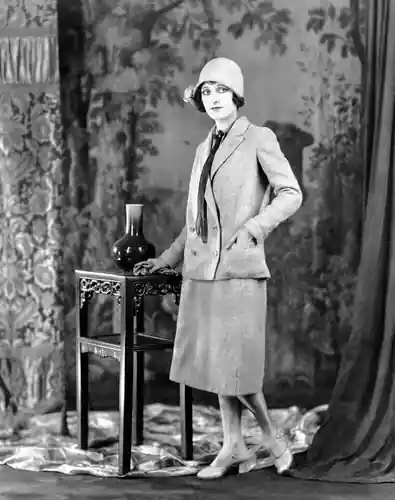
The use of light is particularly notable. The flickering lights of the party are contrasted with the stark, dusty grey of the Valley of Ashes. This visual dichotomy is handled with more nuance than the script itself, which often defaults to title cards to explain emotion.
The pacing is brisk, almost frantic. While a film like Khleb might linger on a single social concept, Gatsby moves from party to confrontation to death with the speed of a tabloid headline. It’s a breathless experience.
If you are a fan of early cinema, this film is an essential watch for its historical context and its casting of William Powell. It provides a unique look at how the 1920s interpreted its own most famous literary critique while the era was still in full swing.
The film offers a version of Gatsby that is less about the 'myth' and more about the 'man.' It strips away the poetic layers of Fitzgerald’s prose and replaces them with the visceral energy of a silent melodrama. It’s a fascinating, if incomplete, vision of a masterpiece.
When compared to other films of the mid-20s like The Marriage Lie or West of Chicago, Gatsby feels more ambitious in its social scope. It tries to capture the entire soul of a nation in a few reels.
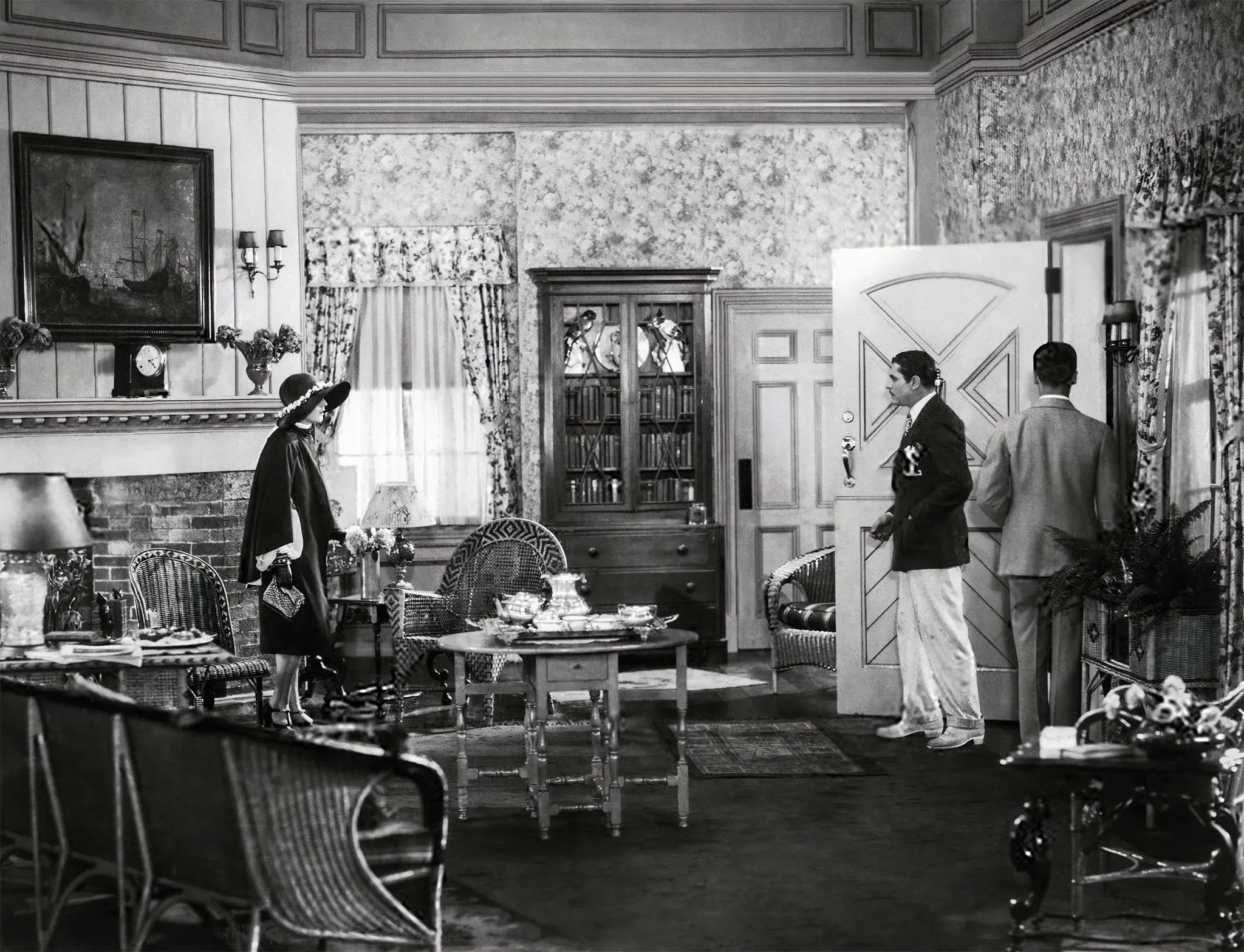
However, it lacks the technical experimentation found in L'accidia. Brenon is a conservative director who trusts the actors more than the camera. This makes the film feel a bit dated, even by 1926 standards, but it allows the performances to breathe.
In the context of the cast's other works, such as The Tenderfoot, this is clearly the high-water mark for many involved. It was a prestige project that knew it was dealing with significant material.
Pros:
Cons:
There is a certain irony in the fact that the first film about Jay Gatsby—a man obsessed with recreating the past—is itself a lost piece of the past. We are left with fragments, much like Gatsby was left with fragments of his time with Daisy.
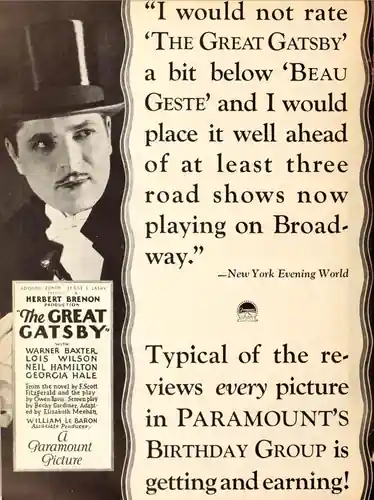
Watching the surviving footage and reading the contemporary reviews, one gets the sense of a film that was caught between two worlds: the Victorian morality of the early silent era and the libertine spirit of the Jazz Age. It doesn't always find its balance.
But in its failure to be a perfect adaptation, it becomes a perfect time capsule. It shows us what the public in 1926 valued in the story. They didn't want a philosophical treatise on the death of the soul; they wanted a story about a man who threw great parties and died for a woman who wasn't worth it.
Is it better than the 1974 version? In terms of energy, yes. Is it better than the 2013 version? In terms of soul, absolutely. It lacks the 'masterpiece' status of the novel, but it has a grit that is often missing from later, more expensive versions.
We see similar thematic explorations in Family Life or the struggle for identity in The Unbeliever. Gatsby remains the gold standard for this type of narrative, and the 1926 film is the foundation upon which all other adaptations were built.
Even in its silent, flickering form, the story of the green light remains potent. It is a reminder that some dreams are too big for the screen, and some pasts are better left buried, even if we keep beating on, boats against the current.
The 1926 The Great Gatsby is a flawed but fascinating mirror of its time. While it lacks the literary depth of Fitzgerald’s prose, it compensates with an authentic Jazz Age grit and a standout performance from William Powell. It is a ghost of a film that still haunts the history of American cinema.
IMDb —
1915
Community
Log in to comment.