DbcultAccessing Vault...
6.1/10
Senior Film Conservator
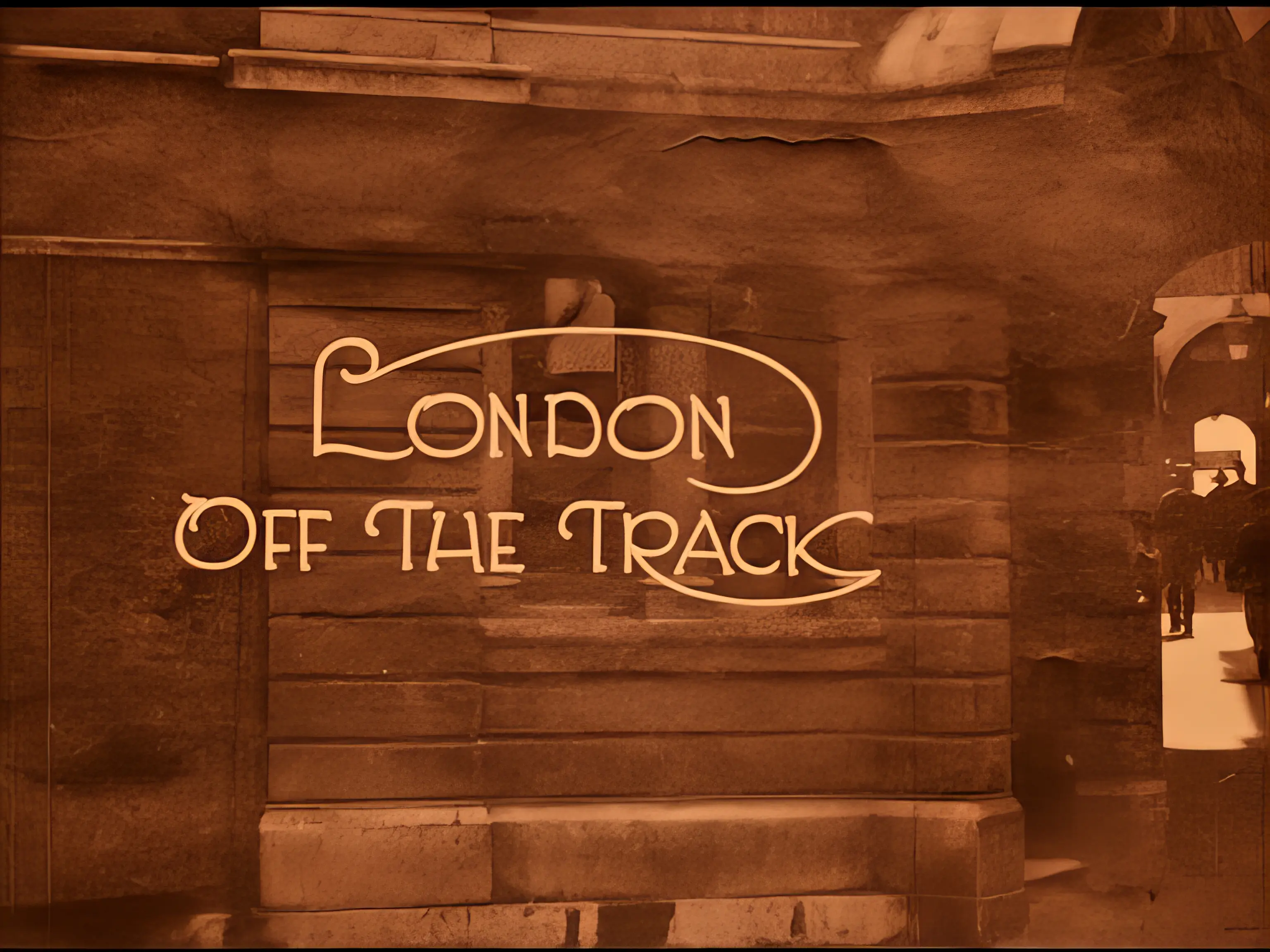
A definitive 6.1/10 rating for a film that redefined the boundaries of cult cinema. Wonderful London: London Off the Track remains a cornerstone of transgressive art.
There is a peculiar, almost ghostly intimacy in watching a city breathe through the lens of a century-old camera. Wonderful London: London Off the Track is not merely a film; it is a temporal bridge. In an era where cinema was still grappling with its own identity—oscillating between the theatricality of Romeo and Juliet and the burgeoning social realism of the time—directors Frank Miller and Harry B. Parkinson opted for something far more radical: the unvarnished truth of the pavement. This installment of the "Wonderful London" series serves as a stark counterpoint to the postcard-perfect imagery often associated with the British Empire. It is a dive into the interstitial spaces, the places where the sun rarely reaches, and where the pulse of the city beats with a raw, syncopated rhythm.
As I sat through the restored nitrate footage, I was struck by the sheer audacity of the cinematography. At a time when many filmmakers were content with static wide shots, Parkinson and Miller employed a wandering eye. They captured the architectural chiaroscuro of the East End with a sensitivity that predates the great city symphonies of Ruttmann or Vertov. While The Crow's Nest might offer a more conventional narrative grip on the nautical and the adventurous, London Off the Track finds its adventure in the mundane—the way a street sweeper navigates the slush, or the way the fog clings to the rigging of a tramp steamer docked at Wapping.
"The city is a book of stone and shadow, and Miller and Parkinson were its most diligent readers."
The film’s structure is deceptively simple, yet its impact is profound. It avoids the saccharine sentimentality found in contemporary works like The Runaway or the comedic triviality of The Champeen. Instead, it leans into a proto-documentary aesthetic that values observation over orchestration. We are taken through the 'secret' London—the London of the Huguenot weavers, the hidden courts of the City, and the desolate reaches of the Isle of Dogs. There is a palpable sense of discovery here, a feeling that the filmmakers were uncovering a world that was already in the process of vanishing.
The lexical diversity of the visual language is staggering. One moment, we are presented with the industrial grit that mirrors the themes of Strife, and the next, we are treated to a moment of quiet, almost pastoral beauty in a forgotten graveyard. The editing is brisk, never allowing the viewer to become complacent. It demands an active engagement with the screen. You aren't just watching 1924; you are breathing its coal-dusted air. The film captures a society in flux, where the horses of the Victorian era are being slowly crowded out by the motorcars of the new century, a theme explored with less subtlety in Idle Tongues.
What distinguishes London Off the Track from its peers is its refusal to look away from the poverty that defined much of the city's 'off-track' areas. While films like The College Orphan or The On-the-Square Girl often focused on the aspirations of the middle class, Parkinson and Miller turned their lens toward the disenfranchised. There is no pity in their gaze, only a rigorous, almost clinical interest in the mechanics of survival. The faces of the children playing in the gutters of Bethnal Green are captured with the same dignity as the statues in St. Paul’s. This egalitarian approach to cinematography was revolutionary for its time.
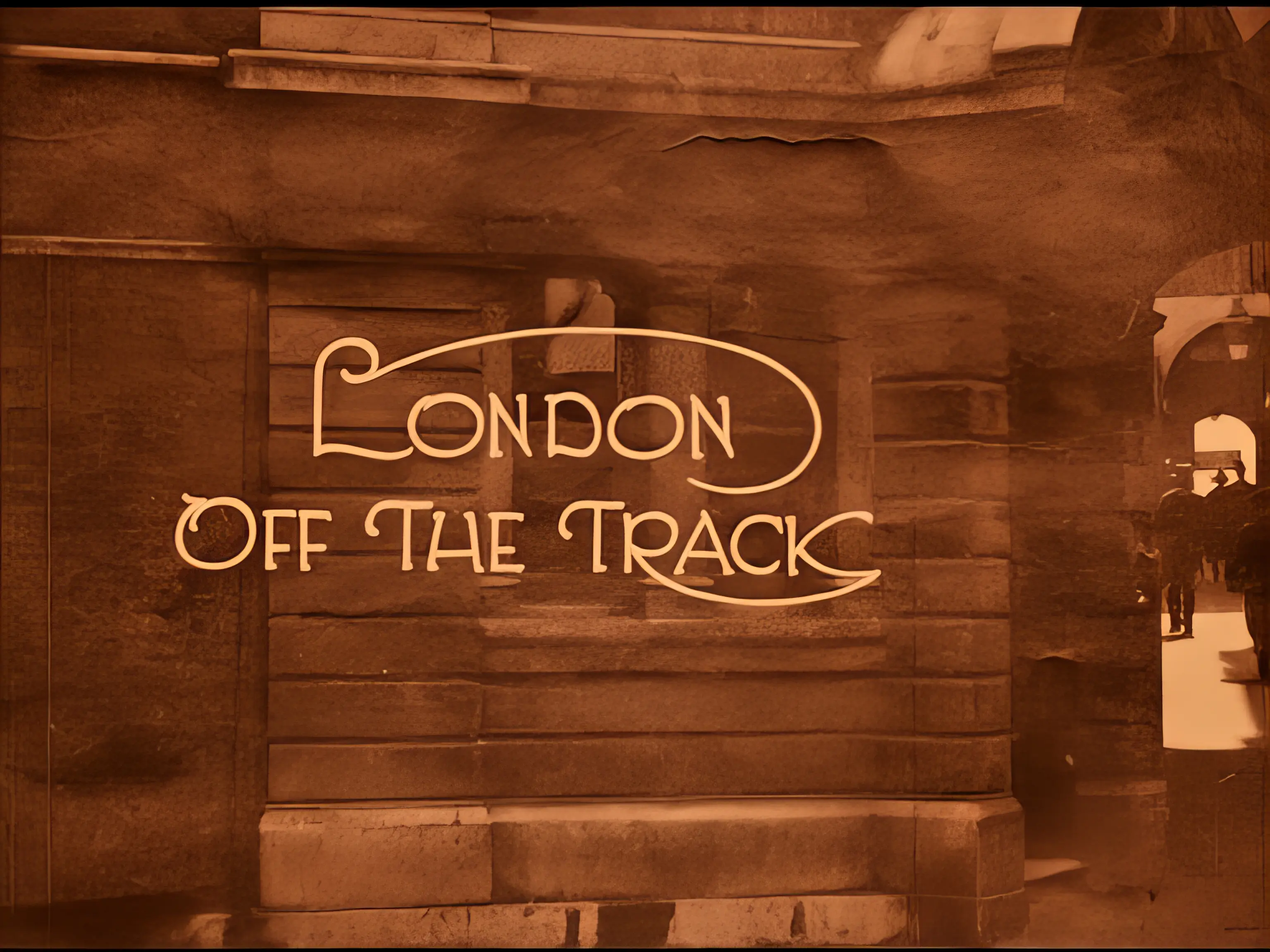
The film also serves as an inadvertent historical record of a city that survived the Blitz but lost its soul to post-war redevelopment. To see the intricate ironwork of the old markets and the precarious tenements of the riverside is to witness a topography that no longer exists. It reminds me of the atmospheric density found in Die Legende von der heiligen Simplicia, though transposed from a religious allegory to an urban reality. The use of natural light is particularly noteworthy; the way the sun filters through the London 'particular' (the infamous fog) creates a dreamlike, almost surreal quality that contrasts sharply with the film’s grounded subject matter.
From a technical standpoint, the restoration of this film is a triumph. The grain is fine, the blacks are deep and ink-like, and the highlights possess that unique, shimmering quality that only nitrate film can provide. It makes the digital perfection of modern cinema feel sterile by comparison. The tinting—often used in silents like Három hét or L'assassino del corriere di Lione to signify mood or time of day—is used here with exceptional restraint. A sepia wash for the daytime streets, a cool blue for the nocturnal docks; it is subtle, effective, and hauntingly beautiful.
The pacing of the film is another area where Miller and Parkinson excel. They understand the power of the long take. They allow the viewer to linger on a scene—a group of men sharing a pipe outside a pub, a woman hanging laundry across a narrow court—long enough to notice the small details: the texture of the bricks, the frayed edges of a coat, the weary set of a jaw. This is a far cry from the slapstick energy of The Stork's Mistake or the frantic athletic displays of Three Strikes. It is a contemplative experience, a visual essay that rewards patience.
In the broader context of 1920s cinema, Wonderful London: London Off the Track stands as a monumental achievement of the travelogue genre. While many such films were mere curiosities designed to show 'exotic' locales to a domestic audience, Parkinson and Miller turned that curiosity inward. They treated their own city with the same wonder and scrutiny that one might apply to a distant land. This internal exoticism is what gives the film its lasting power. It challenges the viewer to find the extraordinary within the ordinary, much like the thematic undercurrents in Solskinsbørnene or the early work of Greta Garbo in Luffar-Petter.
To watch this film today is to engage in a form of cinematic archaeology. Every frame is packed with information—historical, sociological, and aesthetic. It is a reminder that the city is a living organism, constantly shedding its skin and reinventing itself. The 'off-the-track' London of 1924 is gone, replaced by glass towers and high-speed transit, but through the work of Miller and Parkinson, its ghost remains. It is a vital piece of film history that deserves to be seen not just by historians, but by anyone who has ever felt the pull of the city’s hidden corners.
The film concludes not with a grand statement, but with a quiet fade to black, leaving the viewer with a sense of profound melancholy. It is the melancholy of knowing that the people we have just watched—the dockers, the flower sellers, the street urchins—are all long gone, yet their presence on the screen is so vibrant, so immediate, that they feel as though they might step out of the frame at any moment. This is the magic of the silent era, and London Off the Track is one of its most potent spells. It is a masterclass in observation, a triumph of the lens, and an essential document of the human condition in the heart of the twentieth century’s greatest metropolis.
IMDb 5.7
1931
Community
Log in to comment.