DbcultAccessing Vault...
Cult Review
Senior Film Conservator
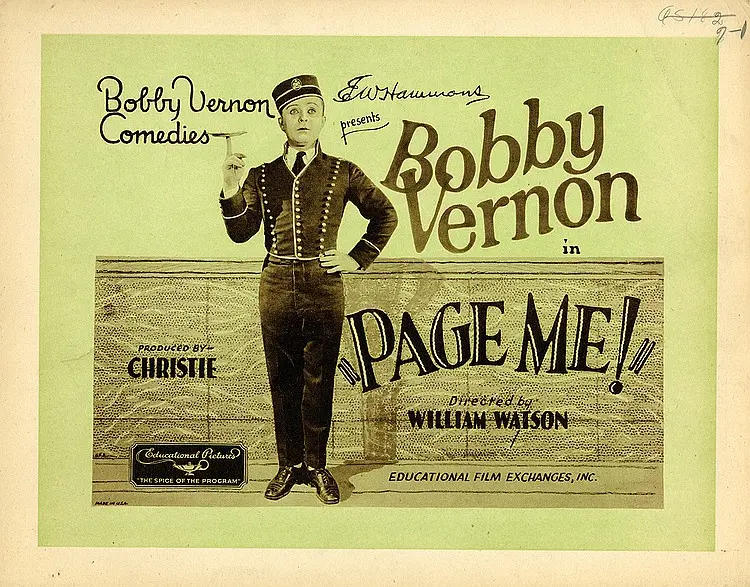
Short answer: Yes, but strictly as a historical curiosity for those who enjoy the more aggressive, frantic side of silent slapstick. If you are looking for the poetic grace of Buster Keaton, keep walking; this is a film of sweat, panic, and involuntary chemical reactions.
This film is for silent cinema enthusiasts who appreciate the 'comedy of errors' pushed to a fever pitch. It is absolutely not for viewers who find repetitive physical gags or the 'debtor as a slave' trope uncomfortable to watch in a modern context.
Page Me is worth watching if you want to understand the high-octane energy of the Christie Comedies and Bobby Vernon’s specific brand of 'boyish' chaos. It provides a fascinating, if accidental, look at early 20th-century anxieties regarding debt and chemical warfare, all wrapped in a hotel-room farce.
This film works because: The laughing gas sequence creates a genuine sense of escalating madness that feels more like a fever dream than a standard comedy routine.
This film fails because: The central romance with Sally feels entirely secondary to the financial stakes, making the final 'happy' marriage feel like a cold business transaction.
You should watch it if: You have an interest in how early cinema used 'new technology' (like gas warfare) as a springboard for physical comedy, or if you are a fan of Bobby Vernon’s athletic screen presence.
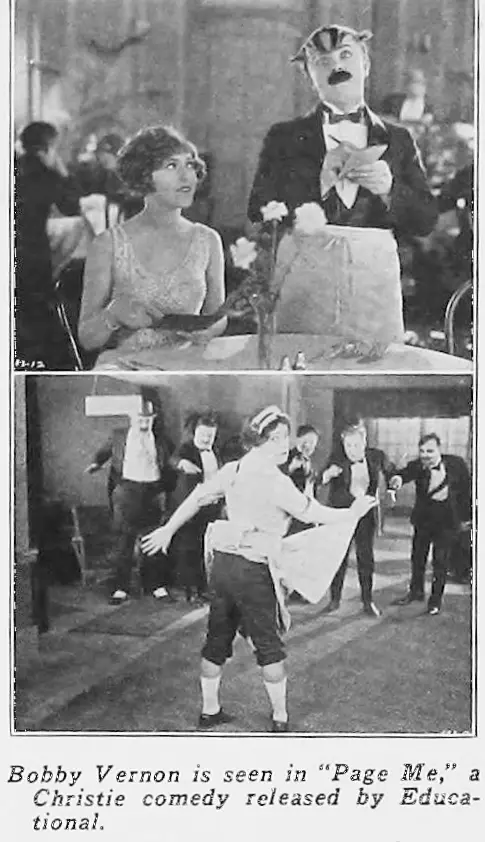
Bobby Vernon was often marketed as the 'Boyish Comedian,' but in Page Me, that boyishness is replaced by a frantic, jittery survival instinct. From the moment he tries to sneak his trunk down the fire escape, there is a palpable sense of desperation. It’s not just funny; it’s stressful. He moves with a jagged energy that distinguishes him from the more fluid movements of his contemporaries.
Take the scene where he is forced to serve ice water to Sally. The way he contorts his face and body to avoid recognition isn't just a gag—it’s a masterclass in silent disguise. He manages to be both the protagonist and the obstacle in his own story. Unlike the characters in Mighty Like a Moose, where the humor comes from mutual deception, Vernon’s deception is born of pure, unadulterated shame. It works. But it’s flawed.
The direction by the uncredited filmmaker (likely under the Christie banner) keeps the camera static but the frame busy. Every corner of the hotel lobby is utilized, making the space feel cramped and oppressive. This claustrophobia serves the plot well, emphasizing that Bobby is literally trapped by his debt. It’s a cynical setup for a comedy, but it provides a solid foundation for the lunacy that follows.
The introduction of the 'laughing gas' is where Page Me shifts from a standard hotel farce into something much more interesting and bizarre. The scientist is explicitly described as carrying a weapon for 'future wars.' There is a dark undercurrent here. The film suggests that the next great conflict will be fought by making people laugh themselves into helplessness. It’s a terrifying thought played for laughs.
When the gas finally leaks, the film enters a state of pure anarchy. The manager, the detective, and Bobby all succumb. This isn't the joyous laughter of a joke; it’s a biological imperative. The scene where Bobby staggers to the window ledge ten stories up is genuinely harrowing. While it lacks the calculated precision of Harold Lloyd’s stunt work, it possesses a raw, uncontrolled energy. He thinks the prospect of falling to his death is a 'huge joke.' That is dark. It’s arguably one of the most unconventional observations in 1920s short-form comedy.
The visual effects of the 'smoke' or gas are rudimentary, yet effective. They create a physical barrier that the actors must fight through, adding a layer of slapstick that is both visual and atmospheric. If you compare this to the domestic comedy of Shoe Palace Pinkus, you see a much more aggressive approach to humor here. Page Me isn't interested in social climbing; it’s interested in biological survival.
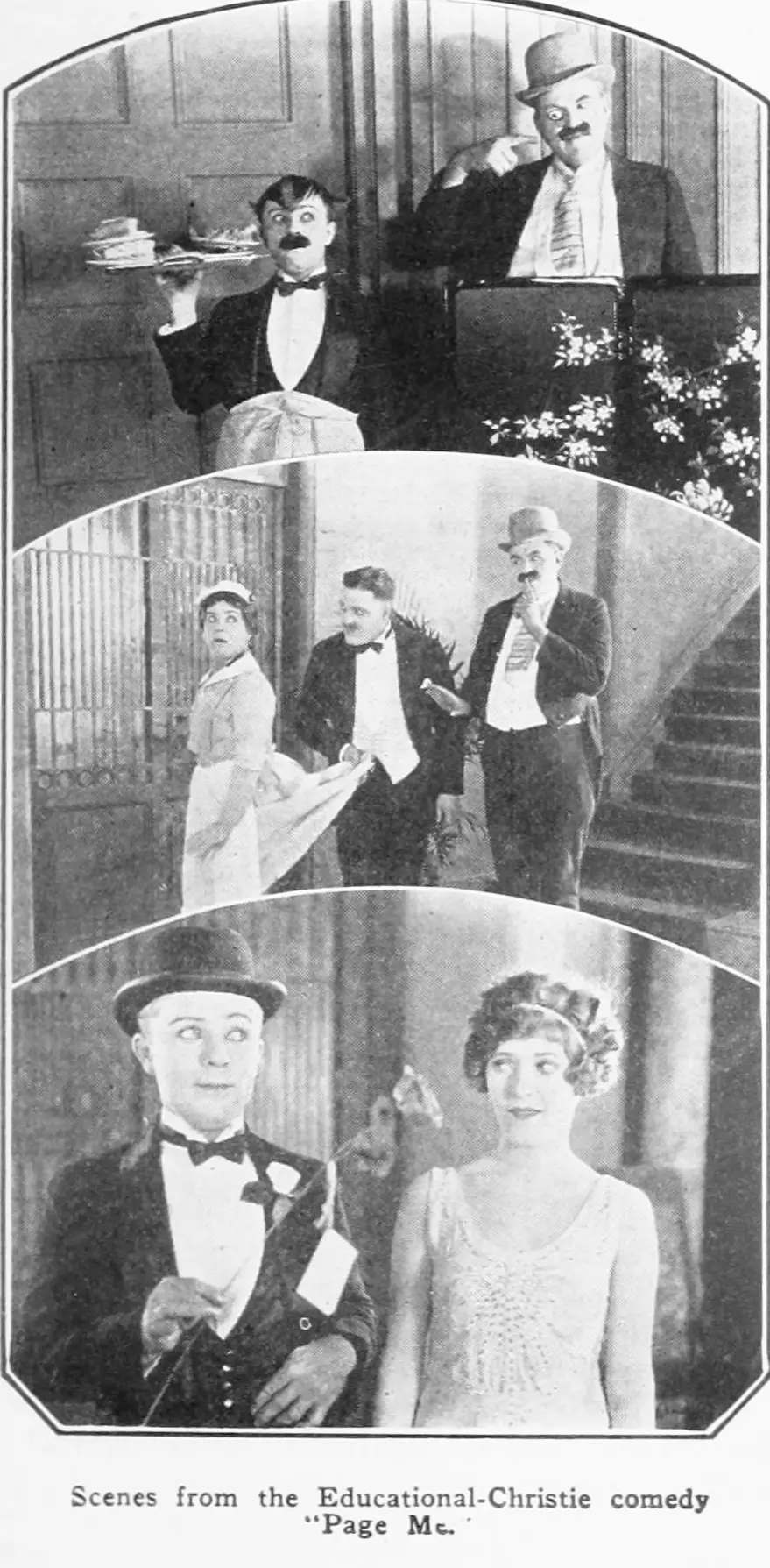
The third act of the film relies heavily on the 'man in drag' trope, which was a staple of the era. Bobby disguises himself as a woman to escape the detective. It’s a sequence that feels a bit tired today, but Vernon’s commitment to the bit is undeniable. He doesn't just put on a dress; he adopts a completely different physical language. However, the disguise is quickly discarded for the real meat of the finale: the $5,000 check.
The logic of the uncle’s check—made out to 'Mrs. Bobby'—is peak silent film contrivance. It forces a marriage that the film hasn't really earned. We haven't seen Bobby and Sally share a moment of genuine affection; we’ve only seen him hide from her in shame. This makes the final rush to her room feel less like a romantic climax and more like a bank heist. He needs that signature. He needs that money. The marriage is the tool to get it.
This mercenary attitude is actually quite refreshing. It avoids the saccharine sentimentality often found in films like The Miracle of Life. Here, the world is harsh, the bills are due, and love is a financial strategy. It’s a brutally simple sentence: Get married or go to jail. That is the stakes of Page Me.
Pros:
Cons:
Page Me is a fascinating artifact. It isn't a masterpiece of the silent era, but it is a potent example of the 'bread and butter' comedies that kept audiences coming back to theaters in 1920. It lacks the polish of a Chaplin short, but it makes up for it with sheer, unadulterated panic. The laughing gas sequence remains a standout moment of early 20th-century weirdness. It’s a film that reminds us that even in the 1920s, the world felt like a place where you were always one unpaid bill away from disaster. Watch it for Vernon’s energy, stay for the bizarre chemical warfare, and ignore the flimsy romance. It’s a wild ride that proves slapstick can be surprisingly dark when it wants to be.

IMDb —
1927
Community
Log in to comment.