DbcultAccessing Vault...
Cult Review
Senior Film Conservator
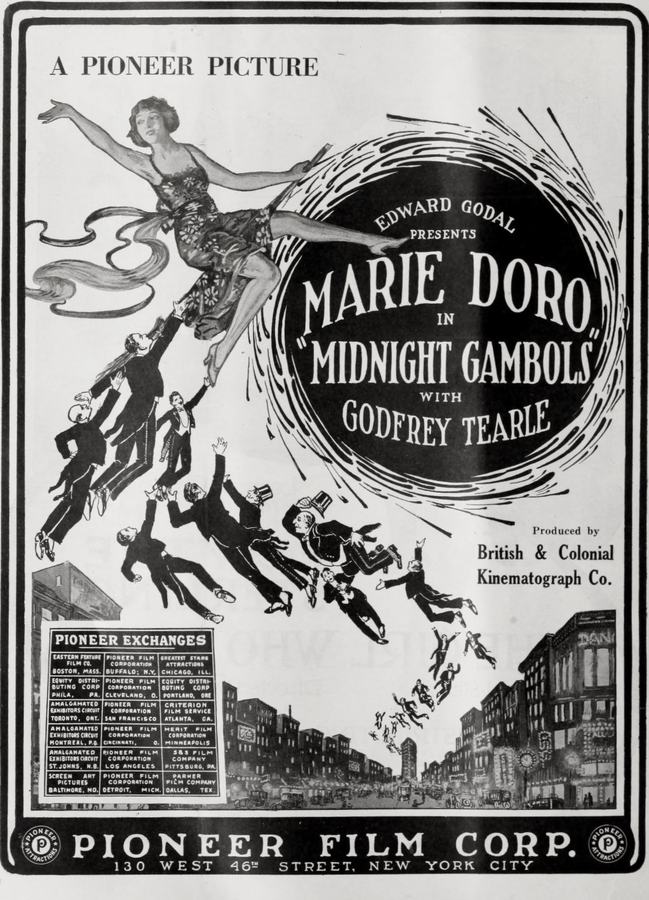
In the vast tapestry of early cinema, certain films emerge not just as historical artifacts but as resonant explorations of the human condition, their narratives echoing with themes that remain perennially relevant. George Edwardes-Hall's Midnight Gambols stands as one such cinematic gem, a work that transcends its era to deliver a potent psychological drama. Far from being a mere melodrama, this film meticulously dissects the devastating ripple effects of clandestine lives and moral compromises, specifically through the prism of a family irrevocably altered by a father's secret profession.
At its core, Midnight Gambols is a study in domestic upheaval, a narrative that begins with the seemingly ordinary and descends into the extraordinary. The film opens a window into a seemingly respectable household, only for its foundations to be violently shaken by the sudden arrest of the patriarch, a man revealed to be a practiced forger. This revelation isn't just a legal crisis; it's an existential shattering for his family, particularly his pregnant wife, whose world implodes with the weight of deceit and impending shame. It is here that the film truly distinguishes itself, moving beyond the mere mechanics of crime and punishment to plumb the depths of psychological trauma.
The most compelling and unsettling consequence of this familial catastrophe manifests in their young daughter. An innocent bystander, yet profoundly affected by the palpable distress of her mother and the sudden void left by her father, she begins to suffer from a series of strange, dissociative trances. These episodes are not merely plot devices; they are the film's most powerful symbolic expression of inherited trauma. They represent the child's psyche grappling with an unspeakable horror, an emotional burden too vast for her young mind to process consciously. Edwardes-Hall masterfully uses these trances to externalize the internal turmoil, transforming a familial secret into a haunting, almost supernatural, affliction that permeates the very atmosphere of their home.
The portrayal of these trances, while perhaps lacking the nuanced psychological understanding of modern cinema, is remarkably effective for its time. It invites the audience to ponder the fragility of the human mind, especially in childhood, when confronted with profound emotional shocks. The film suggests that trauma, like a virus, can infect the most vulnerable, manifesting in ways that defy easy explanation. This element sets Midnight Gambols apart from many of its contemporaries, which often focused on more straightforward moral tales or romantic entanglements. Instead, it ventures into the nascent territory of psychological realism, hinting at the complex interplay between mind, body, and environment.
The emotional weight of Midnight Gambols rests heavily on the shoulders of its cast, and they deliver performances that are both nuanced and deeply affecting. Mary Jerrold, as the pregnant wife, is particularly outstanding. Her portrayal is a masterclass in silent suffering, conveying the crushing burden of shame, fear, and betrayal through subtle gestures and expressive eyes. We witness her transformation from a woman of quiet dignity to one consumed by anxiety, her pregnancy becoming a symbol not just of new life, but of the heavy legacy her husband's actions have bequeathed upon their unborn child. Jerrold eschews histrionics, instead opting for a deeply internalized depiction of grief and resilience, making her character profoundly relatable and sympathetic.
Godfrey Tearle, as the disgraced forger, brings a compelling complexity to a role that could easily have devolved into caricature. Tearle imbues his character with a palpable sense of regret and the tragic awareness of his own undoing. His performance allows us to glimpse the man behind the crime, someone capable of love and domesticity, yet ensnared by a dangerous secret. The film doesn't fully villainize him; rather, it explores the human cost of his choices, making his eventual downfall all the more poignant. His interactions, or lack thereof, with his family after his arrest speak volumes about the chasm that has opened between them.
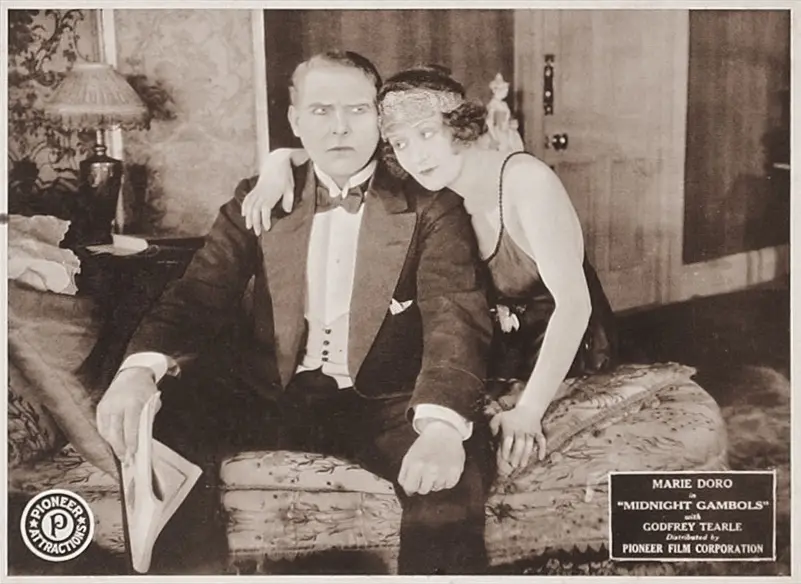
The supporting cast, including Sam Livesey, Marie Doro, Gordon Begg, Christine Maitland, and Gladys Ffolliott, contribute significantly to the film's rich texture. Their reactions, whether of judgment, pity, or quiet support, paint a vivid picture of the societal context in which such a scandal would unfold. Marie Doro, in particular, adds a layer of depth to her role, whatever its specific contours, contributing to the overall sense of a world irrevocably altered by a single act of transgression. George Edwardes-Hall, as the writer, crafted these roles with an understanding of human frailty and strength, allowing the actors to explore the full spectrum of emotions.
Edwardes-Hall's direction is noteworthy for its restraint and its focus on character interiority. Even within the technical limitations of early cinema, the film manages to convey a profound sense of atmosphere and psychological tension. The pacing allows for the emotional beats to resonate, giving the audience time to absorb the gravity of each development. There's a deliberate unhurriedness that serves the narrative well, building the sense of impending doom and then the quiet devastation that follows. The visual storytelling, though perhaps simplistic by today's standards, is effective in highlighting key emotional moments, often relying on close-ups or carefully framed shots to emphasize an actor's expression or a significant object.
Thematically, Midnight Gambols is remarkably rich. It explores the corrosive power of secrets, the fragility of reputation, and the enduring strength of familial bonds even under immense pressure. It asks profound questions about culpability and innocence, particularly how the sins of the father can visit upon the children. This echoes, in a more dramatic fashion, the themes of hidden lives and societal judgment seen in films like The Unchastened Woman, though Midnight Gambols delves into the direct, almost physiological, impact on a child. The film serves as a poignant reminder that actions have far-reaching consequences, extending beyond the immediate perpetrator to impact the most vulnerable members of a community.
Examining Midnight Gambols within its historical context further illuminates its significance. Produced during a period when cinema was rapidly evolving, moving beyond simple spectacle towards more complex narrative forms, this film demonstrates an ambitious reach. It predates the Hays Code era, allowing for a certain frankness in its depiction of moral failings and their psychological toll. It showcases an early understanding of how cinematic storytelling could explore internal states, even without the benefit of extensive dialogue or advanced special effects.
Compared to films like Hands Up, which focused on more action-oriented narratives, or even Cohen's Luck, which offered lighter fare, Midnight Gambols carved out a niche for serious dramatic inquiry. It belongs to a lineage of films that sought to grapple with the darker aspects of human experience, much like The Black Envelope might explore intrigue, but with a deeper, more personal psychological focus. The film’s exploration of a child’s inexplicable suffering due to adult transgressions also brings to mind the underlying emotional currents in stories like The Secret Garden, where a child's inner world is a landscape of complex emotions and hidden wounds, albeit in a different narrative context. The external manifestation of internal distress in Midnight Gambols is particularly striking for its time.
Ultimately, Midnight Gambols is more than just a period piece; it is a timeless examination of the human cost of deception and the enduring power of familial love and trauma. The film’s ability to evoke profound empathy for its characters, particularly the suffering wife and the afflicted daughter, speaks volumes about its narrative strength and the performances it elicits. It reminds us that even in the nascent days of cinema, filmmakers were capable of crafting stories with immense emotional depth and psychological insight.
This film doesn't offer easy answers or neat resolutions. Instead, it lingers in the mind, prompting reflection on the unseen burdens people carry and the insidious ways that secrets can unravel the fabric of a family. It’s a compelling argument for the artistic merit of early cinema, demonstrating its capacity for nuanced storytelling and its ability to touch upon universal truths. For cinephiles and historians alike, Midnight Gambols remains a vital and moving experience, a testament to the enduring power of film to explore the darkest corners of the human heart and the fragile resilience of the human spirit. It’s a journey into the heart of a shattered family, rendered with a sensitivity and depth that belies its age, leaving an indelible mark on the viewer long after the final frame.
IMDb —
1923
Community
Log in to comment.