DbcultAccessing Vault...
5.9/10
Senior Film Conservator
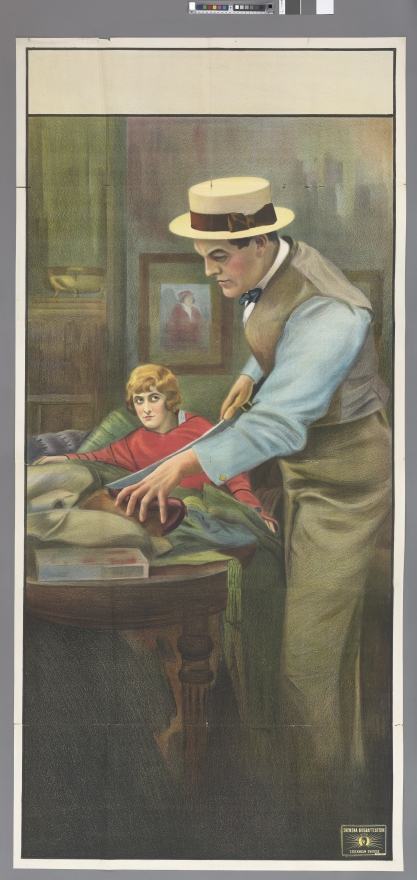
A definitive 5.9/10 rating for a film that redefined the boundaries of cult cinema. Wanted - A Film Actress remains a cornerstone of transgressive art.
The Stockholm winter of 1925 seeps through every perforation of Wanted: A Film Actress, a mercurial little miracle that somehow never joined the global canon alongside Mysteries of London or Hoffmanns Erzählungen. Gustaf Molander, later hailed as Sweden’s metteur-en-scène of urbane sorrow, here writes his first love-letter to the abyss between life and performance, anticipating Anton the Terrible’s psychological labyrinths by a full decade.
Thomas Graal—played by Torsten Winge with the slouched glamour of a man who has read too many of his own stage directions—opens the film pawing at a blank page while the camera circles like a vulture. Enter Bessie (Emma Dietrichs), a secretary whose bobbed haircuts seem to snip away at whatever remains of his detachment. Their repartee is all angles: she corrects his spelling, he corrects her philosophy; each interruption is a flirtation disguised as labor. Molander allows their chemistry to accumulate in the negative space—hands almost touching a coffee cup, eyelines grazing the edge of a desk—until that fateful dusk when Thomas, drunk on deadline adrenaline, plants a kiss that lands less like seduction and more like a copyright claim.
What follows is a disappearing act worthy of any Houdini: Bessie evaporates into Stockholm’s fog, leaving behind only a ribbon that the camera fetishizes in three separate inserts. The gesture is minimal yet volcanic; it ruptures the film’s tonal membrane and nudges Thomas into the realm of autobiographical alchemy. He begins scripting The Missing Leading Lady, a project that will, of course, become the very film we are watching. Cue the first of many Chinese-box moments: intertitles announce scenes we have already witnessed, now re-inscribed with literary varnish.
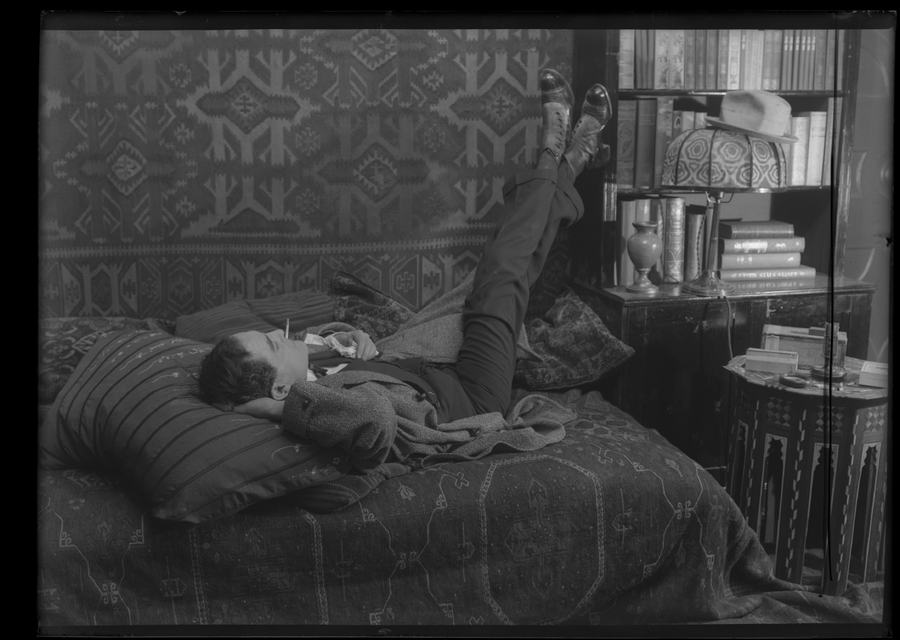
Molander, who apprenticed under The King’s Game director Sjöström, understood that silent cinema’s true soundtrack is the rustle of the audience’s imagination; he exploits that rustle by making absence auditory. Every time Thomas types Bessie’s name on his Remington, the intertitle card quivers ever so slightly—an animator’s trick that suggests ectoplasmic visitation. The film thus positions writing not as documentation but as necromancy: resurrect the beloved, control the narrative, evade the messy leftovers of consent.
But Bessie, it turns out, has never been a passive phantom. Mid-production she resurfaces at the studio gates, now self-renamed Berit Elisabet—a moniker that sounds like a baroque stage role—and auditions for the part inspired by her own vanishing. The meta-frisson is delectable: the woman Thomas tried to fossilize in ink now negotiates wages for embodying his trauma. Dietrichs plays the reunion with porcelain poise; her half-smile suggests she has read the entire third act and found it wanting.
The ensemble functions like a hall of mirrors. Emil Fjellström’s bumbling property man keeps misplacing the very letter-opener that Thomas used to slit envelopes containing Bessie’s old memos—a visual gag that doubles as thesis statement: objects, like identities, get lost in circulation. Karin Molander (no relation to the director) appears as a rival actress whose Nordic cheekbones could slice celluloid; she vamps for Thomas’s approval while Bessie watches from the wings, her gaze a silent audit of every sexist trope the industry recycles.
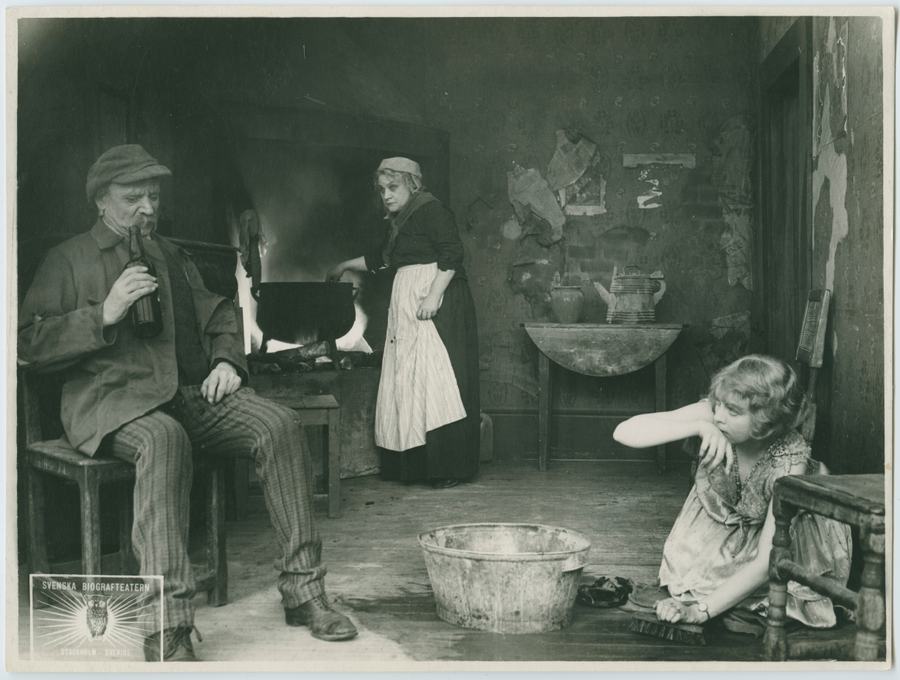
“We are not humans living stories; we are stories living humans.”—intertitle card, Wanted: A Film Actress
Even the minor walk-ons feel hauntological. Olof Ås plays a lighting technician who keeps positioning Fresnels so that Bessie’s eyes gleam with preternatural wetness; later we learn he is her cousin, complicit in her earlier flight. The film never announces these relations—they surface only if you map surnames in the end credits, a proto-Lynchian puzzle that rewards archival bloodhounds.
Cinematographer Henrik Jaenzon (who shot The Heart of Lady Alaine) bathes interiors in umber shadows that swallow lapels and morals alike. Note the audition sequence: Bessie performs a monologue while Thomas stands behind the camera, his silhouette eclipsing her face on the frosted-glass backdrop. The resulting image is a literal eclipse—an optical metaphor for authorship devouring subjectivity. Jaenzon’s lighting scheme anticipates the low-key noir aesthetics that would not flourish until the mid-forties, proving Sweden’s silent era was already moonlighting as future Hollywood.
Exteriors contrastingly bloom with over-exposure: snowscapes bleach the frame until characters become paper cutouts sliding across a blank page. The strategy externalizes Thomas’s script—his world reduced to a treatment where emotional nuance is Photoshopped into stark black or blinding white. When Bessie finally confronts him beside an icy canal, their breath visible as ghost-dialogue, the over-bright sky obliterates horizon lines; the couple float in a white void, as though the filmstrip itself has been exorcised of context.
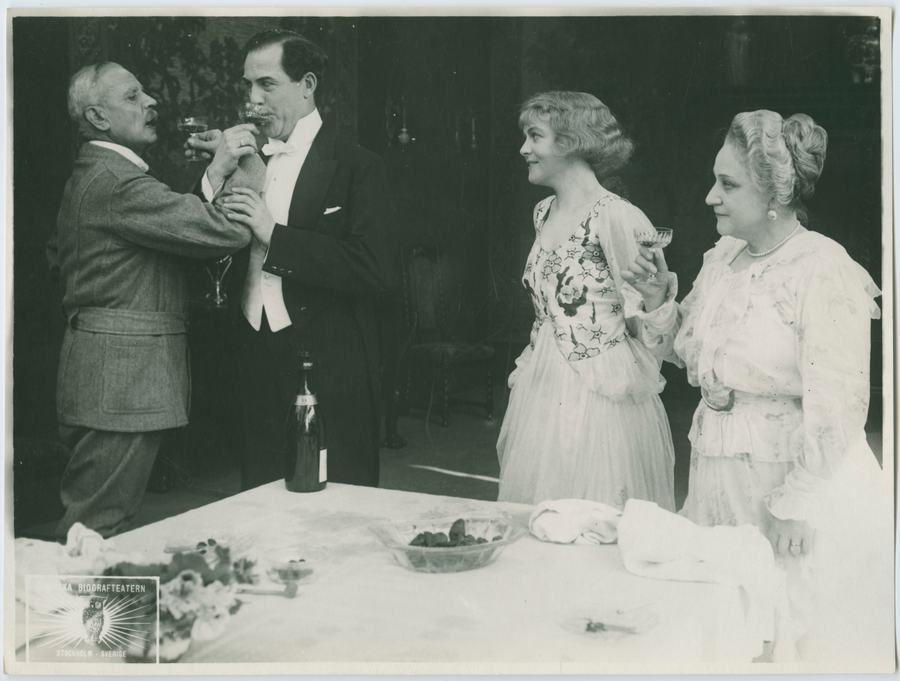
Molander’s editorial cadence owes debts to Soviet tempo yet remains ineffably Nordic. Crosscutting between Thomas’s feverish typing and Bessie’s screen test, he accelerates shot duration until individual frames resemble shrapnel. The montage crescendos with a match-cut: a close-up of Bessie’s trembling lip dissolves into the lip of a porcelain cup on Thomas’s desk. Commodification complete—woman replaced by crockery, lust by caffeine, soul by prop.
But the director refuses to let montage settle into propaganda. Immediately after the cup insert, he lingers on an unbroken 28-second shot of Bessie staring into camera, her gaze so steady it seems to drill through the fourth wall and judge each spectator complicit in the consumption. The moment is proto-Brechtian, a century before “self-care” memes commodified feminist resistance.
Though technically mute, the film crackles with synesthetic suggestion. During a pivotal projection-room scene, we see only the beam of light exiting the booth window; intertitles describe the “salt-sweet taste of unwound dreams.” Viewers inevitably swallow harder, their own memories of heartbreak projected onto the dust motes. The strategy illustrates cinema’s occult ability to trigger gustatory memory—an alchemy later perfected in Più forte del destino’s operatic crescendos.
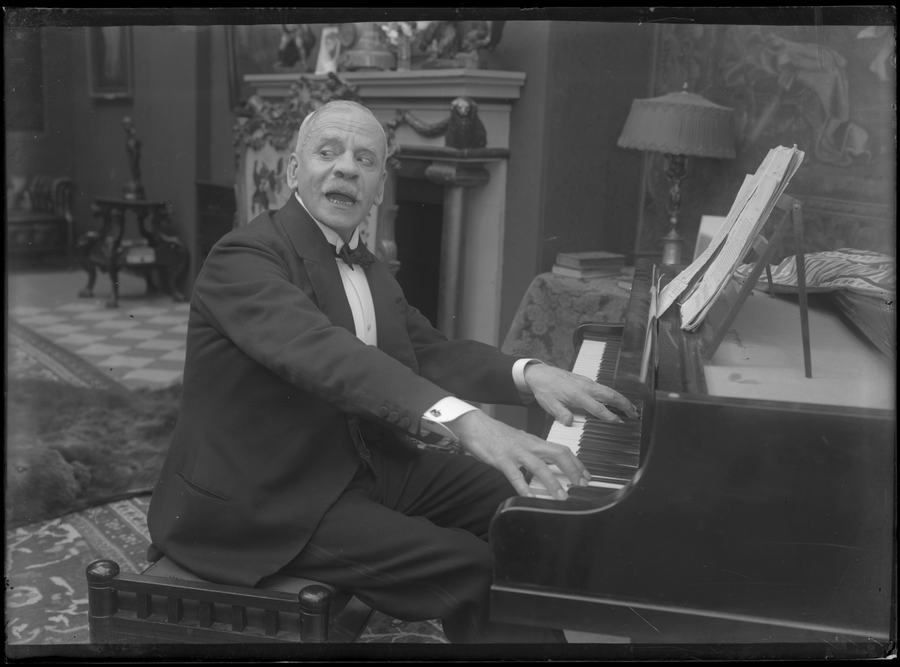
Emma Dietrichs delivers one of silent cinema’s most intricate dual roles: she must play Bessie the secretary, Berit Elisabet the aspirant, and “Bessie-as-filtered-through-Thomas’s-script,” each tier signaled through micro-gestures. Watch her hands: as secretary, they flutter like trapped sparrows; as starlet, they become swans; as fictionalized artifact, they stiffen into marble—an evolution achieved without the crutch of voice. In the climactic test screening, when she watches her own image on the silver sheet, a single tear slides. Is it Berit mourning Bessie, or Bessie mourning Berit? The ambiguity detonates a chain reaction of ontological anxiety that ripples outward to us, the twenty-first-century spectators, who binge-follow curated avatars of ourselves.
Critics often file Wanted: A Film Actress under romantic trifle, but its sexual politics skewer the male gaze with surgical precision. Thomas’s script demands Bessie’s character die in act three—an accidental drowning that provides the leading man a tear-stained close-up. When studio executives green-light the tragedy, Bessie negotiates a new ending: her character vanishes, yes, but into a lifeboat of self-invention. The revised finale shows her boarding a northbound train, destination undisclosed, while Thomas remains on the platform clutching a reel of exposed footage. The reversal anticipates contemporary discourse on agency: write your own third act or be written out.
Molander, a male director, grants his heroine the final erasure of the author—a generosity still scarce in modern franchises that resurrect dead heroines as vengeful CGI ghosts. One cannot watch this without recalling the on-set battles of The Stubbornness of Geraldine, where actresses fought producers over costumed corsetry. The difference is that Molander embeds the struggle inside the narrative, turning production discord into plot engine.
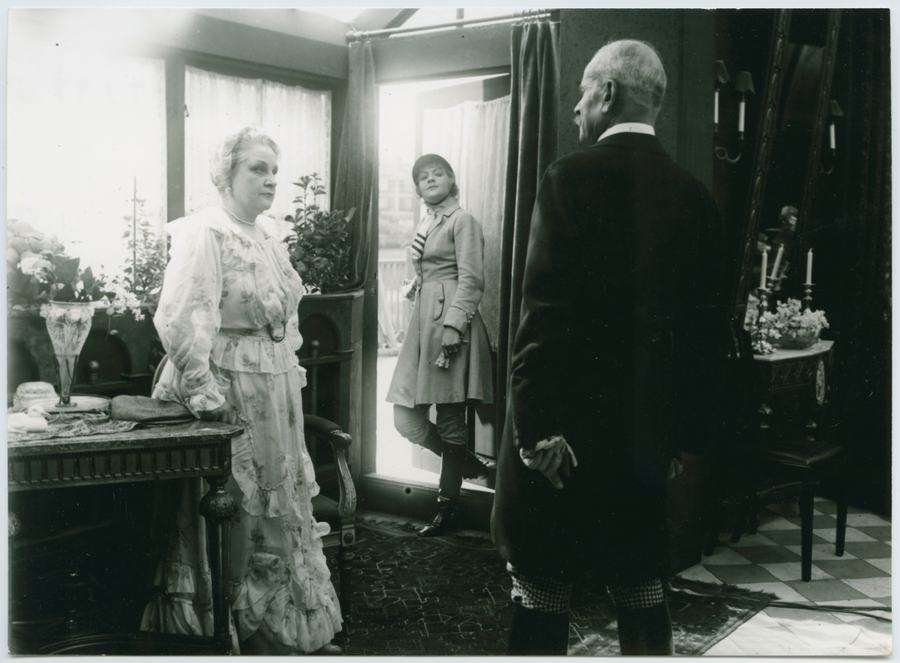
For decades the film languished in Sweden’s cellar vaults, mislabeled as Thomas Graal, Best Man—a comedy short from 1917. Rediscovered in 1998 during a nitrate census, the reels reeked of vinegar syndrome; frames at the beginning and end had liquefied into amber sludge. Restorers at the Swedish Film Institute employed optical reprinting, grafting surviving stills onto the damaged sections. The patchwork is visible if you know where to look: during the first kiss, the left third of the frame pulses with a ghostly stillness while the right shimmers with 4K clarity. Rather than a flaw, the scar becomes a palimpsest—history exposing its own stitches.
Pair this with He Fell in Love with His Wife and you’ll witness European cinema wrestling with authorship anxiety five years before Hollywood’s Singin’ in the Rain mythologized the talkie transition. Whereas the American film laughs at technological upheaval, Molander’s work trembles before ethical upheaval: who owns a story when the muse absconds?
Conversely, stack it against The Walls of Jericho and notice how both deploy architectural metaphors for emotional fortifications. Jericho’s marital battlements crumble under melodramatic siege; Wanted’s studio walls grow ever more porous, until life and art seep through each other like overlapping dissolves.
Viewers weaned on Irma Vep or The French Lieutenant’s Woman will recognize the hall-of-mirrors structure, yet Molander achieves it without quotation-mark cynicism. His characters believe fervently in their own fictions, which makes their collisions heartbreaking rather than hip. That sincerity resonates in post-truth eras where curated selves on glowing screens supplant flesh.
Consider the film’s treatment of consent: Thomas’s kiss is never condemned in a moralizing intertitle, yet the narrative recursively interrogates its fallout—through rewritten scenes, alternative camera angles, and Bessie’s eventual refusal to die on cue. The strategy prefigures today’s social-media reckonings, where a single stolen moment can be retweeted, reframed, revenged.
When the lights rise, the viewer staggers out haunted by a paradox: the more Thomas tries to incarcerate Bessie within celluloid, the more she multiplies—into actress, archetype, audience member, critic. The film ends with a shot of an empty movie theater, seats littered with discarded programs. It is a dare: occupy this seat, rewrite this script, break the cycle. In that sense Wanted: A Film Actress is not a relic but a dare—a silent shout across a century, urging us to audit whose stories we hoard, whose visages we monetize, whose lips we claim ownership of with a single, presumptuous kiss.
Seek it out however you can: streaming archival restorations, repertory houses, or a 16 mm print sputtering through a rattling projector. Let the flicker remind you that every frame is a two-way mirror, and somewhere on the other side Bessie—Berit—whoever she chooses to be—may still be waiting, passport in hand, ready to board the next northbound train out of someone else’s lousy third act.
IMDb —
1918
Community
Log in to comment.