DbcultAccessing Vault...
Cult Review
Senior Film Conservator
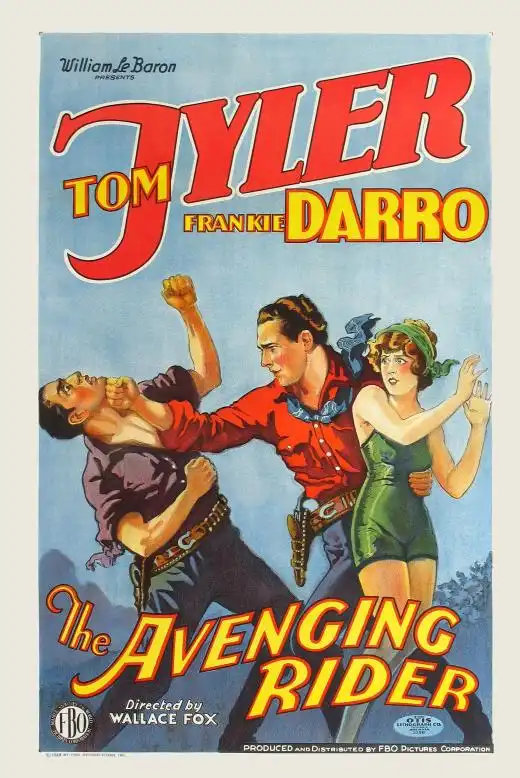
So, The Avenging Rider. Look, let's be upfront: if you’re not already predisposed to the charms of a low-budget 1930s western, probably starring Tom Tyler, you’re going to have a rough time with this one. It's not a hidden gem for the casual viewer. This is for the completists, the folks who genuinely enjoy seeing how these quick-shot programmers were assembled, warts and all. If you're looking for something with a modern pace or deep character work, turn back now. You’ll probably hate it.
Right from the start, there’s a distinct feeling of 'we need to make a movie by Friday.' The opening credits roll over some stock footage of horses, which is fine, but it immediately sets a certain expectation. You know what you're getting into. And what you're getting is a lot of riding, some very direct dialogue, and a plot that usually involves a ranch being stolen or a family member wronged. It’s comforting in its predictability, if nothing else.
Tom Tyler, our titular rider, has that classic stoic cowboy thing down. He doesn't emote much, which works for the archetype. He just squints, rides, and occasionally throws a punch. There's a scene early on where he's introduced, just sitting on his horse, staring off. It lasts a little too long, like the editor accidentally left a few extra frames in, or maybe they just didn't have another shot to cut to. It gives you time to really take in the dust on his hat, the way the light hits his saddle. Or to wonder if he's thinking about his grocery list.
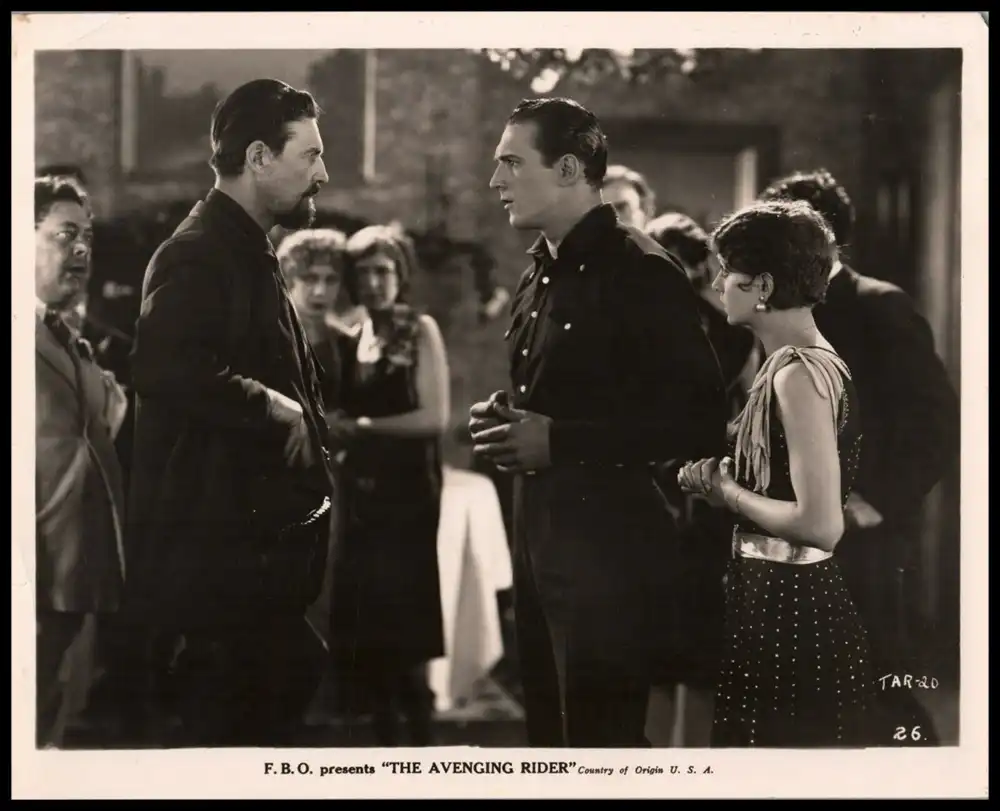
The pacing is a wild beast. Sometimes it feels like minutes are spent on a single horse chase, which, while visually engaging in a rudimentary way, starts to drag. Then, suddenly, a pivotal piece of exposition is delivered in two lines of incredibly stiff dialogue, almost whispered, and then we're off to the next location. It's not exactly a smooth narrative flow.
And the sound. Oh, the sound. This is an early talkie, and you can tell. The horse whinnies sound suspiciously similar from scene to scene, probably the same sound effect looping. The gunshots are often a bit flat, lacking any real punch. There's a particular scene in a saloon where the background chatter is so obviously artificial, it sounds like three people trying to imitate a whole crowd. You can almost hear the microphone struggling.
Al Ferguson, reliably playing the heavy, does his usual sneering villain act. He's good at it, but there's a moment during a confrontational scene where his mustache seems to shift slightly. It's tiny, almost imperceptible, but once you see it, you can't unsee it. Made me wonder if it was glued on a little too quickly that morning.
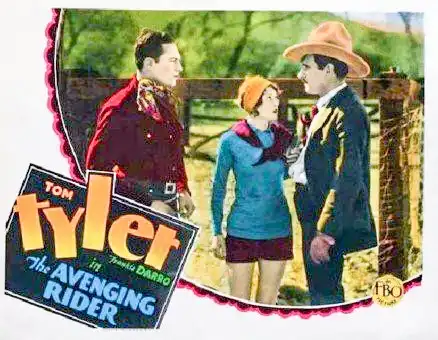
The fight choreography is, well, enthusiastic. Punches often connect with more air than face, but the actors sell the impact with dramatic falls. One particular brawl in a dusty street involves a lot of tumbling over barrels, and you can almost feel the splinters. It's charmingly amateurish, a far cry from the slickness you'd see even a decade later. It reminded me a bit of the physical comedy in something like Laughing Gas, though obviously without the same intent.
The sets are, as expected, minimal. The interior of the sheriff's office looks like it was thrown together in an afternoon, with a single wanted poster tacked unevenly to the wall. The exterior shots, however, do capture some nice, wide-open country. It’s those moments, the sense of scale in the landscape, that surprisingly work best, even if they’re just filler between plot points.
There's a kid character, likely Frankie Darro, who's supposed to be plucky but mostly just feels like he's been told to stand somewhere specific and deliver his lines as fast as possible. His wide-eyed reactions to danger are a bit overdone, making you wonder if he’s genuinely scared or just trying to remember his next cue.
The whole thing wraps up pretty abruptly, as these films tend to do. The bad guys get their comeuppance, justice is served, and our hero rides off into the sunset, presumably to avenge another injustice in another town. There’s no big emotional payoff, no lingering questions. Just a clean, efficient end. It's a product of its time, made quickly, consumed quickly, and then largely forgotten. But for those of us who appreciate the sheer volume of cinema from this era, there’s a certain honest charm to its limitations.
IMDb —
1927
Community
Log in to comment.