DbcultAccessing Vault...
Cult Review
Senior Film Conservator
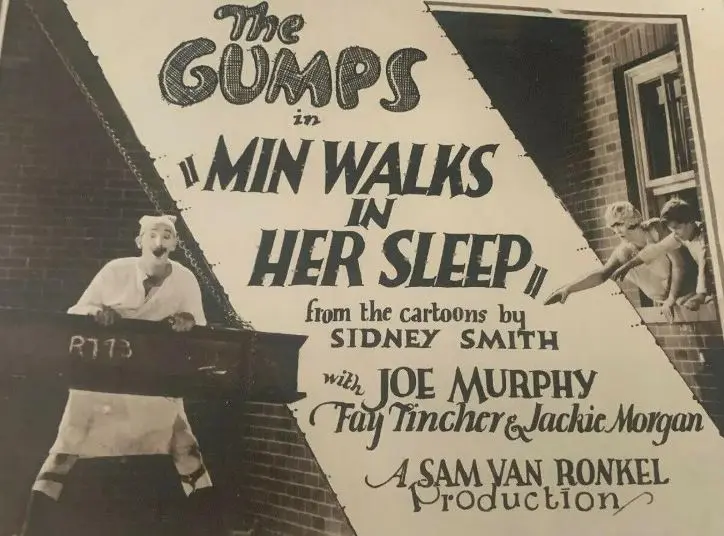
Is Min Walks in Her Sleep worth watching today? Short answer: yes, but with significant caveats. This 1920s silent comedy offers a fascinating glimpse into early slapstick and the enduring appeal of the Gump family, making it a compelling watch for film historians, silent cinema enthusiasts, and those curious about the roots of physical comedy. However, modern audiences accustomed to intricate narratives and sophisticated humor may find its episodic structure and broad gags less engaging.
This film isn't for everyone. It’s absolutely for anyone who appreciates the raw, unpolished charm of early cinema, particularly the kind that relies on exaggerated physical reactions and escalating absurdities. It’s decidedly not for viewers seeking a profound story, nuanced character development, or humor that doesn't involve ants, bullies, or dizzying heights.
This film works because of its relentless commitment to physical comedy and its surprisingly ambitious final act.
This film fails because its early vignettes feel disjointed and lack the sustained comedic brilliance of its contemporaries.
You should watch it if you want to experience a slice of early American screen comedy, particularly the Gump family's unique brand of chaos.
The world of the Gumps, as depicted in Min Walks in Her Sleep, is one of charming domestic chaos, amplified by the simple premise of a family vacation gone awry. We open with Andy, the eternally bewildered patriarch, attempting to impose a semblance of order through calisthenics. It’s a classic setup for comedic disruption, and the film wastes no time delivering: a swarm of ants turns Min’s earnest exercise into an impromptu, wildly inappropriate hula. This moment, simple as it is, perfectly encapsulates the Gumps' comedic dynamic – good intentions quickly devolving into public spectacle.
The film then shifts gears, introducing little Chester into the ant-induced pandemonium. His mimickry of Min's contortions, much to Andy's feigned moral outrage, is a delightful piece of physical comedy, highlighting the infectious nature of absurdity. The comedic crescendo of this sequence arrives when Andy himself succumbs to the itchy invaders, joining his family in an undignified, involuntary dance. It’s a universal gag, executed with a straightforward charm that speaks to the era’s comedic sensibilities.
The narrative then takes an abrupt turn to a playground brawl, where Chester, proving himself a chip off the old block, bravely takes on a larger bully. Andy's sudden, almost primal pride in his fighting son is a genuinely funny character beat, offering a brief glimpse into the Gumps' flawed, yet relatable, family values. This paternal enthusiasm, however, is short-lived, as the bully’s gargantuan father emerges, threatening Andy with a fight of his own. It’s a sudden escalation, typical of silent comedies that often relied on rapid-fire plot developments to maintain audience engagement.
Min’s timely intervention, forcing Chester to cease his victory, saves Andy from an inevitable thrashing, but not from eviction. The family is unceremoniously thrown off the land, a consequence that feels both arbitrary and entirely fitting for a family seemingly destined for perpetual misfortune. The return home sets the stage for the film’s titular, and most memorable, sequence: Min’s somnambulistic journey across a perilous urban landscape. This shift from rural slapstick to urban suspense is jarring, yet it’s here that the film truly finds its unique footing.
Min, sleepwalking out a window and onto a steel beam, confidently navigates the dizzying heights of a construction site. Andy’s terrified, cautious pursuit, crawling along the same perilous beams, injects genuine suspense into the narrative. The stakes are suddenly higher, the comedy tinged with real peril. Chester's quick thinking in calling the fire department adds another layer of escalating chaos, culminating in a truly bizarre rescue orchestrated by a stew bum and a gravity-defying water jet. It’s a climax that defies logic, embraces the absurd, and delivers a memorable visual spectacle, even by today's standards.
Director Sidney Smith, often associated with the Gump series, demonstrates a clear understanding of the mechanics of silent slapstick in Min Walks in Her Sleep. The early scenes, while simple, are paced effectively. The ant sequence, for instance, builds its humor through repetition and escalation: Min, then Chester, then Andy, each succumbing to the same indignity. Smith allows the physical reactions to play out, trusting his actors' expressive capabilities to convey the humor without the need for intertitles to explain every beat. This rapid-fire succession of gags keeps the energy high, preventing the audience from dwelling too long on any single, minor mishap.
However, it's in the film's latter half, the sleepwalking sequence, where Smith truly shines, pushing beyond simple slapstick into something more ambitious. The cinematography, while not groundbreaking for its era, effectively conveys the perilous heights. Shots from below looking up at Min on the beams, or wide shots emphasizing the sheer drop, create a palpable sense of vertigo. There’s a clever use of perspective that, even on a small screen, communicates the danger. The choice to place the climax in a construction site was a stroke of genius, offering natural scaffolding for a suspenseful, high-altitude chase. One particular moment, showing Andy tentatively crawling across a narrow beam with the city far below, is genuinely tense, a testament to the visual storytelling power of silent film when executed well.
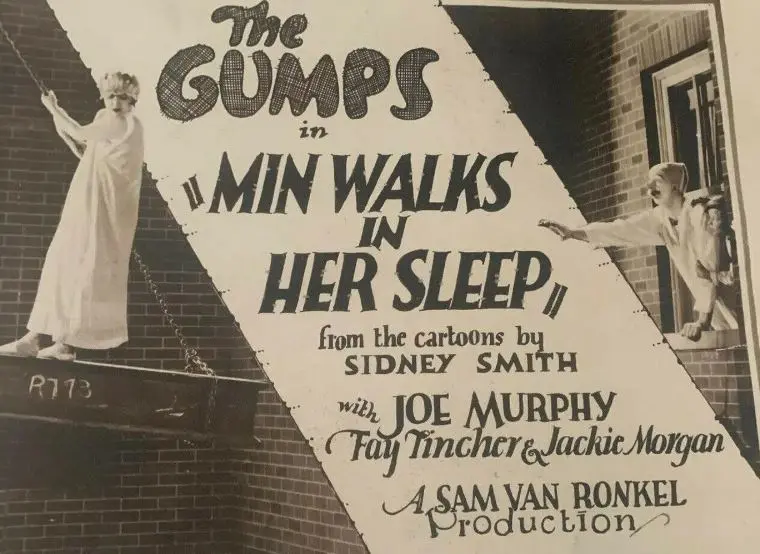
Compared to the more elaborate stunts of a Buster Keaton or Harold Lloyd, the sleepwalking sequence in Min Walks in Her Sleep feels a touch more grounded, albeit still fantastical. It relies less on intricate choreography and more on the inherent terror of heights, combined with the comedic incongruity of Min’s serene obliviousness and Andy’s panicked terror. It’s a testament to Smith's direction that this sequence, despite its absurdity, manages to evoke genuine concern for the characters, even as we laugh at their predicament. The visual gags, like the stew bum being handed a fire hose and then accidentally creating a human fountain, are pure silent-era gold, prioritizing spectacle over strict realism.
The success of any Gump family film rested heavily on the shoulders of its lead actors, and Min Walks in Her Sleep is no exception. Jack Morgan, as Andy Gump, embodies the quintessential silent film everyman – a figure perpetually flustered, well-meaning but often inept, and prone to exaggerated reactions. His physical comedy during the ant attack is a masterclass in silent film performance; the rapid-fire twitching and frantic attempts to dislodge the insects are both hilarious and relatable. Morgan’s expressions, particularly his wide-eyed terror during the sleepwalking chase, are perfectly calibrated to convey his character’s helplessness and fear without uttering a single word. He’s the anchor of the chaos, the one character whose reactions ground the absurdity in something approaching human experience.
Then there’s Fay Tincher as Min Gump, whose performance is arguably the film’s most surprising. In the early scenes, she’s a dutiful wife, if a bit clumsy, but it’s her transformation into the sleepwalking automaton that truly stands out. Her confident, almost serene demeanor as she navigates perilous heights is a stark contrast to Andy’s panic, creating a fantastic comedic juxtaposition. Tincher's ability to maintain a blank, almost otherworldly expression while performing what must have been physically demanding sequences is commendable. Her character becomes the unwitting catalyst for the film's most thrilling moments, a testament to her unique contribution to the Gump family dynamic.
Joe Murphy as little Chester Gump provides the youthful energy and mischievous spirit. His imitation of Min’s hula, and his spirited fight with the larger boy, are charming examples of child acting in the silent era. Chester isn't just a prop; he’s an active participant in the chaos, even playing a crucial role in the climax by calling the fire department. The interplay between the three Gumps, while not deeply explored, establishes a familiar, if dysfunctional, family unit that audiences of the time would have recognized from the popular comic strip. Their collective chemistry, though broad, is effective in selling the film’s comedic premise.
The pacing of Min Walks in Her Sleep is a fascinating study in early silent film construction. The initial segments, particularly the ant incident and Chester’s fight, are delivered with a brisk, almost vignette-like rhythm. Gags are introduced, executed, and quickly moved past, giving the film an episodic feel that mirrors its comic strip origins. There’s a certain charm in this rapid-fire progression; it doesn’t dwell, it simply moves from one comedic setup to the next, keeping the audience engaged with a constant stream of low-stakes mishaps. This approach, while perhaps lacking the sophisticated build-up of later silent comedies, works well for its intended audience, providing consistent, if simple, laughs.
However, the film undergoes a significant tonal shift in its latter half. The moment Min steps out onto the steel beam, the comedic rhythm slows, replaced by a growing sense of suspense and genuine peril. The pacing becomes more deliberate, allowing the audience to absorb the dizzying heights and Andy’s palpable fear. This shift is surprisingly effective, turning what began as a collection of lighthearted gags into a legitimate, if still humorous, rescue mission. The transition from domestic farce to urban thrill ride is abrupt, yet it’s this unexpected pivot that elevates the film beyond mere forgettable slapstick.
The overall tone is one of lighthearted absurdity, even when touching upon themes of danger. The Gumps are portrayed as a lovable, if somewhat hapless, family who navigate life’s minor catastrophes with a mix of befuddlement and resilience. Even the dramatic climax, with its fire department and water jet rescue, maintains an underlying comedic current, preventing the film from ever becoming truly grim. It’s a testament to the filmmakers’ ability to balance tension with humor, ensuring that even in moments of peril, the audience is still ready for a laugh.
Yes, Min Walks in Her Sleep absolutely holds value for contemporary viewers, but with specific expectations in mind. It's a valuable historical document. It showcases early filmmaking techniques. It offers insight into the popular culture of the 1920s through the Gump family. The film’s climax is genuinely impressive for its era.
It's best appreciated by those with an interest in silent cinema, early American comedy, or the evolution of slapstick. Don't expect a modern blockbuster. Don't expect deep character arcs. Do expect simple, physical humor. Do expect a surprising, suspenseful finale. It’s a curiosity, a piece of cinematic archaeology, rather than a timeless classic that transcends its period.
One of the most surprising observations about Min Walks in Her Sleep is its audacious shift in genre. What begins as a quaint, outdoor domestic comedy quickly morphs into an urban high-wire thriller. This isn't just a change of scenery; it's a complete reorientation of the film's stakes and comedic approach. Many silent comedies stuck to a consistent tone, but Min Walks in Her Sleep dares to be two distinct films in one. It works. But it’s flawed.
The sequence involving the 'stew bum' and the fire hose is a perfect example of early cinema's improvisational spirit and willingness to embrace the utterly ridiculous. It’s a moment of pure, unadulterated silent film logic – or lack thereof – where a random drunkard becomes the unlikely hero, manipulating a jet of water to both propel and then safely lower the Gumps. It’s profoundly silly, yet undeniably inventive, highlighting a period in filmmaking where ingenuity often trumped realism. This kind of spontaneous, almost magical realism is something often lost in more structured, modern narratives.
I’d argue that the true genius of the Gump films, and this one in particular, lies not in their sophisticated plotting, but in their ability to translate the everyday frustrations and minor triumphs of ordinary life into exaggerated, universal comedy. Andy Gump's moralizing, Min's unwitting escapades, Chester's youthful exuberance – these are relatable archetypes, even a century later. The film doesn't aim for profundity; it aims for a chuckle, a gasp, and a sense of shared, bewildered amusement. It achieves this, often with surprising effectiveness. It's a reminder that sometimes, simple, honest physical comedy is all you need.
Min Walks in Her Sleep is more than just a relic; it’s a lively, if uneven, example of early silent comedy that offers genuine moments of both laughter and suspense. While its episodic structure and broad humor might not appeal to every modern viewer, its daring sleepwalking climax alone makes it a worthwhile watch for anyone interested in the foundational elements of cinematic storytelling. It’s a film that, despite its age, still possesses a peculiar charm and a surprising capacity to entertain. It may not redefine the genre, but it certainly adds a unique, high-flying chapter to the Gump family's cinematic legacy, proving that even a century later, a good, silly stunt can still get a rise out of an audience. Seek it out if you're curious about the roots of screen comedy; you might be surprised by its enduring, if quirky, appeal.
IMDb 7.3
1924
Community
Log in to comment.