DbcultAccessing Vault...
Cult Review
Senior Film Conservator
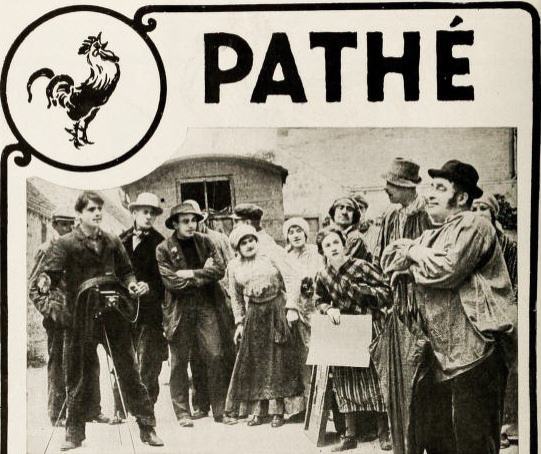
In the pantheon of early silent cinema, few figures embody the ruthless transition from Victorian domesticity to industrial coldness as vividly as Archibald J. Wright. The Price of Tyranny is not merely a melodrama; it is a psychological autopsy of a man who believes that his capital gives him dominion over the souls of his progeny. The film opens with a masterclass in establishing atmosphere within the Burlingbrook Cottonmills. The rhythmic clatter of the machinery is felt even in the silence, mirroring Archibald’s own rigid, uncompromising heartbeat. When we first encounter Edward, we see a youth caught between the burgeoning freedoms of the early 20th century and the suffocating expectations of a lineage built on labor and grit.
The inciting incident—a gambling debt of ten thousand dollars—might seem a trite narrative device to modern audiences, but within the context of 1914, it represents a fundamental breach of the Protestant work ethic. Archibald’s explosion of rage is captured with a visceral intensity that suggests a man terrified of losing control. His decision to send Edward to India is a form of social execution. He doesn't just want Edward to work; he wants him to be subsumed by the very machinery of empire that Archibald himself exploits. This thematic exploration of the 'prodigal son' is handled with far more nuance here than in contemporary works like The Only Son, where the conflict feels more localized and less existential.
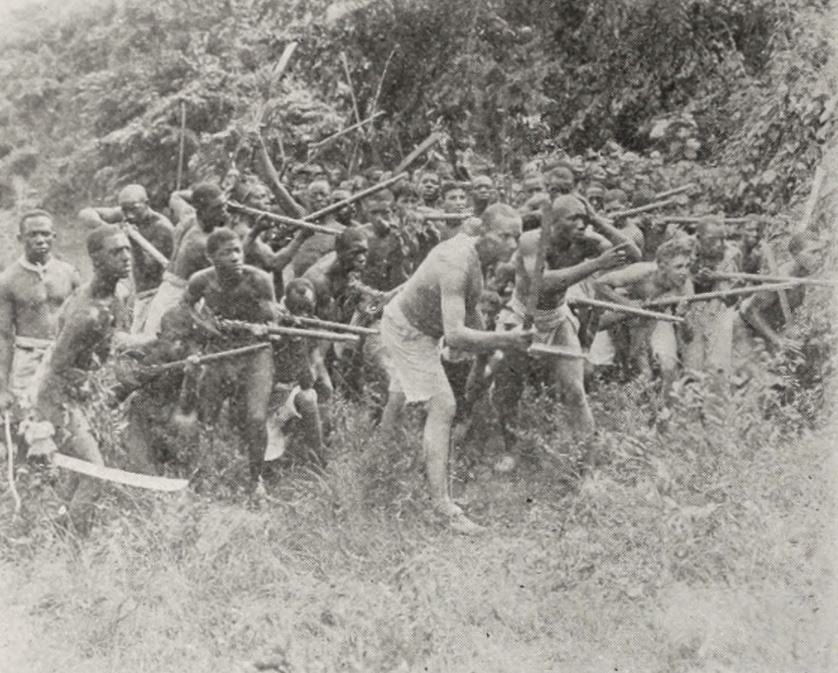
The shift from the grey, soot-stained interiors of Burlingbrook to the overexposed, shimmering heat of India provides a jarring visual contrast. The film utilizes the 'exotic' locale not merely as a backdrop, but as a catalyst for Edward’s moral evolution. Laboring alongside 'the natives,' Edward is stripped of his class privilege, a process that allows him to see the humanity in the Hindoo maid who becomes his solace. This romance is filmed with a surprising gentleness, avoiding some of the more egregious caricatures of the era, though it still operates within the framework of the 'benevolent white protagonist.' However, the stakes are elevated when Archibald, hearing of the union, attempts to reach across the ocean with the 'rod of iron' that has defined his life.
The tragedy of Edward’s life is his inability to escape the shadow of his father’s wealth. Even in his defiance, he is defined by what he has lost. The transition of the family to Greece, where Edward becomes an itinerant photographer, is perhaps the most poetically resonant sequence in the film. Photography, an act of capturing fleeting moments, becomes a metaphor for Edward’s own transient existence. He is a man without a country, a ghost haunting the edges of European civilization. This sense of doomed wandering is reminiscent of the atmospheric dread found in The White Pearl, though The Price of Tyranny grounds its tragedy in economic reality rather than maritime fantasy.
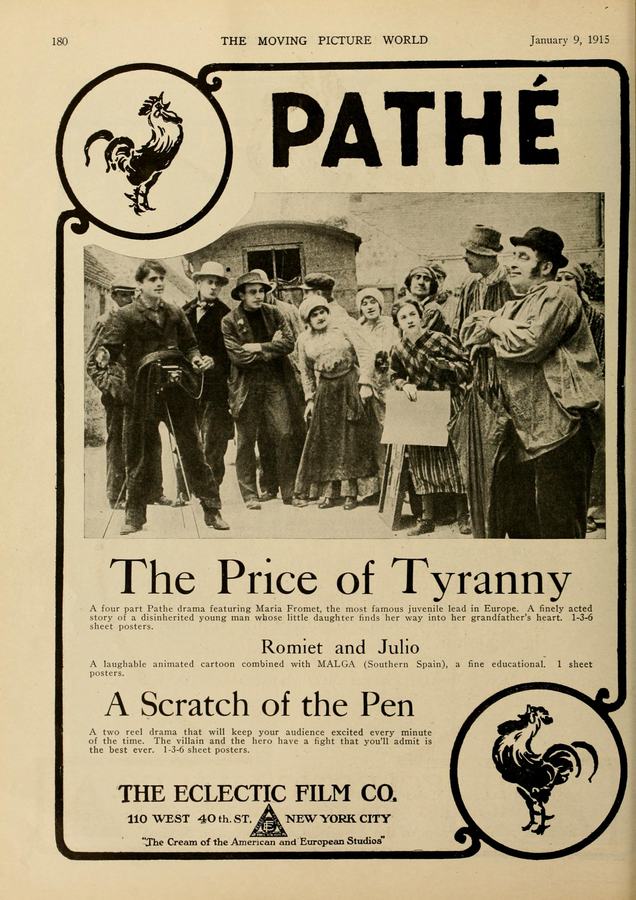
When the narrative mantle passes to Maud, played with an ethereal yet grounded quality by Maria Fromet, the film transforms into a proto-feminist survival story. Maud’s journey from a Grecian hovel to the industrial heart of America is a grueling odyssey. The scene where she must sell her donkey to pay off her mother’s debts is a heart-wrenching depiction of the precarity of the poor. Unlike the protagonists in Her Shattered Idol, who often succumb to their circumstances, Maud possesses a pragmatic resilience. She doesn't just survive; she infiltrates the system that discarded her father.
Her arrival at the Burlingbrook mills is a masterstroke of dramatic irony. She is a cog in her grandfather’s machine, yet she is the only person who holds the key to his emotional salvation. The linguistic barrier—her knowledge of Italian—becomes her greatest asset. In a beautifully staged sequence, she reads a letter to the aging, nearly blind Archibald. The irony is thick: the man who built an empire on his ability to oversee every detail is now entirely dependent on the girl he doesn't know is his own flesh and blood. This dynamic of hidden identity and industrial espionage echoes the suspense of The Master Key, but with a significantly higher emotional payload.
No melodrama is complete without a foil, and Harold, the nephew, serves this role with a serpent-like grace. Harold represents the cynical opportunism that often follows in the wake of a tyrant. He has 'craftily insinuated' himself into Archibald’s graces, filling the vacuum left by Edward’s exile. Harold is the quintessential corporate sycophant, a character type that would become a staple of cinema, similar to the antagonists in The Governor's Boss. His presence creates a ticking clock for Maud; she must reveal herself before Harold’s usurpation is complete, yet her fear of the 'rod of iron' keeps her silent.
The tension between Maud and Harold is played out in the shadows of the mill office. The cinematography here utilizes sharp angles and deep blacks to emphasize the moral ambiguity of the setting. Archibald, meanwhile, begins to soften, his advancing years bringing a 'yearning' that his younger self would have considered a weakness. This softening is not a sudden epiphany but a slow, painful erosion of his defenses, a narrative choice that feels remarkably modern in its psychological consistency.
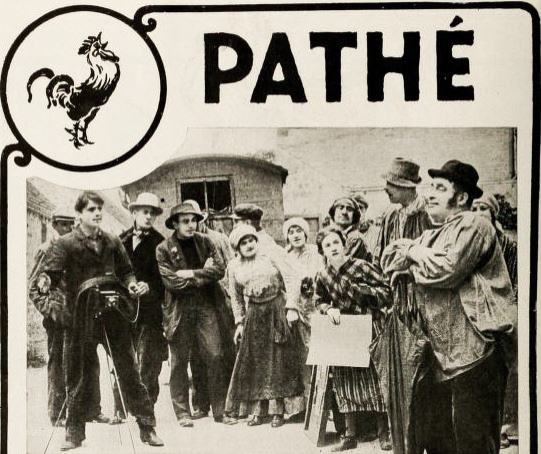
The literal and metaphorical blindness of Archibald Wright is the film's most potent symbol. The cataract closing over his eyes is the physical manifestation of the pride that prevented him from seeing his son’s worth. The operation is a high-stakes moment, both medically and narratively. It represents a 'reset' for the character. When the bandages are removed, he doesn't just see the world; he sees the 'child who was so attentive to him in his sorrow.' The visual clarity mirrors his moral clarity. This trope of sight restoration as a catalyst for truth is a recurring theme in silent cinema, often seen in variations within films like Rip Van Winkle, where time and perception are the primary obstacles to reunion.
The climactic revelation in the office—Maud’s caress of her father’s portrait—is handled with a restraint that prevents it from descending into bathos. Maria Fromet’s performance is key here; her gesture is one of genuine grief, not a calculated play for sympathy. When she produces the note from Edward, the cycle of tyranny is finally broken. The note is a document of forgiveness, a final act of grace from the son to the father who destroyed him. It is a devastating moment of realization for Archibald: he has been forgiven by the man he never asked for forgiveness from.
Ultimately, The Price of Tyranny is a sobering meditation on the limits of power. Archibald Wright may have kept his mills and his fortune, but the cost was the lives of his son and daughter-in-law. The ending is bittersweet; while Maud is restored to her rightful place, the ghosts of the past remain. The film suggests that while repentance is possible, it cannot undo the 'awful price' already paid. The 'sinner's repentance' found in the care of his granddaughter is a small light at the end of a very dark tunnel.
In comparison to the industrial critiques found in Are They Born or Made? or the social justice themes of The Lure, this film remains a deeply personal, domestic tragedy that resonates because of its focus on the interior life of its characters. It avoids the broad strokes of political propaganda, choosing instead to examine the micro-consequences of a macro-ego. The film stands as a testament to the power of the silent medium to convey complex emotional landscapes, proving that even a century later, the price of tyranny is a currency we still recognize and fear.
IMDb 6.6
1928
Community
Log in to comment.