DbcultAccessing Vault...
Cult Review
Senior Film Conservator
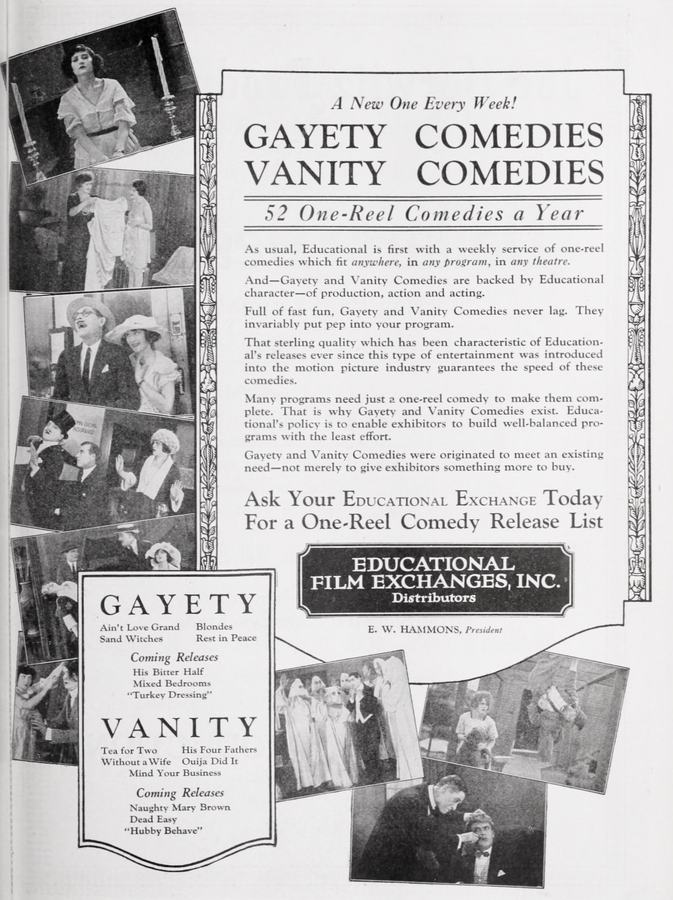
The first time the camera dollies into that little corner café, cigarette smoke curling like gossip, you already sense the coming carnage. Walter Graham’s script—tight as a tourniquet—lets Helen Darling’s single girl glide through the door with the swagger of someone who’s read the last page of a thriller and knows everyone else is still fumbling at chapter three. She’s here to prove a point: that no marriage is a fortress, that every ring has a hairline fracture waiting for the right chisel. Dorothy Devore’s married friend, all cloche hat and unearned serenity, tags along like a smug chorus. Their pact is simple, venomous, irresistible—test the husband, expose the rot, walk away wiser.
Except the husband—played by James Harrison with the square-jawed naïveté of a man who’s never had to parallel-park his own ego—doesn’t take the bait himself. He delegates, the way kings dispatch knights. Enter Eddie Baker, comedy’s perennial second fiddle, now upgraded to reluctant leading man. Baker has the elastic limbs of a marionette cut loose from strings; when he sidles into the café, pretending to be the husband, every twitch is a drumroll. Darling’s man-trap zeros in, batting eyelashes like semaphore flags. The air thickens with possibility and peril.
What follows is a masterclass in escalating bewilderment. A misplaced glove becomes a smoking gun; a hastily scribbled address mutates into a love letter; a lipstick print metastasizes into proof of adultery. The silent frame, unburdened by dialogue, forces the actors to semaphore emotions in bold strokes—eyebrows arch like cathedral vaults, shoulders fold like collapsing deck chairs. Director Roy Del Ruth (rarely lauded enough) keeps the rhythm staccato: gag, glance, gasp, repeat. Visual puns ricochet—when Devore’s wife finally storms the café, the camera tilts up to a ceiling fan spinning like a gossip’s tongue.
The film’s midpoint hinge is a dinner table sequence worthy of Renoir. Candlelight carves the scene into chiaroscuro masks: the wife pretending she hasn’t seen the note, the husband unaware that she’s seen it, the bachelor friend unaware that anyone knows anything. Each cut is a scalpel, dissecting loyalties. At one point Harrison lifts a champagne glass and the stem snaps—an accident that Del Ruth kept in the final print because it mirrors the marriage’s hairline crack now turned fissure. The moment lands like a pistol shot in a cathedral.
Comparisons spring to mind: Friend Husband mined similar marital masquerades, though with more farce than scalpel. The Innocent Lie flirted with infidelity but lacked this film’s merciless clockwork. Even Good Night, Nurse—all bedpans and bawdiness—feels slack beside the taut corsetry of Mind Your Business. The difference is tone: where others wink, this film leers; where others forgive, this film remembers.
Helen Darling, unjustly eclipsed by bigger flapper names, delivers a performance that oscillates between vamp and vulnerable. Watch her eyes in close-up: they glitter with predatory calculation, then cloud with the sudden recognition that she herself might be falling for the decoy bachelor. It’s a flicker, maybe three frames, but it humanizes what could have been a stock temptress. Dorothy Devore, saddled with the “good wife” archetype, finds nuance in the way her hands keep smoothing an already immaculate tablecloth—every swipe a futile attempt to erase uncertainty.
Eddie Baker, though, is the film’s pulse. Comedy often ages poorly; pratfalls turn to museum pieces. Yet Baker’s timing—rooted in anxiety rather than bravado—feels bracingly modern. When he realizes the single girl’s affections are genuine, his face cycles through panic, tenderness, and the existential dread of a man who’s juggled dynamite only to discover it’s now glued to his palms. It’s a silent-era ancestor of the cringe comedy that would later flower in The Office or Curb Your Enthusiasm.
The cinematography, anonymous but brilliant, deserves a plaque. Note how the camera lingers on a café table after both characters exit: a spilled sugar cube dissolving into a tiny Antilles of grit, a metaphor for marriages dissolving in real time. Or the final shot—a slow push-in on the re-united married couple framed by the café window while, reflected in the glass, Darling and Baker walk away together, their silhouettes ghosted over the “happy” pair. It’s a visual whisper: trust is restored, but transparency remains illusory.
Critics of the period dismissed the picture as a “pleasing trifle.” They missed the subversive undertow: the film insinuates that monogamy survives not on virtue but on selective blindness. The wife forgives because she chooses to un-see; the husband is absolved because failure never actually happened. Meanwhile the true emotional transgression—the single girl’s heart, briefly, genuinely stirred—goes unacknowledged. That’s the real sting: in a story ostensibly about testing fidelity, the only authentic betrayal is of the self.
Restoration-wise, the 2018 4K scan from a Dutch print is revelatory. Grain swarms like bees, but detail sharpens: you can read the prices chalked on the café menu (coffee five cents, trust priceless). The tinting—amber for interiors, cobalt for twilight exteriors—restores emotional temperature. The Mont Alto Motion Picture Orchestra’s new score lilts from Charleston to anxious pizzicato, never spoon-feeding mood, always letting the viewer eavesdrop on chaos.
If you binge through related silents, pair this with The Transgressor for a darker moral aftertaste, or One of the Finest for another round of mistaken identities. But return to Mind Your Business last; let its effervescence curdle into something more astringent as the lights come up. You’ll exit wondering which of your own relationships rest on similar gentle fictions, and whether you, too, would rather not know.
Verdict: a brittle, effervescent comedy that gnaws at the marrow of modern coupling. Ninety years haven’t dulled its bite; if anything, the dentures of contemporary rom-coms make its enamel seem sharper. Watch it for the laughter, rewatch it for the winces, quote it the next time someone claims “trust is everything.” Trust, this film retorts, is merely the story we agree to leave unedited.

IMDb —
1926
Community
Log in to comment.