DbcultAccessing Vault...
6.9/10
Senior Film Conservator
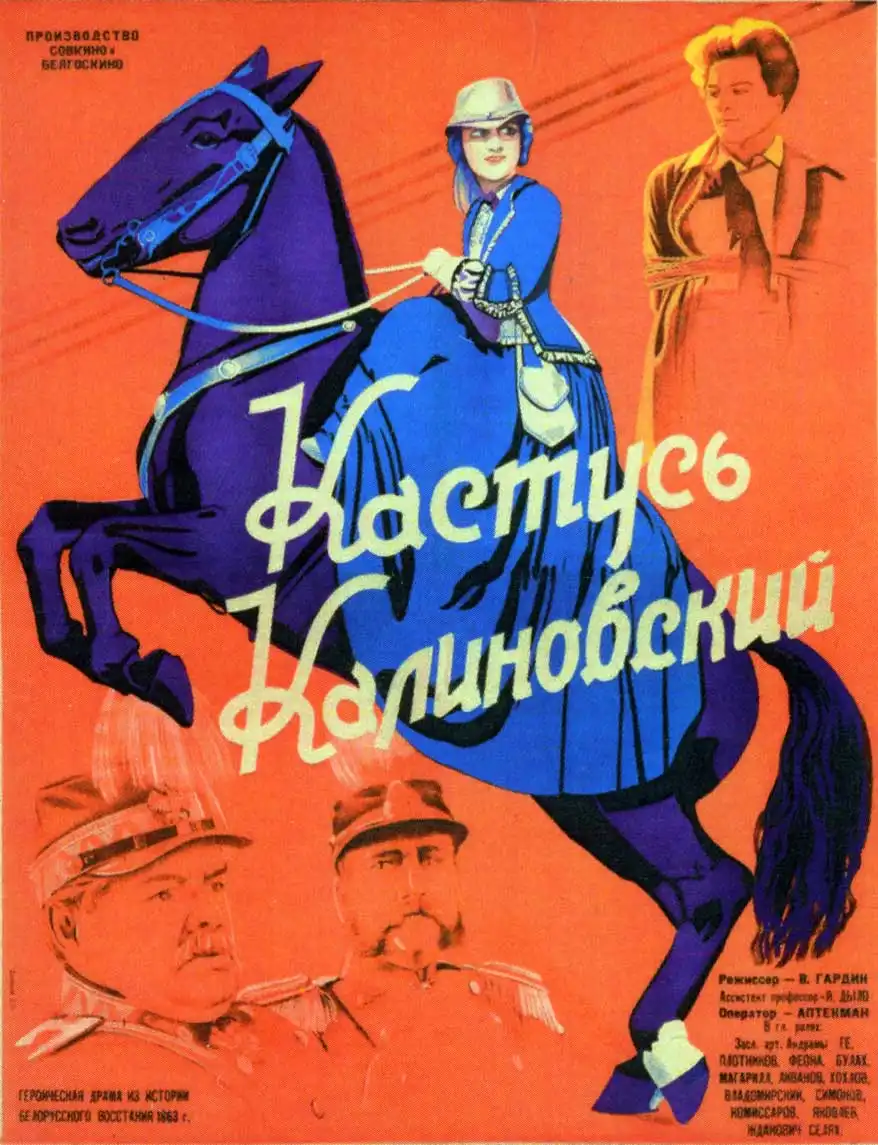
A definitive 6.9/10 rating for a film that redefined the boundaries of cult cinema. Kastus Kalinovskiy remains a cornerstone of transgressive art.
Right off the bat, if you're looking for a smooth, modern cinematic ride, you can probably give Kastus Kalinovskiy a pass. 🙅♀️ This one is strictly for the history buffs, the old film devotees, or anyone genuinely fascinated by how nations told their own founding myths on screen back in the day. Casual viewers? You'll likely find it a bit of a slog. But for those who appreciate the *weight* of early cinema, there’s something here.
The film opens with these really stark, almost *tableau-like* shots. You get a sense immediately that this isn't about naturalism. It's about _statements_. Pavel Samoylov as Kalinovskiy, he's got this intense, almost unblinking stare that just *drills* into you. It's not subtle acting, not by today's standards, but it's effective for the period.
Every gesture feels magnified, deliberate. There's a scene, or rather a series of scenes, with crowds gathering. You see the extras, dozens of them, huddled together, often just *looking* at something important happening off-screen.
There isn't much individual reaction, more a collective posture of either despair or defiant hope. It gives the whole thing this almost operatic quality, even when the actual action is fairly minimal. The camera holds on these wide shots for quite a while. Long enough that you start noticing the guy in the back scratching his nose. 😂
And the *dialogue*, oh boy. It’s delivered with such earnestness, like every line is a pronouncement etched in stone. No one just *talks* in this film; they declare, they lament, they inspire. It feels a bit like watching a stage play from a very distant row, but on a giant screen. The actors, especially Florian Zhdanovich and Sofiya Magarill, they really lean into it. Their expressions are often *big*, designed to be understood even from afar. You can almost feel the director saying, "Make it grander!"
The pacing... it's a thing. It doesn't rush. Moments are given space to breathe, sometimes *too much* space. A character will walk into a room, and the camera just *waits*. Then they'll stand there, and the camera *still waits*. You might find yourself checking if your player is paused. But then, you realize this is just *how it was*. This was the rhythm. It wasn't about quick cuts or building suspense through speed. It was about allowing the *gravitas* of each scene to sink in, like slowly watching a grand painting.
There's a particular shot, it's quite simple actually, of Kalinovskiy just standing against a — what looks like a painted backdrop of a village. The lighting is pretty flat, but there's this determination in his posture. It’s not just a man; it’s *the idea* of a man. The film consistently tries to elevate its subject to a symbol. Sometimes it works beautifully, sometimes it makes him feel a little less human.
You can really tell this film was made with a purpose. It’s not just telling a story; it’s building a *legacy*. The way certain characters are framed, always in heroic poses, or the villains are depicted with almost cartoonish malice. There’s no grey area here. It's very black and white, good versus evil, our hero versus the oppressors. And the score, when it kicks in, is always very dramatic, swelling with emotion exactly when you’d expect it.
One thing that really stuck with me, small as it is: the uniforms. They’re meticulously detailed, even if the film stock sometimes makes them look a bit muddy. But you can tell someone put a lot of effort into making them feel authentic for the time period. It’s these little touches that remind you there was a real *craft* here, even if the overall cinematic language feels alien to us now.
The sheer dedication of the cast is palpable, though sometimes it tips over into almost unintentional comedy for a modern viewer. There’s a scene where Boris Livanov’s character is giving a passionate speech, and his arms are just *flailing* with such vigor, it’s hard not to chuckle a little. But you also get it. This was the acting style; this was how you projected emotion to a vast audience without nuanced close-ups.
Kastus Kalinovskiy feels less like a narrative film and more like a _reenactment_. A very serious, very important reenactment. It's a testament to a certain era of filmmaking, where the message often overshadowed subtlety. If you can get past the slower pace and the theatrical performances, there’s a historical weight that makes it oddly compelling. It won't be everyone's cup of tea, but it certainly leaves an impression. ☕
IMDb —
1923
Community
Log in to comment.