DbcultAccessing Vault...
Cult Review
Senior Film Conservator
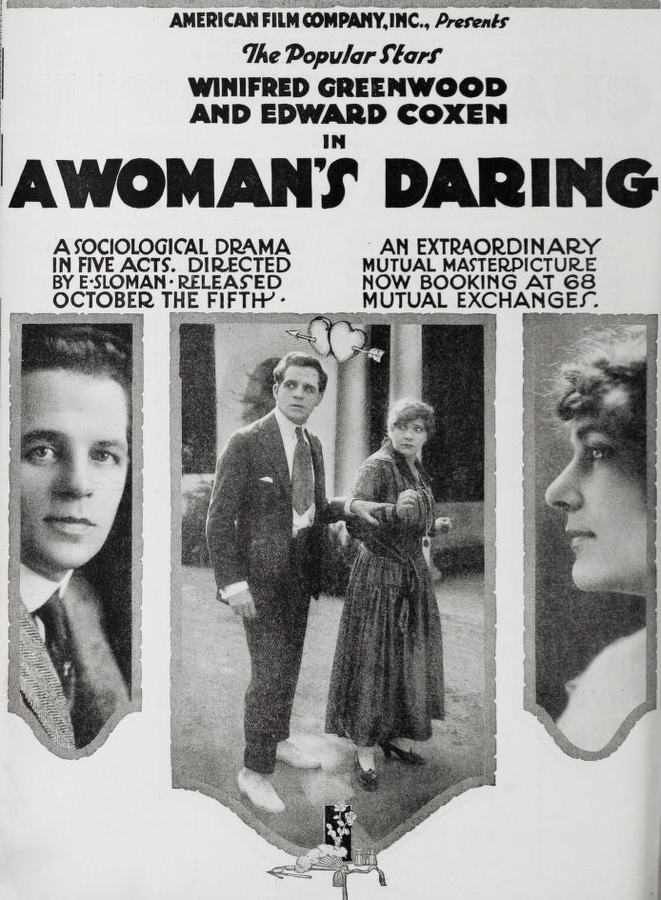
Stepping back into the nascent years of cinematic storytelling, one encounters a treasure trove of human drama, often overlooked in the glare of contemporary blockbusters. Among these gems, William H. Lippert’s 1916 production, 'A Woman's Daring,' emerges not just as a film, but as a visceral exploration of resilience, betrayal, and the profound strength found within the human spirit, particularly that of a woman pushed to her absolute limits. This is not merely a period piece; it is a timeless narrative that resonates with universal themes of survival and the quest for redemption, crafted with an emotional intensity that transcends its silent medium. It demands our attention, not just as a historical artifact, but as a compelling piece of art that speaks volumes without uttering a single word.
The film introduces us to 'The Woman,' portrayed with an affecting vulnerability and burgeoning strength by Winifred Greenwood, as a young soul sequestered from the world, raised on a desolate farm under the oppressive hand of a miserly uncle. This isolation, a barren landscape mirroring her emotional void, sets the stage for her inevitable susceptibility. It is into this vacuum that a traveling mining stock broker, a serpent in the garden of her innocence, slithers. His charm, a deceptive veneer, quickly ensnares her, offering a glimmer of connection, a promise of escape from her monotonous existence. The narrative swiftly plunges into the depths of betrayal when, upon discovering her predicament – a euphemism for her seduction and subsequent pregnancy – the uncle, rather than offering solace, casts her out into the raging storm. This tempest, both literal and symbolic, forces her into a desperate search for shelter, leading her back to the very man who wronged her. He, seizing the opportunity, manipulates her into a hurried marriage in a nearby town, a fleeting illusion of salvation. Yet, the ink barely dries on the marriage certificate before this fragile peace is shattered. The arrival of his legitimate wife, accompanied by the stern hand of the law, exposes his cruel bigamy, leaving 'The Woman' abandoned, heartbroken, and utterly alone, her world once again in ruins.
In a cruel twist of fate, as if to underscore the capriciousness of destiny, 'The Woman' learns of her uncle's demise in the very storm that cast her out, leaving her an unexpected inheritance. This newfound wealth, a bitter recompense for her suffering, provides the means for her escape and reinvention. She relocates to a bustling small city, shedding her past identity like a chrysalis, emerging as a 'widow,' a respectable façade for her single motherhood. Five years unfurl, years of painstaking reconstruction, dedicated to raising her son, who has grown into a lively lad. This period of fragile happiness highlights her immense capacity for endurance and love, a testament to the quiet strength that underpins her character. She navigates society with a guarded grace, attracting the affections of two prominent men: a distinguished physician and a reputable broker. It is the broker, portrayed by George Field with an understated nobility, who ultimately wins her heart, offering her a chance at genuine happiness and stability. Their union promises a future free from the specters of her past, a sanctuary she desperately craves.
However, the threads of fate are not so easily severed. The past, like a tenacious shadow, looms large. The broker, in an act of paternal consideration, hires a chauffeur for his wife, an innocuous decision that unravels her carefully constructed world. The man who arrives at their elegant home is none other than her original betrayer, William A. Carroll, whose menacing presence instantly reintroduces the terror she thought she had escaped. His reappearance is a masterstroke of dramatic tension, plunging the narrative back into the heart of her deepest fears. He wastes no time in leveraging her secret, threatening exposure unless she acquiesces to his demands for money. Trapped, she dares not refuse, her son's future and her precarious respectability hanging in the balance. The chauffeur's malevolence extends beyond blackmail; he cruelly abuses their innocent son, an act that ignites a primal fury within 'The Woman.' This escalating torment, the insidious encroachment on her newfound peace, builds an unbearable tension, forcing the audience to grapple with the agonizing choices she faces.
The escalating cruelty reaches a zenith one day when the broker witnesses the chauffeur's brutal treatment of his stepson. Enraged, he discharges the man on the spot, an act of protective justice that, inadvertently, pushes 'The Woman' closer to the precipice. The chauffeur, now stripped of his position and his leverage, issues a final, chilling ultimatum: reinstatement or the devastating revelation of her past. Cornered and desperate, 'The Woman' seeks him out at her husband's office when it is empty. A tense confrontation ensues, culminating in a struggle over a flourished gun. The screen, though silent, crackles with the raw energy of their desperate encounter. A shot rings out, the man falls, and 'The Woman' flees into the night, a fugitive from a crime born of self-preservation. The coroner, investigating the scene, unearths a crucial piece of evidence: a locket clutched in the dead man's hand, unmistakably belonging to 'The Woman.' This incriminating detail, a silent accuser, is held back by the coroner, a deliberate narrative choice that heightens the suspense and sets the stage for the dramatic courtroom battle to come.
Unaware of the full ramifications of her flight, 'The Woman' hides, consumed by guilt and fear. The narrative takes a harrowing turn when her innocent husband, the very man who offered her solace, is arrested for the murder. This injustice, the specter of his undeserved suffering, becomes the ultimate catalyst for her 'daring.' A terrifying vision of the penitentiary, of her husband enduring a fate meant for her, galvanizes her resolve. She hastens to the court, a figure of tragic nobility, and in a moment of profound courage, confesses. Her testimony, a raw outpouring of truth detailing the man's long history of betrayal, blackmail, and his final attack, clears her husband. Both are discharged, a legal triumph achieved through her harrowing honesty. This pivotal scene, a testament to the power of truth, is a cathartic release, not just for the characters, but for the audience who has witnessed her torturous journey. It is a moment reminiscent of other melodramas where secrets unravel under public scrutiny, such as in Woman and Wife, where hidden marital truths often lead to dramatic confrontations, or The Masqueraders, where concealed identities create intricate webs of deceit that ultimately demand resolution.
Returning home, the immediate danger averted, 'The Woman' recognizes that true freedom demands more than legal exoneration. She determines to liberate her mind from the oppressive shadow of her secret, to shed the last vestiges of her deception. In a climactic act of profound vulnerability and trust, she recounts the entire, unvarnished story of her life to her husband. This confession, a testament to her 'daring' in its purest form, is met not with condemnation, but with profound understanding and forgiveness. It is a powerful affirmation of love, trust, and the capacity for empathy, elevating the narrative beyond mere melodrama into a study of human grace. The film concludes not with a simplistic 'happily ever after,' but with the promise of an authentic, unburdened future, built on the bedrock of truth and mutual acceptance. This final act of transparency mirrors the thematic depth found in films like The Test of Womanhood, where a woman's moral fortitude and honesty are ultimately rewarded, or even the psychological weight of secrets explored in a film like The Bells, though its gothic horror is a different tonal landscape.
At the heart of 'A Woman's Daring' lies Winifred Greenwood's remarkable performance. In an era where exaggerated gestures and overt expressions were the norm for silent film acting, Greenwood delivers a portrayal imbued with a nuanced emotionality that feels surprisingly modern. She navigates 'The Woman's' complex emotional landscape with a compelling authenticity, from the wide-eyed innocence of her youth to the crushing weight of betrayal, the fierce protectiveness of motherhood, and the ultimate, liberating courage of confession. Her eyes, often downcast in despair or blazing with defiance, convey volumes without the aid of dialogue. One truly feels her torment, her desperate hope, and her burgeoning resolve. William A. Carroll, as the villainous broker-turned-chauffeur, is suitably loathsome, embodying a sneering malevolence that makes his character’s presence genuinely unsettling. His performance is a chilling counterpoint to Greenwood's pathos, effectively driving the narrative's central conflict. George Field, as the forgiving second husband, provides a much-needed anchor of decency and understanding, his quiet strength a balm after the narrative's turbulent storms. The ensemble, though constrained by the conventions of the time, collectively contributes to a compelling emotional tapestry.
William H. Lippert’s script for 'A Woman's Daring' is a masterclass in melodrama, meticulously constructing a plot that, while featuring heightened emotions and dramatic twists, remains grounded in a recognizable human struggle. The narrative progression, from idyllic innocence to brutal betrayal, through periods of desperate survival and fragile happiness, before culminating in a harrowing confrontation and ultimate redemption, is impeccably paced. Lippert understands the power of escalating stakes, consistently raising the emotional ante for 'The Woman,' ensuring that her eventual triumph feels hard-won and deeply earned. The film’s direction, while typical of its era, effectively uses visual storytelling to convey emotion and plot points. The storm that rages when 'The Woman' is cast out, for instance, is not just a backdrop but a mirror to her inner turmoil, a common but effective trope in silent cinema. The stark contrast between her desolate upbringing and the opulent surroundings of her second marriage visually accentuates her journey and the precariousness of her new life. This thoughtful visual language, combined with Lippert's compelling narrative, ensures the film holds its own against other powerful dramas of the period, perhaps even sharing a spirit of the tenacious fight for justice and survival seen in films like Darkest Russia, though their specific contexts differ.
Beyond its immediate plot, 'A Woman's Daring' delves into profound thematic territory. It is a powerful commentary on societal judgment, the unforgiving nature of a woman's past, and the immense pressure to maintain respectability. 'The Woman's' decision to live as a 'widow' is a poignant reflection of the limited choices available to women in her circumstances during that era, highlighting the societal double standards that often condemned women for circumstances beyond their control. Her journey is a testament to the enduring strength of maternal love, which serves as her primary motivator, driving her to extreme lengths to protect her son. The film also explores the complex nature of forgiveness – both societal and personal – and the arduous path to self-acceptance. It asks whether one can truly escape their past, or if confrontation is the only route to genuine freedom. The ultimate act of telling her husband the full truth, knowing it could shatter her carefully built world, is the film's most 'daring' moment, a profound statement on the power of honesty to forge deeper, more authentic bonds. In an age often characterized by its overt moralizing, 'A Woman's Daring' manages to deliver its message with a surprising degree of empathy and psychological insight, making it a compelling watch for anyone interested in the evolution of cinematic storytelling and the timeless struggles of the human heart.
IMDb —
1918
Community
Log in to comment.