DbcultAccessing Vault...
6.5/10
Senior Film Conservator
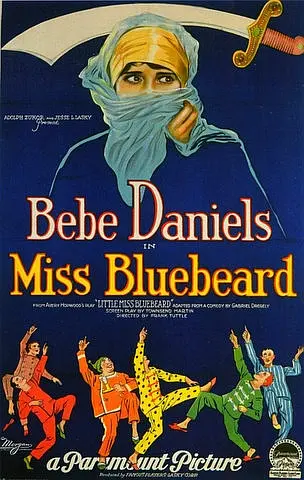
A definitive 6.5/10 rating for a film that redefined the boundaries of cult cinema. Miss Bluebeard remains a cornerstone of transgressive art.
Miss Bluebeard, a 1924 American comedy film, directed by Searle Sykes and written by Townsend Martin, Avery Hopwood, and Gábor Drégely, is a delightful and intricate portrayal of a romance that unfolds amidst the backdrop of deception and mistaken identities. The film stars Raymond Griffith, Bebe Daniels, Martha O'Dwyer, Florence Billings, Ivan F. Simpson, Lawrence D'Orsay, Diana Kane, Kenneth MacKenna, and Robert Frazer. The story revolves around Larry Charters, a popular songwriter, who, to avoid the relentless demands of his female admirers, arranges for his friend, Bob Hawley, to impersonate him.
Bob, assuming the persona of Larry, embarks on a journey to the Continent. On a train, he meets Colette, a French actress, whose charm and wit captivate him. An unfortunate series of events leads them to be left behind at a French village station. The intoxicated mayor, mistaking their intentions, marries Bob to Colette in Larry's name. This sets the stage for a series of comical and poignant moments as Bob and Colette navigate their new reality in Paris, where Larry is introduced to his new and unexpected wife.
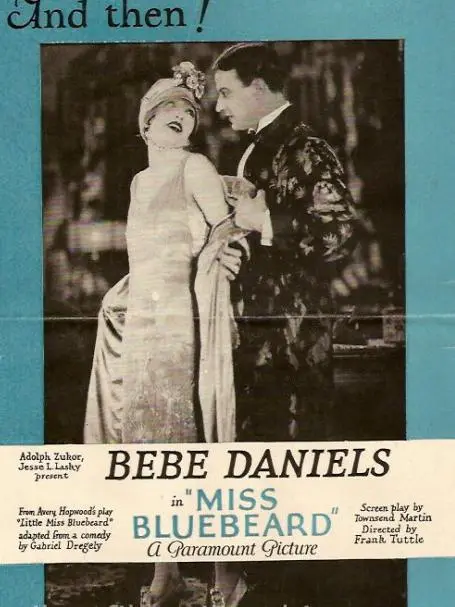
The film's narrative is a masterclass in misdirection and the human capacity for love and loyalty. As Larry falls for Colette, he arranges for her to stay with him, but she remains his wife in name only. Bob, meanwhile, becomes engaged to Gloria, one of Colette's friends. The dynamics between the characters are intricate, and the film skillfully explores the themes of identity, love, and the complexities of human relationships.
At a house party, Colette, in an attempt to test Larry's love and loyalty, disguises herself as one of Larry's old girlfriends. This plot device adds a layer of depth to the story, forcing the characters to confront their feelings and the nature of their relationships. The confusion and misadventure that ensue are both charming and humorous, showcasing the film's ability to blend comedy with emotional depth.
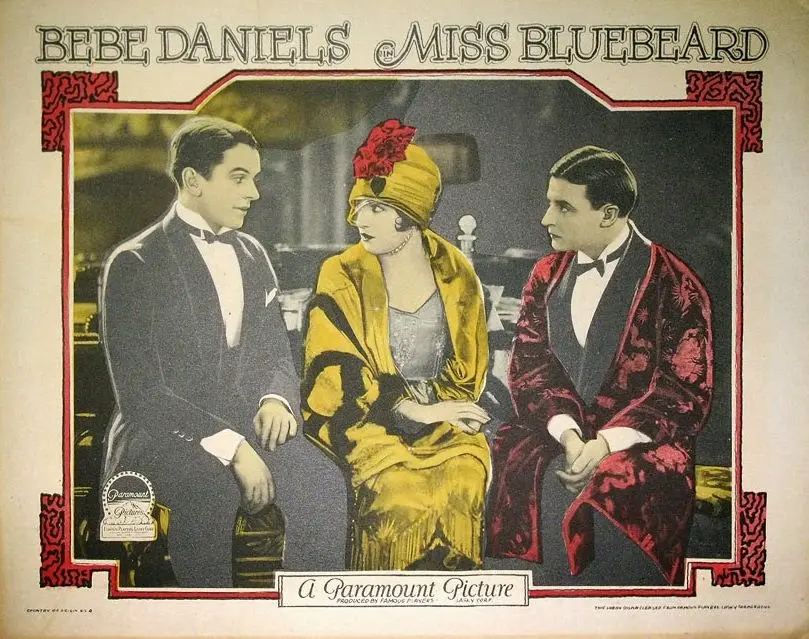
Miss Bluebeard is a testament to the golden era of silent film, where visual storytelling and character development were paramount. The performances of the cast, particularly Bebe Daniels as the enigmatic Colette, are exemplary. Daniels brings a blend of charm, wit, and depth to her role, making Colette a memorable and compelling character. Raymond Griffith, as Larry, is equally adept, portraying a man torn between his feelings for Colette and his loyalty to his friend Bob.
The film's setting in France adds a picturesque and romantic atmosphere, enhancing the story's charm. The elaborate costumes, set designs, and the general aesthetic of the film transport the audience to a bygone era of elegance and sophistication. The music, while not as prominent as in the more recent musicals, adds to the film's ambiance, subtly underscoring the emotional beats of the story.
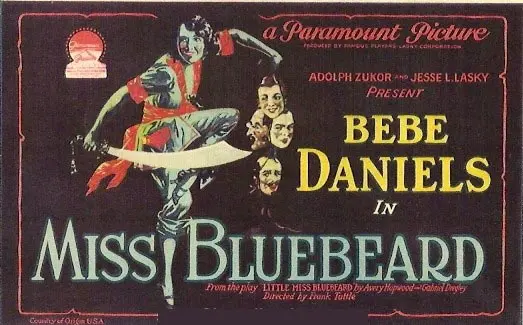
Comparatively, Miss Bluebeard shares thematic similarities with other films of its era, such as All Wet and Unclaimed Goods. Both films explore themes of deception and mistaken identities, but Miss Bluebeard stands out for its more nuanced and emotionally resonant exploration of love and identity. The film's ability to balance humor and emotional depth makes it a standout piece of early cinema.
Overall, Miss Bluebeard is a charming and delightful film that offers a fresh perspective on the complexities of human relationships. It is a testament to the art of storytelling in a time when visual and character-driven narratives were at the forefront. For those interested in the golden era of cinema, Miss Bluebeard is a must-watch. It is a film that not only entertains but also provides a deeper understanding of the human experience.
IMDb 7.8
1931
Community
Log in to comment.