DbcultAccessing Vault...
3.5/10
Senior Film Conservator
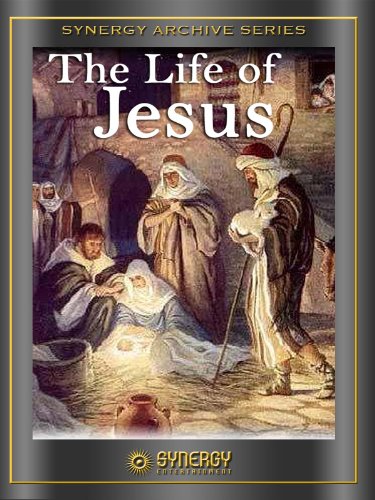
A definitive 3.5/10 rating for a film that redefined the boundaries of cult cinema. Life of Christ remains a cornerstone of transgressive art.
In the nascent years of the twentieth century, the medium of film was often relegated to the status of a vaudevillian curiosity or a mere scientific instrument for capturing movement, as seen in the fleeting glimpses of Saída dos Operários do Arsenal da Marinha (1901). Yet, in 1906, a year otherwise defined by the gritty realism of The Story of the Kelly Gang, a work of profound spiritual and technical ambition emerged from the Gaumont studios in France. This film, Life of Christ (likely a re-titled version of Alice Guy-Blaché's La Vie du Christ), remains a towering testament to the artistic possibilities of early cinema.
To understand the magnitude of Life of Christ, one must first acknowledge the hand of its creator. Alice Guy-Blaché, the first female filmmaker, did not merely document reality; she constructed it. While many of her contemporaries were preoccupied with the spectacle of combat, such as the The Corbett-Fitzsimmons Fight (1897) or the Jeffries-Sharkey Contest (1899), Guy-Blaché sought a higher aesthetic plane. In this film, she transcends the limitations of the fixed camera to create a series of twenty-five scenes, or tableaux, that function as windows into a divinely ordered world.
The film’s production was an undertaking of Herculean proportions. Utilizing over 300 extras and expansive, multi-layered sets, it dwarfed the modest 'actualities' like 69th Regiment Passing in Review (1897). Guy-Blaché’s use of the Buttes-Chaumont studios allowed for a level of control over lighting and composition that was impossible in the outdoor 'topical' films of the era, such as A Rua Augusta em Dia de Festa (1900). The result is a visual texture that feels closer to classical painting than to the flickering newsreels of the time.
The aesthetic DNA of Life of Christ is inextricably linked to the work of James Tissot, whose biblical illustrations were the definitive visual reference for the era. Guy-Blaché meticulously recreated Tissot’s compositions, imbuing the film with a sense of historical and religious authenticity that resonated deeply with audiences of 1906. This was not the raw, unpolished imagery of Birdseye View of Galveston, Showing Wreckage (1900); this was a deliberate, curated beauty.
Consider the scene of the Nativity. The arrangement of the figures, the soft filtering of light, and the deliberate pacing create an atmosphere of reverence. Unlike the frenetic energy of At Break-Neck Speed (1900), Life of Christ invites contemplation. The camera remains static, but the internal movement within the frame—the subtle gestures of the Virgin Mary, the humble approach of the Magi—reveals a sophisticated understanding of mise-en-scène. This film was a precursor to the grand religious epics of Cecil B. DeMille, establishing a visual vocabulary for the divine that would persist for decades.
When placed alongside other films of the period, the sophistication of Life of Christ becomes even more apparent. While Pathé Frères was producing their own version, The Life and Passion of Jesus Christ, Guy-Blaché’s version for Gaumont is often cited for its more nuanced performances and superior set design. It avoids the staginess of S. Lubin's Passion Play (1898), opting instead for a more cinematic depth.
Furthermore, the film’s narrative breadth is staggering. In an era where a single film might consist of a single shot of a train arriving or a parade passing—such as the May Day Parade (1900) or O Carnaval em Lisboa (1900)—the twenty-five scenes of Life of Christ represent a massive leap forward in storytelling. It shares more in common with the ambitious, multi-scene structure of The Story of the Kelly Gang, though it swaps out the outlaw's grit for the Savior's grace.
The latter half of the film, focusing on the Passion, is where Guy-Blaché’s directorial prowess truly shines. The Way of the Cross is depicted with a somber gravity that rivals the religious processions captured in A Procissão da Semana Santa (1900) or O Cortejo da Procissão da Senhora da Saúde (1901). However, while those films were mere documents of existing rituals, Life of Christ is a dramatic recreation that uses the tools of cinema to amplify emotion.
The Crucifixion scene is particularly noteworthy for its use of scale. The three crosses silhouetted against a painted backdrop create a stark, iconic image that is both theatrical and profoundly cinematic. The use of hand-coloring in some surviving prints further enhances this effect, with the blood of Christ and the golden halos of the saints providing a vivid contrast to the monochromatic world of early film. This level of artifice was not intended to deceive, but to elevate the subject matter, much like the stylized performances in Dingjun Mountain (1905) in China or the operatic flair of Bohemios (1905).
Technically, Life of Christ was at the cutting edge. The film’s length—approximately 35 minutes—was extraordinary for 1906, a time when most films were under five minutes. This required a different approach to exhibition and audience engagement. It was an event, a spectacle that demanded the same respect as a trip to the theatre or the opera. In this sense, it paved the way for the feature-length films that would follow a decade later.
The film also showcases an early attempt at continuity. While the transitions between tableaux are marked by dissolves or simple cuts, there is a clear narrative thread that connects them. This is a far cry from the disjointed nature of 'reproduction' films like Reproduction of the Corbett and Fitzsimmons Fight (1897) or Sharkey-McCoy Fight Reproduced in 10 Rounds (1899), which were often sold as individual rounds rather than a cohesive whole.
The fact that Life of Christ is believed to be a US re-release of Guy-Blaché’s French production speaks to the global nature of early cinema. Films were fluid entities, crossing borders and being repackaged for different audiences. In America, this film would have been a staple of church halls and early nickelodeons, providing a 'respectable' alternative to the more populist fare of the day, such as Professor Billy Opperman's Swimming School (1899) or A Football Tackle (1899).
It also highlights the early dominance of French cinema in the American market. Before Hollywood became the epicenter of the industry, companies like Gaumont and Pathé were the primary innovators. Life of Christ was a flagship product, demonstrating the cultural prestige that film could achieve. It was a far cry from the simple 'view' films like Fourth Avenue, Louisville (1901) or Birmingham (1901). This was art with a capital 'A'.
For many years, the contributions of Alice Guy-Blaché were largely forgotten, her films often attributed to her male assistants or to her contemporary, Ferdinand Zecca. However, modern scholarship has reclaimed Life of Christ as a vital part of her filmography. To watch it today is to witness the birth of a director’s voice. Her touch is evident in the humanity of the performances and the elegance of the staging.
Comparing this film to the secular actualities of the time, such as 1906 French Grand Prix or the The Republican National Convention (1900), one sees a clear divide between film as a recording device and film as an expressive medium. Guy-Blaché chose the latter, and in doing so, she helped define the future of the art form.
In the final analysis, Life of Christ (1906) is much more than a historical curiosity. It is a work of startling beauty and profound ambition that pushed the boundaries of what was possible in the first decade of cinema. It stands as a bridge between the Victorian era’s obsession with religious iconography and the modern era’s obsession with the moving image. While films like The Climbers (1901) or Westinghouse Works (1904) captured the industrial progress of the age, Guy-Blaché captured the enduring spirit of humanity through the lens of the divine.
For any serious student of film history, this 1906 masterpiece is essential viewing. It reminds us that even in the 'silent' era, cinema was never quiet; it spoke with a visual eloquence that remains as powerful today as it was over a century ago. Whether viewed as a religious document or a technical milestone, Life of Christ remains a shining example of the transformative power of the silver screen.
IMDb 5.4
1935
Community
Log in to comment.