DbcultAccessing Vault...
1/10
Senior Film Conservator
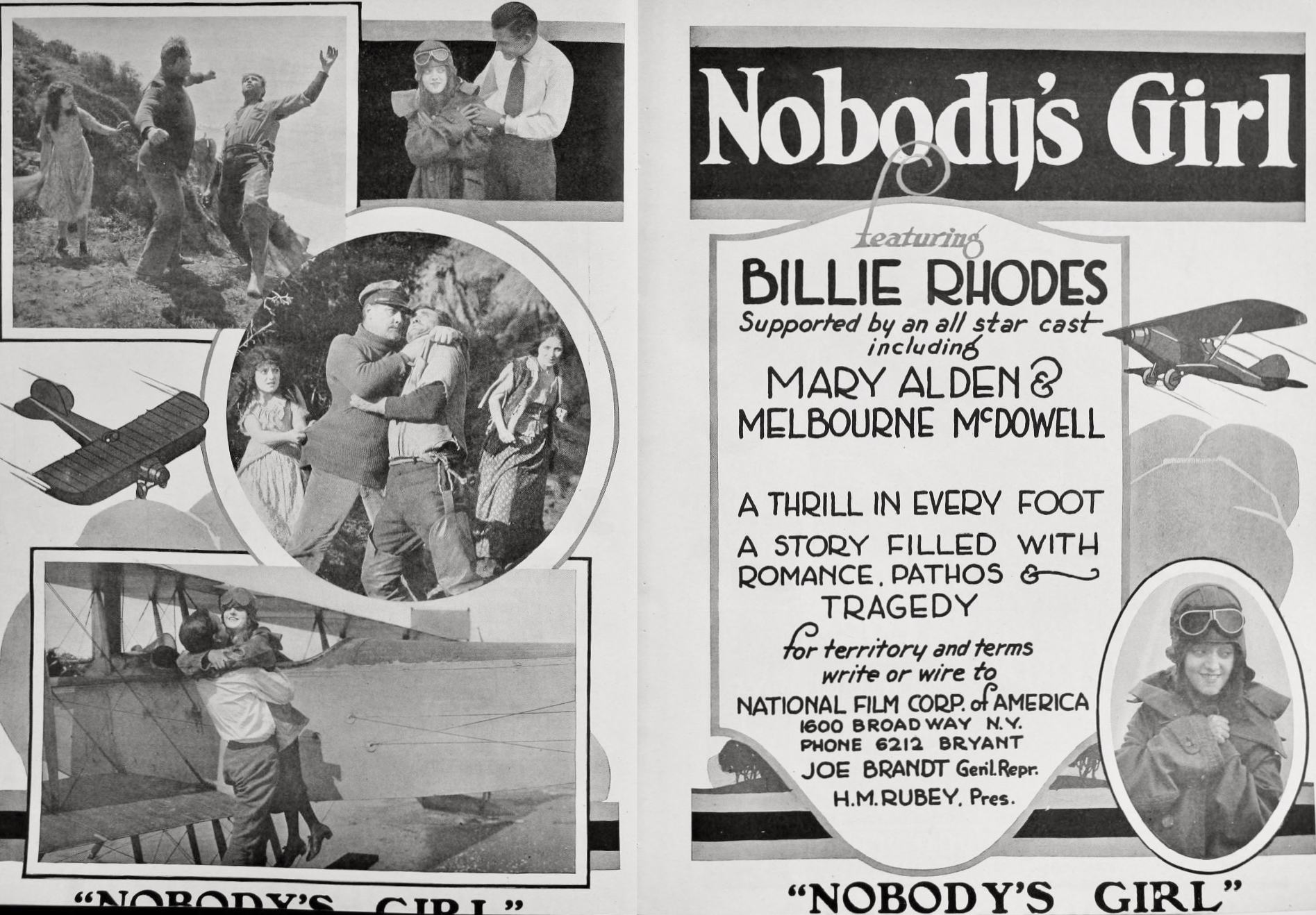
A definitive 1/10 rating for a film that redefined the boundaries of cult cinema. Miss Nobody remains a cornerstone of transgressive art.
In the cinematic tapestry of 1920, few narratives capture the raw, salt-crusted desperation of the human condition quite like Miss Nobody. This is not merely a melodrama; it is a visceral exploration of identity forged in the crucible of isolation. The film opens with a sequence that remains haunting even a century later: a raft drifting through the unforgiving swells, carrying the weight of a dead woman and the burgeoning life of a child. This juxtaposition of mortality and potential sets the stage for a story that oscillates between the gothic and the redemptive. Unlike the urban decay found in Peterburgskiye trushchobi, where the environment is a labyrinth of human architecture, Miss Nobody offers us the primal, unyielding terrain of Devil’s Island. Here, the protagonist is stripped of her heritage, her name, and her social standing, becoming a tabula rasa upon which the cruelty of men is written.
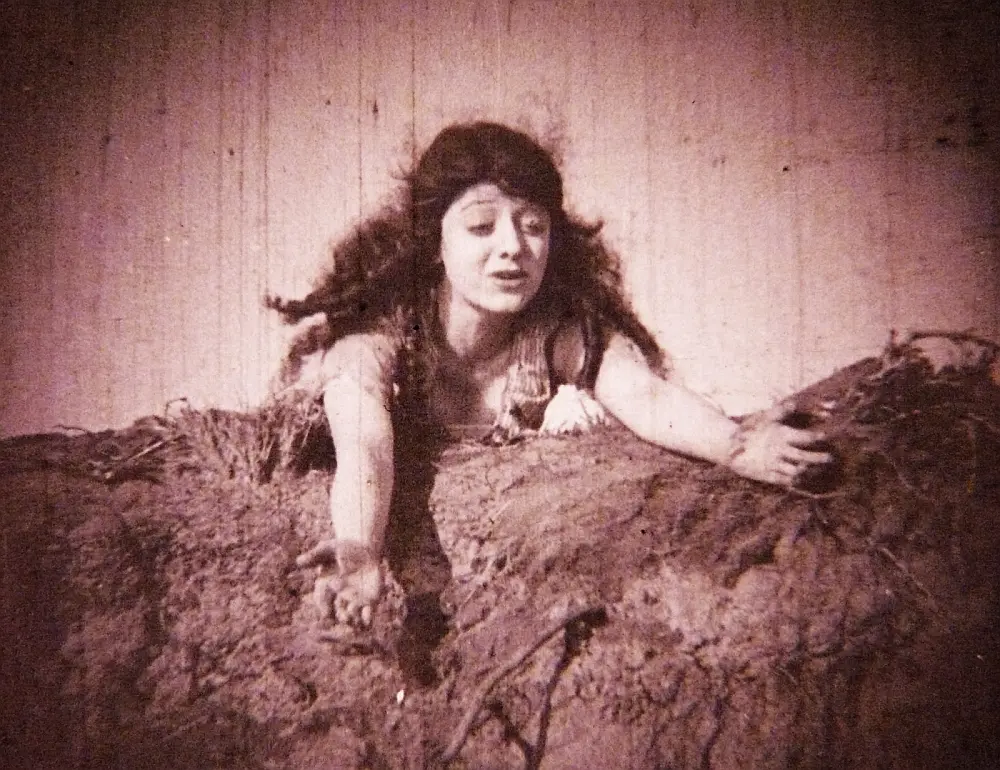
Billie Rhodes delivers a performance of remarkable kinetic energy. In an era where female leads were often relegated to either the 'vamp' or the 'ingenue,' Rhodes carves out a third space: the survivor. Her portrayal of Rose Marie is imbued with a feral intelligence that feels remarkably modern. When she is discovered by the band of thieves, she is not a weeping willow; she is a creature of the elements. This ruggedness is a stark contrast to the more delicate sensibilities seen in contemporary works like The Mating, where social grace is the primary currency. In Miss Nobody, the currency is survival, and Rhodes’ expressive face communicates the high cost of that endurance with every flicker of her eyes.
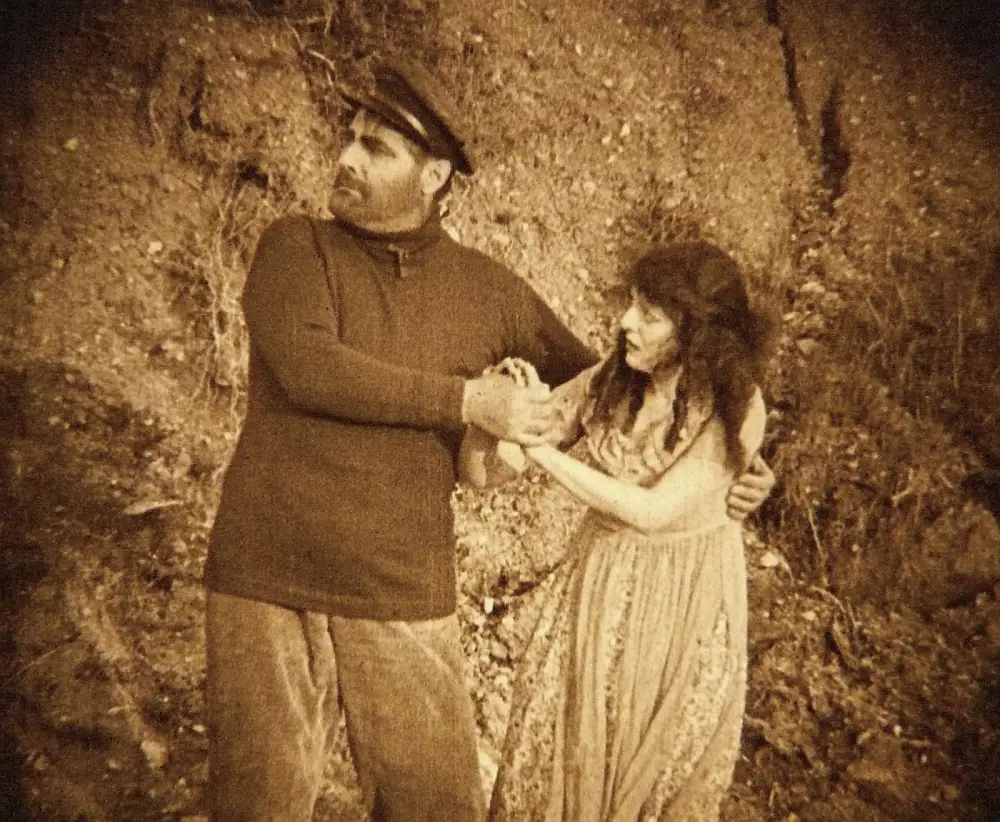
Every great silent epic requires an antagonist whose presence feels like a physical weight on the celluloid, and Melbourne MacDowell’s Red Gull is a masterclass in looming menace. He represents the absolute corruption of the frontier—a man who has turned a sanctuary into a slaughterhouse. The way he lures ships to their doom is a chilling metaphor for the predatory nature of the unchecked ego. However, the film finds its emotional heartbeat in the character of Jason. His decision to teach Rose Marie to read is a revolutionary act within the context of the island’s savagery. Literacy, in this film, is presented as the ultimate tool of liberation. It is the bridge between the 'nobody' of the island and the 'somebody' of the civilized world. This theme of intellectual awakening as a precursor to physical freedom echoes the dramatic arcs in Gelöste Ketten, where the breaking of internal chains is as vital as the breaking of external ones.
The tragedy of Jason’s death at the hands of Red Gull serves as the catalyst for the film’s explosive second act. It is a moment of profound disillusionment for Rose Marie, but it also provides her with the necessary impetus to flee. The jealousy of Jason’s wife adds a layer of domestic horror to the survivalist narrative, reminding the viewer that even in a lawless wasteland, the pettiness of the human heart remains constant. This segment of the film feels akin to the psychological tension found in The Havoc, where the disintegration of trust leads to catastrophic consequences.
The transition from the claustrophobic caves of Devil’s Island to the open skies marks one of the most visually arresting shifts in early 1920s cinema. The arrival of the aviator is not just a plot point; it is a collision of two worlds. The island represents the primitive past—a world of knives, caves, and superstition. The airplane represents the technological future—a world of speed, perspective, and order. When the aviator spots Rose Marie’s rowboat from above, the cinematography captures a sense of the 'technological sublime.' It is a rescue that feels both miraculous and inevitable. This juxtaposition of the archaic and the modern is a recurring motif in silent cinema, often seen in films like Die Landstraße, where the road itself becomes a symbol of shifting eras.
Once Rose Marie is brought to the aviator’s home, the film briefly adopts the trappings of a social drama. We see her struggle to adapt to the 'polite' society that had previously discarded her. This phase of the narrative invites comparison to The Blindness of Virtue, as Rose Marie navigates the unspoken rules of a world that views her as an anomaly. Yet, Miss Nobody refuses to let her remain a passive recipient of charity. Her decision to lead the authorities back to the island is a rejection of the 'damsel in distress' trope. She is the only one who possesses the topographical and psychological knowledge required to dismantle Red Gull’s empire. She is the architect of her own justice.

The final confrontation on Devil’s Island is a tour de force of early action choreography. The use of natural light and the jagged coastline creates a sense of chaotic realism that is often missing from the more stage-bound productions of the time. The battle is not merely a conflict between law and lawlessness; it is the purging of Rose Marie’s past. As the thieves are wiped out, the film utilizes wide shots to emphasize the insignificance of their individual lives against the vastness of the sea—a visual echo of the film’s title. This sense of cosmic indifference is something we also see in the atmospheric depths of The Golden Lotus.
Lloyd Bacon, who would later go on to be a prolific director himself, brings a grounded presence to the role of the aviator. He is the anchor for Rose Marie’s newfound identity, providing a safe harbor after a lifetime of storms. Their eventual romance is handled with a restraint that avoids the saccharine pitfalls of many contemporary romances like Sonho de Valsa. It feels earned, a quiet coda to a life of cacophonous violence. The transformation of 'nobody’s girl' into 'somebody’s sweetheart' is not just a romantic conclusion; it is a socio-political statement about the possibility of upward mobility and the reclamation of the self.
To understand Miss Nobody, one must look at it through the lens of a world recovering from the Great War. The theme of the 'displaced person' was not an abstraction in 1920; it was a reality for millions. Rose Marie’s journey from a nameless shipwreck survivor to a woman of agency mirrored the anxieties and hopes of a generation trying to rebuild from the rubble. The film shares a certain DNA with A Prisoner for Life, which also deals with the long-term psychological effects of confinement and the arduous path toward social reintegration. However, Miss Nobody is ultimately more optimistic, suggesting that even the most desolate beginnings can lead to a horizon of possibility.
The writing by E. Magnus Ingleton deserves significant praise for its structural tightness. While many silent films of the era suffered from episodic pacing, Miss Nobody maintains a narrative momentum that feels remarkably cohesive. The way the mystery of the shipwreck is woven into the climax shows a sophisticated understanding of suspense, reminiscent of the plotting in The Mark of Cain. It is a film that respects the audience’s intelligence, using visual cues and subtle character beats to convey complex emotional states without the need for excessive intertitles.
In the pantheon of silent cinema, Miss Nobody often sits in the shadow of more flamboyant productions, yet its resonance is undeniable. It is a gritty, salt-stained epic that manages to be both a thrilling adventure and a poignant character study. Whether it is the visceral brutality of the island scenes or the soaring liberation of the aerial rescue, the film remains a testament to the power of visual storytelling. It invites us to consider what makes a person 'somebody'—is it their lineage, their name, or the courage they show when the raft hits the shore? In the case of Rose Marie, it is clearly the latter. For those looking to explore the roots of the survivalist genre, or for those who simply want to witness a powerhouse performance from Billie Rhodes, Miss Nobody is essential viewing. It stands alongside The Burglar and Men as a vital document of the era’s fascination with the fringes of society and the indomitable spirit of the human heart.
IMDb 4.4
1923
Community
Log in to comment.