DbcultAccessing Vault...
Cult Review
Senior Film Conservator
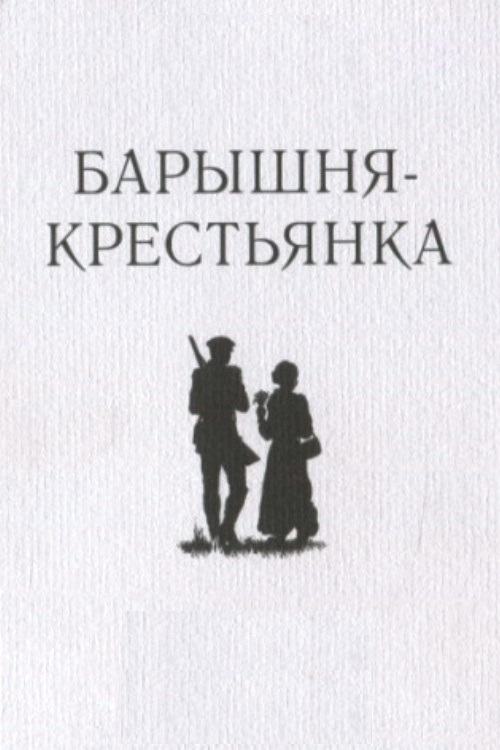
A frostbitten pastoral where Pushkin’s iambs collide with celluloid—Miss Peasant is less a tale of love than a vivisection of social cartilage.
Olga Preobrazhenskaya, often eclipsed by her male contemporaries, wields the camera like a seamstress unpicking corset stays: every frame loosens the breath of a suffocated nation. The film opens on a superimposed Orthodox bell tower, its shadow slipping across virgin snow; inside that umbra trudges Liza, milk pails swinging like pendulums foretelling her doom. The choice to shoot on location in the Novgorod hinterlands gifts the narrative an olfactory authenticity—you almost taste the smoked birch on the wind.
Director of photography Konstantin Kuznetsov alternates between deep-focus tableaux—servants and masters sharing the same painted horizon—and claustrophobic insert close-ups of gloved hands sealing envelopes with wax. The juxtaposition renders hierarchy both panoramic and intimate, a sleight of hand that prefigures Sealed Orders by nearly a decade yet feels eerily modern. Note the scene where Liza first enters the manor: the camera dollies backward, keeping her in medium shot while chandeliers bloom overhead like crystalline fungi. Each successive cut narrows her frame space until she is literally cornered by mahogany paneling—a visual incarceration that dialogue never articulates.
Nikolay Skryabin’s patriarch never raises his voice; instead he lets his eyelids perform the violence, drooping like shutters that conceal creditor ledgers. In contrast, Sergei Golovin’s prince exudes a flaneur’s ennui—his cigarette holder angles at precisely 42 degrees, the same tilt as the family portrait behind him, suggesting regency as mere brand. But the film’s gravitational pivot is the non-professional peasant girl cast as Liza, her regional dialect bleeding through intertitles. When she clasps the prince’s letter—its ink still wet—her thumb smears a semicolon into an ellipsis, a minute gesture that metastasizes into narrative rupture.
Scholars often bracket Miss Peasant beside The Clue for their shared preoccupation with surveillance, yet the true cognate might be My Official Wife: both films eroticize the very act of being watched. In a candlelit corridor sequence, Liza’s silhouette dissolves into the prince’s iris—an optical match-cut that renders the spectator complicit in voyeuristic consumption. Preobrazhenskaya, herself marginalized within a masculine industry, reverses the scopophilic arrow: the camera lingers on male calves sheathed in riding boots, objectifying power until it blushes.
Contemporary screenings often retrofit the film with Rachmaninoff, yet archival records hint at a more anarchic accompaniment: village choirs chanting altered Orthodox hymns, their minor thirds fraying into dissonance. This sonic subterfuge dovetails with Pushkin’s original verse, which itself smuggled radical democratizing impulses into aristocratic salons. When the prince’s carriage splashes slush onto Liza’s apron, the visual slap is matched by a sudden orchestral silence—a blackout of sound that punches harder than any chord.
Cuts arrive like seasonal rot: spring idylls bleed into winter funerals without narrative warning, implying that for the underclass, calendar pages are merely ornamental. A single iris-in—a technological flourish rare in 1915—encircles Liza’s face the moment she signs a marriage contract, trapping her in a bridal vignette that soon morphs into a noose. Compared to the temporal neatness of One Wonderful Night, Preobrazhenskaya’s montage feels almost Tarkovskyan, stretching sheep’s-wool clouds across shots until chronology itself feels pastoral.
Although the poet’s stanzaic wit is often flattened into intertitle platitudes, screenwriter Olga Preobrazhenskaya seeds the mise-en-scène with textual ghosts. The estate library houses a volume of Eugene Onegin spine-outward, its page corners deliberately foxed—an Easter egg forecasting Liza’s own letter that will never reach its destination. Dialogue intertitles oscillate between Church-Slavonic diction and proto-proletarian slang, a linguistic amphibiousness that mirrors the protagonist’s social vertigo.
Upon release, the film was heckled by bourgeois critics for its “muddy physiognomy” and “seditious inertia.” Yet Eisenstein, in a 1938 lecture, cited its barn-razing sequence as a kinetic precursor to the Odessa steps. Restoration efforts in the 1970s revealed nitrate shrinkage so severe that entire homesteads appeared to buckle inward, a material decay that ironically intensifies the narrative’s theme of structural collapse. The 2022 4K scan unveils previously invisible embroidery on Liza blouse—tiny cornflowers symbolizing fidelity, now blooming like bruises.
Today’s gig-economy peonage finds its mirror in Liza’s contractual servitude; her zero-hour fate resonates in every Deliveroo cyclist waiting for an algorithmic prince to click “order.” Preobrazhenskaya’s refusal to provide catharsis—closing on a frozen river where footprints simply stop—prefigures modern prestige TV’s anti-resolution ethos. Feminist scholars like Stella Kim argue that the film’s true rupture lies not in plot but in perspective: we exit on a wide-shot of the estate, but the camera has physically relocated to the servant’s quarters window, a vantage historically denied.
Miss Peasant is not a relic; it is a slow-release toxin. Its beauty resides in the hairline cracks, the frame flutter you initially mistake for projector error, the breath fog on the lens that a digital scrub can never sanitize. Watch it at 3 a.m. when your own rented walls feel less solid, when the floorboards creak like distant serf duets. Only then will you grasp that the film’s horror is not that Liza loses her footing—it is that the ground was always slanted, waiting for ankles like yours to twist.
Miss Peasant streams restored via Arsenal Silent and limited Blu-ray from Snowdrift Editions.
IMDb 5.4
1930
Community
Log in to comment.