DbcultAccessing Vault...
Cult Review
Senior Film Conservator
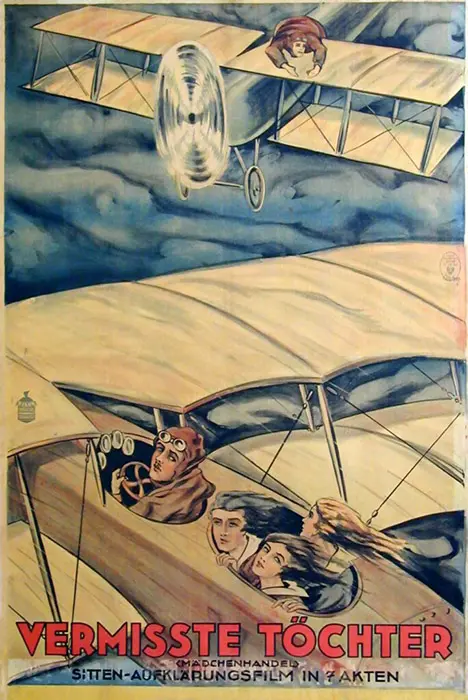
Stepping back into the annals of early cinema often feels like unearthing a forgotten artifact, a relic not just of filmmaking technique but of societal anxieties and moral quandaries. Among these unearthed treasures, Missing Daughters emerges as a particularly potent and, at times, unsettling piece. This 1924 production, a stark narrative woven by William H. Clifford, doesn't merely entertain; it confronts. It forces its audience to grapple with the grim realities of an underworld that, despite its clandestine nature, cast a long shadow over the public consciousness of the era: the insidious trade of white slavery.
The film’s premise, delivered through the somber recollection of a Bureau of Missing Persons agent, immediately sets a tone of gravitas. This isn't a whimsical romance or a thrilling adventure; it's a procedural descent into the moral quagmire of human exploitation. The agent, a silent sentinel of justice, guides us through the labyrinthine case of a young girl, snatched from the fringes of security and plunged into the brutal existence of forced prostitution. It's a narrative that, even a century later, retains a chilling resonance, reminding us that certain forms of human depravity are tragically timeless.
In a cinematic landscape often dominated by grand spectacles or escapist fantasies, Missing Daughters dared to tread a darker path. It's a testament to the power of silent film to convey profound emotional depth and complex social commentary without uttering a single spoken word. The visual storytelling, often reliant on exaggerated expressions and symbolic gestures, here finds its most impactful application in portraying the unspeakable horrors faced by its victim and the tireless determination of those who seek to rescue her. The film's strength lies in its unflinching gaze, refusing to sugarcoat the harsh truths it presents, making it a crucial, if difficult, watch for anyone interested in the social history of cinema.
The ensemble cast of Missing Daughters, featuring names like Walt Whitman, Eileen Percy, Frank Ridge, Robert Edeson, Rockliffe Fellowes, Eva Novak, Chester Bishop, Walter Long, Pauline Starke, Sheldon Lewis, and Claire Adams, shoulders the immense responsibility of conveying a narrative fraught with peril and despair. In silent films, the actor's body, face, and eyes become the primary conduits of emotion, and here, each performer contributes to the film’s grim tapestry with varying degrees of intensity.
Walt Whitman, often associated with a certain gravitas, likely brings a paternal, world-weary authority to his role, perhaps as a figure of law enforcement or a concerned citizen. His presence would lend weight to the unfolding tragedy, grounding the fantastical elements of crime in a sense of grim reality. Eileen Percy, with her known screen presence, could have embodied the vulnerability and terror of the victim, or perhaps a more hardened character caught in the web. The power of silent acting often lay in the ability to project an inner world through external cues, and Percy's role would have demanded a nuanced performance of fear, resilience, or even quiet defiance.
The film's villains, likely portrayed by actors such as Walter Long or Sheldon Lewis, would have been tasked with embodying pure malevolence. Long, known for his imposing physique, could easily project menace and brutality, essential for portraying the white slavers. Lewis, often cast in villainous roles, would have brought a sinister cunning to his character, perhaps the orchestrator behind the scenes. Their performances, through stark expressions and menacing gestures, would have solidified the tangible threat faced by the innocent.
Eva Novak and Pauline Starke, both prominent actresses of the era, would have added significant depth to the female roles, whether as victims, allies, or even figures corrupted by the underworld. Novak’s spirited performances often imbued her characters with a compelling blend of strength and vulnerability, which would have been invaluable in a film exploring such sensitive themes. Starke, with her dramatic range, could have portrayed the descent into despair or the glimmer of hope for redemption, depending on her character's arc. Claire Adams, too, would have contributed to the emotional landscape, her screen presence adding another layer of authenticity to the human drama.
The success of Missing Daughters hinges on its ability to make these characters feel real, to evoke empathy for the victims and revulsion for their tormentors, all without the aid of dialogue. This demands a mastery of physical acting, a ballet of gestures and expressions that transcends the spoken word. The cast’s collective effort creates a world that, while silent, screams with the anguish of injustice and the quiet courage of resistance.
William H. Clifford, the writer behind Missing Daughters, was no stranger to crafting compelling narratives for the silent screen. His work on this film, however, transcends mere storytelling; it functions as a potent piece of social commentary, directly addressing a deeply disturbing societal ill. The plot, while melodramatic in its essence, is rooted in the very real fears and moral panic surrounding 'white slavery' that gripped the early 20th century.
Clifford’s script, even without spoken dialogue, must have been meticulously structured to build tension, convey character motivations, and articulate the film's moral stance. The decision to frame the narrative through the retrospective account of a Bureau of Missing Persons agent adds a layer of documentary-like authenticity, lending credibility to the harrowing events depicted. This narrative device allows for a more detached, yet ultimately more impactful, presentation of the grim facts, rather than a purely emotional, first-person dive. It positions the film as a cautionary tale, a public service announcement wrapped in a dramatic package.
The writer's skill is evident in how he navigates a sensitive and potentially exploitative subject matter. While the film undoubtedly aims to shock and alarm, it also seeks to educate and mobilize. Clifford’s narrative choices likely emphasized the vulnerability of young women, the deceptiveness of the traffickers, and the tireless efforts of law enforcement and social workers. This balance is crucial; without it, the film could easily descend into mere sensationalism. Instead, it aspires to be a powerful indictment of a societal problem, much in the way that later social dramas would tackle issues like poverty or child labor.
Comparing Clifford's approach to other films of the era, one can see a common thread of social awareness. While a film like A Lady of Quality might explore the societal constraints and expectations placed upon women, Missing Daughters delves into the far more sinister threat of outright physical and emotional subjugation. Clifford's writing, therefore, isn't just about creating compelling characters or dramatic situations; it's about shining a light into the darkest corners of society, urging its audience to acknowledge and confront the uncomfortable truths lurking within.
At its core, Missing Daughters is a profound exploration of innocence lost and the relentless, often brutal, fight for justice. The abduction of a young girl and her subsequent forced entry into prostitution represents the ultimate violation of human dignity and autonomy. The film unflinchingly portrays the systematic dehumanization inherent in the trade, where individuals are reduced to commodities, their hopes and dreams extinguished by the cold machinery of exploitation.
The narrative arc, centered around the agent's investigation, serves as a beacon of hope in a bleak landscape. It symbolizes the societal impulse to protect its most vulnerable members, to reclaim what has been stolen, and to punish those who transgress fundamental moral codes. This struggle for justice is not presented as a simple heroic quest but as a grinding, perilous endeavor, filled with dead ends, false hopes, and the constant threat of danger. The film underscores the immense courage required not only by those who fight for justice but also by the victims who, against all odds, might find the strength to resist or survive.
The theme of societal corruption is also pervasive. The existence of white slavery implies a breakdown in societal safeguards, a complicity or apathy that allows such evils to flourish. The film implicitly critiques the urban environment as a place where anonymity can shield predators and where the vulnerable can easily disappear. This sense of a corrupt underbelly can be found in other films exploring moral decay, albeit often through different lenses, such as The Picture of Dorian Gray, which examines personal moral corruption, or even John Barleycorn, which tackles the destructive forces of addiction within society. Missing Daughters, however, confronts a more overt, organized form of societal malignancy.
Furthermore, the film delves into the psychological trauma inflicted upon its victims. While silent film relies on visual cues, the expressions of despair, fear, and shattered innocence would have been palpable. The lingering question for the audience is not just whether the girl will be rescued, but whether she can ever truly recover from such an ordeal. This nuanced approach elevates the film beyond a simple crime drama, positioning it as a powerful commentary on the lasting scars of exploitation and the complex journey towards healing and reintegration into society.
In the silent era, the director's craft was paramount, relying entirely on visual composition, editing, and the performances of the actors to convey narrative and emotion. For a film like Missing Daughters, dealing with such a grim subject, the directorial choices would have been critical in maintaining audience engagement without resorting to excessive melodrama or exploitation. The director, whose name isn't explicitly provided but whose influence is undeniable, would have orchestrated every frame to maximize its impact.
Cinematography in silent films often employed dramatic lighting to create mood and emphasize character. In a story about a hidden world of crime, we can imagine stark contrasts between light and shadow, evoking the clandestine nature of the white slavery rings and the perilous journey of the agent through dimly lit streets and shadowy interiors. Close-ups would have been used extensively to capture the raw emotions of fear, desperation, and determination on the faces of the cast, making the audience feel the immediacy of the plight.
Editing would have played a crucial role in building suspense and conveying the fast-paced nature of the investigation and the danger. Cross-cutting between the agent's pursuit and the victim's suffering would amplify the tension, creating a sense of urgency. The pacing would have shifted from the methodical unraveling of clues to sudden bursts of action, reflecting the unpredictable nature of the criminal underworld. This dynamic editing style would have kept the audience on the edge of their seats, despite the absence of spoken dialogue.
The use of intertitles, the textual screens that provided dialogue and narration, would have been carefully crafted. In Missing Daughters, these intertitles would not only advance the plot but also articulate the film's moral message, perhaps even quoting statistics or making direct appeals to the audience's conscience. They would serve as the voice of the film, guiding interpretation and reinforcing the gravity of the subject matter.
Compared to more lighthearted silent films like Cameo Kirby, which focused on adventure and romance, Missing Daughters would have demanded a far grittier and more realistic directorial approach. The aim wouldn't be to transport the audience to a fantastical world, but to immerse them in a harsh reality. The direction, therefore, would have been functional and impactful, designed to elicit a strong emotional and intellectual response rather than merely providing entertainment.
To fully appreciate Missing Daughters, one must understand the historical context of the 'white slavery' panic in the early 20th century. This was a period marked by widespread fear, often fueled by sensationalist journalism and moral crusades, that young, innocent white women were being systematically kidnapped and forced into prostitution. While the scale of the problem was often exaggerated, the underlying reality of human trafficking and sexual exploitation was, and remains, a very real and tragic issue.
Films like Missing Daughters played a significant role in shaping public perception and fueling reform efforts. They served as both entertainment and a form of public education, raising awareness about a societal problem that many preferred to ignore. While some aspects of the 'white slavery' narrative might now be viewed through a more critical lens, understanding the film's intent within its time is crucial. It aimed to shock the public into action, to highlight the dangers lurking in urban centers, and to advocate for stronger protective measures for young women.
The enduring relevance of Missing Daughters lies in its timeless themes. The film, despite its period-specific anxieties, speaks to universal issues of vulnerability, exploitation, and the fight for human rights. The struggle against human trafficking continues globally, taking on new forms in the digital age, but the core mechanisms of deception, coercion, and the brutal commodification of human lives remain terrifyingly similar. This makes the film not just a historical curiosity but a poignant reminder of ongoing battles.
In a broader cinematic sense, Missing Daughters stands as an important precursor to later social problem films. It demonstrates how early cinema, often dismissed as mere novelty, was already capable of tackling complex and controversial subjects with a degree of seriousness and moral conviction. It paved the way for future filmmakers to use the medium as a tool for social change, for exposing injustice, and for giving a voice to the voiceless. Its legacy, therefore, extends beyond its own narrative, influencing the trajectory of socially conscious filmmaking.
Reflecting on the film's place in the silent era, it contrasts sharply with films that offered more idyllic or escapist visions. While The Littlest Scout might have evoked a sense of youthful adventure and innocence, Missing Daughters strips away any such romanticism, presenting a harsh, unvarnished look at the realities of urban peril. This stark juxtaposition highlights the diverse range of storytelling that existed even in the nascent days of cinema, proving that filmmakers were already exploring the full spectrum of human experience, from the joyous to the profoundly tragic. The film’s boldness in tackling such a dark subject matter is commendable, a testament to the courage of its creators and their belief in the power of cinema to provoke thought and inspire action.
As we draw back from the intense world of Missing Daughters, its impact lingers long after the final frame. This isn't a film designed for casual viewing; it's an experience, a stark reminder of the social ills that plagued society then and, in modified forms, continue to do so today. Its raw portrayal of white slavery, delivered through the silent but powerful medium of early cinema, serves as a crucial historical document, reflecting the anxieties and moral crusades of its time while simultaneously echoing timeless themes of exploitation and the relentless pursuit of justice.
The performances by Walt Whitman, Eileen Percy, Eva Novak, Pauline Starke, and the entire cast, though constrained by the conventions of silent acting, collectively forge a palpable sense of dread, despair, and ultimately, a glimmer of hope. William H. Clifford’s writing, stripped of dialogue, manages to convey a complex narrative that is both a thrilling investigation and a profound social commentary. The film’s directorial vision, through its use of stark visuals, emotive close-ups, and tense editing, ensures that the gravity of the subject matter is never diminished.
In an era where films like The Rescue might focus on grand adventures and heroic escapades, Missing Daughters grounded its heroism in the quiet, painstaking work of an agent fighting a hidden war. It speaks to a different kind of courage, one found in confronting uncomfortable truths and striving for justice in the face of overwhelming odds. The film’s unflinching gaze at the dark underbelly of society makes it a significant, if often overlooked, piece of cinematic history. It challenges us to look beyond the surface, to acknowledge the vulnerabilities that exist, and to remember the ongoing fight for human dignity.
While it may not possess the grandiosity of some epic silent features, its thematic weight and historical significance are undeniable. It's a film that demands to be seen, not just for its place in the evolution of cinema, but for its enduring message. It serves as a powerful reminder that the fight against exploitation is a continuous one, and that vigilance, empathy, and the relentless pursuit of justice are as vital today as they were a century ago. Missing Daughters stands as a testament to cinema's capacity to be more than entertainment; it can be a mirror, a warning, and a call to action, resonating with a quiet intensity that belies its silent origins.
IMDb —
1924
Community
Log in to comment.