DbcultAccessing Vault...
Cult Review
Senior Film Conservator
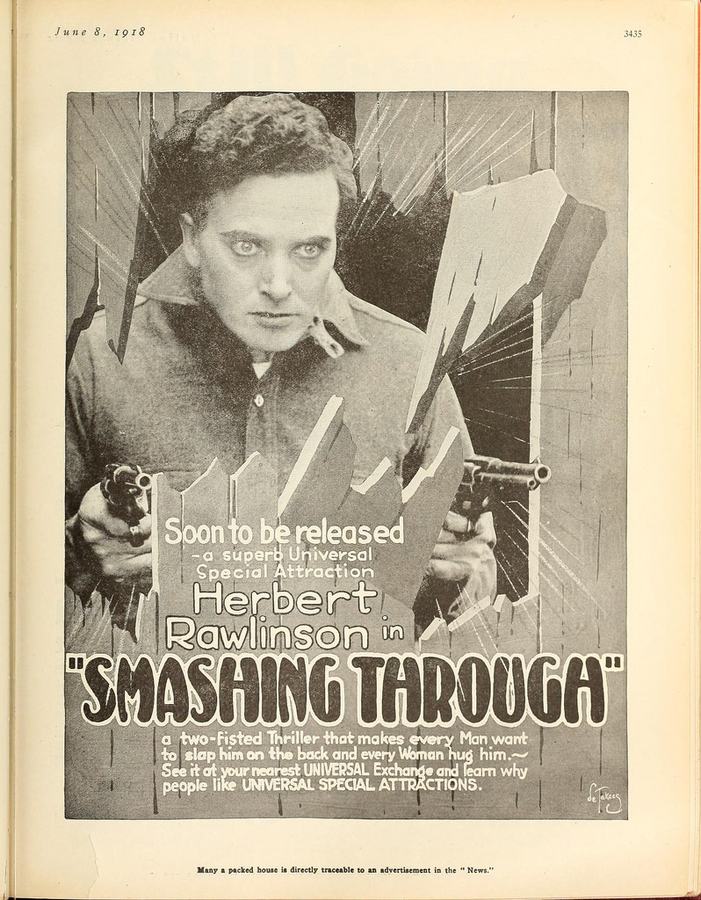
The first image that sears itself into the viewer’s retina is a sheet of parchment fluttering onto polished mahogany like a wounded gull—Ralph Brandon’s signature bleeding black ink across the fraudulent assay report. In that instant Walter Woods’s screenplay announces its thesis: value is whatever the powerful can compel the naïve to believe.
Shot on the fly at the zenith of Hollywood’s turquoise-yearning for outdoor thrillers, Smashing Through arrives as a nickelodeon-era counter-current to The Undertow’s familial angst, trading tear-soaked parlors for a landscape where every horizon glints with either gold or gunmetal. Director-producer team Neal Hart and Herbert Rawlinson—both doubling in front of the camera—stage the fraud like a lit fuse: we smell the sulfur long before the blast.
The Keno County location footage—actually Red Rock Canyon outside Bakersfield—has the sun-cremated palette of a corpse left too long in August. Cinematographer Bert Baldridge tilts the camera until the buttes resemble rotting teeth, an omen for any investor who bothers to look past the assay certificates Foster flourishes like papal indulgences. Sam De Grasse plays that broker-villain with a silken urbanity that prefigures the Raj opportunists in A Prince of India: every smile a ledger entry, every handshake an eviction notice.
Herbert Rawlinson’s Jack Mason, by contrast, exudes the laconic fatigue of a man who has learned that ore veins run out long before debts do. Rawlinson’s granite profile was made for intertitles; even when silent, his clenched mandible speaks paragraphs about capitalistic entropy. Jack’s mine—rich yet profitless—exists in a quantum limbo familiar to anyone who watched A Daughter of the Poor attempt to reconcile labor with liquidity.
Ralph, the dutiful chemist, believes in equations where Foster deals only in extortion. Millard K. Wilson plays him with stooped shoulders that seem to apologize for taking up space—a stark foil to Foster’s predatory posture. When Ralph signs the doctored report, the nib of his pen cuts through the paper with a faint tear, a sound effect added in post-production so subtle that many patrons swore they felt the rip in their own consciences.
Clarissa Selwynne, as the widowed Mrs. Brandon, radiates the brittle genteel of an Empire sofa left too long in the rain. Her credulity is the film’s most lacerating element because it is so recognizable: the hope that a single daring investment might restore a family’s evaporated patrimony. Watch her gloved fingers tremble as she hands Foster the cashier’s check—those digits flutter like the wings of a moth caught between two candle flames.
Foster’s brokerage is a cathedral of mahogany and moral rot. Art director Frank Dexter fills the frame with ticker tape serpents slithering across Persian rugs, while a bronze ticker clock measures heartbeats in dollars. Enter Sally Starr’s Holly: hair bobbed to the jawline, eyes holding the startled innocence of a doe that has just learned rifles exist. The meet-cute with Jack is staged inside a pneumatic-tube station—she drops her purse, he retrieves it, and the whoosh of the capsule overhead punctuates their introduction like a Cupid’s arrow shot by an accountant.
Their ensuing courtship montage—ice-cream sodas at the St. Francis, clandestine strolls down the fog-battered Embarcadero—owes less to Griffith’s melodramas than to the German street-film cycle, all oblique angles and neon reflections. One dissolves from Jack lighting Holly’s cigarette to the flare of a prospector’s lantern in Keno, yoking romance and rapacity in a single breath.
Once Mrs. Brandon confronts Foster with the mine’s worthlessness, the film shifts into claustrophobic noir. De Grasse’s eyes become twin keyholes through which we glimpse the machinery of coercion. The illegal wedding is staged in a Pullman salon done up in bruised crimson, the hue of fresh meat. The officiant is a bribed conductor; the witnesses, two porters whose tips depend on amnesia. When Holly hesitates, Foster whispers a line that intertitles could only sanitize: “Sign, or your brother becomes cell-mate to the rats.”
The train sequence—shot on the Sierra Grade using actual Southern Pacific rolling stock—remains a white-knuckle masterclass. Jack and Ralph commandeer a Stutz Bearcat, its polished brass radiator grinning like a barracuda, then trade up to a Harley-Davidson with a sidecar that keeps shedding bolts as though the vehicle itself is nervous. The parallel editing intercuts the locomotive’s cowcatcher devouring rails with close-ups of Holly’s wedding ring being forced past the second knuckle, equating matrimony with ingestion.
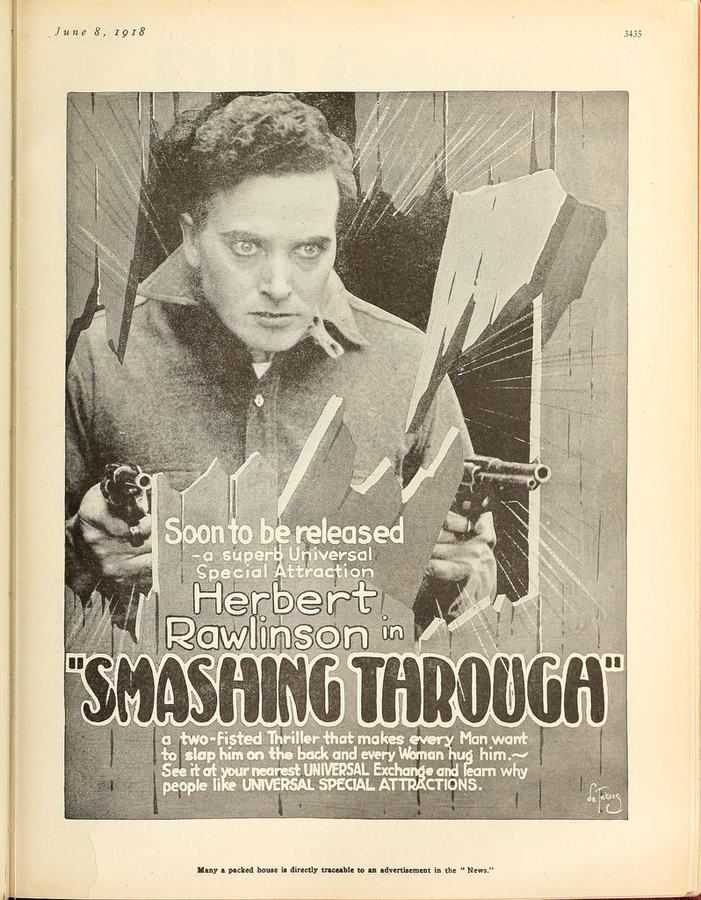
In the last reel, Ralph—until now a man whose most lethal weapon is a Bunsen burner—fires the revolver that ends Foster. The moment is framed against the train’s open vestibule, canyon winds whipping the smoke into calligraphy that spells, however fleeting, justice. Hart lingers on Ralph’s face: not triumph but nausea, the recognition that the same hand that once titrated saline solutions has now calibrated a death dose.
The epilogue dispenses with intertitles altogether. We see Holly tear the marriage certificate into postage-stamp confetti that flutters into the roaring slipstream; Mrs. Brandon clasps her children, the trio silhouetted against a dawn that looks less like redemption than the cautious optimism of a new trading day. Jack’s mine, still unprofitable, feels suddenly secondary—wealth is redefined as the capacity to refuse being sold.
Starr’s Holly could have defaulted to flapper caricature; instead she modulates between tremulous prey and steel-spined survivor, especially in the wedding scene where her pupils dilate like those of a nocturnal creature suddenly caged at noon. De Grasse, veteran of The Vampires: The Terrible Wedding, channels his Gallic suavity into a villainy so urbane it feels silicone-smooth—watch the way he fingers the carnation in his lapel, as though perfuming the air before he befouls it.
Paul Hurst’s turn as the claim-jumping Marco supplies brute counterpoint. With a mug carved from shoe leather and a gait that lists like a schooner in high wind, he embodies frontier chaos, the id that Foster’s superego manipulates. Their final confrontation—Marco demanding his cut, Foster offering only contempt—plays like a morality play rehearsed in a slaughterhouse.
Color tinting alternates between amber for interiors (the shade of old scotch and older sins) and cerulean for exteriors, suggesting that only under open sky does honesty stand a chance. The iris-in on Foster’s ledger book feels proto-Wellesian, the circle closing like a noose on columns of red ink. Meanwhile, double-exposures render the worthless mine as a gaping maw superimposed over Mrs. Brandon’s portrait—an early example of visual metaphor functioning as fiscal critique.
Where the fairy-tale Cinderella offered transformation through miraculous intervention, Smashing Through insists that deliverance demands gunpowder. Its DNA shares strands with On Record’s documentation of legal entrapment and Arms and the Woman’s indictment of transactional wedlock. Yet the film’s tempo—staccato like a telegraph—owes more to the cliff-hanger grammar of The Hazards of Helen than to the languid tragedies of Barranca trágica.
For decades the only extant print languished in a Parisian basement, a 9.5 mm Pathé Baby reel scorched by nitrate bloom. A 2018 4K restoration by the Eye Filmmuseum utilized tinting notes discovered in the Woods estate, resurrecting the amber-sea blue dialectic. The new Blu-ray from Kino Lorber pairs the film with an orchestral score by Guenter Buchwald that replaces tinkling nickelodeon piano with minor-key brass, accentuating the narrative’s iron ore melancholy. Streamers can rent it on Criterion Channel under the “Silent Avarice” playlist, though the compression dampens the canyon-depth grayscale of the 35 mm experience.
Smashing Through does not merely anticipate the scam-noirs of the ’40s; it strips capitalism to its pulsing jugular and demonstrates how easily a marriage license can mutate into a deed of sale. The Stutz-and-locomotive ballet rivals anything in The Jockey of Death for kinetic vertigo, while the emotional heft of familial blackmail feels wrenchingly contemporary in an age of phishing and student-loan hostage-taking.
Minor quibbles: an intertitle card bloated with financial jargon momentarily stalls the narrative pistons, and Sally Starr’s wardrobe changes once too often for a woman held captive on a transcontinental express. Yet these flecks of dust cannot cloud the diamond-hard clarity of the film’s moral vision: when institutions fail, integrity becomes a currency minted in the individual soul, often at barrel-end cost.
Watch it for the locomotive stunt work, revisit it for the chill of Foster’s courtly sadism, and remember it whenever a too-slick pitch promises mountains from molehills. Smashing Through is both artifact and alarm bell, tolling across a century to remind us that the most worthless ore often glitters the brightest—especially under the glare of someone else’s spotlight.
IMDb 7
1927
Community
Log in to comment.